
Nigeria Jet A1 Fuel Resilience and Air Travel: Navigating Domestic Flights, Airline Operations, and Travel Guide 2026

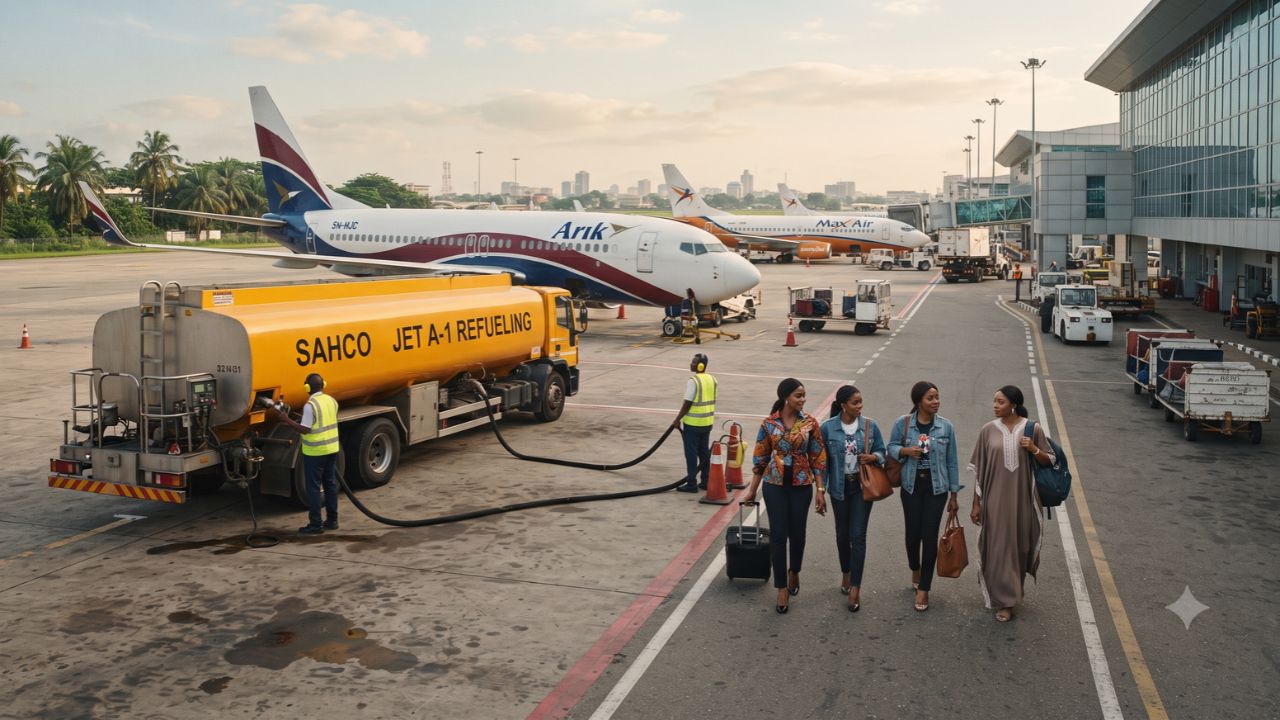
Although Nigeria ranks among Africa’s largest crude oil producers, its commercial aviation network has historically depended almost entirely on imported and certified Jet A1 turbine kerosene to power every domestic takeoff. As passenger movements scale across key commercial corridors connecting Lagos, Abuja, Port Harcourt, Kano, and Enugu, aviation fuel resilience stands as the single most significant factor dictating flight punctuality, ticket affordability, and fleet deployment in 2026.
Commercial air travel serves as the vital backbone of transit across Nigeria, bridging distances that would otherwise require multi-day road journeys across vast geographic expanses. For business professionals, cultural travelers, and international visitors, domestic flights operated by Nigerian carriers provide fast and dependable links between energetic metropolitan centers and regional cultural capitals. Understanding how the aviation fuel supply chain works—and how regulatory agencies coordinate supply integrity—offers travelers indispensable insight into booking strategies, airport transit, and schedule reliability.
Jet A1 Supply Systems and Domestic Flight Dynamics
Aviation turbine kerosene, universally graded as Jet A1, represents up to forty percent of an airline's direct operating expenditure. Unlike standard automotive fuels, Jet A1 requires rigorous quality assurance testing, dedicated temperature-controlled storage tanks, specialized filtration infrastructure, and secure airport hydrant delivery networks to prevent particulate contamination. In Nigeria, the supply ecosystem connects international refiners and domestic petroleum depots with fuel marketers, airport terminals, and airline ground crews under the regulatory watch of the Nigerian Civil Aviation Authority (NCAA).
When global energy prices shift or distribution logistics face pressure at coastal ports, airline operational margins tighten rapidly. Domestic carriers frequently manage tight turnaround schedules, flying single aircraft across multiple daily sectors—such as Lagos to Abuja, followed by quick hops to Owerri, Asaba, or Kano. Any localized disruption in fuel dispatch at a regional terminal creates a ripple effect across afternoon flight departures.
To counteract historical volatility, the Federal Government of Nigeria and the Ministry of Aviation and Aerospace Development have accelerated energy sector integration. The expansion of domestic refining capacity and modernized depot logistics are designed to establish predictable, locally sourced aviation fuel reserves. For passengers navigating Nigerian airspace, these structural improvements point toward enhanced schedule stability, reduced operational turnaround delays, and steady fleet utilization.
What Makes Nigerian Aviation Unique
Traversing Nigeria by air offers an extraordinary panorama of West African geography and cultural heritage. Within a ninety-minute flight from the coastal lagoons of Lagos, aircraft descend over the dramatic granite monoliths of Zuma Rock and Aso Rock encircling Abuja, or touch down on the ancient savannah plains of Kano, where centuries-old trans-Saharan trade routes originated.
The nation's dual aviation hubs—Murtala Muhammed International Airport (LOS) in Lagos and Nnamdi Azikiwe International Airport (ABV) in Abuja—function as essential continental crossroads. Managed by the Federal Airports Authority of Nigeria (FAAN), these facilities process millions of domestic and international travelers each year. Modernized domestic terminals like MMA2 in Lagos deliver seamless automated check-in, dedicated executive lounges, and streamlined security lanes that rival global transport hubs.
Beyond the primary hubs, regional airports serve as direct gateways to legendary cultural landmarks. Flying into Akanu Ibiam International Airport in Enugu places travelers within reach of the rolling Udi Hills and ancient iron-smelting sites. Landings at Mallam Aminu Kano International Airport grant immediate access to the historic Kurmi Market and the Emir’s Palace, while flights into Port Harcourt connect visitors to the rich waterways and culinary traditions of the Niger Delta.
Visitor Insider Tips for Flying Across Nigeria
- Target Morning Flight Departures: Book scheduled flights departing before 10:00 AM whenever possible. Morning departures operate with freshly positioned aircraft and fully fueled tanks from overnight depot allocations, sharply reducing exposure to cascading midday operational delays.
- Master the Lagos Terminal Layout: Lagos Murtala Muhammed Airport is divided into distinct terminals. International flights arrive at the main terminal (MMIA), while domestic flights depart from either MMA2 (operated by Bi-Courtney Aviation Services) or the General Aviation Terminal (GAT). Allow at least 45 to 60 minutes for road transfers between international and domestic terminals during peak traffic hours.
- Keep Flexible Buffer Windows for Onward Road Trips: When flying to regional hubs to attend traditional festivals—such as the Argungu Fishing Festival in Kebbi, the Osun-Osogbo sacred grove celebrations, or the Calabar Carnival—schedule your arrival flight at least 24 hours in advance to absorb any timetable adjustments.
- Opt for Direct Airline Bookings: Purchase domestic tickets directly through official airline websites or authorized Nigerian travel aggregators. Direct bookings guarantee immediate SMS and email notifications regarding gate changes, equipment swaps, or revised departure times.
- Pack Hand Luggage Smartly for Regional Hops: Regional domestic routes frequently deploy Embraer E-Jets, Bombardier CRJs, or ATR turboprops. Overhead bin capacity on these aircraft is compact, so keep essential electronics, travel documents, medications, and charging accessories in a personal daypack that fits comfortably beneath the seat ahead.
Cultural and Environmental Context of Nigerian Air Mobility
Air connectivity serves as a powerful catalyst for cultural preservation and community exchange across Nigeria's more than 250 ethnic groups. By reducing intercity transit times from exhausting twenty-hour drives to swift one-hour flights, the domestic aviation network enables cultural heritage travelers to reach protected rainforests, wildlife reserves, and UNESCO World Heritage Sites like the Sukur Cultural Heritage Settlement in Adamawa and the Osun-Osogbo Sacred Grove in Osun State.
At the same time, the transition toward domestic fuel security intersects with environmental and community stewardship. Modernizing airport fuel storage tanks and implementing strict hydrant monitoring across FAAN terminals prevents soil and groundwater runoff in sensitive delta ecosystems. Concurrently, Nigerian aviation authorities are participating in international dialogues surrounding the future deployment of Sustainable Aviation Fuels (SAF), evaluating regional feedstocks like agricultural residues that could eventually supplement conventional Jet A1 turbine supplies.
Supporting a resilient aviation infrastructure empowers local businesses, artisanal craft markets, eco-tourism lodges, and hospitality workers across every state. As energy sector reforms reinforce the supply chain, Nigeria’s skies remain open for adventurous travelers eager to explore the country's vibrant traditions, architectural splendors, and culinary diversity.
FAQ: Navigating Air Travel in Nigeria 2026
What is the most reliable way to book domestic flights in Nigeria?
Book directly through local carrier websites or established Nigerian ticketing platforms using a major credit card or verified local payment gateway. Always opt in for real-time SMS and email flight tracking updates.
How early should I arrive at Nigerian airports for domestic flights?
Arrive at least two hours prior to domestic departure times. This provides ample time to clear initial exterior baggage screening, complete counter check-in, drop luggage, and pass through central security checkpoints.
Which airports serve as the primary transit hubs in Nigeria?
Murtala Muhammed International Airport (LOS) in Lagos and Nnamdi Azikiwe International Airport (ABV) in Abuja are the primary hubs, connecting seamlessly to regional airports in Kano, Port Harcourt, Enugu, Asaba, Benin City, and Calabar.
Are taxis and ride-hailing services readily available at Nigerian airport terminals?
Yes, major airports including Lagos, Abuja, and Port Harcourt offer app-based ride-hailing services like Uber and Bolt, alongside licensed airport car hire desks located immediately outside the baggage claim halls.
From the energetic coastal pulse of Lagos to the ancient red-clay ramparts of Kano, a resilient aviation network unlocks the timeless cultural wonders and boundless hospitality of Nigeria.
Related Travel Guides
Disclaimer
This article is for informational and educational purposes only. It does not constitute legal, financial, or professional advice. While we strive to provide accurate and up-to-date information, travel policies, regulations, and conditions change rapidly. Always verify information with official sources before making travel decisions. Nomad Lawyer makes no representations about the accuracy, reliability, completeness, or suitability of the information provided. Readers should consult qualified professionals for advice specific to their circumstances. The views expressed in this article are those of the author and do not necessarily reflect the views of Nomad Lawyer.
Raushan Kumar
Founder & Lead Developer
Full-stack developer with 11+ years of experience and a passionate traveller. Raushan built Nomad Lawyer from the ground up with a vision to create the best travel and law experience on the web.
Learn more about our team →