
New York Solo Travel Guide 2026: Falling Crime Rates, Subway Navigation, and Neighborhood Safety
Explore New York City independently in 2026 with verified NYPD safety statistics, subway conductor car hacks, neighborhood lodging tips, and cultural insights.

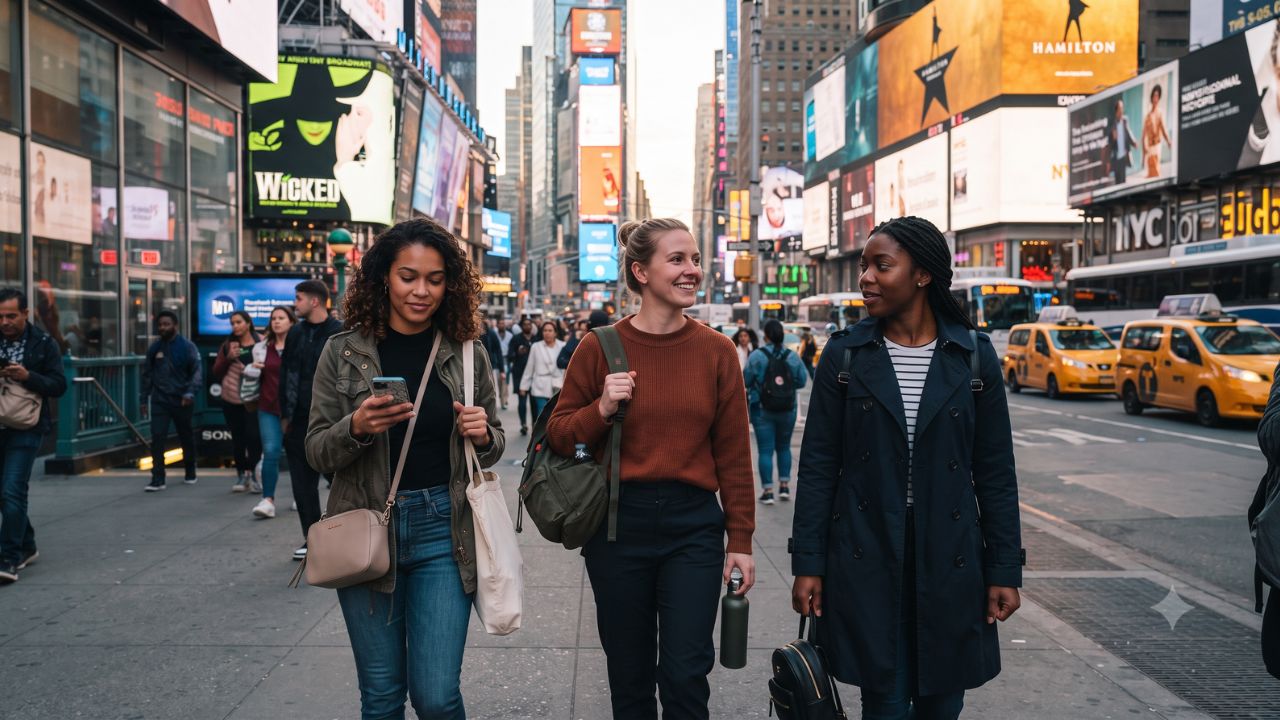
During August 2026, the entire New York City transit network documented zero murders, zero rapes, and zero shooting incidents, marking one of the safest summer transit periods on municipal record. At the same time, transit robberies dropped to 27 across all five boroughs, representing the lowest single-month tally ever recorded by the New York City Police Department. For independent travelers planning to cross Manhattan avenues alone or ride the midnight express trains to Brooklyn, these official benchmarks reflect a noticeable turning point in urban safety that makes solo exploration more practical than it has been in years.
Urban Safety Shifts Across the Five Boroughs
Navigating a metropolis of over eight million residents requires distinguishing between sensationalized headlines and verified municipal data. According to official figures released by the NYPD, overall major crime across New York City declined 6.6% in August 2026 compared to August 2025, falling from 11,000 incidents down to 10,276. Significant reductions appeared across high-severity categories: homicides fell by 34.3%, robberies decreased by 13.3%, burglaries dropped by 9.1%, and grand larceny contracted by 6.5%.
Gun violence also registered sustained declines throughout the warmest months of the year. August 2026 saw 61 shooting incidents citywide compared to 77 during the same month in 2025, delivering a 20.8% year-over-year reduction. Looking at the entire summer quarter spanning June, July, and August, the city logged a combined 195 shooting incidents, representing the lowest summer total ever documented in modern department recordkeeping.
For travelers organizing their itineraries through New York City Tourism + Conventions, these numbers provide grounding context. While conditions naturally shift between individual precincts and commercial corridors, the broader statistical trajectory shows an urban environment where independent sightseeing is supported by declining violent crime and strengthened patrol visibility.
What Makes New York City Different for Independent Exploration
Unlike decentralized American cities where travelers remain tethered to rental cars or isolated hotel zones, New York functions on constant pedestrian momentum. Solo travelers do not stand out here; eating alone at a diner counter in Chelsea, reading on a bench in Washington Square Park, or taking a single seat at a Broadway matinee is standard daily behavior for hundreds of thousands of local residents.
The physical layout of Manhattan simplifies orientation for first-time visitors. Above Houston Street, the numbered grid system allows you to calculate walking distances with exact precision (twenty north-south blocks equal roughly one mile). When you branch off the grid into the 19th-century street patterns of Greenwich Village, SoHo, or the Financial District, the density of ground-floor retail, corner bodegas, and residential walk-ups ensures active street life from dawn until past midnight.
Connecting it all is the 24-hour network operated by the Metropolitan Transportation Authority. The subway links Manhattan with Brooklyn, Queens, the Bronx, and the ferry connections to Staten Island without requiring constant taxi expenses. Because the system runs continuously, you are never stranded when an evening museum lecture or jazz set runs late, provided you understand how station layouts and train schedules adapt during off-peak hours.
Official NYPD Crime Trends: Summer 2025 vs. Summer 2026
To understand how urban safety conditions have evolved across the city, the table below highlights key performance metrics published by the NYPD for August 2026 compared with the previous year:
| Metric / Category | August 2025 | August 2026 | Year-on-Year Change | Key Safety Context |
|---|---|---|---|---|
| Total Major Citywide Crimes | 11,000 | 10,276 | -6.6% | Comprehensive index across all five boroughs |
| Murder | Baseline (2025) | Reduced count | -34.3% | Steepest individual major crime reduction |
| Robbery | Baseline (2025) | Reduced count | -13.3% | Notable drop along commercial walking corridors |
| Burglary | Baseline (2025) | Reduced count | -9.1% | Residential and business property offenses |
| Grand Larceny | Baseline (2025) | Reduced count | -6.5% | Includes unattended property and bag theft |
| Shooting Incidents (August) | 77 | 61 | -20.8% | Continued downward momentum in gun violence |
| Summer Shootings (Jun–Aug) | Historical counts | 195 | Lowest on Record | Citywide lowest summer quarter tally recorded |
| Subway Transit Robberies | Historical counts | 27 | Lowest on Record | Lowest monthly transit robbery total recorded |
| Subway Violent Crimes | Historical counts | 0 | 0 Incidents | Zero murders, rapes, or shootings in August 2026 |
Visitor Insider Tips
Experiencing New York City safely and smoothly as a solo traveler relies on specific habits and transit know-how that locals practice instinctively:
- Look for the Subway Zebra Board: When waiting on subway platforms late at night, look up toward the ceiling near the middle of the platform for a suspended black-and-white striped board. The train conductor's window aligns directly with this marker when the train stops. Boarding the car directly in front of the conductor guarantees you ride with an active MTA crew member.
- Guard Against Opportunistic Theft: The NYPD notes that unattended property theft accounts for nearly half of all subway crime. Never place your smartphone loosely in an open coat pocket or leave your bag slung over the back of a restaurant chair. Keep bags zipped and worn across your chest on crowded train platforms and while passing through dense plazas like Times Square.
- Pick the Right Lodging Base: For first-time solo visitors, Midtown Manhattan provides walkable proximity to major theater venues and Central Park, while the Upper West Side and Upper East Side offer quieter, tree-lined residential streets near cultural institutions. Lower Manhattan gives you straightforward pedestrian access to the waterfront paths overseen by the National Park Service at Castle Clinton and the Brooklyn Bridge pedestrian boardwalk.
- Avoid Tourist Ticket Hustles: Never buy Broadway vouchers, comedy club wristbands, or harbor cruise passes from street sellers approaching you near Battery Park or 42nd Street. Always purchase tickets directly through venue box offices, official apps, or accredited visitor kiosks.
- Pace Your Walking Distances: Solo travelers frequently encounter fatigue by attempting to pack three neighborhoods, two museums, and ten miles of walking into a single afternoon. Over-exhaustion reduces situational awareness. Build midday recovery pauses into public reading rooms like the Stephen A. Schwarzman Building on Fifth Avenue.
Cultural and Environmental Context
New York's tourism economy directly shapes the daily life of residential neighborhoods. Over the past decade, the rapid influx of independent visitors into historic enclaves like the West Village and Lower East Side has spurred municipal initiatives to protect small independent businesses, historic cast-iron architecture, and long-standing community gardens from retail displacement.
Simultaneously, the city's reliance on public mass transit makes New York one of the most energy-efficient metropolitan areas per capita in North America. By choosing the subway, municipal buses, and walking routes over individual rideshare vehicles, solo travelers directly minimize vehicular congestion in dense street corridors and reduce carbon emissions across the Hudson and East River transit sheds. Respecting quiet hours on residential side streets and supporting local neighborhood bakeries, immigrant-run eateries, and independent bookstores ensures that your tourism dollars contribute directly to the communities you explore.
FAQ: Visiting New York City 2026
Is the New York City subway safe for solo travelers late at night?
Yes. August 2026 recorded zero subway murders, shootings, or rapes, alongside record-low robberies. For late journeys, stand near the platform's black-and-white conductor marker and ride in the middle car with the train operator.
What should I do in an emergency while visiting New York?
Dial 911 immediately from any mobile phone or public emergency call box for police, fire, or medical response. For non-urgent municipal inquiries or noise concerns, contact the city information line by dialing 311.
Which Manhattan neighborhoods are best for first-time solo travelers?
Midtown offers central transit access to major sights, while Greenwich Village and SoHo provide lively dining and pedestrian streets. The Upper West Side provides quiet residential surroundings with direct access to Central Park and museums.
How can I avoid the most common tourist scams in New York?
Avoid purchasing attraction tickets, CDs, or ferry passes from street solicitors in Times Square or Battery Park. Keep your phone secure on public transit, download offline street maps, and use contactless payment methods for transit.
Mastering New York City on your own terms comes down to matching the pace of the street, riding with the conductor car, and letting the city unfold block by block.
Related Travel Guides
Disclaimer
This article is for informational and educational purposes only. It does not constitute legal, financial, or professional advice. While we strive to provide accurate and up-to-date information, travel policies, regulations, and conditions change rapidly. Always verify information with official sources before making travel decisions. Nomad Lawyer makes no representations about the accuracy, reliability, completeness, or suitability of the information provided. Readers should consult qualified professionals for advice specific to their circumstances. The views expressed in this article are those of the author and do not necessarily reflect the views of Nomad Lawyer.
Raushan Kumar
Founder & Lead Developer
Full-stack developer with 11+ years of experience and a passionate traveller. Raushan built Nomad Lawyer from the ground up with a vision to create the best travel and law experience on the web.
Learn more about our team →