
New York Rallies Alongwith Hawaii, Florida and Others Face Travel Cost Pressure As US Airfares Surge 23.4% And Hotels Rise 5.1%
New York Rallies Alongwith Hawaii, Florida and Others Face Travel Cost Pressure As US Airfares Surge 23.4% And Hotels Rise 5.1%

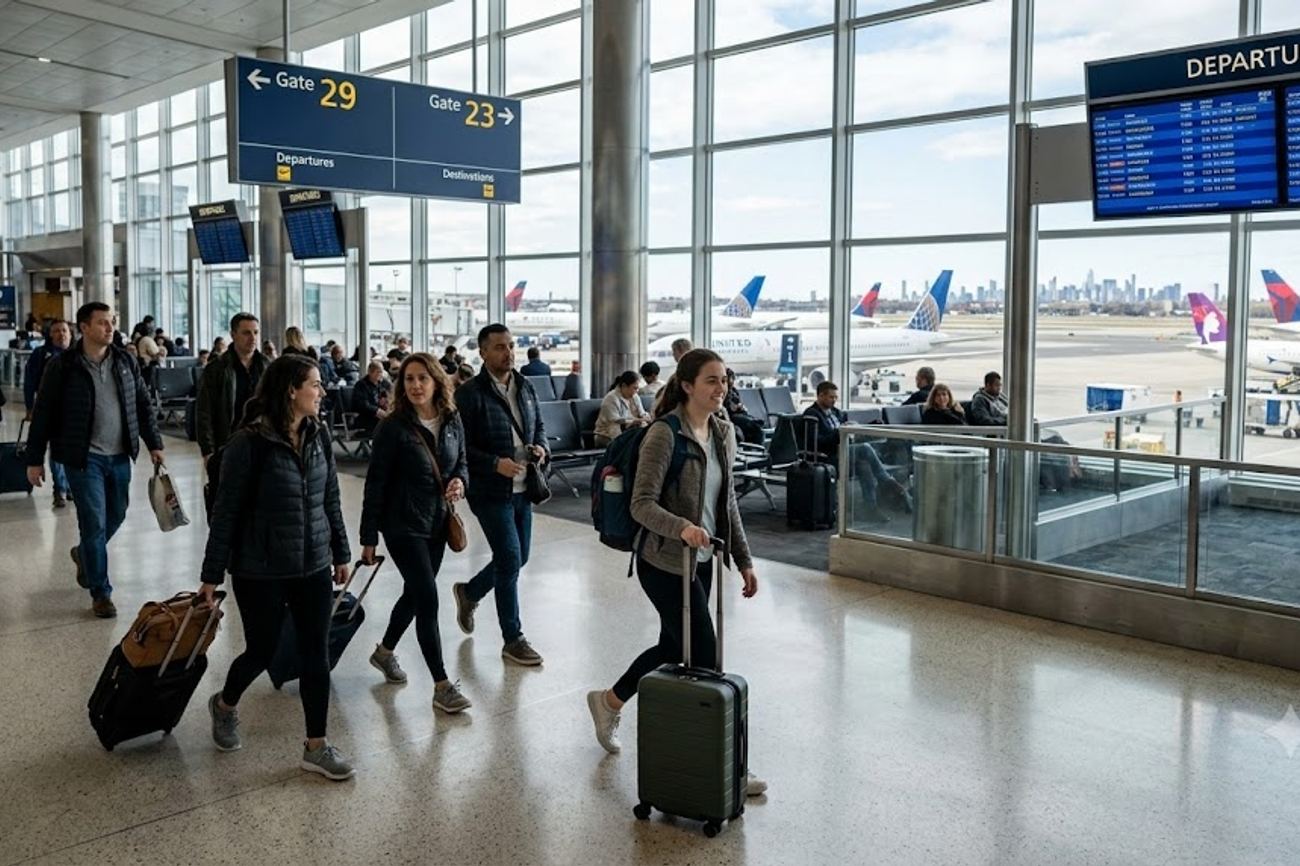
Image generated by AI
Imagine a family of four planning a summer getaway to Honolulu, only to find that their typical flight budget has been obliterated by a 23.4% surge in airfares. As they pivot to a New York City itinerary, they discover that hotel rates have climbed 5.1%, forcing them to choose between a cramped room in Manhattan or a lengthy commute from the outer boroughs. This is the current reality for millions of travelers navigating a US tourism market where operational costs are being passed directly to the consumer.
The 2026 US Travel Cost Surge: A Data Breakdown
The American tourism sector is currently grappling with a significant pricing correction driven by escalating operating expenses and shifting import economics. According to the latest industry data, airfares have spiked by 23.4% year-over-year, while hotel prices have seen a 5.1% increase. These figures are not isolated incidents but are the result of broader economic pressures affecting the hospitality and aviation supply chains.
A primary driver of this inflation is the rising cost of imports. In August 2026, import prices rose by 0.7% month-over-month and stand at 7.0% higher than they were a year ago. For the travel industry, this is a systemic issue. Airlines are facing higher costs for specialized equipment and operational supplies, while hotels are seeing price hikes for the furniture, technology, and renovation materials required to maintain luxury standards. Even the culinary experience of a vacation is under pressure, as restaurants face increased costs for imported ingredients.
Despite these headwinds, consumer resilience remains surprisingly high. US retail sales grew by 1.2% in August 2026, with strong performance in online shopping, electronics, and dining. This suggests that while travelers are feeling the pinch, they are still prioritizing experiences over savings, though they are becoming far more strategic about where and how they spend their discretionary income.
High-Pressure Tourism Hubs and Impact Levels
The burden of these price increases is not distributed evenly across the United States. Certain "gateway" cities—those relying heavily on international arrivals or long-haul domestic flights—are experiencing the most acute pressure.
| City | State | Primary Drivers | Pressure Factors | Impact Level |
|---|---|---|---|---|
| New York City | New York | International, Broadway, Business | Extreme hotel rates, dining, transport | Very High |
| Honolulu | Hawaii | Beach, Resorts, International | Airfare, accommodation, import costs | Very High |
| Miami | Florida | Cruises, Luxury, International | Hotel rates, food, premium travel | High |
| Los Angeles | California | Entertainment, Events, International | Accommodation, transport expenses | High |
| Las Vegas | Nevada | Resorts, Conventions, Gaming | Resort fees, hotel and ticket prices | High |
| Boston | Massachusetts | Education, History, Coastal | Urban travel, accommodation costs | Moderate to High |
| Seattle | Washington | Cruises, Business, PNW Tourism | Visitor costs, accommodation | Moderate to High |
In New York City, the pressure has reached a tipping point where budget-conscious travelers are actively seeking alternatives to Manhattan. This has led to a noticeable trend of shorter visitor stays and a migration toward cheaper accommodation in the outer boroughs. In Honolulu, the situation is more precarious due to the city's total reliance on long-distance air travel and imported goods, making it highly susceptible to the 23.4% airfare jump.
Your Rights as a Passenger
When airfares surge and operational costs lead to "efficiency" measures, passengers often face the brunt of the fallout in the form of delays, cancellations, or unexpected fee hikes. Depending on where your journey begins or ends, you are protected by different legal frameworks.
For Flights Departing from the EU or UK If your flight to a US destination (like NYC or Miami) departs from an EU or UK airport, you are protected by EU261/2004 or the UK equivalent. If your flight is cancelled or delayed by more than three hours for reasons within the airline's control (e.g., staffing issues or technical faults), you may be entitled to compensation up to €600 (£520) per person. Note that "extraordinary circumstances" such as weather or air traffic control strikes generally exempt the airline from paying compensation, though they must still provide "duty of care" (meals and hotel). You can verify your rights through the UK Civil Aviation Authority.
For US-Based Flights and Departures US passenger rights are primarily governed by the Department of Transportation (DOT). Unlike the EU, the US does not have a mandatory fixed-sum compensation law for delays. However, new DOT rules regarding "Automatic Refunds" are critical. If your flight is significantly changed or cancelled, you are entitled to a full refund of the ticket price—including taxes—regardless of whether the ticket was "non-refundable." You should not be forced to accept a travel voucher. For detailed guidance on filing a complaint or requesting a refund, visit the US Department of Transportation.
Hotel and Resort Fee Transparency In cities like Las Vegas and New York, "hidden" resort fees are a major point of contention. While these are often legal, they must be disclosed. If a hotel fails to disclose mandatory fees at the time of booking, you may have grounds for a partial refund through your credit card issuer or the booking platform.
Rebooking Strategy and Alternatives
With airfares up 23.4% and hotel costs rising, the traditional "book and go" method is no longer financially viable for many. To mitigate these costs, consider the following tactical shifts:
1. The "Secondary Hub" Pivot Instead of flying directly into high-pressure hubs like JFK (New York) or HNL (Honolulu), look for alternative entry points. For New York, check flights into Newark (EWR) or Stewart (SWF). For Florida, consider flying into Fort Lauderdale (FLL) instead of Miami (MIA) and using the Brightline rail system to reach your final destination.
2. Strategic Rebooking and Tracking Use tools like FlightAware or Flightradar24 to monitor flight patterns and identify which carriers are maintaining more consistent schedules. If you are facing a cancellation, do not wait in the airport line. Use the airline's mobile app to rebook immediately or call their international support lines, which often have shorter queues than domestic ones.
3. Accommodation Arbitrage As New York and Honolulu see a surge in hotel rates, the value proposition of short-term rentals or "shoulder-neighborhood" hotels increases. In NYC, look toward Long Island City or Jersey City. In Las Vegas, consider hotels just off the Strip to avoid the most aggressive resort fee hikes.
4. Refund vs. Voucher Trade-off If an airline offers you a voucher due to a disruption, calculate the value. Given the 23.4% rise in fares, a voucher may be worth less in "real" travel power than a cash refund that you can then use to book a more affordable alternative carrier or a different destination entirely.
FAQ: US Travel Cost Pressure 2026
Am I entitled to compensation for the 23.4% airfare increase? No. Airlines are permitted to adjust prices based on market demand and operating costs. Compensation only applies to flight disruptions (cancellations/delays) under specific laws like EU261 or DOT refund rules.
Can I get a full refund if my flight is cancelled due to "operational costs"? Yes. Under US DOT rules, if the airline cancels your flight for any reason, you are entitled to a full cash refund to your original payment method, not just a travel credit.
What are the best alternative routes to avoid high NYC hotel costs? Consider staying in New Jersey or the outer boroughs (Queens/Brooklyn) and utilizing the MTA subway system. Alternatively, explore "secondary cities" like Philadelphia or Boston for similar urban experiences at a lower price point.
How do I fight unfair resort fees in Las Vegas or Miami? Ensure the fee was disclosed during the booking process. If it was hidden until checkout, document the lack of disclosure and file a dispute with your credit card company or the Better Business Bureau.
Travel is no longer just about the destination; in 2026, it is about the strategy you use to get there.
Tags: US-Airfare-Surge-2026, DOT-Refund-Rules, EU261-Compensation, NYC-Tourism-Costs, Honolulu-Travel-Pressure, US-Hospitality-Inflation
Related Travel Guides
- San Salvador Lights Up as Festival Ícaro Unveils Bold Salvadoran Animation
- Ireland’s Galway Oyster Festival Wins Global Attention as Seafood Tourism Celebrates Europe’s Best Autumn Experiences: All You Need to Know
- Tierra del Fuego Takes Over FIT 2026 With 50 Tourism Providers and a Game-Changing Argentina-Chile Route
Disclaimer
This article is for informational and educational purposes only. It does not constitute legal, financial, or professional advice. While we strive to provide accurate and up-to-date information, travel policies, regulations, and conditions change rapidly. Always verify information with official sources before making travel decisions. Nomad Lawyer makes no representations about the accuracy, reliability, completeness, or suitability of the information provided. Readers should consult qualified professionals for advice specific to their circumstances. The views expressed in this article are those of the author and do not necessarily reflect the views of Nomad Lawyer.
Raushan Kumar
Founder & Lead Developer
Full-stack developer with 11+ years of experience and a passionate traveller. Raushan built Nomad Lawyer from the ground up with a vision to create the best travel and law experience on the web.
Learn more about our team →