
Ireland’s Galway Oyster Festival Wins Global Attention as Seafood Tourism Celebrates Europe’s Best Autumn Experiences: All You Need to Know
Ireland’s Galway Oyster Festival Wins Global Attention as Seafood Tourism Celebrates Europe’s Best Autumn Experiences: All You Need to Know

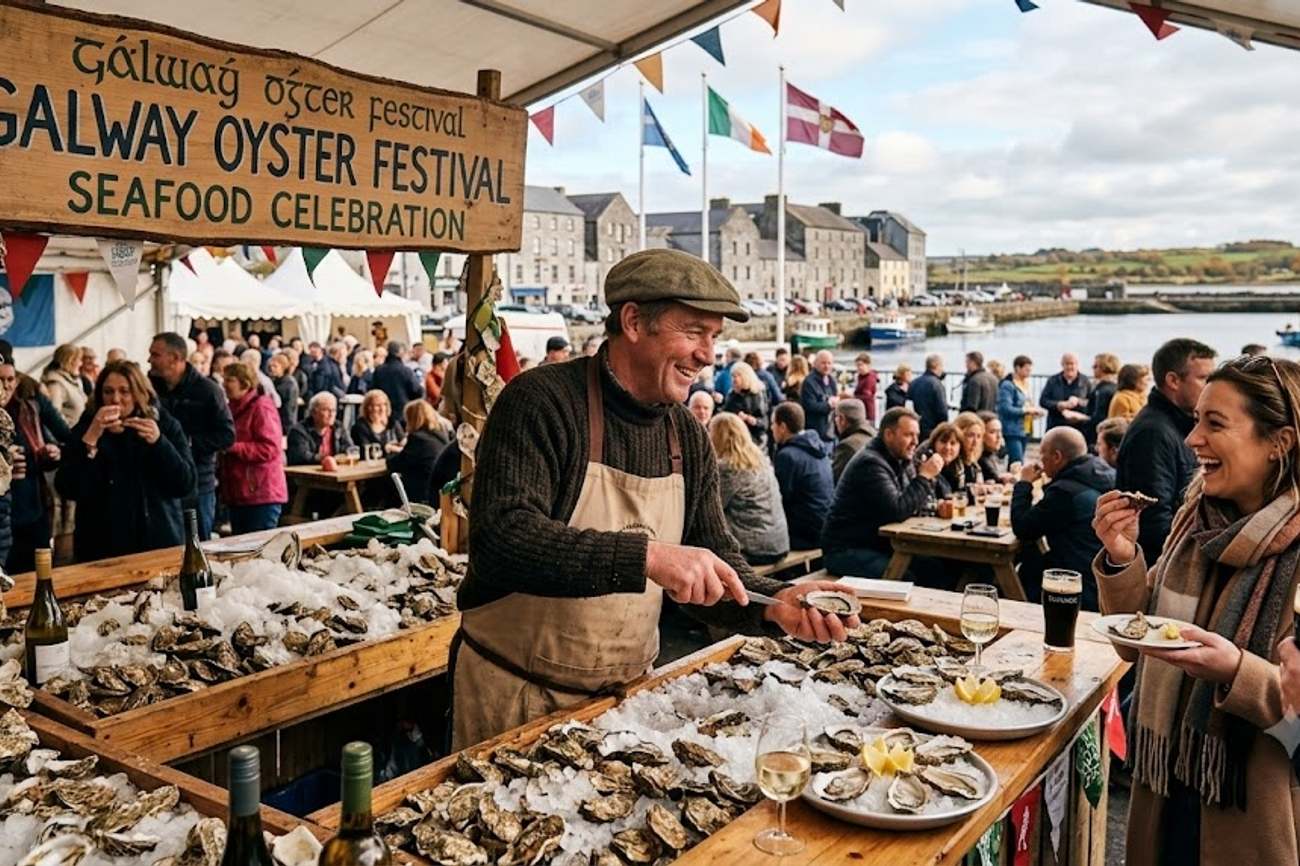
Image generated by AI
Culinary tourism in Western Europe has shifted from a secondary travel motivator to a primary driver of destination selection, with seasonal food events now capable of offsetting the traditional "shoulder season" dip in occupancy. The Galway International Oyster and Seafood Festival, entering its 72nd year in 2026, serves as a primary data point for this shift, leveraging a hyper-specific regional product to maintain international visitor flows into late September.
The Gastronomy Pivot in Numbers
The 2026 iteration of the Galway International Oyster and Seafood Festival, scheduled for September 25 to 27, highlights a sophisticated integration of niche culinary competition and regional tourism. A critical metric of the event's global reach is the World Oyster Opening Championship, which is projected to feature competitors from 17 different nations in 2026. This international participation rate transforms a local maritime celebration into a global sporting and culinary event, creating a "destination anchor" that attracts a demographic of high-spending, experience-seeking travelers.
The festival's operational model focuses on a multi-sector economic impact. By concentrating high-density tourism into a three-day window in late September, the event generates a surge in demand across five specific hospitality verticals: accommodation, dining establishments, transport services, local seafood production, and regional attractions. This concentration of activity is a strategic move to extend the average length of stay for visitors who might otherwise only visit Ireland during the peak summer months.
According to data from the World Tourism Organization (UNWTO), the trend toward "experience-based travel" is accelerating, and Galway's model of combining the Wild Atlantic Way's natural scenery with a specific culinary event aligns with this global trajectory. The festival does not operate in isolation but acts as a gateway to the broader western coastal economy, pushing visitor spending beyond the city center and into the rural coastal villages and seafood producers of the Atlantic coast.
Comparative Regional Benchmarks
When analyzed against the wider European culinary map, Galway's approach mirrors the success of specialized gastronomy hubs in Italy, France, and Spain. However, the Irish model is distinct in its focus on "maritime identity" rather than just agricultural produce. While France may lead in cheese and wine festivals and Italy in vineyard-centric tourism, Galway is carving a niche in "blue economy" tourism—where the attraction is the direct link between the Atlantic environment and the plate.
The following table compares the strategic focus of leading European culinary tourism models to illustrate where Galway fits within the competitive landscape:
| Region/Country | Primary Culinary Driver | Tourism Seasonality Strategy | Market Reach |
|---|---|---|---|
| Galway, Ireland | Native Oysters/Atlantic Seafood | Late September (Shoulder Season) | Global (17+ nations in competition) |
| Tuscany, Italy | Wine/Olive Oil | Autumn Harvest (September-November) | Continental & North American |
| Bordeaux, France | Viticulture/Fine Dining | Year-round / Harvest Peaks | Global Luxury Market |
| Andalusia, Spain | Gastronomy/Harvest | Spring/Autumn | Mediterranean & European |
| Bavaria, Germany | Seasonal Beer/Cultural Foods | Late September/October | Global Mass Market |
This data indicates that Galway is positioning itself not as a general tourism hub, but as a specialized culinary destination. By focusing on the 72-year legacy of the oyster season, the city creates a sense of authenticity and "time-bound" urgency that encourages travelers to book specifically for the September window.
Practical Traveler Advisory and Strategic Insights
For the individual traveler, the professionalization of culinary festivals means that "winging it" is no longer a viable strategy for high-profile events like the Galway Oyster Festival. The data regarding the 2026 event suggests a high concentration of international visitors within a narrow 72-hour window (September 25-27).
If you are planning to visit Galway for the 2026 festival, the following data-driven booking strategies are recommended:
- Accommodation Lead Times: Because the festival creates a spike in "increased accommodation demand" in a city with finite hotel inventory, booking 6 to 9 months in advance is essential. The surge in demand is concentrated in the city center and nearby coastal villages.
- Route Planning: To maximize the value of the trip, travelers should integrate the festival with the Wild Atlantic Way. Data shows that visitors who combine the festival with regional exploration have longer stays and a higher satisfaction rate with "authentic" experiences.
The Galway Oyster Festival is a premier event in Ireland's culinary calendar, attracting visitors from around the world to sample the country's renowned seafood. For travelers planning to attend the festival, visit the official website of the Irish Tourism Board for information on accommodation, transportation, and festival schedules. With its unique blend of food, music, and culture, the Galway Oyster Festival is an unforgettable experience that showcases the best of Ireland's autumn festivities. 3. Event Scheduling: The World Oyster Opening Championship is the peak attraction. Travelers should prioritize securing tickets or viewing positions for this specific event early, as the participation of 17 nations increases the global visibility and crowd density of this particular segment of the festival.
The Trajectory of Blue Tourism
Looking forward, the Galway International Oyster and Seafood Festival is a bellwether for the rise of "Blue Tourism"—a subset of sustainable travel that focuses on the ocean's resources. As travelers move away from mass tourism toward sustainable, community-focused models, the festival's emphasis on local producers and sustainable seafood production becomes a competitive advantage.
The trajectory suggests that Ireland will continue to diversify its tourism product to reduce reliance on the summer peak. By leveraging the "native oyster season" as a marker, Galway is creating a repeatable, annual reason for international return visits. We can expect to see an increase in "culinary corridors"—where tourists visit multiple seafood hubs along the Atlantic coast, using the Galway festival as the primary anchor.
Industry data from IATA regarding regional flight patterns often shows a dip in autumn; however, the growth of these specialized festivals is likely to flatten that curve, creating a more stable year-round revenue stream for the western region of Ireland. The integration of "maritime identity" with "international competition" is a scalable model that other coastal cities in Europe are likely to emulate to attract the "foodie" demographic.
FAQ: Galway Seafood Tourism 2026
Will hotel prices increase during the festival? Yes. The data indicates "increased accommodation demand" from September 25 to 27, 2026. Expect premium pricing in Galway city and surrounding coastal areas. Booking early is the only way to avoid peak surge pricing.
Is this festival suitable for non-seafood eaters? While seafood is the anchor, the festival integrates "live entertainment, music, and cultural activities." It is designed as a broader maritime culture celebration, meaning there are significant non-culinary attractions for general travelers.
Which airlines are expanding to support this trend? While specific carrier data for 2026 is pending, the general trend in Irish tourism is an increase in regional connectivity to the West. Check for increased autumn capacity into Shannon Airport or Galway-adjacent hubs.
Is the 2026 festival larger than previous years? With the World Oyster Opening Championship expecting competitors from 17 nations, the international scale of the event is expanding, suggesting higher visitor numbers than historical averages.
The shift from generic sightseeing to precision-targeted culinary tourism is turning the Atlantic coast into a high-value gastronomic corridor.
Tags: GalwayOysterFestival2026, IrelandCulinaryTourism, BlueEconomyTravel, AtlanticCoastGrowth2026, SeafoodTourismMetrics
Related Travel Guides
- Tierra del Fuego Takes Over FIT 2026 With 50 Tourism Providers and a Game-Changing Argentina-Chile Route
- Assam’s Concert Tourism Revolution Begins As Guwahati Welcomes BURPP Festival 2026 And Global Travel Opportunities
- USA and Barbados Connected Through Carnival Tourism as Miami Broward Carnival 2026 Showcases Caribbean Heritage Worldwide
Disclaimer
This article is for informational and educational purposes only. It does not constitute legal, financial, or professional advice. While we strive to provide accurate and up-to-date information, travel policies, regulations, and conditions change rapidly. Always verify information with official sources before making travel decisions. Nomad Lawyer makes no representations about the accuracy, reliability, completeness, or suitability of the information provided. Readers should consult qualified professionals for advice specific to their circumstances. The views expressed in this article are those of the author and do not necessarily reflect the views of Nomad Lawyer.
Kunal K Choudhary
Co-Founder & Contributor
A passionate traveller and tech enthusiast. Kunal contributes to the vision and growth of Nomad Lawyer, bringing fresh perspectives and driving the community forward.
Learn more about our team →