
New Australian Airport Board Appointments and Infrastructure Push to Drive Tourism Growth by 2030
Australia is restructuring aviation leadership and investing over 20 billion AUD in infrastructure to modernize borders and boost international tourism visitor numbers.

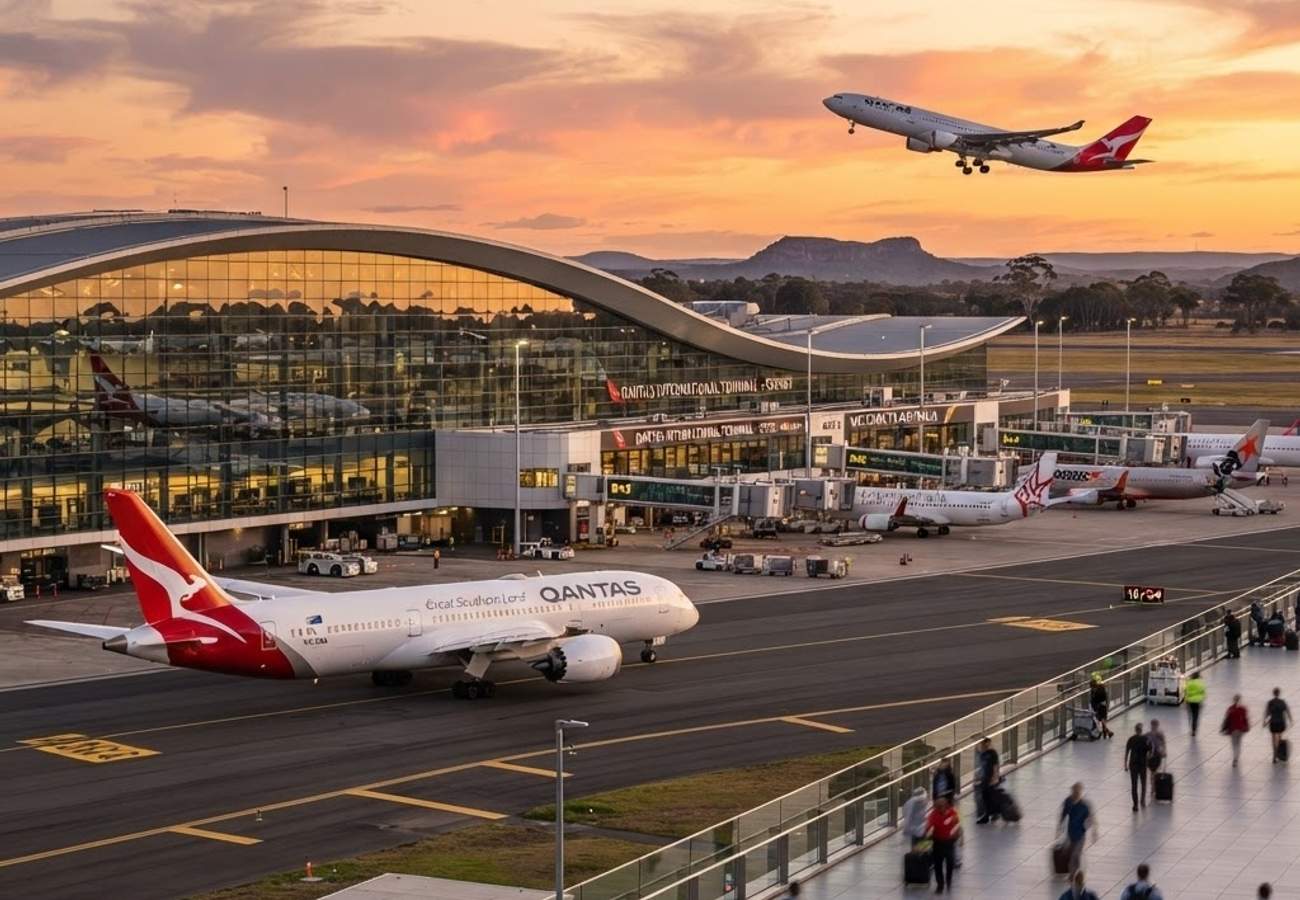
Image generated by AI
Australia is aggressively restructuring its aviation leadership and committing massive capital investments to secure its position as a premier global destination. With a strategic eye toward 2030, the nation is synchronizing board appointments across airports, regulatory bodies, and tourism agencies to streamline trade flows and modernize border security.
The shift comes as the industry prepares for a surge in international travel volumes, necessitating a tighter integration between the entities that manage aircraft safety, terminal operations, and national marketing. By placing operational aviation experts into strategic governance roles, Australia aims to eliminate the silos that historically separated airport management from tourism promotion.
Strategic Leadership Changes at Australian Airports Association
The Australian Airports Association (AAA) has recently expanded its board to integrate deeper legal and operational expertise. Simon McPhee, the general counsel and chief corporate services officer at Perth Airport, has joined as a director. Simultaneously, Katie Cooper, the chief executive of Launceston Airport, has been appointed to a member-elected position representing the interests of large-scale airports.
These appointments are not merely administrative; they reflect a broader industry pivot toward enhancing non-aeronautical revenue and strengthening airline partnerships. As airports evolve into multi-modal commercial hubs, the presence of executives who manage complex corporate services and regional operations is intended to accelerate the delivery of passenger experience improvements and airfield capacity expansions.
The scale of the ambition is reflected in the financial commitments of the sector. Industry data indicates that Australian airports are planning infrastructure investments exceeding 20 billion Australian dollars over the next seven years. This funding is earmarked for:
- Construction of new piers to accommodate larger aircraft.
- Extensive runway modifications to increase flight frequency.
- Commercial developments to boost retail and hospitality revenue.
- Upgrades to long-haul connectivity and freight handling capabilities.
By aligning these multi-billion dollar projects with national tourism goals, the AAA aims to ensure that physical capacity keeps pace with the demand for increased visitor arrivals.
Regulatory Updates and Safety Oversight at CASA
Parallel to the commercial push, the federal government is ensuring that safety and regulatory frameworks evolve. In May 2026, the government appointed Greg Hughes to the board of the Civil Aviation Safety Authority (CASA) and confirmed the reappointment of chief executive Pip Spence.
CASA remains the primary entity responsible for enforcing safety standards across all airspace, aerodromes, and airlines. As carriers increase capacity on Asia Pacific routes, the board's focus has shifted toward regulatory modernization. This includes a transition toward risk-based oversight and the adoption of advanced digital air traffic tools, which are seen as essential for unlocking additional slot capacity at heavily congested gateway airports.
The regulatory environment is also being reshaped by a massive digital transformation of the border. The Australian government has committed more than 56 million Australian dollars to implement the Australia Travel Declaration nationwide. This digital system, which replaces traditional paper arrival cards, is scheduled for full rollout across all international airports and seaports by the end of 2027.
Integrating Aviation Expertise into Tourism and Trade Boards
A notable trend in the current governance shift is the "cross-pollination" of aviation leadership into tourism boards. This strategy ensures that destination marketing is grounded in the reality of airport capacity.
A prime example is the inclusion of Brisbane Airport CEO Gert-Jan de Graaff on the board of Tourism and Events Queensland. This arrangement allows the state's marketing strategies to be directly informed by the operational capabilities of one of its largest international gateways.
At the national level, Tourism Australia has bolstered its executive team by appointing Kath O’Brien as executive general manager of global markets. O’Brien brings over two decades of experience, including a significant tenure with Air New Zealand in Australia. Her role is specifically designed to bridge the gap between carriers, airports, and distribution partners to attract high-yield inbound travelers.
The broader Tourism Australia board has also been diversified to include experts in international trade and digital marketing. This blend of skills is intended to help the country compete for premium leisure and business event segments, both of which are heavily dependent on seamless long-haul air links.
Infrastructure Pipelines and Border Modernization
The physical manifestation of these leadership changes is evident in the massive capital works projects currently underway. The synergy between board-level strategy and on-the-ground construction is critical for the next phase of growth.
| Airport / Project | Investment Amount | Primary Focus |
|---|---|---|
| Melbourne Airport | 4.5 Billion AUD | International terminal capacity and passenger amenity |
| National Border Reform | 56 Million AUD | Digital Australia Travel Declaration rollout |
| Total Sector Pipeline | 20+ Billion AUD | Piers, runways, and commercial developments |
Industry leaders argue that physical terminal upgrades, such as the 4.5 billion AUD project at Melbourne Airport, will only reach their full potential if accompanied by the aforementioned border processing reforms. Without a modernized, digital border, new terminals risk becoming bottlenecks rather than gateways.
Why This Matters: The Impact on the Global Traveler
For the international traveler, these systemic changes mean a transition from fragmented airport experiences to a more integrated "journey ecosystem." When the person managing the airport also informs the tourism board, the result is a more cohesive experience—from the moment a flight is marketed in a foreign city to the moment the passenger clears customs via a digital declaration.
From a logistical standpoint, the investment in "slot capacity" and "digital air traffic tools" is the most critical development. For years, major Australian gateways have struggled with congestion. The shift toward risk-based regulatory oversight at CASA suggests that the government is prioritizing the efficient movement of aircraft over rigid, legacy bureaucratic processes.
Furthermore, the focus on "high-yield" and "premium leisure" segments indicates that Australia is shifting its strategy away from sheer volume and toward value. For the traveler, this likely translates to more luxury lounge expansions, streamlined "fast-track" border options, and a higher standard of on-airport retail and hospitality.
Australia is effectively rebuilding its aviation nervous system to ensure that by 2030, the physical infrastructure and the regulatory mindset are finally in sync.
Related Travel Guides
Disclaimer
This article is for informational and educational purposes only. It does not constitute legal, financial, or professional advice. While we strive to provide accurate and up-to-date information, travel policies, regulations, and conditions change rapidly. Always verify information with official sources before making travel decisions. Nomad Lawyer makes no representations about the accuracy, reliability, completeness, or suitability of the information provided. Readers should consult qualified professionals for advice specific to their circumstances. The views expressed in this article are those of the author and do not necessarily reflect the views of Nomad Lawyer.
Raushan Kumar
Founder & Lead Developer
Full-stack developer with 11+ years of experience and a passionate traveller. Raushan built Nomad Lawyer from the ground up with a vision to create the best travel and law experience on the web.
Learn more about our team →