
The Boeing 747-500: Why Aviation's Most Ambitious Stretch Never Left the Drawing Board
Breaking airline news and aviation industry updates for 2026.

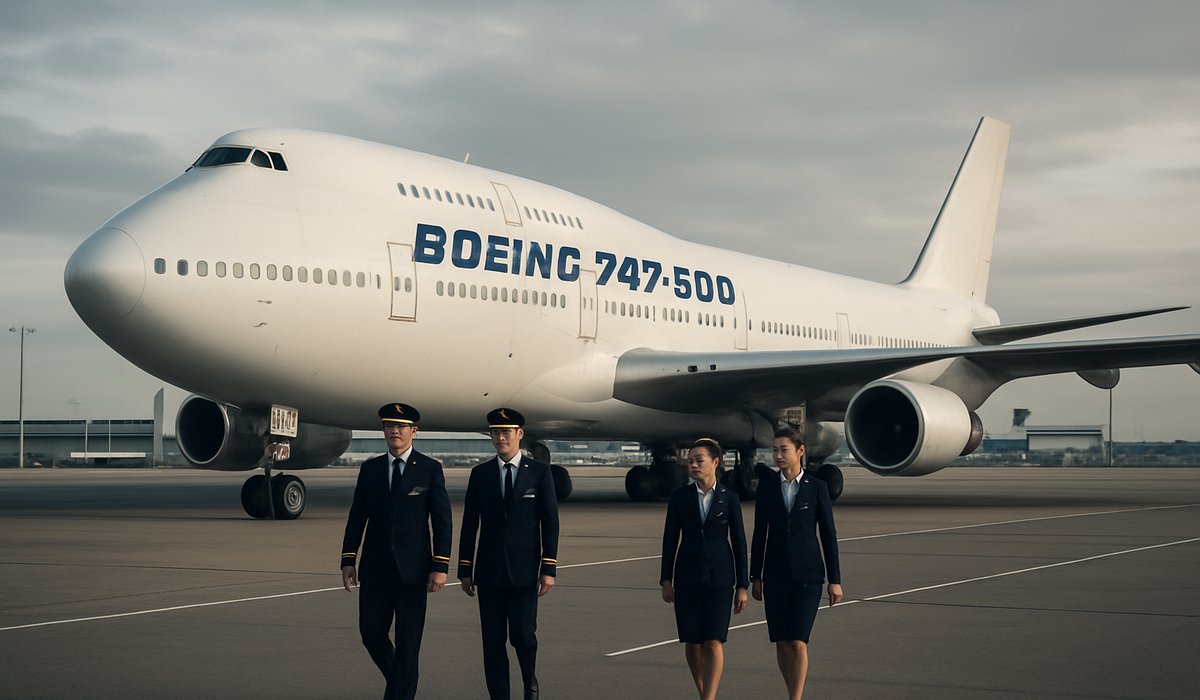
Image generated by AI
The Boeing 747-500: Why Aviation's Most Ambitious Stretch Never Left the Drawing Board
The aircraft that could have revolutionized long-haul travel remained a concept as Boeing pursued alternative strategies
A Visionary Design That Never Took Flight
Boeing's legendary 747 jetliner came tantalizingly close to receiving a radical evolutionary upgrade in the form of the 747-500—a stretched variant that would have merged the proven architecture of the 747-400 with cutting-edge technologies pioneered by the airline manufacturer's acclaimed 777 widebody. Despite preliminary designs and engineering enthusiasm, the ambitious project ultimately never advanced beyond the conceptual stage, representing one of aviation's most intriguing might-have-beens.
The Engineering Vision Behind the Concept
The proposed 747-500 represented Boeing's attempt to extend the operational lifespan of its iconic jumbo jet program by leveraging innovations that had defined the 777's success. The 777 had introduced revolutionary composite materials, advanced avionics systems, and fuel-efficient powerplants that fundamentally transformed commercial aviation when the aircraft debuted in the mid-1990s.
By incorporating these technological breakthroughs into an elongated 747 fuselage, engineers envisioned a super-stretched aircraft that could carry significantly more passengers while reducing operational costs—a compelling proposition for the international carriers that dominated long-haul routes during the late 1990s and early 2000s.
Why the Concept Remained Grounded
Several converging factors ultimately sealed the 747-500's fate. The 777 program itself was capturing market momentum and airline interest, reducing the commercial incentive to develop a stretched 747. Additionally, Boeing's development resources were increasingly allocated toward next-generation aircraft programs rather than variants of aging platforms.
The aviation market's trajectory also shifted. Rather than pursuing ultra-high-capacity single-deck configurations, carriers began diversifying their fleet strategies with twin-aisle, twin-engine aircraft that offered greater operational flexibility on varied route networks.
Legacy of an Unrealized Dream
Though the 747-500 never materialized, Boeing continued refining the 747 platform with successive variants including the 747-8, which eventually incorporated many technologies originally envisioned for the -500. The 747-8, introduced in 2011, represented the final and most advanced iteration of the jumbo jet line before the program concluded in 2023.
The 747-500's fate underscores how rapidly commercial aviation priorities evolve, and how even the world's largest aircraft manufacturer must continually reassess which development investments align with market realities.
FAQ: Boeing 747 Development and Aviation History
What was the Boeing 747-500 supposed to be? The 747-500 was a proposed stretched variant of the 747-400 that would have incorporated advanced technologies from the 777, designed to extend the jumbo jet's commercial viability into the 21st century.
Why was the 747-500 never built? Boeing prioritized the 777 program and shifted development resources toward next-generation aircraft. Market demand also shifted toward more flexible twin-engine widebodies rather than ultra-high-capacity variants.
Which Boeing 747 variant was ultimately produced instead? The 747-8, launched in 2011, became the final production variant and incorporated many of the advanced technologies originally conceptualized for the 747-500.
How did the 777's technology influence Boeing's aircraft design philosophy? The 777 introduced composite materials, advanced avionics, and fuel-efficient engines that became standard features in subsequent Boeing programs and shaped the industry's trajectory toward efficiency-focused design.
When did Boeing end 747 production? The 747 program concluded in December 2023 after more than 50 years in production, making it one of aviation's longest-running and most iconic aircraft programs.
Related Travel Guides
- Riyadh Air Launches London Heathrow Route, Shielding Premium Travelers From European Travel Chaos and Flight Cancellations
- Malaysia Airlines Expansion Chaos: New Routes to Tokyo, Beijing, Sydney, London Disrupt Global Flight Network in 2026
- Virgin Australia Queensland Flight Sale: 500,000 Domestic Seats Released
Disclaimer
This article is for informational and educational purposes only. It does not constitute legal, financial, or professional advice. While we strive to provide accurate and up-to-date information, travel policies, regulations, and conditions change rapidly. Always verify information with official sources before making travel decisions. Nomad Lawyer makes no representations about the accuracy, reliability, completeness, or suitability of the information provided. Readers should consult qualified professionals for advice specific to their circumstances. The views expressed in this article are those of the author and do not necessarily reflect the views of Nomad Lawyer.
Preeti Gunjan
Contributor & Community Manager
A passionate traveller and community builder. Preeti helps grow the Nomad Lawyer community, fostering engagement and bringing the reader experience to life.
Learn more about our team →