
This Nashville Museum Is Dedicated to African American Music

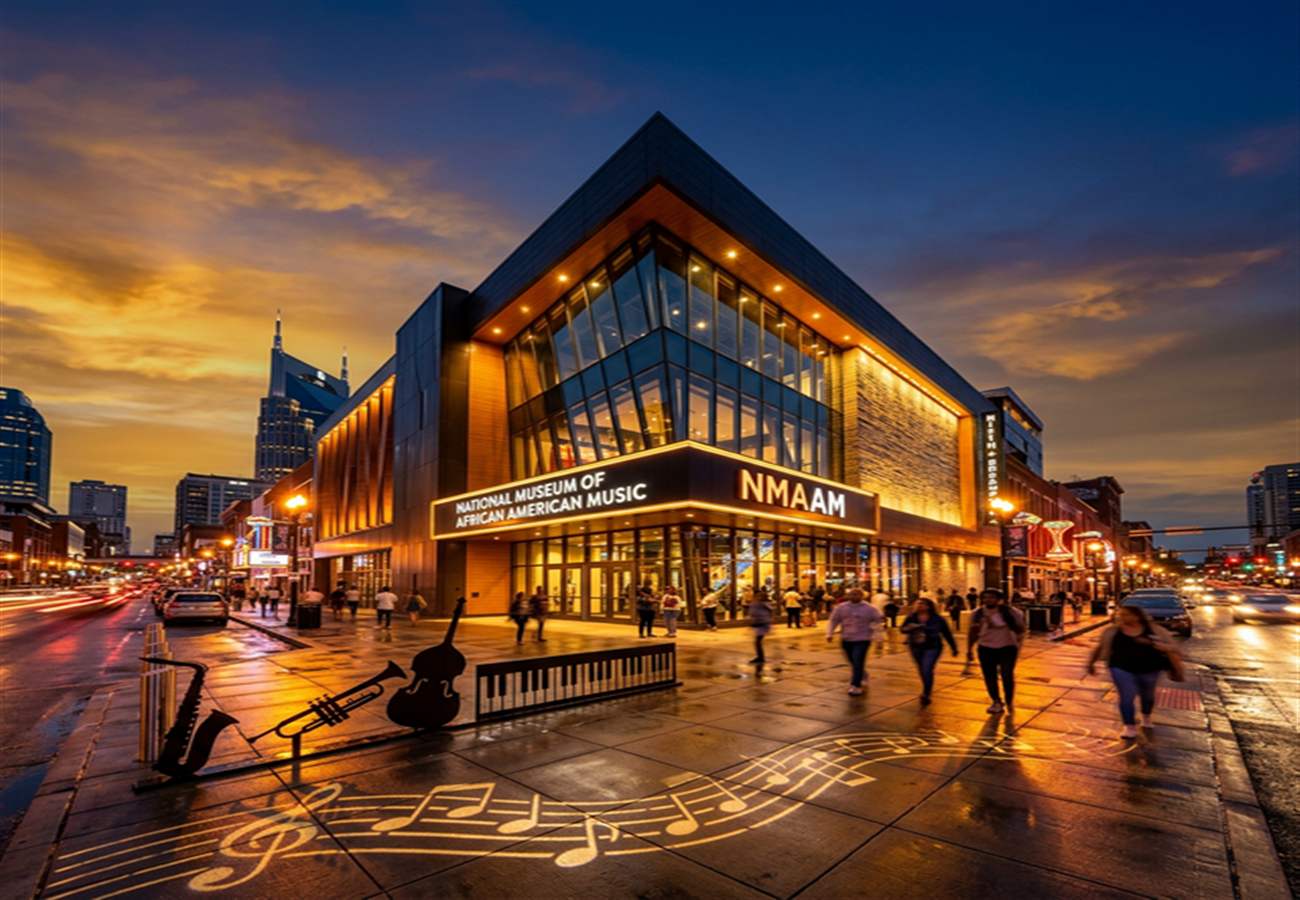
Image generated with AI
Nashville calls itself "Music City." But until January 2021, the city was missing an institution that fully told the story of the music that made America — and the African Americans who created it. The National Museum of African American Music (NMAAM), located in the heart of downtown Nashville, filled that gap in the most ambitious way imaginable: 56,000 square feet of immersive galleries, 1,600 artifacts, and a journey through more than 50 musical genres spanning hundreds of years of history. It is, simply put, one of the most important cultural institutions in the United States today.
A Two-Decade Vision Finally Realized
The idea for NMAAM was first proposed in 2002 by members of the Nashville Area Chamber of Commerce. The vision was simple but urgent: create a permanent home to preserve, celebrate, and educate the world about African American music, art, and culture. Over the following decade, the project's focus sharpened exclusively on music — the most globally resonant and culturally transformative contribution of African Americans to world civilization.
In 2021, after nearly 20 years of planning, fundraising, and development, NMAAM opened its doors at Fifth + Broadway in downtown Nashville. The location carries its own significance: Nashville's identity as Music City owes an enormous, often underacknowledged debt to Black American musicians, from the Fisk Jubilee Singers in the 1870s — who helped save Fisk University by touring the world performing spirituals — to the soul, blues, and gospel artists who defined the city's cultural DNA long before country music took the global spotlight.
The Rivers of Rhythm: How the Museum Is Organized
Walking into NMAAM is not like visiting a conventional museum. From the moment you enter, you receive an RFID wristband that becomes your personal companion through the experience. As you move through exhibits, you can save songs, videos, artist profiles, and even your own recordings directly to a digital account — a playlist of your personal journey through American music history.
The museum is organized around the concept of "Rivers of Rhythm" — an interactive timeline tracing 13 historical eras of African American music. The journey begins in the Roots Theater, where a 15-minute film lays the foundation: how African musical traditions, carried across the Atlantic by enslaved people, took root in American soil and grew into something the entire world would eventually borrow, sample, remix, and love.
Inside the Galleries: Five Unforgettable Exhibits
Wade in the Water — The Power of Gospel
The spiritual tradition is where everything begins. Wade in the Water traces religious music from African indigenous traditions through the coded freedom songs of the Underground Railroad, through the Golden Age of Gospel, and into the contemporary church music that still fills sanctuaries every Sunday. The gallery's emotional centerpiece is a live sing-along experience with the Nashville Super Choir — a moment visitors consistently describe as one of the most moving of any museum visit in their lives.
Crossroads — Where the Blues Were Born
The blues didn't arrive — they were built, note by note, in the work songs and field hollers of the Deep South and the Mississippi Delta. Crossroads tells that story with unflinching honesty, tracing the blues from its origins through its foundational influence on country music, rock and roll, and virtually every Western genre that followed. Visitors can step into a recording booth and cut their own blues track — leaving with something real.
A Love Supreme — The Language of Jazz
Named for John Coltrane's landmark 1965 album, A Love Supreme chronicles jazz from its Dixieland and New Orleans roots through swing, bebop, fusion, and the avant-garde. Artifacts from giants of the genre fill the space — instruments, handwritten scores, photographs, stage clothing — while audio and video installations let the music do what it has always done: speak directly to the soul.
One Nation Under a Groove — R&B, Soul, and Beyond
If the blues and gospel are America's foundation, One Nation Under a Groove is where that foundation went electric. The gallery documents R&B's emergence after World War II and its explosive evolution into soul, funk, disco, house, and techno. Artifacts from Whitney Houston, Prince, and other icons anchor an exhibit that connects postwar joy, Black cultural pride, political protest, and dancefloor euphoria into a single, thrilling narrative.
The Message — Hip-Hop's Revolution
The most contemporary gallery may also be the most kinetic. The Message drops visitors into New York's South Bronx in the 1970s — the moment and place where hip-hop was born from necessity, creativity, and community. DJ culture, breakdancing, graffiti, and streetwear all get their due, alongside an interactive beat-making station where visitors can compose their own hip-hop track. In an era when hip-hop is the world's dominant music genre, this gallery places its origins and its architects in the historical context they deserve.
The Artifacts: Touching History
NMAAM's collection of up to 1,600 artifacts is one of its most powerful assets. Among the highlights:
- Louis Armstrong's trumpet — the physical instrument of one of the 20th century's most influential artists
- Ella Fitzgerald's Grammy Award — concrete recognition of a voice that redefined what singing could be
- Stage clothing worn by Nat King Cole, Dorothy Dandridge, and Whitney Houston — garments that carried genius onto stages across the world
- Items from Lisa "Left Eye" Lopes — honoring one of the most dynamic performers in hip-hop history
Each artifact is not simply displayed — it is contextualized within the musical and cultural moment it represents, transforming objects into portals into lived history.
Living Events: NMAAM Beyond Its Walls
The museum is not content to be a static archive. Its calendar of programming keeps the institution alive year-round. Heartbeat Saturdays bring a resident DJ and live community engagement every week. Every June, Black Music Month transforms NMAAM into Nashville's cultural epicenter, with film screenings, live performances, and free admission events like the Bridge to Broadway Block Party — a celebration spanning blues, hip-hop, and country alike.
In June 2025, NMAAM launched its most ambitious Black Music Month yet: the "We Are Music City" celebration, featuring four signature events paying tribute to Nashville's 150-year legacy as Music City. The series coincides with "Jubilation!" — the museum's first-ever traveling exhibit, celebrating the legacy of the Fisk Jubilee Singers, the South's oldest Black collegiate ensemble, which is now touring national institutions.
For younger visitors, the "Soundtrack for All" program offers free admission for all youth under 18 every Tuesday, ensuring that the next generation can access this history without a financial barrier.
Plan Your Visit
Location: 510 Broadway, Nashville, TN 37203 — at the Fifth + Broadway complex in downtown Nashville, steps from the famous honky-tonks of Lower Broadway.
Hours: Open Tuesday through Sunday. Check nmaam.org for current hours and any special event schedules.
Admission: Adults and children's rates are available, with free youth admission on select days through the Soundtrack for All program. Free admission on Nissan Free Wednesdays during Black Music Month.
Tips: Allow at least 2–3 hours to experience the full museum. The RFID wristband experience is best enjoyed without rushing. The museum's gift shop carries books, music, and cultural items worth browsing.
Why NMAAM Matters
Every genre of American popular music traces its roots to African American creators. Rock, country, jazz, blues, hip-hop, R&B, gospel — the lineage is direct, documented, and undeniable. What NMAAM does, with remarkable craft and emotional intelligence, is make that truth impossible to brush past. It is not a side gallery in a larger institution. It is not a temporary exhibit. It is a 56,000-square-foot declaration that this music — and the people who made it — shaped the world.
If you're visiting Nashville, the honky-tonks of Broadway are fun. But NMAAM is essential.
Come for the music. Leave understanding where all the music came from.
Disclaimer
This article is for informational and educational purposes only. It does not constitute legal, financial, or professional advice. While we strive to provide accurate and up-to-date information, travel policies, regulations, and conditions change rapidly. Always verify information with official sources before making travel decisions. Nomad Lawyer makes no representations about the accuracy, reliability, completeness, or suitability of the information provided. Readers should consult qualified professionals for advice specific to their circumstances. The views expressed in this article are those of the author and do not necessarily reflect the views of Nomad Lawyer.
Raushan Kumar
Founder & Lead Developer
Full-stack developer with 11+ years of experience and a passionate traveller. Raushan built Nomad Lawyer from the ground up with a vision to create the best travel and law experience on the web.
Learn more about our team →