
Munich Living Costs and Relocation Guide 2026: Housing Realities, Transit Networks, and Local Culture

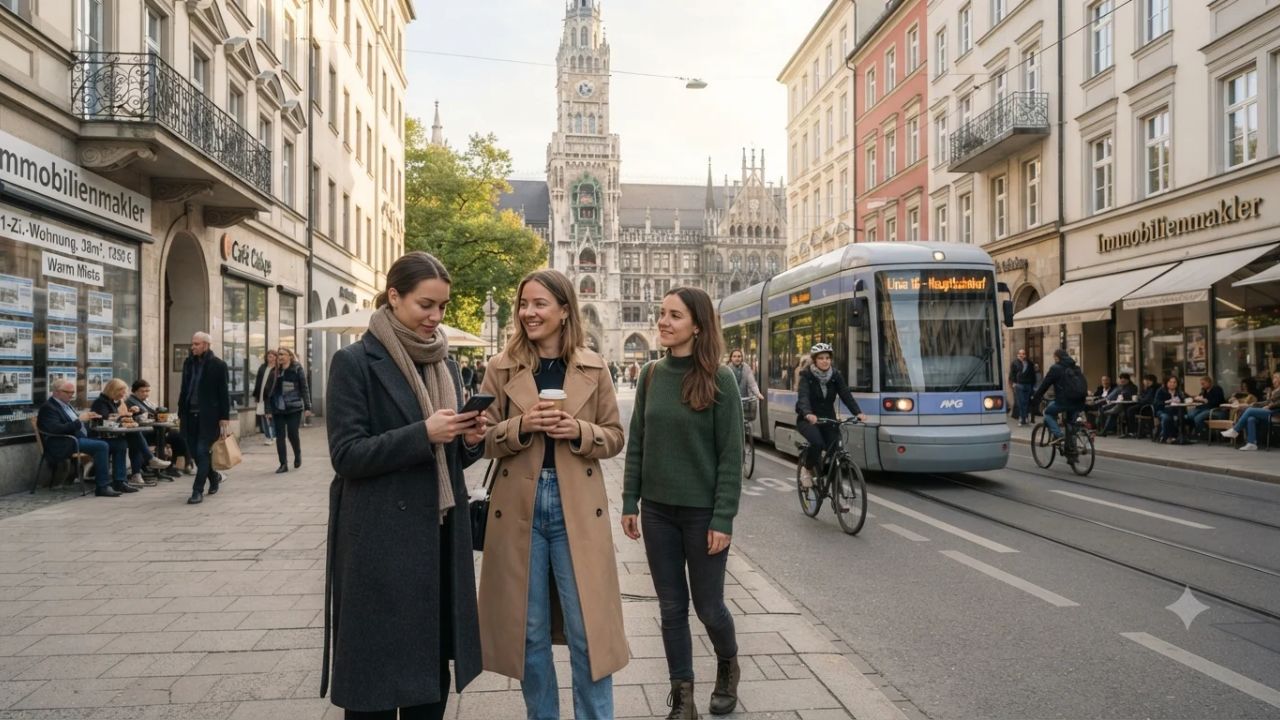
While Munich commands Germany's steepest urban living costs with single-person monthly baselines reaching €2,572, the city balances its €25.03 per square meter apartment rents with public beer garden culture where bringing your own picnic remains protected by law. Beyond the postcard imagery of gothic towers and alpine views, the Bavarian capital functions under a distinct equilibrium where high net corporate compensation, strict municipal bureaucracy, and expansive green infrastructure shape everyday life for residents and extended-stay travelers alike.
Munich continues to attract international professionals, digital nomads, and cultural travelers who discover that thriving here requires decoding local lease markets, public transit zones, and neighborhood traditions well before stepping off the train at the Hauptbahnhof.
The Bavarian Economic Engine: Housing Scarcity and Monthly Expense Realities
Relocating to or basing oneself in Munich places travelers face-to-face with the most demanding residential property market in Germany. Standard one-bedroom flats command average monthly rents of €1,815, while central three-bedroom residences frequently exceed €6,507 per month. On a unit area calculation, house rentals average €21.62 per square meter, while urban apartments surpass €25.03 per square meter. This shortage means securing a lease involves weeks of intensive documentation, credit ratings (SCHUFA checks), and formal landlord interviews.
Monthly Budget Breakdown: Living and Commuting in Munich
| Budget Category | Typical Expense (EUR) | Local Context & Practical Details |
|---|---|---|
| Standard Apartment Rent | €1,815 / month | Average baseline for individual flats outside prime historic center |
| Central 3-Bedroom Flat | €6,507+ / month | Premium urban core residential options (Maxvorstadt, Altstadt) |
| Living Costs (Excl. Rent) | €1,074 / month | Groceries, utilities, leisure, and daily domestic consumer costs |
| Total Single Baseline | €2,572 / month | Combined living outlays including studio or small apartment lease |
| Average Net Expat Salary | €4,064 / month | After-tax net monthly earnings across tech and engineering sectors |
| Self-Funded Health Cover | ~€500 / month | Compulsory statutory or private medical insurance baseline |
| MVG Zone M Single Ride | €4.00 – €4.50 | Central municipal transit ticket covering U-Bahn, tram, and bus |
For professionals earning the local average after-tax net salary of approximately €4,064 per month, these numbers provide sustainable financial ground, yet they leave little margin for unprepared arrivals. International visitors on extended assignments increasingly rely on serviced lodging, extended-stay hotels, and boutique temporary apartments while seeking long-term leases, maintaining steady demand across Munich's extended hospitality sector.
What Makes Munich Different: Urban Density Meets Alpine Proximity
Home to more than 1.53 million residents across a compact layout, Munich records a population density of roughly 4,830 people per square kilometer—the highest density of any major German city. Despite expanding at an annual demographic growth rate of 0.89%, the city avoids oppressive congestion through rigorous urban zoning and extensive green wedges that connect downtown quarters directly to nature.
The city's tourism footprint remains immense, logging over 18 million annual overnight stays. Transient leisure visitors maintain an average length of stay of 2.3 days, drawn primarily from leading source markets including the United States, Italy, Switzerland, and Austria, alongside significant growth from the Arab Gulf States. Understanding the broader context via the Germany National Tourist Board reveals how Munich serves as both an economic heavyweight and the cultural gateway to Upper Bavaria's Alpine foothills and historic palaces.
The municipal transit ecosystem operated by the Münchner Verkehrsgesellschaft (MVG) allows residents and visitors to bypass private vehicle ownership entirely. Centered on the primary Zone M core, single journeys cost between €4.00 and €4.50, integrated seamlessly across the U-Bahn underground, streetcars, buses, and S-Bahn commuter rail networks. Hundreds of kilometers of protected bicycle lanes run parallel to rail arteries, allowing cyclists to travel from residential suburbs like Schwabing or Haidhausen directly into the city center within minutes.
Visitor Insider Tips: Navigating Daily Life, Transit, and Local Etiquette
- Master the Beer Garden Code: In authentic Munich beer gardens like those inside the English Garden (Englischer Garten) or Hirschgarten, tables with tablecloths indicate table service where you must buy food and drinks from staff. Bare wooden tables designate self-service areas where you are legally permitted to bring your own pretzels, cold cuts, and salads, provided you purchase your beer from the counter.
- Respect Quiet Hours (Ruhezeit): Sunday in Munich is preserved for rest. All retail shops and supermarkets close completely, except for small convenience outlets inside major railway stations and the airport. Running noisy domestic appliances, mowing lawns, or recycling glass bottles into street containers on Sundays and public holidays can trigger neighborhood complaints or municipal fines.
- Decode the Anmeldung Timetable: Anyone moving to Munich for work or long-term study must register their residential address with the municipal administration (Bürgerbüro) within a mandatory 14-day window after moving into permanent accommodation. Securing this appointment early is critical, as registration documents are required to open German bank accounts and establish tax identification numbers.
- Learn Essential Bureaucratic German: While more than 50% of workers across Munich's tech and startup hubs communicate fluently in English, all official municipal documents, tax filings, residency registrations, and binding lease contracts are executed solely in German. Carrying translated identification papers and learning foundational administrative phrases prevents significant delays.
- Choose Strategic Neighborhood Bases: For stays exceeding a few weeks, look beyond the tourist-heavy Altstadt. Quarters such as Sendling, Giesing, and Neuhausen offer neighborhood bakeries, independent coffee shops, and direct U-Bahn links to central squares at comparatively lower short-term rental costs.
Cultural and Environmental Context: Balancing Heritage with Tech Expansion
Munich balances rapid modern tech sector expansion with protective cultural regulations. The city's proximity to UNESCO World Heritage properties across Bavaria, documented by the UNESCO World Heritage Centre, reflects centuries of preservation policies that still limit skyscraper construction across the central skyline to protect views of historic church spires.
At the same time, municipal authorities actively encourage visitor dispersion outside the central Marienplatz corridor. By directing tourist footfall toward outer art districts, botanical reserves along the Isar River, and regional cultural sites across Upper Bavaria, the city protects historic infrastructure while distributing economic benefits across residential boroughs. This balance between strict regulatory order, accessible public parks, and deep-rooted community traditions makes Munich one of Europe's most distinctive urban destinations.
FAQ: Visiting Munich 2026
What is the average monthly cost of living in Munich for a single person?
A single person requires approximately €1,074 per month for living expenses excluding rent. Factoring in a standard apartment or studio lease brings total monthly expenditures to roughly €2,572.
Do I need a car to explore Munich and surrounding Bavaria?
No. Munich's MVG transit network connects every neighborhood via U-Bahn, trams, and buses. Regional trains (Regionalbahn) depart frequently from Hauptbahnhof to the Bavarian Alps, Lake Starnberg, and historic castles.
How strictly are Sunday shopping closures enforced?
All retail stores, department stores, and supermarkets are closed on Sundays across Munich. Only select convenience shops, bakeries with morning hours, and transit hub pharmacies inside Hauptbahnhof and Ostbahnhof remain open.
Is English sufficient for living and working in Munich?
English is widely spoken across multinational tech firms and international offices, where over 50% of the workforce uses it daily. However, official government business, housing leases, and utility setups require German documentation.
Munich rewards those who look past its manicured exterior, discovering a city where alpine precision, high-tech industry, and centuries of open-air community rituals exist side by side.
Related Travel Guides
Disclaimer
This article is for informational and educational purposes only. It does not constitute legal, financial, or professional advice. While we strive to provide accurate and up-to-date information, travel policies, regulations, and conditions change rapidly. Always verify information with official sources before making travel decisions. Nomad Lawyer makes no representations about the accuracy, reliability, completeness, or suitability of the information provided. Readers should consult qualified professionals for advice specific to their circumstances. The views expressed in this article are those of the author and do not necessarily reflect the views of Nomad Lawyer.
Raushan Kumar
Founder & Lead Developer
Full-stack developer with 11+ years of experience and a passionate traveller. Raushan built Nomad Lawyer from the ground up with a vision to create the best travel and law experience on the web.
Learn more about our team →