
Munich's Autonomous Taxi Revolution: Uber and Autobrains Go Driverless
Munich becomes Germany's autonomous vehicle hub as Uber and Autobrains launch Level 4 robotaxis. Here's what the legal framework means for travelers and the future of urban mobility.

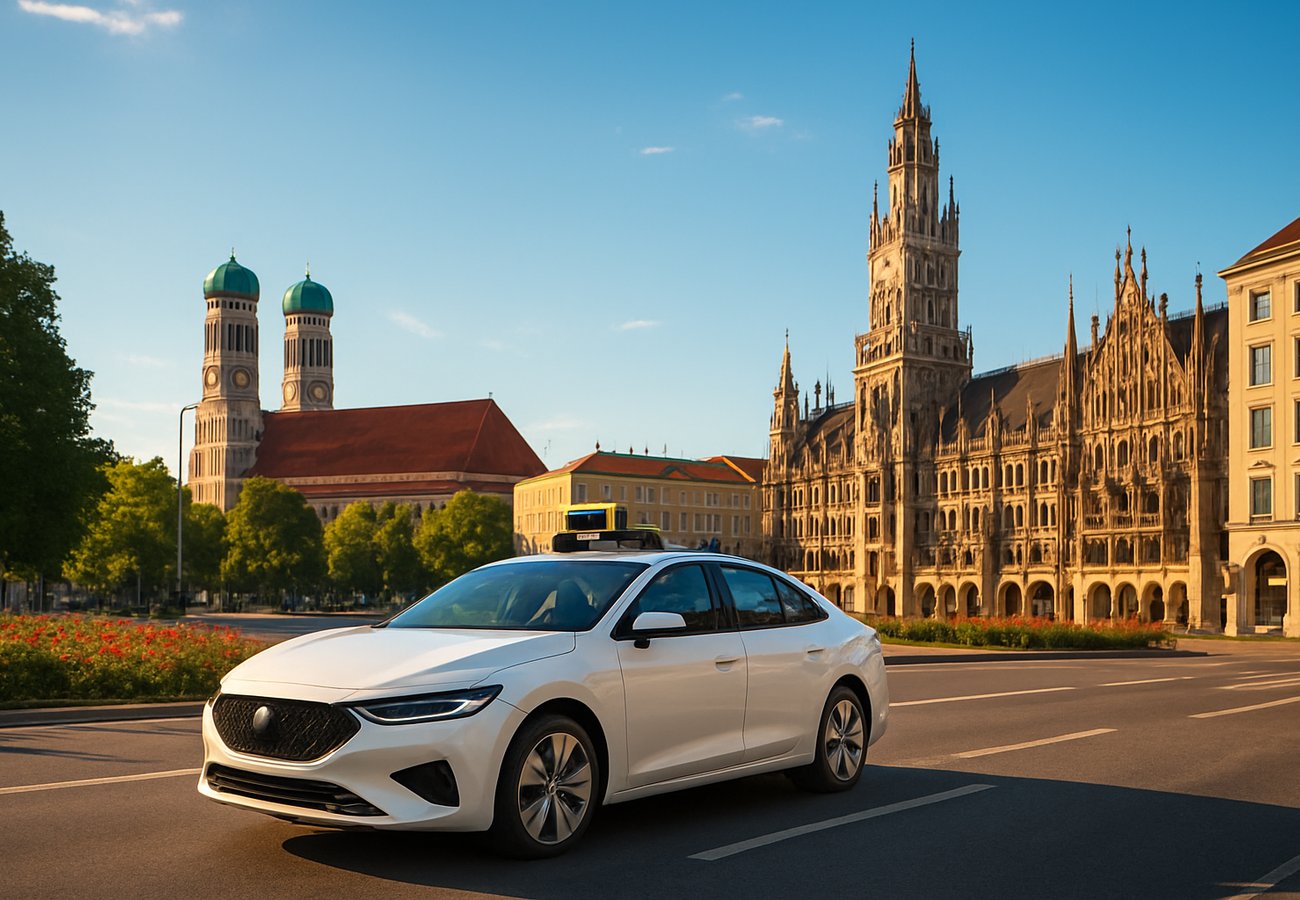
Image generated by AI
Munich is about to make history. Germany's Bavarian capital is preparing to become Europe's first major city to operate fully autonomous robotaxis on public streets—and the implications for travelers, urban planners, and tech enthusiasts are enormous.
Uber and Israeli AI specialist Autobrains are partnering to deploy Level 4 autonomous vehicles that will navigate Munich's streets without a human driver behind the wheel. This isn't theoretical anymore. This is happening under Germany's official autonomous driving legal framework, with regulatory approval in motion. The question isn't if driverless taxis are coming to Europe—it's when passengers will first climb into one in Bavaria.
The Legal Gateway: Germany's Level 4 Framework
Here's what makes Munich's robotaxi program legally possible: Germany's 2021 "Gesetz zum autonomen Fahren" (Autonomous Driving Act) provides the regulatory scaffold that few European countries have matching in place.
Level 4 autonomy means the vehicle handles all driving functions independently within a defined operating area. No human override needed during normal operations. But "independent" doesn't mean unaccountable. The Landesbaudirektion Bayern (Bavarian State Building Authority) and federal regulators will scrutinize every aspect before a single robotaxi serves a passenger.
Each autonomous vehicle must receive an individual operating permit specifying its geographic service zone. The approval process evaluates compliance with the Straßenverkehrsgesetz (StVG)—Germany's Road Traffic Act—alongside rigorous safety testing. This explains why the timeline remains open-ended: regulators aren't cutting corners for headlines.
Reddit: "Germany has the legal framework sorted, but execution is where things get real. Other European cities are watching Munich like hawks." — r/autonomous_vehicles
The Technology Stack: Uber, Autobrains, and Nvidia
The partnership stacks cutting-edge components into a real-world system. Autobrains provides Agentic AI—the decision-making software that reacts to complex urban scenarios in real time. Think split-second calculations: a cyclist swerving, a pedestrian stepping into traffic, a double-parked delivery van blocking the lane.
Uber contributes its ride-hailing network and operational expertise, handling passenger booking, routing, and fleet management. This isn't just autonomous driving; it's autonomous ride-sharing at scale.
Nvidia's DRIVE Hyperion platform supplies the computing architecture specifically designed for Level 4 operations. This hardware-software integration processes sensor data (cameras, lidar, radar) and feeds it into Autobrains' AI stack fast enough to ensure safe navigation.
The modular design is intentionally OEM-agnostic—meaning the autonomous system can run on different vehicle brands and models. This flexibility matters for scaling. If the Munich pilot succeeds, the same tech can deploy across Europe without being locked to one manufacturer.
Why Munich? Why Now?
Munich provides the ideal testing ground. The city offers genuine complexity: dense residential streets, multi-lane arterial roads, highway access, and pedestrian-heavy zones. High traffic volume, weather variability, and regulatory rigor combine to create the toughest real-world laboratory imaginable. If the system works in Munich, it works anywhere in Europe.
Bavaria's regulatory environment also matters. State-level oversight ensures both urban and intercity operations meet consistent safety standards. Authorities aren't rubber-stamping approvals; they're engineering rigor into the process.
The city's identity as an automotive innovation hub doesn't hurt either. Munich hosts major automotive suppliers, tech firms, and research institutions. The ecosystem supports this kind of advanced mobility testing.
From Pilot to City-Scale Deployment
Initial operations will be limited and closely monitored. The autonomous fleet will serve defined urban zones, initially restricted in geography and passenger volume. Every robotaxi undergoes exhaustive validation: Can it handle unexpected obstacles? Does it respond appropriately to edge cases? Can it coexist safely with pedestrians, cyclists, and conventional traffic?
No vehicle will carry paying passengers until all legal and technical boxes are checked. This isn't caution for caution's sake—it's liability management and regulatory necessity.
The strategic vision extends beyond Munich. If the pilot succeeds, the model becomes a template for other European cities. Cities like Berlin, Frankfurt, and Paris are watching. Germany's legal framework could become the gold standard for autonomous vehicle deployment across the EU.
What This Means for Travelers
Autonomous robotaxis will reshape urban mobility for travelers. Picture arriving at Munich Airport and summoning a driverless taxi via the Uber app. No waiting for a driver to arrive. No surge pricing based on driver availability. Consistent pricing, predictable routing, and zero small talk if you prefer silence.
For tourism, autonomous taxis expand mobility to neighborhoods traditionally underserved by conventional cabs. Tourists gain safer, cheaper access to residential areas and landmarks beyond the city center. For business travelers, the consistency and reliability become competitive advantages.
The legal clarity matters here too. Travelers will know that every driverless taxi operating in Munich meets Germany's rigorous autonomous vehicle standards—unlike other countries where regulatory frameworks remain murky or absent.
Europe's Autonomous Future Starts in Bavaria
Munich's robotaxi program signals something larger: Europe is moving from theoretical autonomous vehicles to operational systems. Germany's legal framework—specific, stringent, and transparent—demonstrates that innovation and safety regulation aren't contradictions.
If Uber and Autobrains execute flawlessly, Munich becomes the proof point. Other European cities will follow. Within five years, driverless taxis could operate in a dozen major European cities, each with tailored legal frameworks adapted from Germany's model.
The implications ripple outward: traffic patterns shift, employment in traditional taxi services contracts, insurance models adapt, and urban planning priorities change. All of this hinges on what happens when the first Uber robotaxi pulls away from a Munich curb with a paying passenger aboard.
The future of European urban travel isn't being written in Silicon Valley. It's being written in Munich, by regulators, engineers, and a partnership between an American ride-hailing giant and an Israeli AI company. And legally, Germany gave them permission to do it.
Munich's driverless revolution is coming—and the law is ready.
Related Travel Guides
Qantas adds seats on Brisbane-Hobart route with daily October 2026 launch
Maharashtra Announces 6-Month VAT Cut on Aviation Fuel in May 2026
Disclaimer
This article is for informational and educational purposes only. It does not constitute legal, financial, or professional advice. While we strive to provide accurate and up-to-date information, travel policies, regulations, and conditions change rapidly. Always verify information with official sources before making travel decisions. Nomad Lawyer makes no representations about the accuracy, reliability, completeness, or suitability of the information provided. Readers should consult qualified professionals for advice specific to their circumstances. The views expressed in this article are those of the author and do not necessarily reflect the views of Nomad Lawyer.
Raushan Kumar
Founder & Lead Developer
Full-stack developer with 11+ years of experience and a passionate traveller. Raushan built Nomad Lawyer from the ground up with a vision to create the best travel and law experience on the web.
Learn more about our team →