
US Nature Destinations Ranked by Peace and Tranquility
Oregon’s Lost Lake Loop has emerged as the most peaceful outdoor destination in the United States, leading a shift toward "slow travel" and restorative nature

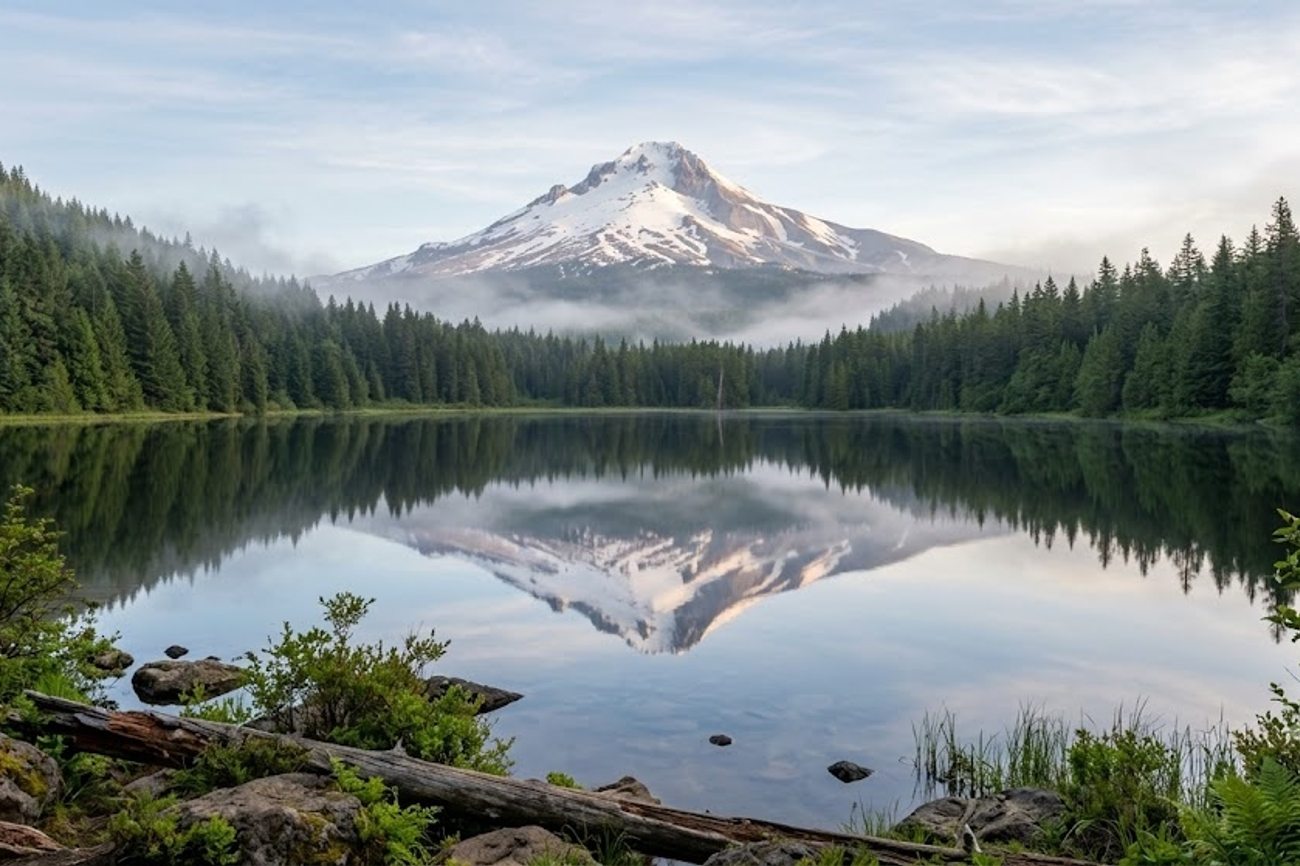
Image generated by AI
A comprehensive analysis of thousands of traveler reviews has identified the premier destinations for those seeking to avoid urban congestion and high-traffic tourist hubs. The research, conducted by ReSound, analyzed mentions of terms such as "peaceful," "quiet," and "relaxing" to determine which US nature spots offer the highest quality of tranquility.
The findings indicate a significant trend toward wellness-led tourism, where travelers prioritize low-intensity outdoor experiences over traditional sightseeing.
The Pacific Northwest and Northeast Lead the Rankings
Oregon's Lost Lake Loop, situated within the Mount Hood National Forest, secured the top position with 307 relaxation-related mentions. The site features a 3.1-mile Lakeshore Trail that winds through hemlock, Douglas fir, and cedar woodlands, offering a low-impact experience framed by views of Mount Hood.
In the Northeast, Jordan Pond in Maine’s Acadia National Park ranked second with 230 mentions. While praised for its glacial waters and the iconic "Bubbles" mountain scenery, the high overall visitor volume of Acadia suggests that tranquility here is highly dependent on timing.
Mountain and Forest Alternatives
Colorado maintains a strong presence in the tranquility sector with two entries in the top five. Emerald Lake in Rocky Mountain National Park ranks third (200 mentions), requiring a trek past Nymph and Dream Lakes. Bear Lake, also in Rocky Mountain National Park, ranks fifth (134 mentions), providing a more accessible subalpine experience.
Washington State's Hoh Rain Forest in Olympic National Park ranks fourth with 149 mentions. Unlike the alpine destinations, the Hoh Rain Forest offers an immersive, temperate rainforest environment characterized by dense vegetation and moss-covered canopies.
Regional Diversity in Quiet Travel
The data reveals that peaceful escapes are not limited to the West Coast or Rockies. Michigan’s Sleeping Bear Dunes National Lakeshore (118 mentions) and South Carolina’s Congaree National Park (109 mentions) highlight the appeal of Great Lakes dunes and old-growth bottomland hardwood forests, respectively.
Top 10 Most Peaceful US Nature Destinations
| Rank | Destination | Location | Mentions | Primary Feature |
|---|---|---|---|---|
| 1 | Lost Lake Loop | Mount Hood Nat. Forest, OR | 307 | 3.1-mile Lakeshore Trail |
| 2 | Jordan Pond | Acadia Nat. Park, ME | 230 | Glacial Lake/The Bubbles |
| 3 | Emerald Lake | Rocky Mountain Nat. Park, CO | 200 | Alpine Lake Trek |
| 4 | Hoh Rain Forest | Olympic Nat. Park, WA | 149 | Temperate Rainforest |
| 5 | Bear Lake | Rocky Mountain Nat. Park, CO | 134 | Subalpine Lake Trail |
| 6 | Sleeping Bear Dunes | National Lakeshore, MI | 118 | Sand Dunes/Lake Michigan |
| 7 | Congaree Nat. Park | South Carolina | 109 | Bottomland Hardwood Forest |
| 8 | Tuolumne Meadows | Yosemite Nat. Park, CA | 104 | High-Elevation Trails |
| 9 | Gooseberry Falls | State Park, MN | 97 | Waterfalls |
| 10 | Trail of the Cedars | Glacier Nat. Park, MT | 88 | Northern Rockies Forest |
Traveler Logistics Guide
From a ground-level perspective, the best way to navigate these high-tranquility zones is to prioritize "shoulder season" travel—specifically late September through early November—to avoid the peak summer crowds.
Booking and Access Tips:
- Timed Entry Permits: Many of these locations, particularly in Rocky Mountain National Park and Yosemite, now require advanced timed-entry reservations. Check the National Park Service (NPS) official portal 30 days in advance.
- Optimal Arrival: For destinations like Jordan Pond (Acadia), arrive before 7:00 AM. The "peaceful" rating drops significantly after 10:00 AM as shuttle buses arrive.
- Connectivity: Expect zero cellular service in the Hoh Rain Forest and Tuolumne Meadows. Download offline maps via Google Maps or Gaia GPS before departure.
- Transport: While some parks offer shuttles, a 4WD vehicle is recommended for accessing the deeper trailheads of Mount Hood National Forest and Glacier National Park.
Infrastructure Impact Assessment
The rise of "slow travel" is shifting tourism pressure away from primary gateway cities and toward secondary rural hubs. This trend encourages the development of low-impact infrastructure, such as expanded boardwalks in Congaree and improved shuttle systems in Acadia, to protect the very tranquility travelers are seeking. For regional economies, this represents a shift from high-volume, short-stay tourism to lower-volume, longer-duration stays focused on wellness and recreation.
Related Travel Guides
Disclaimer
This article is for informational and educational purposes only. It does not constitute legal, financial, or professional advice. While we strive to provide accurate and up-to-date information, travel policies, regulations, and conditions change rapidly. Always verify information with official sources before making travel decisions. Nomad Lawyer makes no representations about the accuracy, reliability, completeness, or suitability of the information provided. Readers should consult qualified professionals for advice specific to their circumstances. The views expressed in this article are those of the author and do not necessarily reflect the views of Nomad Lawyer.
Preeti Gunjan
Contributor & Community Manager
A passionate traveller and community builder. Preeti helps grow the Nomad Lawyer community, fostering engagement and bringing the reader experience to life.
Learn more about our team →