
Most and Least Expensive Airlines in Europe Ranked by Cost Per Kilometre in 2026
New 2026 aviation data reveals a widening price gap in European skies, with Wizz Air leading as the cheapest carrier while legacy hub airlines maintain premium pricing.

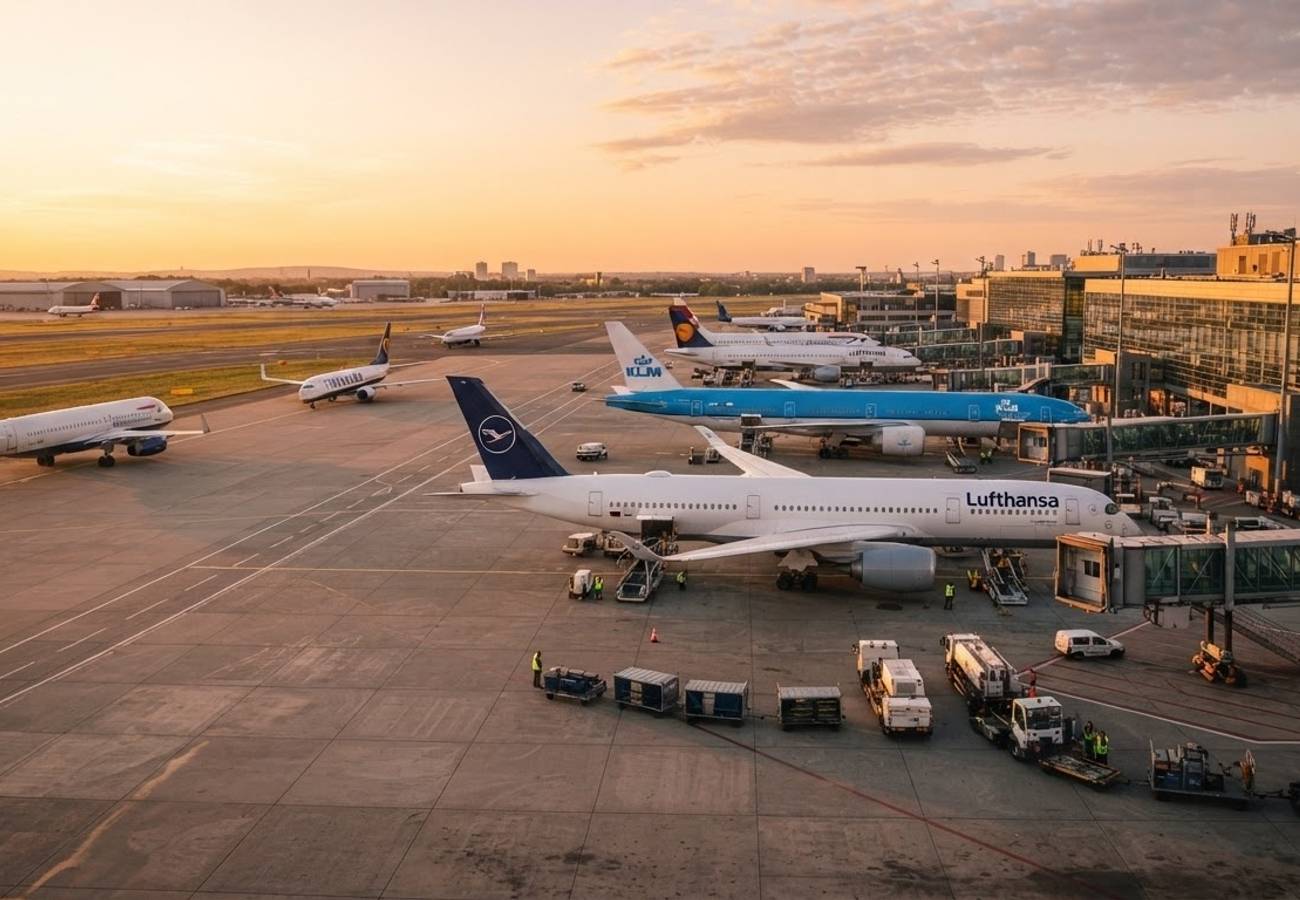
Image generated by AI
The price gap between Europe's ultra-low-cost carriers and legacy airlines has expanded to nearly 28 euro cents per seat kilometre in 2026. This divergence reflects a market split between aggressive point-to-point budget networks and premium hub-and-spoke systems.
The Shift in European Aviation Pricing
The methodology for determining the "cheapest" airline has evolved. Rather than relying on volatile headline ticket prices, the industry now prioritizes Revenue per Available Seat Kilometre (RASK). This metric calculates the effective cost of flying a passenger one kilometre, stripping away the noise of route length and network structure.
For the modern traveler, this means that a "cheap" flight is no longer just about the initial booking screen. RASK captures the structural cost of the airline, incorporating fare buckets and ancillary revenues like priority boarding and seat selection. In 2026, this data reveals a stark contrast: while a short hop on a budget carrier can cost under ten euro cents per seat kilometre, premium network airlines often charge several times that amount.
Ranking the Budget Leaders
Wizz Air continues its three-year streak as the cheapest airline in Europe. According to a May 2026 AirAdvisor study of 23 carriers, the Hungary-founded group remains the benchmark for aggressive pricing. Ryanair and easyJet follow closely, leveraging massive single-type fleets to keep overheads low and base fares competitive, particularly on routes lasting between 90 minutes and three hours.
Interestingly, some legacy carriers are adopting hybrid models to compete. TAP Air Portugal has successfully pivoted toward the budget end of the spectrum. Its cost indicator dropped from just over seven euro cents per seat kilometre in 2024 to under seven cents in 2025, marking a rare price decrease in an era of rising fuel and wage costs. Other carriers frequently appearing in the lower-cost tier include:
- Transavia
- Vueling
- Norwegian
- Jet2
- Eurowings
The Premium Tier and Structural Costs
At the opposite end of the spectrum are the full-service carriers operating out of major hubs like Zurich, Frankfurt, Paris, and London. These airlines record significantly higher RASK figures due to several structural factors:
- Cabin Diversity: The presence of first and business class seating naturally drives up the average revenue per seat.
- Airport Fees: Operating out of primary international hubs incurs higher landing and passenger fees than secondary airports used by budget lines.
- Service Levels: Higher staffing ratios and onboard amenities increase the baseline cost.
Beyond the flag carriers, some niche regional airlines also rank among the most expensive. Lacking the bargaining power of giants like Ryanair on fuel and aircraft procurement, these smaller operators must maintain higher fares to remain viable.
The "Ancillary Trap": Total Trip Cost vs. Base Fare
A critical distinction exists between the cheapest airline and the cheapest trip. Research involving over 4,000 flights in 2026 indicates that the carrier with the lowest advertised fare is rarely the one with the lowest total cost once baggage and seat charges are added.
In many scenarios, carriers like easyJet or Vueling undercut "cheaper" rivals because their ancillary fee structures are more moderate. Furthermore, seasonality creates significant price swings; August 2026 data across 30,000 low-cost fares showed that tickets were more than 10 percent more expensive than in July.
Visitor Insider Tips for European Air Travel
To navigate the 2026 pricing landscape, travelers should move beyond the search engine's first page:
- The "Hidden" Budget Window: While August is the peak, target late September to early November for the lowest RASK across all carriers.
- Regional Specialization: Use Wizz Air and Ryanair for Central and Eastern Europe or the Mediterranean, but check Scandinavian and Benelux-based carriers for better value in Northern Europe.
- The Luggage Math: Always calculate the "Total Trip Cost" (Base Fare + 1 Cabin Bag + 1 Checked Bag) before booking. A legacy carrier's promotional economy fare often beats a budget carrier's "stripped" fare once luggage is included.
- Airport Logistics: Remember that ultra-low-cost carriers often fly into secondary airports (e.g., Beauvais instead of CDG). Factor in the cost and time of the shuttle bus to the city center, as this can often negate the savings of a cheaper ticket.
Tourism Outlook
The 2026 data suggests a permanent bifurcation of the European market. Low-cost carriers now control a dominant share of narrowbody capacity, ensuring that point-to-point leisure travel remains affordable. Meanwhile, legacy airlines are doubling down on corporate travel and long-haul connections to subsidize their networks. For the traveler, this means more choice, but it requires a more analytical approach to booking to avoid the pitfalls of ancillary pricing.
Smart travel in 2026 is less about finding the lowest fare and more about calculating the lowest total cost of transit.
Related Travel Guides
Disclaimer
This article is for informational and educational purposes only. It does not constitute legal, financial, or professional advice. While we strive to provide accurate and up-to-date information, travel policies, regulations, and conditions change rapidly. Always verify information with official sources before making travel decisions. Nomad Lawyer makes no representations about the accuracy, reliability, completeness, or suitability of the information provided. Readers should consult qualified professionals for advice specific to their circumstances. The views expressed in this article are those of the author and do not necessarily reflect the views of Nomad Lawyer.
Raushan Kumar
Founder & Lead Developer
Full-stack developer with 11+ years of experience and a passionate traveller. Raushan built Nomad Lawyer from the ground up with a vision to create the best travel and law experience on the web.
Learn more about our team →