
Middle East Luxury Tourism Shifts Toward High-Yield Heritage Models
The Middle East is pivoting from mass-market urban tourism toward high-yield, decentralized luxury experiences. Despite a 14% drop in Q1 2026 arrivals due to

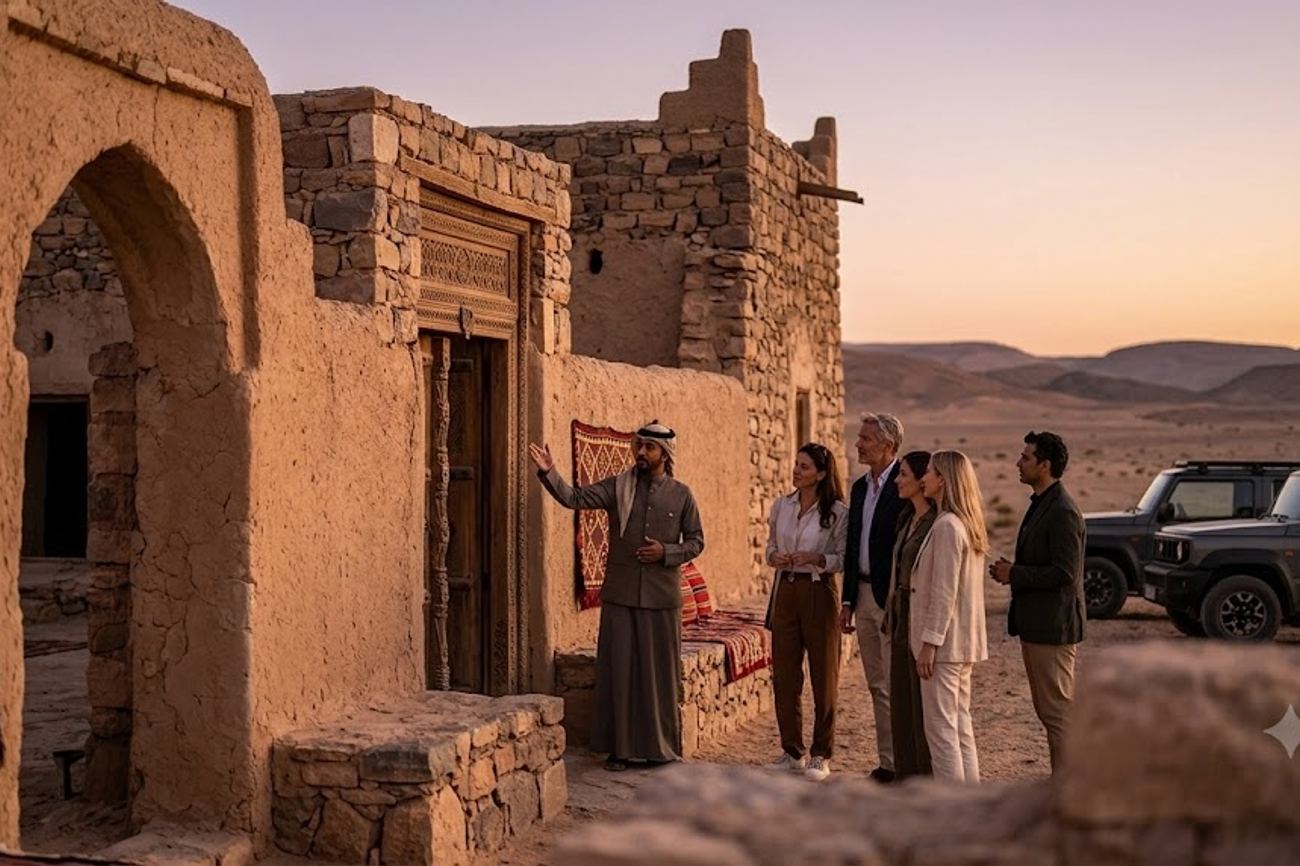
Image generated by AI
The Middle Eastern hospitality sector is undergoing a structural realignment. Investment is shifting away from capital-intensive metropolitan projects—such as high-density luxury towers and shopping complexes—toward immersive, responsible, and authentic experiences.
National tourism ministries across the Levant and the Gulf Cooperation Council (GCC) are now prioritizing geographic distinctiveness and environmental integrity to attract high-net-worth individuals (HNWIs).
Sector Performance and Macroeconomic Data
Our analysis of World Tourism Organization (UN Tourism) data reveals a volatile but growing landscape. While the region served as a primary growth engine post-pandemic, recent geopolitical instability has tested the model.
- 2024 Baseline: International arrivals in the Middle East were 32% above 2019 levels.
- 2025 Benchmark: Global arrivals reached a record 1.52 billion (up 4% YoY), generating USD 2.2 trillion in export revenues. Middle East arrivals stood 39% above pre-pandemic baselines, nearing 100 million.
- Q1 2026 Status: Regional conflicts and airspace closures caused a 14% year-on-year decline in Middle East arrivals, contrasting with a 2% global increase.
Strategic Investment Targets
Institutional capital is now flowing into decentralized, high-margin niches that exhibit greater resilience to regional disruptions than low-margin leisure tourism.
- Jordan: Targeting USD 3.8 billion in new capital by 2033, focusing on high-yield cultural corridors.
- Oman: Executing the Eleventh Five-Year Plan with a total sector capital target of USD 51 billion by 2040.
- Regional Synergy: The Arabian Gulf provides the capital and infrastructure, while the Levant (Lebanon and Jordan) provides the cultural depth and biodiversity.
Technical Evolution: Heritage Glamping
The rise of "heritage glamping" represents a shift toward off-grid engineering in sensitive terrains. To avoid damaging local ecosystems, developers are implementing closed-loop systems in alpine and desert zones.
In Lebanon’s Mount Lebanon range, luxury encampments are utilizing:
- Advanced Materials: Multi-layer composite fabrics with aerogel insulation and polyvinylidene fluoride (PVDF) skins to manage extreme temperature swings and snow loads.
- Energy Systems: Hybrid photovoltaic microgrids and lithium-iron phosphate batteries to eliminate diesel generator noise and carbon emissions.
Passenger Rights & Advisory
For the high-yield traveler operating in this region, the shift toward decentralized, off-grid luxury introduces specific considerations regarding transit and protection.
Airspace and Transit Disruptions Given the 14% contraction in Q1 2026 arrivals due to airspace closures, passengers should be aware that "extraordinary circumstances" clauses are often invoked by airlines to avoid compensation for delays. However, our analysis of aviation policy suggests:
- Duty of Care: Regardless of the cause of the disruption (e.g., geopolitical conflict), airlines must still provide meals, communications, and hotel accommodation if an overnight stay is required.
- Rebooking: Passengers are entitled to re-routing to their final destination at the earliest opportunity.
Insurance for Remote Luxury As tourism shifts toward "environmental isolation" and off-grid glamping, standard travel insurance may be insufficient. Travelers should ensure policies specifically cover:
- Medical Evacuation: Essential for high-altitude alpine zones or deep desert wadis.
- Political Risk: Comprehensive coverage for trip cancellation due to sudden airspace closures or regional volatility.
Industry Analyst View
The transition from "volume to value" is a strategic necessity. By decoupling tourism growth from sheer passenger numbers and linking it to "spend per arrival," Middle Eastern economies are insulating themselves against the volatility of mass-market travel. The integration of the GCC's financial power with the Levant's cultural assets creates a diversified ecosystem that is more sustainable and less prone to total collapse during regional crises.
Related Travel Guides
Disclaimer
This article is for informational and educational purposes only. It does not constitute legal, financial, or professional advice. While we strive to provide accurate and up-to-date information, travel policies, regulations, and conditions change rapidly. Always verify information with official sources before making travel decisions. Nomad Lawyer makes no representations about the accuracy, reliability, completeness, or suitability of the information provided. Readers should consult qualified professionals for advice specific to their circumstances. The views expressed in this article are those of the author and do not necessarily reflect the views of Nomad Lawyer.
Naina Thakur
Contributor & Travel Specialist
Travel enthusiast and legal writer covering visa regulations, responsible tourism, and cultural journeys across global destinations.
Learn more about our team →