
Middle East Flight Crisis: 517 Delays Hit Regional Hubs April 7
A Middle East flight disruption grounded hundreds of travelers on April 7, 2026, with 517 delays and 29 cancellations across Dubai, Riyadh, Cairo, Istanbul and Kuwait City as regional instability persists.

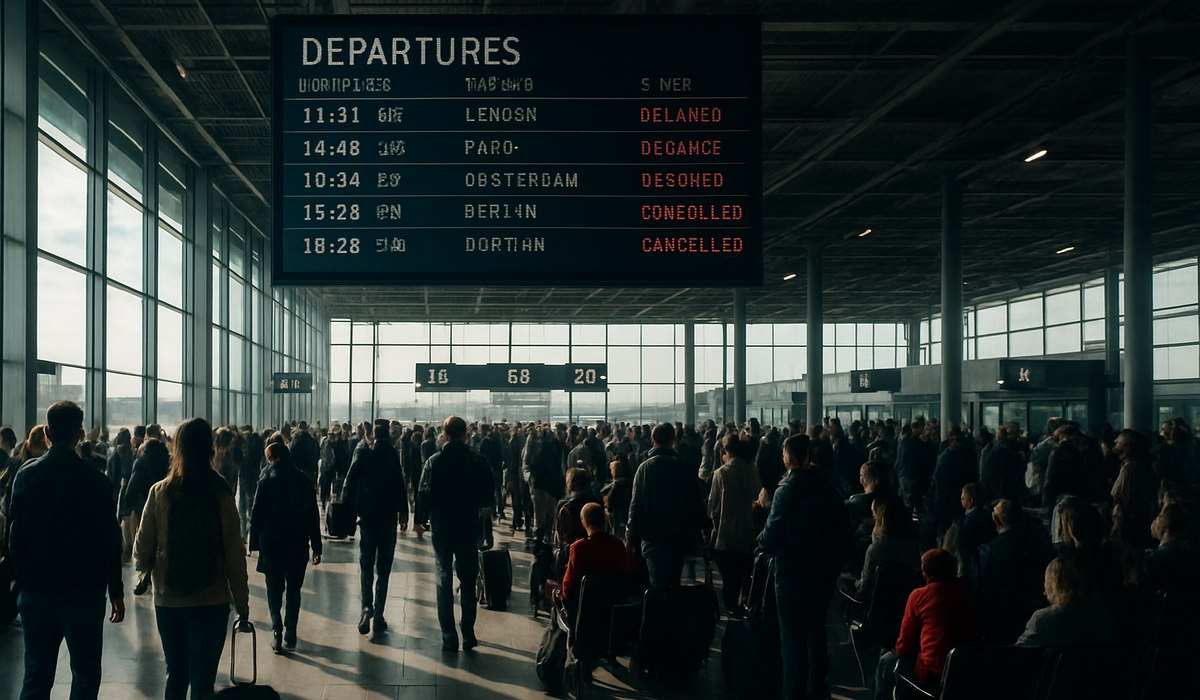
Image generated by AI
Middle East Flight Disruption Strands Hundreds: 517 Delays, 29 Cancellations on April 7
Dubai, Riyadh, Cairo, Istanbul and Kuwait City absorbed the brunt of a severe Middle East flight crisis on April 7, 2026, when 517 flight delays and 29 cancellations rippled across five critical regional aviation hubs. The scale of disruption underscores how fragile air travel remains in the Middle East nearly two months after regional instability began reshaping flight patterns. Thousands of passengers faced rebooking delays, extended terminal waits and uncertainty about onward connections across the interconnected network.
517 Delays and 29 Cancellations: The Scope of Single-Day Devastation
The numbers paint a stark picture. On a single day, Middle East flight operations experienced 517 delays alongside 29 outright cancellations, affecting major carriers including Emirates, Saudia, Etihad Airways, Pegasus Airlines and multiple regional operators. While these figures represent a fraction of daily movements across the five nations, the concentration of disruptions signals that stability has not returned to Middle Eastern air corridors.
Each delay cascades through interconnected networks. A delayed departure from Dubai compounds downstream effects in Cairo. A cancelled Riyadh service forces rebooking onto already-full Kuwait City flights. Passengers caught mid-journey experience compounding uncertainty: departure gate extensions stretch to hours, service desk queues grow unmanageable, and airline staff juggle rebooking requests against increasingly limited seat availability. For business travelers and connecting passengers, these disruptions translate directly into missed meetings, broken itineraries and substantial financial losses. Check FlightAware for real-time tracking of affected services across the Middle East network.
Weeks of Mounting Pressure: From Airspace Closures to Network Cascades
The April 7 crisis did not emerge suddenly. Since late February 2026, Middle East aviation has endured recurring airspace closures, shifting routing requirements and progressively reduced capacity across the region. Airlines adapted by closing unprofitable routes, consolidating services onto fewer flights and increasing load factors on remaining capacity.
These cumulative pressures created operational fragility. Aircraft that normally ferry between six hubs now concentrate on three. Flight crews work irregular schedules managing unexpected repositioning. Ground handling staff at major airports operate under constant uncertainty about hourly schedules. This systemic strain finally manifested in the April 7 disruptions, but industry observers warn that conditions remain volatile. Regional conflict dynamics continue limiting airspace access. Airlines maintain contingency schedules rather than restoring full timetables. Passenger demand remains suppressed as travelers avoid uncertain routes. Until geopolitical conditions stabilize, expect the Middle East flight environment to remain characterized by frequent short-notice schedule changes and periodic capacity crunches.
Major Airlines and Airports Under Strain: Dubai, Riyadh, Cairo, Istanbul and Kuwait City
Dubai and Abu Dhabi anchor the Middle East's long-haul network. Emirates and Flydubai serve as crucial connectors between Europe, Asia and Africa. When Dubai absorbs additional spillover traffic from restricted neighboring airspace, airport infrastructure faces immediate stress. Departure lounges overflow. Boarding processes extend. Ground crews struggle to turn aircraft on schedule. Emirates and Etihad Airways have progressively restarted selected routes, yet travel advisories continue warning of potential short-notice service changes.
Riyadh and Jeddah in Saudi Arabia function as critical transit points for routes normally passing through alternative Gulf hubs. Airspace restrictions in neighboring states funnel traffic toward Saudi airports. Domestic routes linking major cities experience recurring delays as aircraft reposition to support international schedules. Routes between Riyadh and regional cities face mounting congestion as capacity constraints bite.
Cairo serves as the bridge connecting Africa, Middle East and Europe. Additional traffic rerouted through Cairo pushes airport infrastructure and staffing to their limits. Inbound and outbound services both suffer knock-on delays. While Egypt has avoided full shutdowns, operating under constant uncertainty produces frequent schedule disruptions announced on short notice.
Istanbul occupies a dual role. Turkish airports handle increased transfer traffic as airlines navigate restricted Middle Eastern zones. Simultaneously, Turkish carriers announce repeated cancellations and service suspensions to Middle Eastern destinations. This exposure to both inbound congestion and outbound uncertainty creates particular volatility.
Kuwait City endured some of the most severe structural disruption. Previous complete airspace closures and uneven service resumption left schedules extremely fragile. Smaller but strategically important, Kuwait remains a volatile gateway where normal traffic patterns are returning slowly.
What Passengers Face: Rebooking Challenges, Extended Waits and Cascading Delays
Travelers navigating Middle East flight disruptions encounter immediate operational chaos. Service desks at major airports fielded hundreds of rebooking requests on April 7 alone. Airlines worked through evening hours attempting to accommodate stranded passengers across alternative flights, hotels and ground transportation.
Rebooking options proved limited. Because capacity throughout the Middle East region remains suppressed, alternative flights departing the same day rarely have available seats. Airlines offered rebooking on services departing 24-48 hours later, or rerouting through distant alternative airports. Long-haul passengers traveling between Europe and Asia faced choices between staying overnight in congested hubs or accepting multi-stop itineraries adding 8-12 hours to journey times.
Compensation remained unclear. While European Union regulations mandate EUR 250-600 compensation for certain delays over three hours, U.S. Department of Transportation rules apply differently for flights involving American carriers and airports. Passengers often waited days for clarification on refund eligibility. Contact the U.S. DOT for domestic flight protections and FAA for safety-related information.
Queue management presented logistical challenges. With service desks understaffed relative to disruption scale, passengers waited 2-4 hours for assistance. Mobile check-in and rebooking options became congested. Information gaps meant many passengers received contradictory guidance about their travel options. Frustration mounted as airlines apologized but offered limited concrete support beyond rebooking on future flights.
Traveler Action Checklist: Immediate Steps for Affected Passengers
Follow these numbered steps if your Middle East flight faced disruption:
-
Verify flight status immediately by checking your airline's app, website or calling the booking phone number directly rather than relying on airport information boards.
-
Document all communications with airlines, including rebooking offers, cancellation notices and compensation discussions, by saving emails and taking screenshots.
-
Request written rebooking confirmation on alternative flights, including confirmation numbers, departure times and seat assignments before leaving the service desk.
-
Collect receipts for reasonable expenses incurred due to delays exceeding 3+ hours, including meals, accommodation and ground transportation.
-
Identify your passenger rights based on flight origin, destination and airline nationality using U.S. DOT consumer resources or EU/UK regulations as applicable.
-
Submit compensation claims within the mandated timeframe (typically 2-6 years depending on jurisdiction) with supporting documentation and receipts.
-
Monitor airline schedule changes for 7-10 days post-disruption by checking your email and the airline app, as rebooking sometimes requires acceptance of rerouted itineraries.
Key Data: Middle East Flight Disruption Metrics, April 7, 2026
| Metric | Figure | Status |
|---|---|---|
| Total Delays Recorded | 517 | Confirmed April 7 |
| Total Cancellations | 29 |
Disclaimer
This article is for informational and educational purposes only. It does not constitute legal, financial, or professional advice. While we strive to provide accurate and up-to-date information, travel policies, regulations, and conditions change rapidly. Always verify information with official sources before making travel decisions. Nomad Lawyer makes no representations about the accuracy, reliability, completeness, or suitability of the information provided. Readers should consult qualified professionals for advice specific to their circumstances. The views expressed in this article are those of the author and do not necessarily reflect the views of Nomad Lawyer.
Kunal K Choudhary
Co-Founder & Contributor
A passionate traveller and tech enthusiast. Kunal contributes to the vision and growth of Nomad Lawyer, bringing fresh perspectives and driving the community forward.
Learn more about our team →