
FlyDubai, Air Arabia, Flynas, and Kuwait Airways Ground Flights Triggering Widespread Middle East Flight Cancellations and Delays Across Dubai, Sharjah, Jeddah, Dammam, and Manama: New Aviation Updates
A massive aviation gridlock hits the Middle East as operational limits delay 268 flights and cancel 21 across Dubai, Sharjah, Jeddah, and Kuwait City hubs.

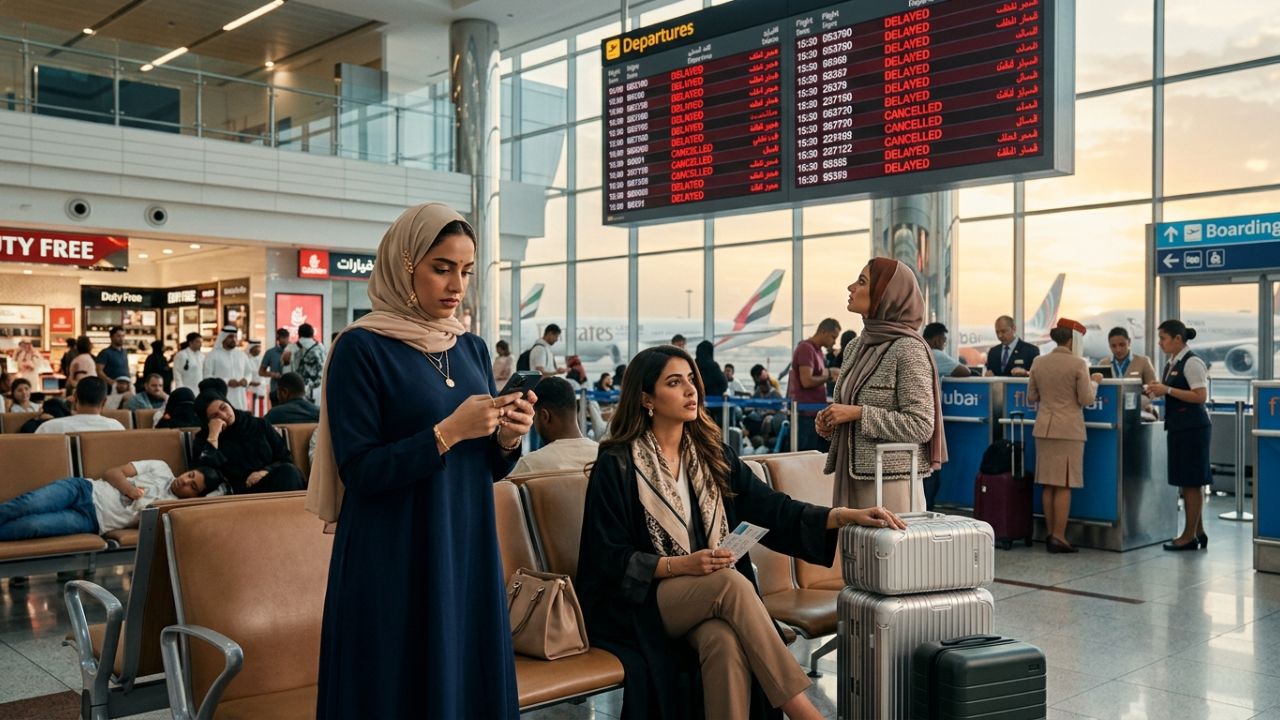
Image generated by AI
In a dramatic wave of operational instability that has swept across the Middle East’s primary aviation gateways, thousands of regional and international travelers are facing extensive scheduling delays. On May 17, 2026, leading Middle Eastern and Gulf carriers—including FlyDubai, Air Arabia, Flynas, and Kuwait Airways—grounded a total of 21 flights and triggered a massive wave of 268 flight delays. This latest airline news update outlines the intense pressure on the region's core transit nodes, causing extensive travel chaos and airport disruptions that have stranded domestic and international passengers across Dubai, Sharjah, Jeddah, Damascus, Dammam, and Manama.
Subheading: Gulf and Levant Aviation Corridors Paralyzed by 21 Cancellations and 268 Delays Amid Hub Congestion and Operational Conflicts
Aviation data suggests that the widespread operational gridlock was driven by severe weather patterns, high passenger volumes, and airport congestion. In compliance with strict safety directives, airlines adjusted schedules to manage regional runways and air traffic control constraints. Because the Middle East's high-density transit corridors share heavy scheduling connectivity, minor delays at primary transit hubs quickly cascade through regional networks, disrupting flight rotations for smaller communities.
The timing of these disruptions is particularly critical given the high demand of the peak travel season. Large carriers like FlyDubai and regional partners manage massive passenger volumes at their main hubs, making them vulnerable to crew allocation shortages and gate capacity bottlenecks when traffic staggers. Meanwhile, low-cost carriers face concentrated operational challenges, directly impacting essential travel links.
Detailed Section-Wise Breakdown of Middle Eastern Airport Disruptions
The scheduling bottleneck has affected seven major international gateways within the Middle East, forcing passengers to navigate long queues, crowded terminals, and rapidly changing departure boards:
Dubai International Airport (DXB) Logged Peak Delayed Flights
As the primary global transit hub in the UAE, Dubai International Airport (DXB) logged 2 cancellations and 119 delays. FlyDubai recorded 2 cancelled flights alongside 22 delayed flights, while Emirates registered 66 delayed flights, and IndiGo, SpiceJet, Airblue, and other partners experienced significant delay volumes.
King Abdulaziz International Airport (JED) Jeddah Operational Pressures
Jeddah’s primary gateway, King Abdulaziz International Airport (JED) in Saudi Arabia, reported 5 cancellations and 65 delays. Flynas recorded 2 cancelled flights and 9 delayed flights, Saudia reported 28 delayed flights, flyadeal and Royal Jordanian each recorded 1 cancelled flight, and IndiGo registered 8 delayed flights.
Kuwait International Airport (KWI) Hub Gridlock
Kuwait’s primary gateway, Kuwait International Airport (KWI), faced substantial network pressure with 2 cancellations and 25 delays. Kuwait Airways Corporation logged 2 cancelled flights and 10 delayed flights, while Jazeera Airways recorded 15 delayed flights over the course of the day.
Sharjah International Airport (SHJ) Air Arabia Gateways Closed
Operations at Sharjah International Airport (SHJ) in the UAE were affected by 4 cancellations and 21 delays. Air Arabia handled the bulk of the disruption load with 4 cancelled flights and 15 delayed flights, while Fly Jinnah recorded 2 delayed flights, and Air India Express, Bangladesh Biman, and Air Cairo registered single delays.
Bahrain International Airport (BAH) Transit Interruptions
The flight schedules at Bahrain International Airport (BAH) were impacted by 3 cancellations and 18 delays. FlyDubai recorded 2 cancelled flights, and Gulf Air experienced 17 delayed flights, complicating regional transit connections.
King Fahd International Airport (DMM) Dammam Logistics Backlog
In Saudi Arabia’s Eastern Province, King Fahd International Airport (DMM) in Dammam reported 3 cancellations and 14 delays. Flynas logged 2 cancelled flights and 8 delayed flights, while Pakistan International Airlines (PIA) recorded 1 cancelled flight, and flyadeal and Tarco Airlines contributed to regional delays.
Damascus International Airport (DAM) Levant Scheduling Snarls
Passengers traveling through Syria faced disruptions at Damascus International Airport (DAM), where 2 cancellations and 6 delays were registered. Air Arabia logged 2 cancelled flights, while Fly Cham, Jazeera Airways, FlyDubai, and Flynas contributed to localized scheduling adjustments.
Flight Details and Operational Performance Matrices
The following tables outline the detailed breakdown of the scheduling disruptions across domestic and international routes, highlighting the scope of the operational pressure:
Summary of Flight Disruptions by Major Airport
| Airport Name | Code | Country | Delayed Flights | Cancelled Flights | Operational Status |
|---|---|---|---|---|---|
| Dubai International Airport | DXB | UAE | 119 | 2 | Severe Hub Congestion |
| King Abdulaziz International Airport | JED | Saudi Arabia | 65 | 5 | Major Scheduling Bottlenecks |
| Kuwait International Airport | KWI | Kuwait | 25 | 2 | Regional Hub Pressure |
| Sharjah International Airport | SHJ | UAE | 21 | 4 | Air Arabia Groundings |
| Bahrain International Airport | BAH | Bahrain | 18 | 3 | Gulf Corridor Outages |
| King Fahd International Airport | DMM | Saudi Arabia | 14 | 3 | East Province Delays |
| Damascus International Airport | DAM | Syria | 6 | 2 | Levant Service Reductions |
| Total Disruptions Combined | - | - | 268 | 21 | Massive Regional Gridlock |
Individual Carrier Performance Breakdowns
- FlyDubai: 4 cancelled flights (DXB & BAH), 23 delayed flights (DXB & DAM).
- Air Arabia: 6 cancelled flights (SHJ & DAM), 15 delayed flights (SHJ).
- Flynas: 4 cancelled flights (DMM & JED), 18 delayed flights (DXB, DAM, DMM & JED).
- Kuwait Airways: 2 cancelled flights (KWI), 12 delayed flights (DXB & KWI).
- Saudia: 0 cancelled flights, 28 delayed flights (JED).
- Emirates: 0 cancelled flights, 67 delayed flights (DXB & DMM).
- Jazeera Airways: 0 cancelled flights, 19 delayed flights (DXB, DAM & KWI).
- Gulf Air: 0 cancelled flights, 19 delayed flights (JED & BAH).
Passenger Impact and Tourism Realities
The emotional and financial toll of these airport disruptions extends far beyond simple scheduling inconveniences. Stranded passengers across Dubai, Jeddah, Manama, and Kuwait City have reported long lines at customer service counters, missed family milestones, postponed business meetings, and high travel anxiety. Because many international travelers utilize the Middle East as a major gateway, these flight delays have resulted in numerous missed connections, requiring airlines to coordinate extensive hotel re-accommodations and baggage re-routing.
Furthermore, passengers are facing unexpected out-of-pocket costs for meals and communications while waiting in crowded terminals. Depending on their origin airport, travelers experienced extended wait times, pushing many travelers to seek last-minute hotel stays or expensive airport dining options.
Industry Analysis: Root Causes of Middle Eastern Flight Disruptions
Aviation analysts explain that the widespread travel chaos is not solely a result of terminal gate capacity bottlenecks. Rather, carriers are dealing with complex operational and safety challenges:
- Operational and Scheduling Conflicts: Ground crews and dispatch teams actively modify schedules to manage high traffic volumes and maintain flight safety.
- Airspace Congestion: High-density air corridors over the Gulf region require wider flight separation distances, causing regional delays.
- Crew Duty-Hour Limits: Flight delays frequently push crew allocations past legal duty-hour restrictions, forcing subsequent flight cancellations.
- Tight Hub Rotation Schedules: Minimal turn times across major hubs mean that minor delays cascade quickly through regional networks.
Conclusion: Recovery Outlook and Stabilizing Operations
Despite the current turbulence, airport authorities and airline dispatch teams are working to stabilize flight schedules and restore passenger confidence. Departure boards continue to show updated times, and flight dispatchers are gradually returning delayed aircraft to their regular rotations. While terminals remain crowded, international aviation experts are optimistic that operational stability will steadily return to the Middle East's busy air corridors over the next 24 hours.
Key Takeaways
- Scale of Disruptions: Exactly 21 flights were cancelled and 268 flights delayed across seven major Middle Eastern airports on May 17, 2026.
- High-Risk Gateways: Dubai International (DXB) logged the highest delay volume with 119 flights, while Jeddah (JED) registered 5 cancellations.
- Most Impacted Carriers: FlyDubai, Air Arabia, Flynas, and Kuwait Airways reported the bulk of regional schedule revisions.
- Core Causes: Regional airspace congestion, operational conflicts, crew duty limits, and tight hub schedules.
- Advice for Travelers: Frequently check live flight status trackers, monitor official carrier applications, and understand your passenger rights under local civil aviation authorities.
Related Travel Guides
- Emirates, Singapore Airlines, AirAsia, and China Eastern Ground Flights Triggering Widespread Asia Flight Cancellations and Delays Across Kuala Lumpur, Singapore, Dubai, Bangkok, and Seoul: New Aviation Updates
- Ryanair Reports Record Passenger Traffic and Stronger Fares as Europe's Budget Travel Boom Shows No Signs of Slowing Down: New Aviation Updates
- The 10 Best Tips for Flight Layovers in Dubai, According to Reddit
Disclaimer
This article is for informational and educational purposes only. It does not constitute legal, financial, or professional advice. While we strive to provide accurate and up-to-date information, travel policies, regulations, and conditions change rapidly. Always verify information with official sources before making travel decisions. Nomad Lawyer makes no representations about the accuracy, reliability, completeness, or suitability of the information provided. Readers should consult qualified professionals for advice specific to their circumstances. The views expressed in this article are those of the author and do not necessarily reflect the views of Nomad Lawyer.
Kunal K Choudhary
Co-Founder & Contributor
A passionate traveller and tech enthusiast. Kunal contributes to the vision and growth of Nomad Lawyer, bringing fresh perspectives and driving the community forward.
Learn more about our team →