
Middle East Aviation Crisis 2026: 955 Flight Delays and 58 Cancellations Hit Dubai, Jeddah, and Riyadh
Severe operational disruptions across Middle East aviation hubs result in 955 delays and 58 cancellations, with Dubai International and Saudia recording the highest impact levels.
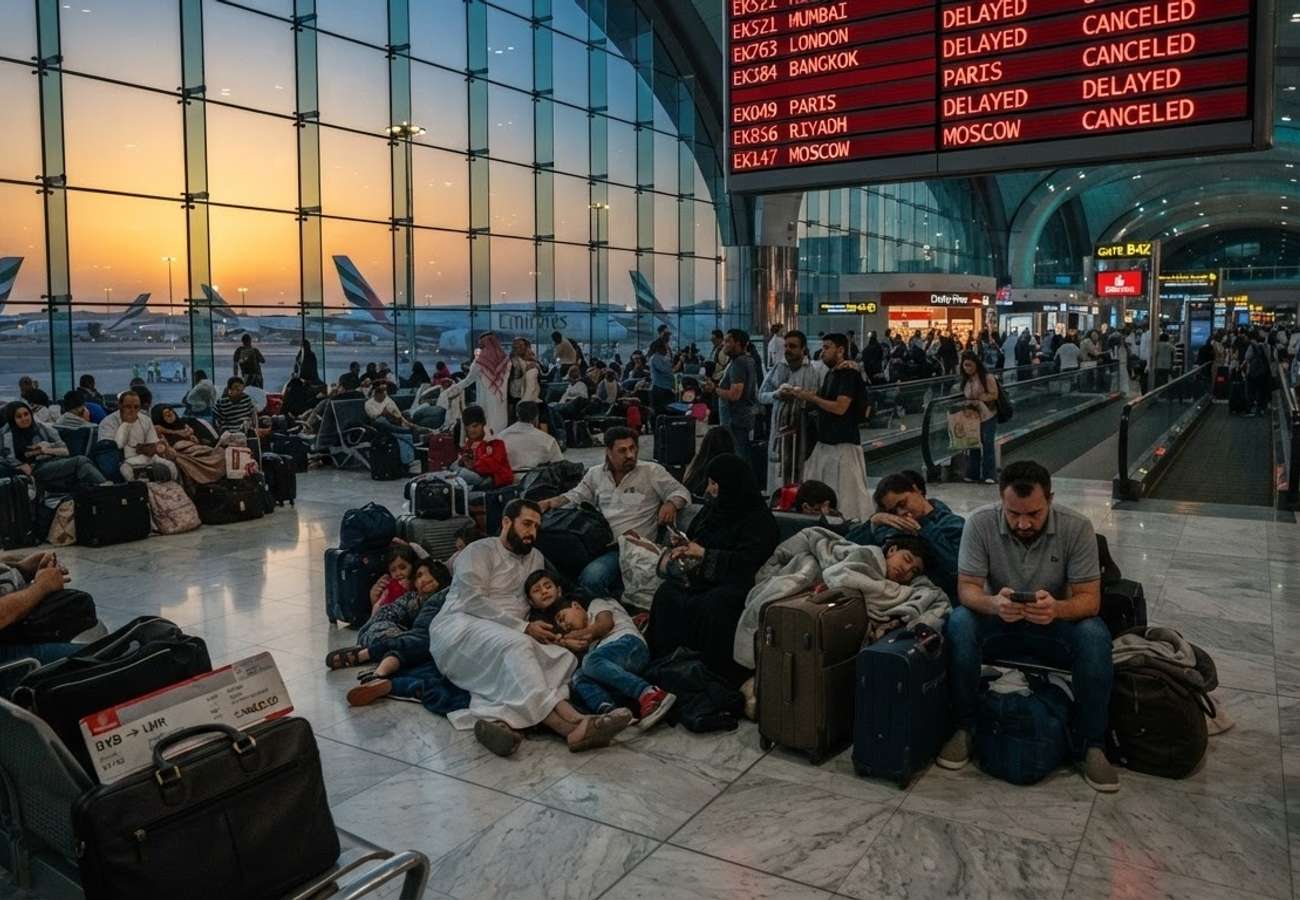
Image generated by AI
Severe operational volatility has paralyzed air travel across the Middle East, resulting in 955 delays and 58 cancellations. Dubai International Airport emerged as the primary bottleneck with 451 delays, while Saudia recorded the highest volume of cancellations at 41.
Regional Aviation Disruptions and Airline Performance
A systemic wave of schedule changes has impacted aviation networks across Saudi Arabia, Jordan, Bahrain, Kuwait, the United Arab Emirates, and Türkiye. The disruptions are concentrated in key transit hubs, where a combination of crew scheduling conflicts, aircraft rotations, and airport capacity limits has created a ripple effect across the regional airspace.
Data sourced from FlightAware indicates that the most significant pressure is concentrated in the UAE and Saudi Arabia. Dubai International Airport alone accounted for nearly half of the region's total delays. In Saudi Arabia, the impact was split between high delay volumes in Jeddah and Riyadh and a high volume of total cancellations by the national carrier, Saudia.
Flight Disruption Metrics by Airport
| Airport | City | Delays | Cancellations | Primary Affected Airlines |
|---|---|---|---|---|
| Dubai International | Dubai | 451 | 6 | Emirates, FlyDubai |
| King Abdulaziz Intl | Jeddah | 129 | 8 | Saudia, Flynas, flyadeal |
| King Khalid Intl | Riyadh | 122 | 13 | Saudia, Flynas, flyadeal, Regent Airways |
| Sabiha Gokcen Intl | Istanbul | 82 | 5 | Pegasus Airlines, AJet |
| Kuwait International | Kuwait City | 47 | 1 | Kuwait Airways, Jazeera Airways, Akasa Air |
| Queen Alia Intl | Amman | 41 | 1 | Royal Jordanian, Flynas, Air Cairo |
| King Fahd Intl | Dammam | 33 | 2 | Flynas, Air Arabia, Air India |
| Bahrain International | Manama | 33 | 2 | Gulf Air, Air Arabia, Royal Jordanian |
Airline-Specific Impact Analysis
The disruption is not evenly distributed across carriers. Emirates recorded the highest single-airline delay count with 215 delays at Dubai International. FlyDubai followed closely with 173 delays spread across nine different cities, including Abha, Istanbul, and Manama.
In Saudi Arabia, Saudia experienced the most severe operational failure regarding service continuity, recording 41 cancellations across Abha, Jizan, Najran, Jeddah, and Riyadh, alongside 66 delays. Flynas also saw significant instability with 59 delays, primarily centered at King Khalid International Airport in Riyadh.
In Türkiye, Pegasus Airlines faced substantial hurdles at Istanbul Sabiha Gokcen, recording 67 delays and one cancellation.
Traveler Logistics Guide: Navigating Middle East Disruptions
From a ground-level perspective, the best way to navigate this volatility is to shift from relying on airline notifications to proactive, independent tracking. Middle East hubs often experience "cascading delays," where a late arrival in Dubai triggers a departure delay in Riyadh.
Optimal Connection Strategies When booking through Dubai (DXB) or Jeddah (JED) during this period of instability, avoid "tight" connections. A minimum connecting time (MCT) of 3 hours is recommended to account for the current rate of delays. If your itinerary involves multiple carriers, ensure you have a "protected" connection (single PNR) to force the airline to handle rebooking.
Digital Transit Policies & Documentation Passengers should maintain digital copies of all boarding passes and receipts. In the event of a cancellation, official requests for refunds or hotel vouchers should be submitted via the airline's app or official portal immediately to establish a timestamped claim.
Actionable Steps for Affected Passengers:
- Pre-Departure Verification: Check flight status via FlightAware or the airport's official portal 4 hours before departure.
- Rebooking Protocol: Contact the airline via social media (X/Twitter) or apps, as phone lines at hubs like DXB often collapse during mass delays.
- Documentation: Keep all physical and digital receipts for meals and accommodation if the airline fails to provide immediate vouchers.
- Connecting Flight Audit: If a regional flight is cancelled, immediately check the status of your long-haul connection, as these are rarely automatically adjusted by regional carriers.
Infrastructure Impact Assessment
The concentration of delays in Dubai, Jeddah, and Riyadh highlights the vulnerability of the "hub-and-spoke" model used by Emirates and Saudia. Because these airlines rotate a small number of aircraft across multiple high-frequency regional routes, a single mechanical failure or crew timing-out in one city creates a logistical vacuum across the entire network.
The high cancellation rate for Saudia suggests a deeper operational strain—likely related to crew scheduling or maintenance rotations—compared to the primarily delay-driven disruptions seen at Dubai International. This disparity indicates that while Dubai is struggling with capacity and traffic flow, the Saudi network is facing fleet availability challenges.
Maintaining operational fluidity in these hubs is essential for the stability of global transit between Asia and Europe.
Related Travel Guides
Disclaimer
This article is for informational and educational purposes only. It does not constitute legal, financial, or professional advice. While we strive to provide accurate and up-to-date information, travel policies, regulations, and conditions change rapidly. Always verify information with official sources before making travel decisions. Nomad Lawyer makes no representations about the accuracy, reliability, completeness, or suitability of the information provided. Readers should consult qualified professionals for advice specific to their circumstances. The views expressed in this article are those of the author and do not necessarily reflect the views of Nomad Lawyer.