
Middle East Airports Face Travel Disruption as 67 Cancelled and 895 Delayed Flights Hit Hubs

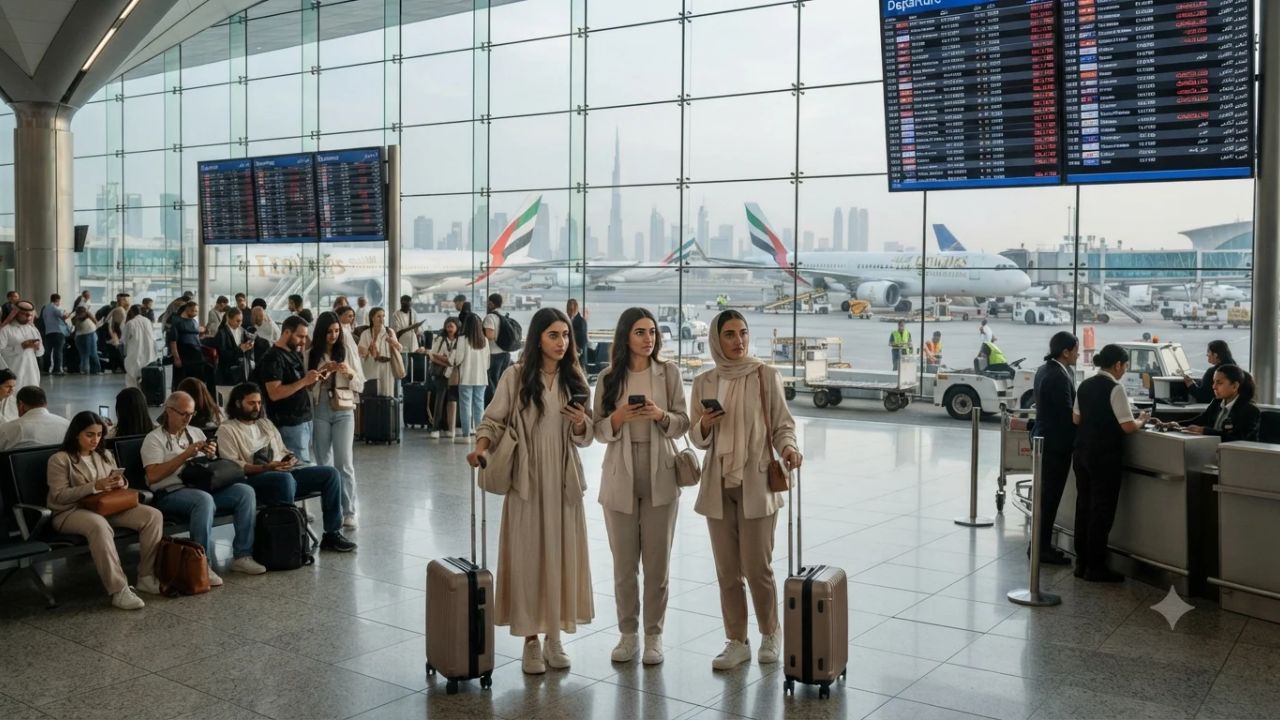
Image generated by AI
Rippling across critical global transit crossroads connecting Europe, Asia, and Africa, a severe wave of 895 flight delays and 67 outright cancellations hit Middle Eastern aviation hubs on September 17 and 18, 2026. Verified real-time operational figures recorded by FlightAware confirm that shifting regional airspace restrictions, tactical flight reroutings, and schedule compressions severely impacted the world’s premier super-connector hubs, with Istanbul Airport logging 191 delays and Saudi Arabia's King Abdulaziz International Airport in Jeddah absorbing 14 cancellations.
Strategic Chokepoints and Airspace Volatility: Why Middle East Hubs Suffer Cascading Shocks
The Middle East occupies a uniquely sensitive position in global civil aviation. The geographic corridor linking the Persian Gulf, the Levant, and the Anatolian peninsula functions as the primary aerial bridge between the industrial economies of Western Europe and the high-growth population centers of South Asia and the Asia-Pacific. However, because regional airspace is tightly constrained by military exclusion zones, volatile geopolitical security conditions, and narrow commercial flight paths, any sudden tactical closure forces immediate, multi-hour circumnavigations.
When commercial jetliners are compelled to divert around restricted flight information regions (FIRs), flight times expand unpredictably. Aircraft burn substantial contingency fuel reserves, arrival slots at destination hubs are missed, and ground crews face unexpected holding patterns. The September 17–18 disruption demonstrated how quickly these tactical reroutings overwhelm ground operations at mega-hubs like Dubai International Airport (DXB) and Istanbul Airport (IST).
In Turkey, Istanbul Airport recorded the highest total delay volume across the entire regional data set, logging 191 delayed departures alongside 7 cancellations. In the United Arab Emirates, Dubai International registered 141 delays and 8 cancellations, while neighboring Sharjah International Airport (SHJ) recorded 45 delays and 1 cancellation. These disruptions directly threatened the integrity of global connecting banks, stranding transit passengers whose inbound flights arrived well after their outbound connecting departures had closed.
Hub and Fleet Impact Audit: Operational Stress Across the Gulf and Levant
The operational fallout was felt unevenly across flag carriers and regional low-cost operators. Airlines faced stark choices between holding departures for late-connecting transfer passengers or pushing back on time to protect downstream aircraft rotations.
Flight tracking data reveals that schedule instability concentrated heavily across major national carriers managing sprawling international networks.
| Airport Gateway (IATA) | Delay Count | Cancellation Count | Dominant Carrier Exposure | Primary Operational Factor |
|---|---|---|---|---|
| Istanbul Airport (IST) | 191 Delays | 7 Cancellations | Turkish Airlines | Northern transit chokepoints & slot congestion |
| Dubai International (DXB) | 141 Delays | 8 Cancellations | Emirates, flydubai | High-density wave bank compression & apron holds |
| Jeddah King Abdulaziz (JED) | 132 Delays | 14 Cancellations | Saudia, Flyadeal | Peak airport cancellation volume across region |
| Antalya Airport (AYT) | 120 Delays | 1 Cancellation | SunExpress, charter operators | Heavy European holiday return charter delays |
| Riyadh King Khalid (RUH) | 110 Delays | 11 Cancellations | Saudia, Flynas | Domestic network adjustments & gate delays |
| Doha Hamad International (DOH) | 77 Delays | 3 Cancellations | Qatar Airways | Intercontinental bank schedule friction |
| Sharjah International (SHJ) | 45 Delays | 1 Cancellation | Air Arabia | Low-cost fleet rotation delays across Levant |
| Kuwait International (KWI) | 30 Delays | 1 Cancellation | Kuwait Airways, Jazeera Airways | Regional connection delays & slot metering |
| Amman Queen Alia (AMM) | 20 Delays | 2 Cancellations | Royal Jordanian | Airspace corridor detours across eastern Levant |
| Abha Regional (AHB) | 16 Delays | 8 Cancellations | Saudia, regional feeders | Elevated regional cancellation rate (9% origin) |
| Dubai Al Maktoum (DWC) | 10 Delays | 2 Cancellations | Cargo, charter & overflow | Secondary hub schedule adjustments |
| Erbil International (EBL) | 3 Delays | 1 Cancellation | Regional Iraqi carriers | Airspace transit limitations & regional feeder cuts |
At the airline level, Turkish Airlines recorded the highest absolute delay count among all carriers, accumulating 160 delayed flights (10 percent of its schedule) alongside 3 cancellations. In Saudi Arabia, national carrier Saudia registered the highest cancellation total, grounding 21 flights (3 percent of operations) while logging 74 delays (12 percent). The Kingdom’s regional network absorbed significant tactical reductions, with domestic outposts Gizan Regional (GIZ) and Najran Domestic (EAM) each recording 4 cancellations without delays as the carrier consolidated airframes.
In the UAE, Emirates absorbed 69 delays (13 percent) and 1 cancellation, while narrowbody sister carrier flydubai posted 36 delays (12 percent) and 6 cancellations (2 percent). In Qatar, Qatar Airways registered 66 delays (10 percent) and 1 cancellation at Hamad International. In Jordan, flag carrier Royal Jordanian logged 3 delays (2 percent) and 2 cancellations (1 percent).
The Super-Connector Dilemma: Wave Schedules and Missed Intercontinental Banks
The vulnerability of the Middle Eastern aviation model stems directly from its architectural reliance on wave-system scheduling. Mega-carriers do not operate random point-to-point flights; instead, they funnel hundreds of aircraft into tightly synchronized arrival and departure waves spanning early morning, mid-afternoon, and midnight blocks.
When an inbound long-haul flight from London, Paris, or Frankfurt is forced to fly a 40-minute southern detour around restricted airspace, it misses its assigned landing slot in Dubai or Doha. The delayed aircraft arrives at the gate after its corresponding outbound connection to Bangkok, Singapore, or Sydney has already pushed back.
This generates a severe logistical cascade: airport transit terminals fill with stranded passengers requiring emergency transit visas, meal vouchers, and overnight hotel accommodations. In cities like Jeddah and Riyadh, where regulatory directives issued by the General Authority of Civil Aviation (GACA Saudi Arabia) enforce strict passenger protection protocols, ground customer service desks were pushed to operational capacity rebooking travelers onto subsequent departures.
Expert Analysis: Airspace Geometry, Fuel Contingency Burdens, and Passenger Care Obligations
For airline chief operating officers, route planners, and international travelers, the direct consequence of persistent Middle Eastern airspace volatility is an immediate surge in operational costs that inevitably trickles down to ticket pricing. Flying circumnavigations around restricted flight zones forces airlines to uplift tons of additional reserve jet fuel on every widebody departure.
The pricing pressure this creates means that airlines operating narrow-margin long-haul routes face severe financial strain. Heavy fuel burn limits aircraft payload capacity, forcing carriers to cap cargo freight or restrict passenger seat sales on ultra-long-haul routes to stay within maximum takeoff weight limits.
From a regulatory standpoint, passengers caught in Middle Eastern hub disruptions must recognize that international carrier obligations are shaped by ticket origin. Under International Air Transport Association (IATA) standards, travelers booked on through-tickets with connecting itineraries are entitled to rebooking on the next available flight and duty-of-care provisions (meals and hotel lodging during overnight delays). However, statutory cash compensation does not typically apply when disruptions stem from sovereign airspace restrictions classified as non-compensable safety events.
To protect travel itineraries across volatile Middle Eastern transit corridors, long-haul travelers must abandon tight connection windows. When booking itineraries through Dubai, Doha, or Istanbul, passengers should deliberately select connecting layovers of three to four hours. Furthermore, securing comprehensive travel insurance with dedicated missed-connection coverage and keeping digital boarding passes readily accessible ensures that passengers can pivot smoothly when regional airspace constraints unravel the best-laid flight schedules.
Key Takeaways
- Extensive Hub Disruption: FlightAware confirmed 895 delayed flights and 67 cancellations across Middle Eastern aviation centers on September 17 and 18, 2026.
- Top Impacted Gateways: Istanbul Airport recorded the highest delay count with 191 delays, while Jeddah’s King Abdulaziz International Airport led cancellations with 14 scrubbed flights.
- Carrier Impact Metrics: Turkish Airlines recorded 160 delayed flights, while Saudia posted the highest cancellation total with 21 grounded flights (3 percent of operations).
- Airspace Rerouting Fallout: Tactical flight detours around restricted regional airspace caused missed landing slots and broken connecting banks at Dubai and Doha.
- Connection Buffer Mandate: International travelers transiting Gulf mega-hubs must schedule minimum three-hour layovers to insulate against cascading operational and airspace delays.
FAQ: Middle East Flight Disruptions 2026
What caused the 895 flight delays across Middle East airports?
The disruptions were caused by shifting regional airspace availability, security-related route modifications, heavy airport slot congestion, and rotational delays affecting tightly synchronized connecting flight banks.
Which airport recorded the highest number of flight delays?
Istanbul Airport (IST) in Turkey recorded the highest delay volume in the region, with 191 delayed departures and 7 cancellations.
Which airline cancelled the most flights during the disruption?
Saudia recorded the highest cancellation count among regional carriers, with 21 cancelled flights (3 percent of its daily schedule) alongside 74 delayed flights.
Are passengers entitled to compensation for airspace-related delays?
While airlines must provide duty-of-care accommodations (meals, refreshments, and hotel layovers) for long-haul connecting passengers, cash compensation is generally not mandatory when delays result from sovereign airspace closures or regional security directives.
Above the shifting crossroads of East and West, modern aviation reminds travelers that while jet engines can shrink continents, the sovereignty of the sky remains absolute.
Related Travel Guides
Hundreds of Travelers Impacted as 3,744 Delays Hit Asian Aviation Hubs
Minnesota MSP Airport Airline Cost Battle & Winter Hub Travel Guide
10-best-international-transit-lounges-middle-east-reddit-2026
Disclaimer
This article is for informational and educational purposes only. It does not constitute legal, financial, or professional advice. While we strive to provide accurate and up-to-date information, travel policies, regulations, and conditions change rapidly. Always verify information with official sources before making travel decisions. Nomad Lawyer makes no representations about the accuracy, reliability, completeness, or suitability of the information provided. Readers should consult qualified professionals for advice specific to their circumstances. The views expressed in this article are those of the author and do not necessarily reflect the views of Nomad Lawyer.
Preeti Gunjan
Contributor & Community Manager
A passionate traveller and community builder. Preeti helps grow the Nomad Lawyer community, fostering engagement and bringing the reader experience to life.
Learn more about our team →