
Mexico Travel Sees Cancún Airport Face Major International Passenger Drop with 846,000 Fewer Visitors
Mexico Travel Sees Cancún Airport Face Major International Passenger Drop with 846,000 Fewer Visitors

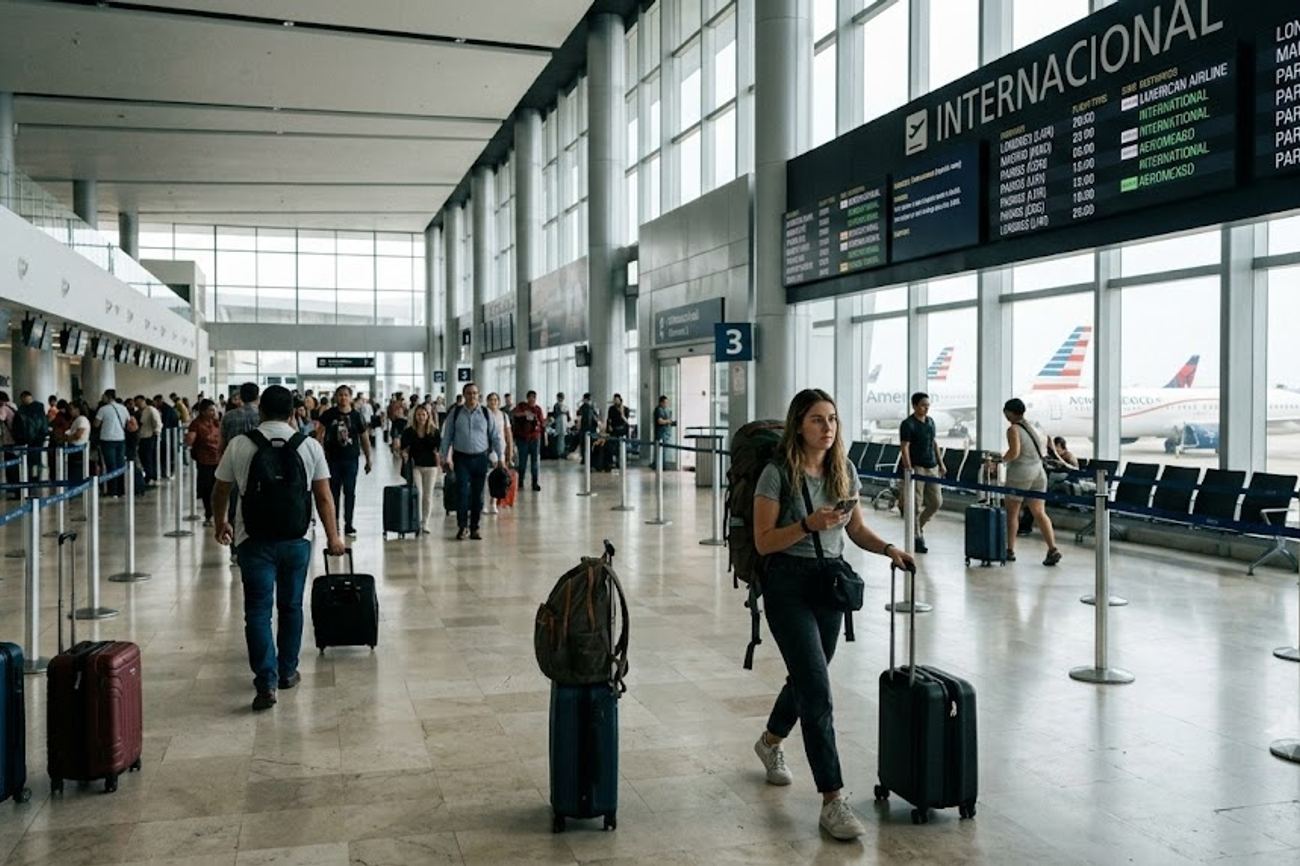
Image generated by AI
[Cancún, August 2026] — International passenger traffic at Cancún International Airport has plummeted by 845,714 visitors during the first eight months of 2026, signaling a sharp contraction in overseas demand for the Mexican Caribbean.
Data released by airport operator ASUR reveals a 6.1% decline in international arrivals between January and August 2026. The airport handled 12.93 million international passengers during this period, a significant drop from the 13.78 million recorded during the same window in 2025. This downturn is most pronounced in the month of August, where international arrivals fell by 15%, dropping from 1.40 million passengers in August 2025 to 1.19 million in August 2026.
The International Demand Slump
The immediate cause of the volatility is a weakening of international travel patterns, specifically impacting foreign markets. While total airport traffic—combining both domestic and international routes—fell by 5.7% (from 20.44 million to 19.28 million passengers), the burden of the loss is disproportionately borne by overseas travelers.
Domestic travel has remained comparatively resilient. Between January and August 2026, domestic passenger numbers dipped from 6.66 million to 6.34 million, representing a 4.8% decrease. The disparity is even more evident in August figures, where domestic traffic saw a marginal decline of only 0.6%, contrasting sharply with the 210,000-passenger loss in the international sector during the same month.
Markets and Infrastructure Impacted
The decline affects a broad spectrum of the regional tourism ecosystem, as Cancún serves as the primary gateway for the Mexican Caribbean. The following sectors and routes are most exposed:
- North American and European Corridors: These markets represent the primary source of demand for the region's luxury resorts and retail sectors.
- Regional Hospitality: While hotel occupancy is not directly linked to passenger counts, the loss of nearly 850,000 international visitors puts pressure on high-end service providers.
- Local Commerce: Restaurants, tour operators, and shopping districts in the Hotel Zone are directly reliant on the spending power of foreign arrivals.
- Airport Operations: As the largest hub operated by ASUR, any sustained drop in traffic affects the operational revenue and scaling of the facility.
Practical Traveler Advisory and Strategic Insights
For passengers currently booking travel to the Mexican Caribbean, the data suggests a shift in the destination's current dynamics. While the airport is seeing fewer international crowds, the luxury infrastructure is actually expanding.
Flight Availability and Pricing: A 15% drop in August international traffic may lead airlines to adjust capacity. Travelers might see fluctuations in flight frequency or aggressive pricing strategies as carriers attempt to fill seats during the late summer slump.
Accommodation Options: Despite the drop in arrivals, luxury capacity is increasing. The opening of the Grand Hyatt Cancun Beach Resort in Puerto Cancún (500 rooms) and the expansion of the St. Regis Costa Mujeres Resort (160 rooms) means more high-end inventory is hitting the market. This could lead to more competitive rates or better availability for luxury suites in the short term.
Crowd Levels: Travelers visiting during the shoulder seasons may experience less congestion at Cancún International Airport (CUN) and within the primary tourist zones compared to the record highs of 2025.
The Investment Paradox
A striking contradiction exists between current passenger data and long-term capital investment. While the Secretaría de Turismo (SECTUR) monitors these fluctuations, global hospitality brands are doubling down on the region.
The continued development of large-scale properties, such as the aforementioned Grand Hyatt and St. Regis projects, indicates that institutional investors view the current passenger decline as a temporary market correction rather than a structural collapse. Investors are betting on the long-term appeal of the Mexican Caribbean, prioritizing future demand over the current eight-month dip.
The economic contribution of a tourist is not measured solely by the number of arrivals. Shifts in traveler behavior—such as longer average stays or a transition toward higher-spending luxury demographics—could potentially offset the raw loss in passenger volume.
Winter Season Outlook
The industry is now looking toward the upcoming winter peak. Historically, the winter months are the most critical period for the region, as travelers from Canada, the United States, and Europe migrate south to avoid cold weather.
Whether the 6.1% decline is a seasonal anomaly or a broader trend will be determined by the Q4 2026 data. If international arrivals do not rebound during the winter surge, it may signal a deeper shift in global travel preferences or economic pressures affecting the primary source markets. For now, the region remains one of Latin America's most vital leisure gateways, and the focus remains on whether airline capacity will scale back or push through the current downturn.
FAQ: Cancún Travel 2026
Are flights to Cancún being cancelled? The report indicates a decline in passenger volume rather than widespread cancellations. However, a 15% drop in August international traffic suggests airlines may be adjusting schedules to match lower demand. Check your specific carrier for updated flight frequencies.
Is it a good time to book luxury hotels in Cancún? Yes. With new properties like the Grand Hyatt (500 rooms) and St. Regis (160 rooms) expanding the luxury inventory while international arrivals are down, travelers may find more availability and competitive pricing in the high-end segment.
Is domestic travel to Cancún also declining? Yes, but much less severely. Domestic traffic fell by 4.8% overall for the first eight months of 2026, and only 0.6% in August, showing that local Mexican tourism remains stable compared to the international market.
Why are hotels expanding if passenger numbers are falling? Investors are focusing on long-term growth and the inherent appeal of the Mexican Caribbean. They view the current dip in international arrivals as a short-term fluctuation rather than a permanent decline in the destination's popularity.
Monitoring the winter surge for signs of a global recovery.
#CUN-International-Traffic-2026 #ASUR-Passenger-Data #Cancun-Tourism-Trends #Mexican-Caribbean-Hospitality #CUN-North-America-Route
Related Travel Guides
Disclaimer
This article is for informational and educational purposes only. It does not constitute legal, financial, or professional advice. While we strive to provide accurate and up-to-date information, travel policies, regulations, and conditions change rapidly. Always verify information with official sources before making travel decisions. Nomad Lawyer makes no representations about the accuracy, reliability, completeness, or suitability of the information provided. Readers should consult qualified professionals for advice specific to their circumstances. The views expressed in this article are those of the author and do not necessarily reflect the views of Nomad Lawyer.
Preeti Gunjan
Contributor & Community Manager
A passionate traveller and community builder. Preeti helps grow the Nomad Lawyer community, fostering engagement and bringing the reader experience to life.
Learn more about our team →