
Mexico Bolsters Revillagigedo Marine Surveillance: Cabo San Lucas and Manzanillo Anchor 2026 Dive Season

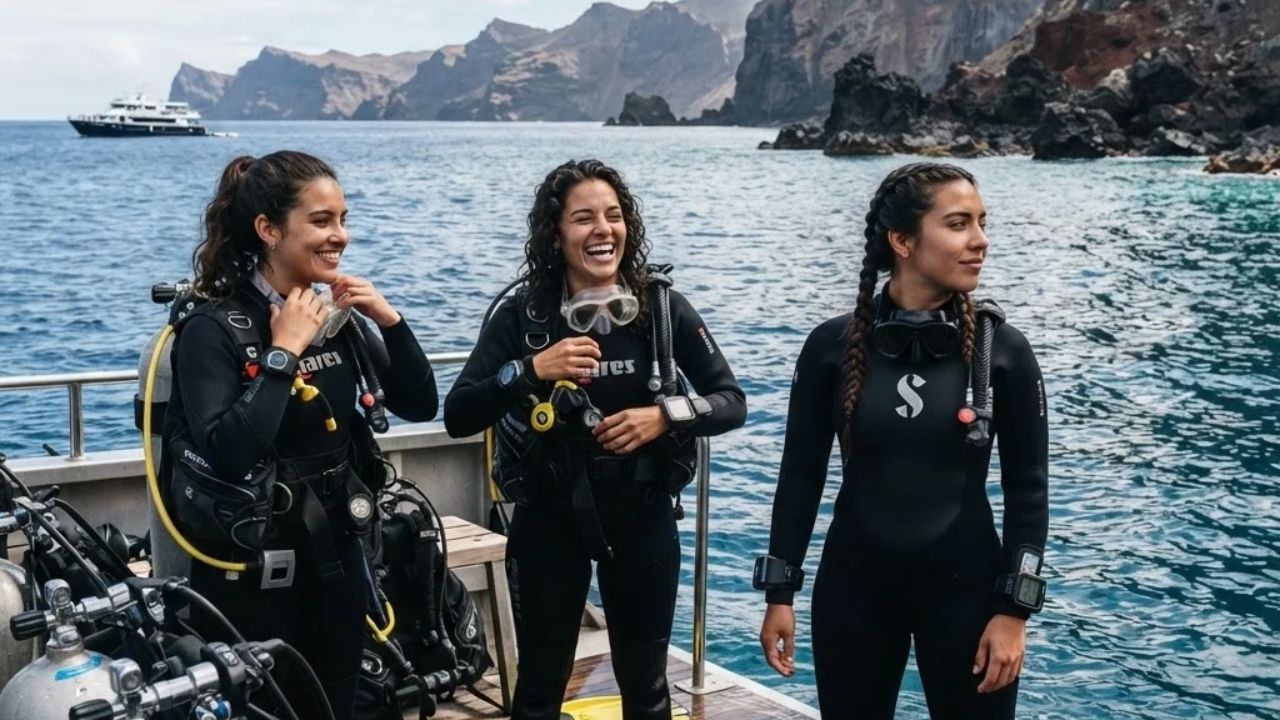
With the official November-to-June scuba diving season approaching, Mexico is deploying an inter-agency surveillance architecture combining satellite tracking and naval interdiction across Revillagigedo National Park’s 14.8 million hectares. Requiring 36 to 60 hours of open-Pacific transit from Cabo San Lucas and Manzanillo, the remote UNESCO archipelago enforces strict carrying capacities and a MXN 3,760 daily conservation fee without reducing approved visitor access.
The federal initiative unites Mexico’s environmental and maritime authorities to preserve one of the planet's most isolated marine ecosystems. Rather than restricting permitted expeditions, the operational focus targets illegal fishing, uncertified vessels, and illicit maritime activity. For international scuba divers and expedition operators, the 2026 pre-season developments reinforce that access to the "Galapagos of Mexico" depends on certified vessels, rigorous safety standards, and strict adherence to environmental carrying limits.
The Local Trend Revealed: Integrated Technology and Pre-Season Maritime Surveillance
On 7 July 2026, the Secretariat of Environment and Natural Resources (SEMARNAT) and the National Commission of Protected Natural Areas (CONANP) confirmed the design of an inter-institutional protection strategy for Revillagigedo National Park. The strategy deploys technological tools designed to detect, track, and intercept illegal activities before they harm fragile pelagic habitats.
This coordinated structure links multiple federal bodies: SEMARNAT, CONANP, the Federal Attorney for Environmental Protection (PROFEPA), the National Commission of Aquaculture and Fishing (CONAPESCA), the Attorney General’s Office, the Secretariat of the Navy (SEMAR), and the Secretariat of Foreign Affairs. Together, these entities are establishing rapid-response protocols to safeguard offshore waters.
The 2026 initiative represents a progression of specialized technological surveillance deployed across the archipelago over several years:
- 8 April 2025: CONANP confirmed the integration of Skylight and Global Fishing Watch satellite tracking platforms, using remote sensing data to intercept a vessel suspected of illicit fishing operations near Clarión Island.
- 9 February 2026: CONANP and SEMAR conducted comprehensive field evaluations assessing base infrastructure, communication technology, specialist personnel, and patrol boat availability, supplying upgraded field gear to offshore detachments.
- 7 July 2026: Federal authorities announced the comprehensive inter-agency strategy, standardizing real-time tracking data and legal prosecution workflows.
- 13 September 2026: Official CONANP operational guidance confirmed that tourist diving schedules, permitted visitor capacities, and standard entrance fees remain active without cancellations or administrative closures.
Revillagigedo Surveillance Evolution & Regulatory Milestones (2025–2026)
| Date | Institutional Action | Operational Impact on Tourism |
|---|---|---|
| 8 April 2025 | Deployment of Skylight and Global Fishing Watch satellite surveillance platforms | Confirmed satellite monitoring across remote marine boundaries prior to new directives |
| 9 February 2026 | Joint CONANP and SEMAR technical audit; delivery of specialized marine field equipment | Reinforced naval response capabilities and safety monitoring at remote island stations |
| 7 July 2026 | Announcement of multi-agency enforcement strategy linking SEMARNAT, PROFEPA, and SEMAR | Established formalized inter-agency response protocols surrounding protected dive circuits |
| 13 September 2026 | CONANP verification of November–June season parameters and visitor fee schedule | Validated that regulated diving expeditions proceed normally without tourist quotas or bans |
Mainland Gateways: Navigating Cabo San Lucas and Manzanillo Transit Chains
Revillagigedo is not a resort destination. Located hundreds of kilometers off Mexico’s Pacific coastline, the volcanic archipelago possesses no hotels, commercial airfields, public docks, or tourist supply depots. While naval stations operate on Socorro and Clarión, all terrestrial station accommodations are reserved exclusively for military personnel, CONANP rangers, and accredited scientific researchers.
Scuba divers experience the national park entirely aboard self-sufficient, commercially certified liveaboard vessels departing from two official mainland staging ports.
Mainland Gateway Logistics and Maritime Approaches
| Mainland Port | State / Region | Transit Distance | Approximate Sea Crossing | Logistics Role |
|---|---|---|---|---|
| Cabo San Lucas | Baja California Sur | 471 km | 36 hours | Primary staging hub; closest continental departure point with direct international aviation links |
| Manzanillo | Colima | 694 km | 60 hours | Secondary sea corridor; serviced by Manzanillo International Airport (ZLO) for specialized expeditions |
Because open-ocean passages take 36 to 60 hours each way across variable Pacific swells, gateway scheduling demands careful planning. Weather delays in Cabo San Lucas or Manzanillo cannot be made up on the water, making arrival buffers before boarding vital for travelers.
Operational Diver Mandates: Safety Ratios, Daily Fees, and NOM-012 Standards
Regulated tourism within Revillagigedo National Park operates under precise parameters established by CONANP and standard NOM-012-TUR-2016, the federal rule governing commercial diving services across Mexico.
Key operational requirements for the November-to-June season include:
- Official Operating Windows: CONANP’s traveler portal lists visitor diving hours from 07:00 to 18:00, while the formal National Park Management Programme defines diving hours from 07:00 until 30 minutes before sunset. Liveaboard operators coordinate dive schedules daily with park rangers to ensure compliance.
- Prohibition on Night Diving: Night diving is strictly prohibited throughout the entire national park reserve to prevent disturbance to nocturnal marine species and manage diver risk in high-current waters.
- Diver Experience Verification: Every diver must present recognized national or international certification credentials verifying advanced open-water proficiency and comfort in deep ocean currents.
- Guiding Ratios & Immersion Limits: Regulations establish a maximum ratio of eight divers per certified dive guide and cap daily immersion at four dives per diver.
- Site Exclusivity & Congestion Limits: No two dive groups may occupy the same dive site simultaneously. At isolated pinnacles such as Roca Partida, when three or more boats are present (with a maximum threshold of five vessels referenced in the management regulations), authorities enforce strict rotational schedules and immersion durations.
- Vessel Safety Equipment: All liveaboard boats must carry complete first-aid kits, dedicated emergency oxygen therapy apparatus, abundant potable water, surface marker buoys, and official dive flags.
- Environmental & Geological Shutdown Authority: Park managers retain legal authority to suspend diving activities immediately during adverse hydrometeorological conditions or seismic-volcanic events.
- Mandatory Conservation Fees: CONANP mandates a daily park fee of MXN 3,760 per person per day. Eligible students and educators carrying valid institutional identification receive a 50 per cent reduction.
Historical data underscores the necessity of these carrying limits. In 2014, CONANP calculated an estimated effective carrying capacity of 56,340 dives across seven primary sites. By the 2017 season, recorded dives reached approximately 61,600, prompting annual reviews of site-specific limits to ensure diving pressure remains sustainable.
Under NOM-012-TUR-2016, every dive operator must hold an active registration in the National Tourism Registry (RNT), employ certified bilingual dive masters, maintain comprehensive civil liability insurance, and provide transparent emergency action plans.
Cultural & Environmental Value: Protecting North America's Largest Marine Sanctuary
Covering approximately 14.8 million hectares, Revillagigedo National Park protects four volcanic islands: Socorro, San Benedicto, Clarión, and the precipitous sea stack of Roca Partida. Inscribed on the UNESCO World Heritage List in 2016 and declared a fully protected national park in 2017, the reserve is the largest fully protected marine protected area in North America.
The archipelago serves as a critical convergence zone for pelagic wildlife. Subsurface currents drive nutrient-rich upwellings that sustain massive aggregations of giant oceanic manta rays (Mobula birostris), scalloped hammerhead sharks (Sphyrna lewini), silky sharks, Galapagos sharks, whitetip reef sharks, and pods of bottlenose dolphins. From January through April, migratory humpback whales congregate in the surrounding waters to calve and nurse.
Federal authorities highlighted in July 2026 that surveillance technologies and inter-agency enforcement models refined at Revillagigedo will serve as the governance template for marine protected areas across Mexico, including Cabo Pulmo, Loreto Bay, and the Gulf of California.
Visitor Insider Tips: Navigating the Pacific Liveaboard Expedition
Reaching and experiencing Revillagigedo requires deliberate preparation and respect for remote oceanic wilderness:
- Strategic Seasonal Windows: The official season extends from November through June. November and early December bring warm ocean temperatures (24°C–26°C / 75°F–79°F) and calm seas, ideal for giant manta encounters at San Benedicto's El Boiler. January through March sees water temperatures dip to 21°C–23°C (70°F–73°F), accompanied by migrating humpback whale pods and schooling hammerheads. Late spring (May and June) brings whale sharks and massive pelagic baitballs around Roca Partida.
- Marine Code of Conduct: Touching, riding, or chasing marine life is strictly illegal. Divers should position themselves along underwater volcanic shelves and allow giant mantas to initiate proximity. Dive gloves and knives are prohibited under park rules to prevent unintentional reef contact.
- Baja and Colima Culinary Staging: Before embarkation, sample authentic regional cuisine. In Cabo San Lucas, visit the marina for traditional smoked marlin tacos (tacos de marlin ahumado), fresh sea bass ceviche, and local Baja California wines. In Manzanillo, try Colima-style ceviche prepared with finely shredded sailfish and key lime juice, savory pork tatemado, and iced tuba, a traditional coconut palm beverage sprinkled with roasted peanuts.
- Open-Ocean Medical Preparation: The 36-hour transit from Cabo San Lucas and the 60-hour voyage from Manzanillo cross open Pacific swell. Divers prone to motion sickness should apply preventative transdermal scopolamine patches or take recommended medication several hours before the vessel departs sheltered waters.
- Park Fee Transparency: Travelers should verify with their booking agent whether the MXN 3,760 daily CONANP fee is bundled into their package rate or collected separately prior to departure.
Tourism Outlook: Remote Conservation-Led Travel as a Global Template
Mexico's enhanced surveillance network demonstrates that the future of high-value eco-tourism relies on strict environmental oversight rather than unrestrained visitor growth. By pairing satellite intelligence with active naval patrols, Mexico protects its marine heritage while ensuring certified liveaboard operators deliver safe, world-class expeditions.
For expedition divers, the stricter enforcement posture guarantees that Revillagigedo’s waters remain pristine, secure, and wild for decades to come.
Related Travel Guides
Canada's Gwaii Haanas Travel Guidance: Advance Booking via Vancouver and Prince Rupert
Los Cabos Tourism and Luxury Travel Growth in Baja California Sur
10 Best Scuba Diving Liveaboard Routes in the Mexican Pacific for 2027
Disclaimer
This article is for informational and educational purposes only. It does not constitute legal, financial, or professional advice. While we strive to provide accurate and up-to-date information, travel policies, regulations, and conditions change rapidly. Always verify information with official sources before making travel decisions. Nomad Lawyer makes no representations about the accuracy, reliability, completeness, or suitability of the information provided. Readers should consult qualified professionals for advice specific to their circumstances. The views expressed in this article are those of the author and do not necessarily reflect the views of Nomad Lawyer.
Raushan Kumar
Founder & Lead Developer
Full-stack developer with 11+ years of experience and a passionate traveller. Raushan built Nomad Lawyer from the ground up with a vision to create the best travel and law experience on the web.
Learn more about our team →