
Mexico Expands MICE Tourism Infrastructure Across Yucatán, Jalisco, and Quintana Roo in 2026
Mexico is diversifying its business tourism strategy, integrating high-security MICE infrastructure in Yucatán with luxury resort hubs in Jalisco and Quintana Roo to attract international corporate events.

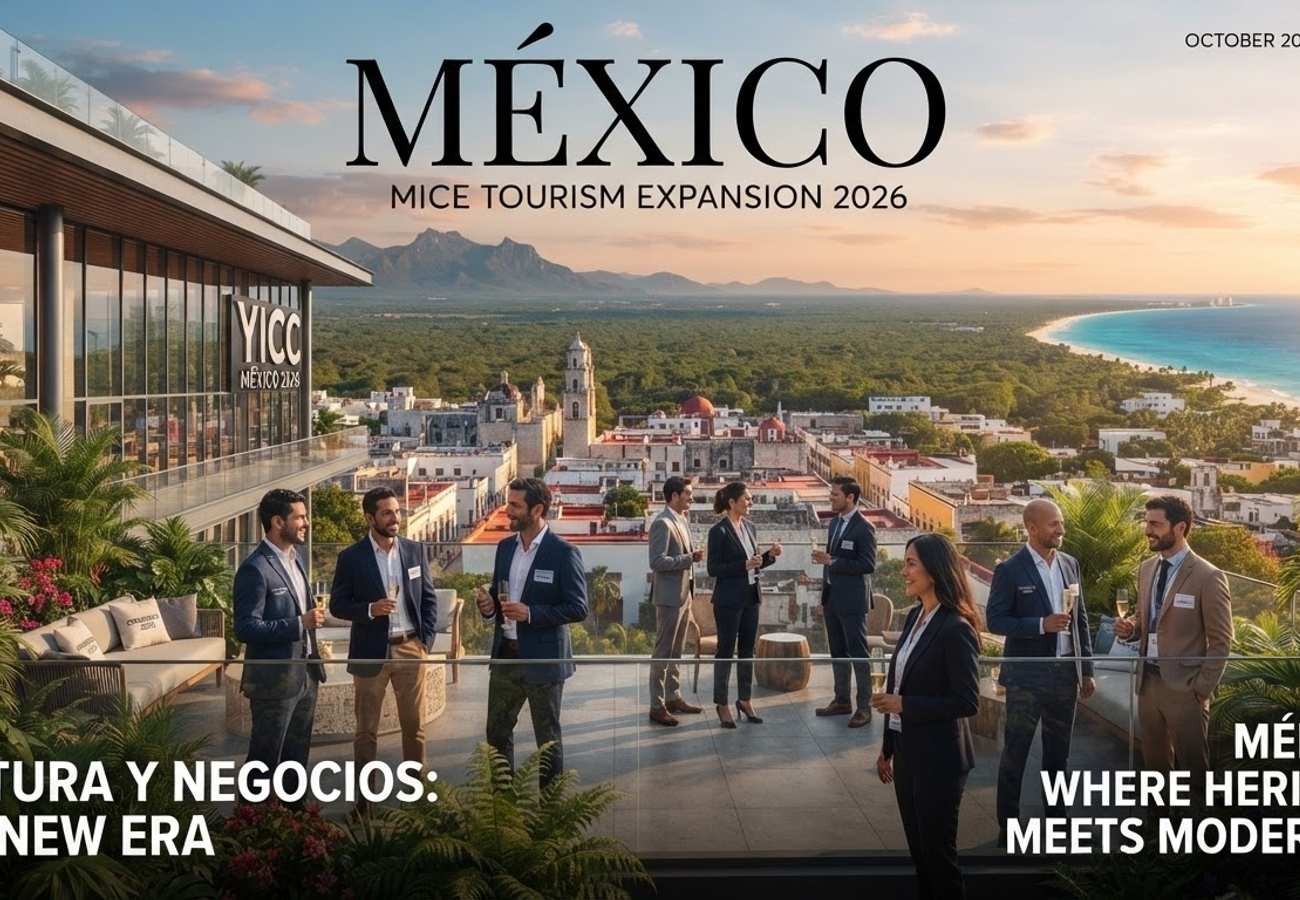
Image generated by AI
Mexico is aggressively diversifying its corporate appeal, moving beyond traditional beach resorts to integrate high-security MICE (Meetings, Incentives, Conferences, and Exhibitions) hubs in Yucatán and Jalisco. This strategic shift offers event planners a sophisticated network of venues that blend industrial capacity with deep cultural heritage.
The traditional image of Mexico as solely a leisure destination is evolving. A coordinated effort across multiple states is transforming the country into a multifaceted business hub. While Quintana Roo remains a powerhouse for resort-led incentives and Caribbean-front conventions, the focus has shifted toward regional diversification. Jalisco is cementing its status as a primary business engine via Guadalajara, while Yucatán is positioning Mérida as a secure, culture-centric alternative for high-level international delegations.
Central to this expansion is the national 2025 Catalogue of Venues. This federal framework categorizes infrastructure into four distinct zones—Centre, Maya, North, and Occident—ensuring that corporate organizers can match their event needs to specific regional strengths, whether it be the industrial scale of the North or the heritage-rich venues of the Maya region.
The Yucatán Pivot: Security as a Luxury Asset
At IBTM Americas 2026, the Yucatán Tourism Office and the Mérida Convention and Visitors Bureau signaled a departure from standard tourism marketing. Ricardo Mier, Director at the Yucatán Tourism Office, identified security not as a talking point, but as a core value proposition.
For the corporate traveler, the real impact is the freedom of movement. Yucatán is currently positioned as one of the safest destinations in the Americas, allowing conference attendees to move between venues, dining districts, and hotels during evening hours with confidence. This safety profile is designed to attract high-net-worth corporate groups and government delegations who prioritize risk management.
However, the strategy extends beyond safety. Mérida is leveraging a "comprehensive ecosystem" that pairs a major convention center with a network of specialized service providers. The goal is a hybrid experience: mornings spent in high-tech meeting rooms, and afternoons exploring cenotes, Maya archaeological sites, or the state's renowned gastronomy.
Regional MICE Specializations Across Mexico
The current growth is not uniform but specialized. Different states are carving out niches to avoid internal competition and provide a broader palette for event planners.
| State | MICE / Meetings Strength | Tourism Proposition | Market Assessment |
|---|---|---|---|
| Yucatán | High-security infrastructure; Mérida Convention Center | Maya culture, cenotes, gastronomy | High-growth secure hub |
| Jalisco | Substantial convention and hotel capacity | Guadalajara business + Puerto Vallarta resorts | Top-tier MICE state |
| Quintana Roo | Resort-led incentives and Caribbean facilities | Beachfront luxury and Caribbean experiences | Major incentive leader |
| Guanajuato | 6 MICE destinations and 11 venues | San Miguel de Allende, León, luxury heritage | Top-tier hybrid hub |
| Baja California Sur | Sophisticated resort and incentive infrastructure | Los Cabos luxury, golf, and cruise tourism | Major luxury incentive |
| Mexico City | Largest metropolitan meetings ecosystem | Global connectivity, museums, gastronomy | National MICE leader |
| Baja California | Border-oriented infrastructure (Tijuana/Mexicali) | Wine tourism and US-border connectivity | Strong business tourism |
Cultural & Environmental Value
The shift toward regional MICE tourism is driving a new wave of sustainable development. By pushing business travel into cities like Mérida and Guadalajara, Mexico is reducing the "over-tourism" pressure on the Caribbean coast. For the visitor, this means a more authentic encounter with regional heritage—such as the colonial architecture of the Occident region or the jungle environments of the Maya zone—rather than the sterilized experience of a mega-resort.
This diversification supports local economies by distributing corporate spending across a wider array of local vendors, from boutique catering services in Guanajuato to indigenous guides in Yucatán.
Visitor Insider Tips
For those planning a business trip or corporate retreat in these emerging hubs:
- The Mérida Window: To avoid the peak humidity and heat of the Yucatán, schedule corporate events between November and February. This is also the ideal time for outdoor "incentive" activities at cenotes.
- Cultural Etiquette: When visiting "Magical Towns" (Pueblos Mágicos) for corporate retreats, prioritize hiring local community-led guides. This is highly encouraged by regional tourism bodies to ensure economic benefits remain within the village.
- Dining for Business: In Yucatán, move beyond the hotel buffets. Organize "gastronomic tours" focusing on Cochinita Pibil and Sopa de Lima to provide delegates with a genuine taste of the region.
- Logistics: When using the Occident region (Jalisco), utilize the connectivity between Guadalajara's business district and Puerto Vallarta's coast to create a "work-hard, play-hard" itinerary.
Tourism Outlook
The long-term trajectory for Mexico's tourism sector is one of professionalization and spread. By integrating security, infrastructure, and cultural identity, the country is moving away from a seasonal leisure model toward a year-round business model. As more states integrate into the federal Catalogue of Venues, Mexico is likely to see a rise in "bleisure" (business + leisure) travel, where professional gatherings serve as the gateway to deeper regional exploration.
Mexico is no longer just a destination for the vacationer; it is becoming a sophisticated stage for global commerce.
Related Travel Guides
Disclaimer
This article is for informational and educational purposes only. It does not constitute legal, financial, or professional advice. While we strive to provide accurate and up-to-date information, travel policies, regulations, and conditions change rapidly. Always verify information with official sources before making travel decisions. Nomad Lawyer makes no representations about the accuracy, reliability, completeness, or suitability of the information provided. Readers should consult qualified professionals for advice specific to their circumstances. The views expressed in this article are those of the author and do not necessarily reflect the views of Nomad Lawyer.
Preeti Gunjan
Contributor & Community Manager
A passionate traveller and community builder. Preeti helps grow the Nomad Lawyer community, fostering engagement and bringing the reader experience to life.
Learn more about our team →