
Mexico’s Community Tourism Revolution: Loreto Marine Bans and Oaxaca’s Zapotec Sierra Norte Alliance
Mexico is transforming its tourism model from mass resort hubs to community-governed destinations, banning large cruise ships in Loreto through 2030 while investing MX$25 million in Oaxaca's Pueblos Mancomunados.

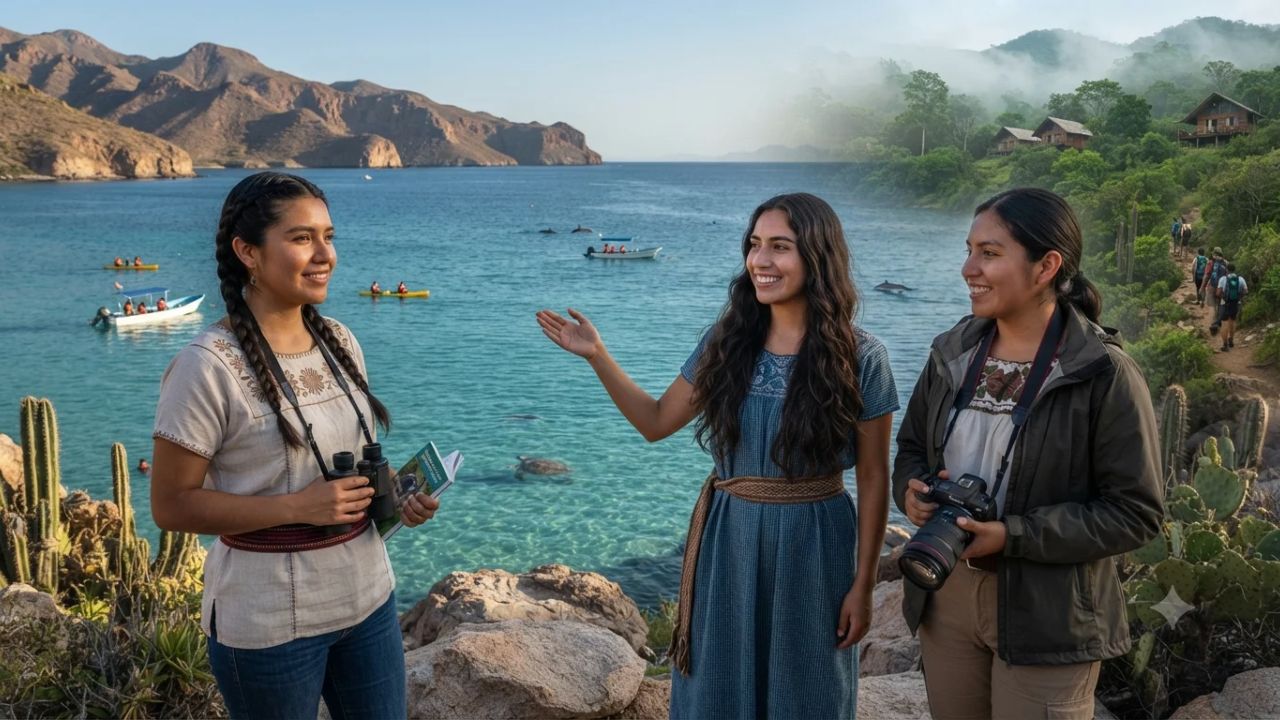
In an unprecedented stand for ecological sovereignty, port authorities in Loreto have officially rejected all international cruise ship arrival applications from 2026 through 2030 to shield over 200,000 hectares of pristine marine sanctuary in the Sea of Cortez. Coupled with a landmark MX$25 million federal investment in the indigenous Zapotec Pueblos Mancomunados of Oaxaca, Mexico is rewriting its national tourism playbook around local governance, biodiversity protection, and community-owned travel enterprises.
For decades, the standard narrative of Mexican travel was defined by large-scale coastal resorts and mega-infrastructure projects. However, Mexico’s Tourism Sector Programme 2025–2030 and Fonatur’s 2026–2030 strategic frameworks reflect a deliberate pivot toward grassroots stewardship. Across two distinct ecological landscapes—the desert-fringed waters of Baja California Sur and the misty pine-oak cloud forests of Oaxaca's Sierra Norte—local communities are proving that environmental conservation is the most durable economic strategy for authentic travel.
The Loreto Precedent: Barring Megaships to Defend Bahía de Loreto
The environmental debate in Loreto reached a turning point in mid-2026. In April 2026, a federal measure briefly reclassified Loreto’s maritime port status to accommodate international deep-sea navigation. Recognizing the acute ecological risks posed by deep-draft cruise liners to the delicate marine nursery of the Sea of Cortez, local civic organizations, eco-tour operators, and environmentalists mobilized immediately.
By May 2026, the federal government officially repealed the measure, returning the port to domestic cabotage status. The Secretariat of Environment and Natural Resources (SEMARNAT) subsequently confirmed that international cruise ships under deep-sea navigation rules would not be permitted. Backing this policy, the Baja California Sur Port Administration formally rejected all cruise line arrival applications spanning 2026 through 2030.
The decision safeguards Bahía de Loreto National Park, a protected marine sanctuary spanning more than 200,000 hectares that serves as a critical breeding ground for blue whales, humpbacks, fin whales, and sea lions. By prioritizing small-scale panga excursions, artisanal sportfishing, and low-impact sea kayaking over thousands of single-day cruise passengers, Loreto has chosen long-term biological preservation over rapid tourist turnover.
| Destination & Framework | Governance Model | Geographic & Environmental Focus | 2026 Policy & Financial Milestones | Primary Visitor Experience |
|---|---|---|---|---|
| Loreto (Baja California Sur) | Municipal & National Marine Park Management | Over 200,000 hectares in Bahía de Loreto National Park | Cruise applications barred from 2026 to 2030; return to cabotage status | Blue whale watching, island kayak expeditions, artisanal diving |
| Pueblos Mancomunados (Oaxaca) | Indigenous Zapotec Community Assembly (INPI oversight) | 8 highland mountain villages across Sierra Norte cloud forests | April 2026 Fonatur pact; MX$25M federal infrastructure investment | High-altitude hiking, singletrack cycling, traditional herbal medicine |
| Federal Tourism Policy (2025–2030) | Multi-agency regional decentralization | Underserved rural and protected indigenous territories | Focus on water treatment, waste management, and direct community fund control | Community-owned homestays, regenerative agriculture tours |
Oaxaca’s Sierra Norte: Eight Zapotec Villages Leading Regenerative Travel
Hundreds of kilometres southeast in the Sierra Madre de Oaxaca, the Pueblos Mancomunados provide a working blueprint for indigenous-led ecotourism. Comprising eight Zapotec mountain villages—Santa María Yavesía, Santa Catarina Lachatao, San Miguel Amatlán, Santa Martha Latuvi, Benito Juárez, San Antonio Cuajimoloyas, San Isidro Llano Grande, and La Nevería—the alliance has practiced communal forestry and territorial self-governance for generations.
In April 2026, Mexico's tourism development board Fonatur signed an agreement with the Government of Oaxaca to formally recognize and strengthen Pueblos Mancomunados as an official Community Tourism Destination. In partnership with the National Institute of Indigenous Peoples (INPI), the federal government allocated an initial MX$25 million infrastructure fund administered directly by the traditional village assemblies rather than outside commercial developers.
Operating through their dedicated community agency, Expediciones Sierra Norte, the eight villages reinvest tourism earnings directly into solar installations, communal water filtration systems, local schools, and sustainable forest management. Visitors hike and cycle along ancient Zapotec mountain paths, sleep in stone-and-adobe communal cabins, and share traditional meals prepared with heirloom corn, wild mushrooms, and mountain herbs.
What Sets Mexico's Community-Led Tourism Model Apart
Unlike conventional eco-resorts managed by external corporate conglomerates, community tourism in Mexico places land rights and decision-making power directly in local hands. In Pueblos Mancomunados, village assemblies vote collectively on visitor quotas, trail maintenance rotations, and conservation zoning. Tourism does not displace traditional forestry or milpa agriculture; it supplements rural livelihoods.
In Loreto, local panga captains—many of whom transitioned from commercial fishing to eco-guiding—are certified by national park rangers to ensure boats maintain strict distances from migrating cetaceans in the UNESCO World Heritage Site islands of the Gulf of California. This creates a tourism economy where visitors interact directly with the people who have inhabited and protected these territories for generations.
Visitor Insider Tips
- Booking Pueblos Mancomunados Treks: Never attempt to hike between the Sierra Norte villages without reserving through the official Expediciones Sierra Norte office in Oaxaca City. They arrange mandatory local Zapotec community guides, trail passes, luggage transfers between villages, and communal cabin bookings.
- Altitude Adaptation in Sierra Norte: Villages like San Antonio Cuajimoloyas and La Nevería sit above 3,000 metres (9,800 feet) elevation. Spend at least two days acclimatizing in Oaxaca City (1,550 metres) before embarking on multi-day hiking or mountain biking traverses.
- Blue Whale Timing in Loreto: The optimal window for encountering blue whales and fin whales in Bahía de Loreto runs from late January through March. Book early morning boat departures with licensed local captains at the Loreto marina when surface winds on the bay are calmest.
- Local Etiquette and Communal Rules: In Zapotec villages, always ask for permission before photographing residents or communal ceremonies. Single-use plastic water bottles are discouraged; carry a refillable insulated bottle to use at purified communal filling stations.
Cultural and Environmental Context
The dual strategies in Loreto and Oaxaca address core environmental vulnerabilities facing Mexico’s biodiversity hotspots. In Bahía de Loreto, preventing megaship traffic eliminates severe risks related to ballast water discharge, underwater acoustic disturbance that disorients marine mammals, and localized sewage dumping.
In the Sierra Norte, community-managed forests act as critical carbon sinks and natural watershed protectors for the central valleys of Oaxaca. By generating direct revenue from low-impact trekking and mountain biking, the Zapotec communities eliminate economic pressure to clear old-growth oak and pine stands for timber. Travelers actively participate in this conservation model by paying direct community conservation fees and respecting indigenous territorial autonomy.
FAQ: Visiting Loreto and Oaxaca's Pueblos Mancomunados 2026
Why are cruise ships not visiting Loreto between 2026 and 2030?
Port and environmental authorities rejected international cruise applications to protect the fragile marine ecology of Bahía de Loreto National Park, focusing instead on small-boat ecotourism and whale conservation.
How do I get to Pueblos Mancomunados from Oaxaca City?
The villages are located roughly 60 to 90 kilometres northeast of Oaxaca City. Expediciones Sierra Norte arranges shared van transfers or private transport directly to trailheads in Llano Grande, Cuajimoloyas, or Latuvi.
Do I need a guide to hike in the Sierra Norte?
Yes. Hiring a local community guide from each village is mandatory to support village families, ensure trail safety in high-altitude terrain, and learn about local medicinal plants and Zapotec culture.
What is the best season for visiting both regions?
November through April offers ideal conditions: mild, dry weather for trekking in Oaxaca's highlands and prime marine mammal migration in the calm waters of Loreto.
By placing conservation and indigenous ownership at the heart of the journey, Loreto and Oaxaca show that the future of travel lies in honoring the land and its people.
Related Travel Guides
Disclaimer
This article is for informational and educational purposes only. It does not constitute legal, financial, or professional advice. While we strive to provide accurate and up-to-date information, travel policies, regulations, and conditions change rapidly. Always verify information with official sources before making travel decisions. Nomad Lawyer makes no representations about the accuracy, reliability, completeness, or suitability of the information provided. Readers should consult qualified professionals for advice specific to their circumstances. The views expressed in this article are those of the author and do not necessarily reflect the views of Nomad Lawyer.
Naina Thakur
Contributor & Travel Specialist
Travel enthusiast and legal writer covering visa regulations, responsible tourism, and cultural journeys across global destinations.
Learn more about our team →