
Massive Memorial Day Holiday Weather Mayhem Triggers 700 Plus Flight Cancellations and Delays Disrupting American, Delta, United, Air Canada, British Airways, Lufthansa, and Air India Across ATL, JFK, and LAX: New Airline News and Aviation Updates
Severe weather and FAA ground stops during the Memorial Day holiday trigger over 700 flight delays and cancellations, disrupting 2.7 million travelers across major U.S. hubs.

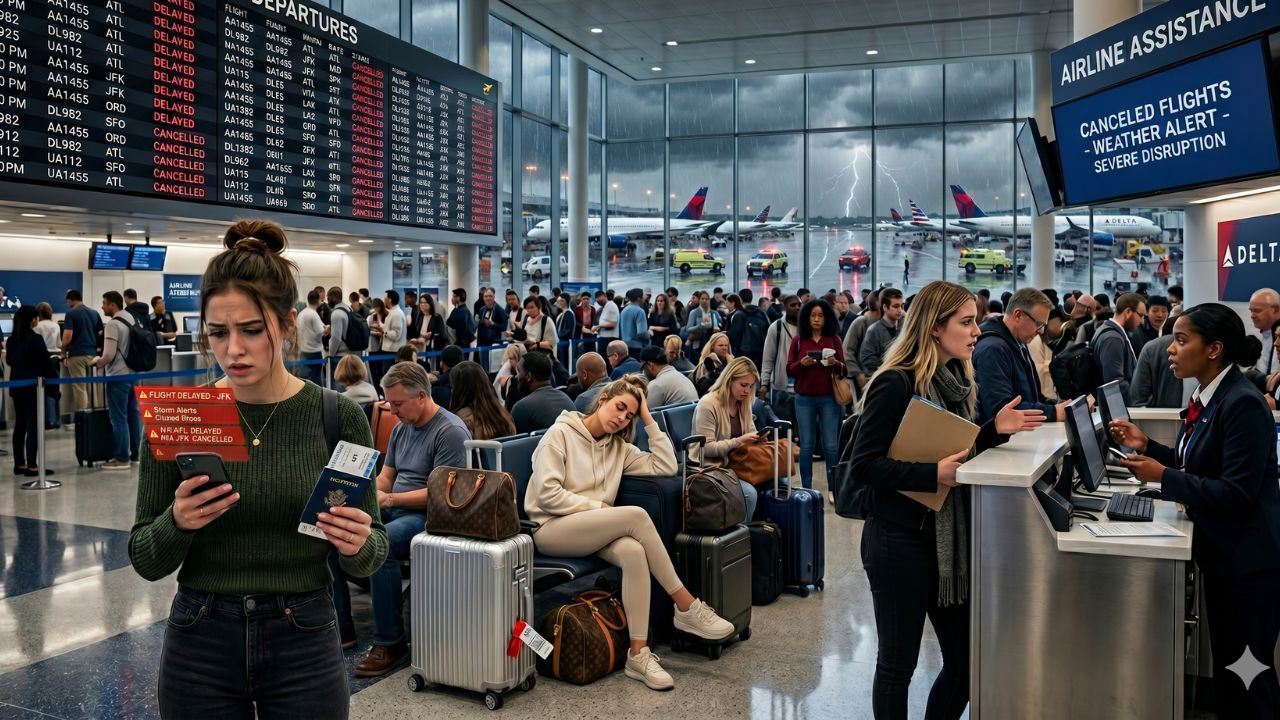
Image generated by AI
In a devastating blow to holiday mobility during one of the year's busiest travel periods, severe spring weather has ignited massive scheduling gridlock across the United States. Hartsfield-Jackson Atlanta International Airport (ATL), John F. Kennedy International Airport (JFK) in New York, and Los Angeles International Airport (LAX) are currently grappling with 700 plus flight delays and cancellations. Triggered by severe thunderstorms, heavy rainfall, and subsequent Federal Aviation Administration (FAA) traffic management restrictions, the cascading disruptions have left more than 2.7 million holiday travelers from Canada, Mexico, the United Kingdom, Germany, and India facing extreme terminal congestion, sweeping flight cancellations, frustrating airport disruptions, and unprecedented travel chaos. Legacy and international carriers, including American Airlines, Delta Air Lines, United Airlines, Air Canada, British Airways, Lufthansa, and Air India, are scrambling to adjust flight schedules in what has become a defining story in modern airline news and global aviation updates.
By introducing direct passenger coordination and dynamic scheduling backups, the regional aviation hubs target growing passenger demand across vital commerce sectors. The choice to coordinate flight departures in phases helps to manage gate capacity, supporting the country's broader regional transportation network.
Context: Severe Spring Weather Triggers FAA Ground Stops
The scheduling disruptions began in earnest on Friday, May 22, 2026, as severe weather systems carrying heavy rain and thunderstorms swept across the southeastern United States. To maintain safety, the FAA initiated a Traffic Management Program, implementing strict sequencing delays that drastically constrained takeoff and landing rates. At the peak of the storms, a mandatory ground stop was issued for all flights destined for Hartsfield-Jackson Atlanta International Airport, temporarily halting aircraft across their domestic and international networks.
When weather hits during peak holiday surges, the strain on airport infrastructure—such as security check-in checkpoints and gate availability—is amplified. The resulting scheduling gridlock quickly spilled over to other major transcontinental hubs, creating aircraft rotation bottlenecks and crew scheduling conflicts that grounded regional and long-haul operations. To review active air traffic control updates, airspace delays, or regulatory flight restrictions, passengers can visit the official Federal Aviation Administration dashboard.
Section-Wise Breakdown of Affected Airport Gateways
Hartsfield-Jackson Atlanta International Airport (ATL)
Hartsfield-Jackson Atlanta International Airport, the central hub for Delta Air Lines, was the primary epicenter of the weather mayhem. The FAA-mandated ground stop and subsequent runway flow controls resulted in massive terminal congestion, leaving thousands of travelers waiting in long queues at security checkpoints. Ground support teams worked continuously to clear gate double-bookings, but rolling delays quickly compromised tight connections across Delta's massive domestic hub. For real-time flight boards, departures status, and ground travel updates, passengers can consult the official Hartsfield-Jackson Atlanta International Airport portal.
John F. Kennedy International Airport (JFK)
New York's John F. Kennedy International Airport served as a major secondary bottleneck as transatlantic flights suffered cascading late arrivals. Large widebody aircraft operated by British Airways, Lufthansa, Air India, and Air Canada faced extensive taxiway holds as ground handling teams managed arriving international flights. The delays compromised onward connections to Europe, the Middle East, and Asia, stranding holidaymakers inside Terminal 4 and Terminal 8.
Los Angeles International Airport (LAX)
On the West Coast, Los Angeles International Airport experienced significant spillover impacts as inbound flights from the East Coast and South arrived behind schedule. Aircraft rotation issues—where an aircraft is delayed on its incoming leg, subsequently delaying all future scheduled departures—prevented timely departures to major transpacific and domestic destinations. Passenger lounges were packed to capacity as airlines struggled to secure alternative seats for affected travelers.
Holiday Disruption Flight and Route Details
To help passengers and corporate travel managers identify affected services, the following list and table detail the core carriers, hub operations, and impacted routes:
- Delta Air Lines: Heavily affected at its primary ATL hub, disrupting core high-frequency domestic and transatlantic routes.
- American Airlines & United Airlines: Experienced substantial delay cascading across their primary JFK, ORD, and LAX networks.
- Air Canada: Suffered extensive flight cancellations and delays on flight corridors linking Toronto (YYZ) and Montreal (YUL) with the U.S. East Coast.
- British Airways & Lufthansa: Suffered transatlantic schedule shifts, affecting long-haul connections to London Heathrow and Frankfurt.
- Air India: Experienced rescheduling risks and late arrivals on ultra-long-haul services bridging Delhi (DEL) and Mumbai (BOM) with JFK.
Affected Carrier & Route Summary
The following table details the key routes, typical aircraft flows, and specific impact types experienced by major airlines during this holiday weather mayhem:
| Operating Airline | Primary Affected Hub | Typical Holiday Peak Routes | Core Disruption Impact Type |
|---|---|---|---|
| Delta Air Lines | Atlanta (ATL) | ATL–JFK, ATL–LAX, ATL–LHR | Connection knock-on & rolling delays |
| American Airlines | New York (JFK), LAX | JFK–MAD, LAX–SYD | Inbound delay & aircraft rescheduling |
| United Airlines | Chicago (ORD), Houston (IAH) | ORD–FRA, IAH–DEL | Rescheduling & capacity shift |
| Air Canada | Toronto (YYZ) | YYZ–ATL, YYZ–JFK | Delays & flight cancellations |
| British Airways | London (LHR) | LHR–ATL, LHR–JFK | Late arrivals & terminal bottlenecks |
| Lufthansa | Frankfurt (FRA) | FRA–JFK, FRA–ATL | Transatlantic missed connections |
| Air India | Delhi (DEL) | DEL–JFK | Ultra-long-haul rescheduling risk |
Passenger Impact: Missed Connections, Long Queues, and Rebooking Struggles
For the 2.7 million international and domestic holidaymakers caught in today's weather mayhem, the financial and emotional toll is immense. Delays exceeding 60 minutes at major hubs like ATL caused hundreds of passengers to miss their connecting flights, leaving families stranded in transit lounges overnight. Unplanned hotel bookings, ground transportation costs, and high rebooking fees added immediate out-of-pocket expenses for travelers.
Furthermore, airport information desks and airline check-in counters faced intense pressure, with customer service lines stretching through terminal lobbies. Airlines attempted to mitigate the chaos by offering rebooking waivers, but the high holiday seat load factors made finding alternative flights exceptionally difficult. To review your seat reservation, check digital rebooking options, or check real-time baggage status, travelers can log into the official Delta Air Lines customer portal.
Macroeconomic Industry Analysis: Holiday Volatility and Regulatory Consumer Protections
Today's extensive scheduling delays emphasize the extreme vulnerability of peak summer and holiday travel networks to sudden weather disruptions. When airlines operate at maximum capacity, there is very little buffer in terms of aircraft availability or crew reserves to absorb the impact of FAA ground stops. Industry analyst bodies note that while weather delays are technically beyond an airline's control, they highlight the critical need for closer coordination between air traffic control centers and airline dispatch offices.
Additionally, departments of transportation globally are keeping a close watch on airline responses. While carriers are not universally mandated to provide cash compensation for severe weather disruptions, they are expected to offer flexible rebooking policies, clear customer communication, and basic terminal care. Airlines that fail to manage customer care during prolonged ground delays face potential regulatory audits.
What This Means for Travelers: Actionable Advice
To protect yourself from severe holiday airport congestion and navigate weather disruptions successfully, follow this essential checklist:
- Verify Flight Status Prior to Leaving: Check your airline's mobile app and airport flight boards frequently before heading to the terminal.
- Arrive at Least 3 Hours Early: Build in ample time for domestic departures, and at least 4 hours for international flights during high-volume holiday surges.
- Understand Your Rebooking Rights: Review your carrier's travel waiver policies to see if you can change your flight for free.
- Pack All Essentials in Carry-On: Keep your medications, travel documents, device chargers, and basic toiletries with you rather than checking them.
- Carry Digital Identification: Ensure your REAL ID or passport is readily accessible to prevent security gate checkpoint delays.
FAQ: ATL and U.S. Hub Holiday Disruption 2026
Why did so many flights face delays and cancellations during the holiday weekend?
Disruptions were driven by severe thunderstorms and heavy rain that triggered FAA-managed ground stops and traffic flow controls during peak passenger traffic surges.
Are airlines required to pay compensation for weather-related flight delays?
No. Because weather is considered beyond an airline's control, carriers are generally not required to provide financial compensation, though they usually offer rebooking waivers and care options.
What should I do if my connecting flight at ATL is delayed?
Use your operating airline's mobile app to search alternative flights immediately, or visit a customer service desk in the terminal for rebooking options.
Key Takeaways
- Sweeping Disruption: Severe weather caused over 700 flight delays and cancellations across major U.S. aviation hubs.
- Massive Passenger Strain: Over 2.7 million holiday travelers from Canada, Mexico, the UK, Germany, and India faced terminal congestion.
- FAA Ground Stops: Thunderstorms and heavy rain forced FAA traffic management stops at ATL, JFK, and LAX.
- Airlines Scrambling: Major carriers including Delta, American, United, Air Canada, British Airways, Lufthansa, and Air India struggled to manage schedules.
- Downstream Connections Broken: Rolling delays resulted in missed connections and unplanned overnight lodging costs.
- Flexible Waivers Activated: Affected airlines activated travel fee waivers to help passengers rebook onto future flights.
Related Travel Guides
EVA Air Launches Exclusive Dulles Runway Experience Mitigating Flight Cancellations
Alaska Airlines Launches Historic Inaugural Seattle to London Heathrow Flight
Memorial Day ATL JFK LAX Flight Cancellations and Travel Chaos on Reddit in 2026
Disclaimer
This article is for informational and educational purposes only. It does not constitute legal, financial, or professional advice. While we strive to provide accurate and up-to-date information, travel policies, regulations, and conditions change rapidly. Always verify information with official sources before making travel decisions. Nomad Lawyer makes no representations about the accuracy, reliability, completeness, or suitability of the information provided. Readers should consult qualified professionals for advice specific to their circumstances. The views expressed in this article are those of the author and do not necessarily reflect the views of Nomad Lawyer.
Kunal K Choudhary
Co-Founder & Contributor
A passionate traveller and tech enthusiast. Kunal contributes to the vision and growth of Nomad Lawyer, bringing fresh perspectives and driving the community forward.
Learn more about our team →