
Japan, North America, Saudi Arabia, Morocco, and Vietnam Leverage Mega-Events and Infrastructure Upgrades to Drive Global Tourism Expansion: Latest Update
Japan, North America, Saudi Arabia, Morocco, and Vietnam leverage mega-events like the World Cup and Expos to drive global tourism expansion.

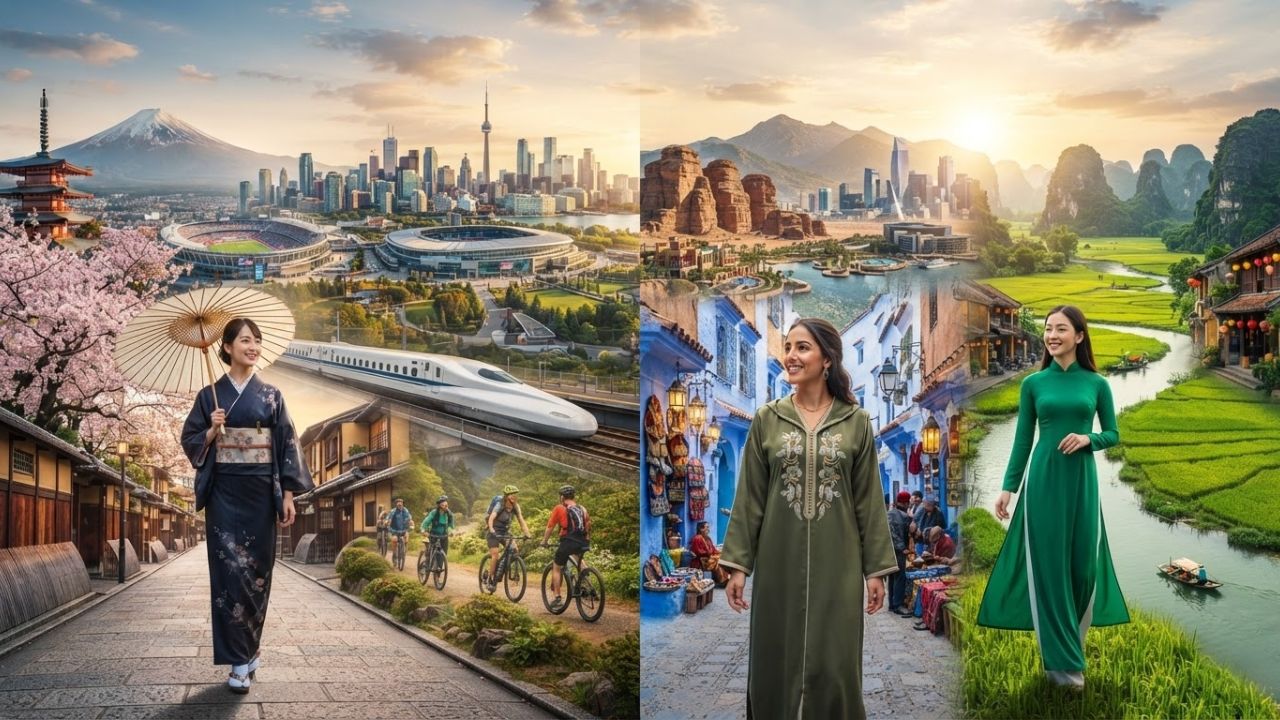
Image generated by AI
Published on July 27, 2026
In a coordinated push to reshape international travel, Japan, North America, Saudi Arabia, Morocco, and Vietnam are launching massive infrastructure upgrades to drive global tourism expansion through upcoming mega-events. This collaborative movement affects international tourists, sports fans, and transit passengers who must navigate streamlined customs checkpoints, new regional travel passes, and expanded flight corridors. Vacationers planning upcoming itineraries are urged to explore these emerging regional routes and dynamic visa policies to optimize their travel convenience and explore beyond congested urban hubs.
Quick Summary
- Coordinated Mega-Events: Host nations are leveraging major showcases like the FIFA World Cup 2026 and World Expos to drive long-term global tourism expansion.
- North American Upgrades: The U.S., Canada, and Mexico are modernizing cross-border checkpoints and transport links to manage millions of sports fans.
- Japan's Rural Dispersion: Japan is actively directing visitors away from crowded cities like Tokyo and Kyoto toward rural heritage prefectures and historic trails.
- Middle Eastern Giga-Projects: Saudi Arabia's Vision 2030 strategy is investing hundreds of billions in Red Sea luxury resorts and historic AlUla heritage sites.
- African and Asian Connectivity: Morocco is expanding high-speed rail networks, while Vietnam accelerates sustainable eco-resorts and visa-facilitation rules.
Context and Background: Infrastructure Upgrades and Event-Led Tourism
The international travel market is undergoing a rapid evolution, transitioning from passive destination marketing to proactive, event-led development strategies. Backed by joint reports from regional tourism boards—alongside global bodies—nations are investing heavily in permanent infrastructure, streamlined transit, and regional dispersion. This coordinated approach is designed to distribute the economic rewards of travel beyond crowded capital cities into secondary rural corridors, supporting local communities directly.
As over-tourism puts immense pressure on public transit systems and local housing markets in famous cities, dispersing visitors offers a vital lifeline to rural economies. Host countries are coordinating cross-border policies, introducing temporary travel passes, and building green hospitality hubs. This proactive method ensures that the next era of global travel expansion remains resilient, inclusive, and culturally enriching for future generations of travelers.
Event and Incident Details: Rewriting the Rules of Global Tourism Expansion
The strategic alignment of these five major destinations showcases the diverse models used to capture international market shares. While some regions focus on cross-border sporting events, others are building rural heritage networks or luxury eco-tourism hubs. The key tourism drivers, focus areas, and projected economic impacts for each host region are detailed in the comparison table below:
| Host Country / Region | Key Tourism Drivers & Mega-Events | Core Strategic Focus Area | Anticipated Tourism & Economic Impact |
|---|---|---|---|
| North America (US, Can, Mex) | FIFA World Cup 2026 (16 host cities) | Seamless cross-border movement & transport | Multi-city itineraries & regional transit upgrades |
| Japan | Post-Expo 2025 Kansai initiatives | Dispersing traffic to rural prefectures | Preservation of heritage & reduced urban congestion |
| Saudi Arabia | Vision 2030 & Riyadh/Jeddah summits | Red Sea luxury resorts & AlUla heritage | Economic diversification & high-value arrivals |
| Morocco | Sports tournaments & cultural corridors | High-speed rail & regional airport expansions | Streamlined transit & secondary medina/coastal growth |
| Vietnam | Eco-tourism forums & culinary festivals | Visa facilitation & green hotel standards | Protection of ecosystems & green-certified resort growth |
These diverse strategies illustrate the close connection between mega-event hosting and long-term regional development. For instance, North America is preparing for the FIFA World Cup 2026 by upgrading transport links across 16 cities in the U.S., Canada, and Mexico to encourage multi-destination itineraries. Simultaneously, Japan is shifting visitor traffic away from Tokyo and Kyoto toward regional prefectures using rural rail links. In the Middle East and Africa, Saudi Arabia is funding giga-projects like NEOM, and Morocco is extending its high-speed rail lines to Chefchaouen and Fes to broaden cultural tourism corridors.
Risk and Impact: Navigating Border Upgrades and Congestion Challenges
The implementation of these massive infrastructure projects and mega-events brings several key challenges:
- Border Crossing Bottlenecks: Coordinating customs checkpoints across multiple borders during mega-events like the World Cup 2026 poses logistics challenges for fans.
- Severe Urban Over-tourism: Traditional golden-route cities face immense pressure on local housing markets and public transportation networks if crowds are not dispersed.
- Massive Capital Pressures: Financing giga-projects and high-speed rail networks requires hundreds of billions in state capital, placing strain on public funds.
- Ecosystem Disturbance: Expanding hospitality infrastructure near pristine natural sanctuaries, like Vietnam's highlands or caves, requires strict green guidelines to prevent damage.
What Authorities and Experts Say: Sustainable Event-Led Growth
According to statements from Anup Kumar Keshan, Founder and Editor-in-Chief of Travel And Tour World, the strategic synergy between these host nations demonstrates how mega-events can be leveraged for sustainable growth. He noted that connecting major international showcases like the World Cup and cultural expos with rural heritage routes effectively eases urban congestion. For tournament coordinates and transit rules, fans can consult the FIFA official website to prepare for matches.
Tourism directors at the Japan Tourism Agency explain that dispersing international visitors into tranquil countryside destinations is a vital economic lifeline for aging rural populations. Additionally, the Pacific Asia Travel Association (PATA) emphasizes that sustainable hospitality management and visa facilitation are essential for long-term long-haul competitiveness. Authorities urge travelers to use designated transit systems and respect local community customs when exploring rural regions.
Practical Traveler Advice: Capitalizing on Global Tourism Expansion and Regional Routes
For passengers planning to travel during this era of rapid transit upgrades, travel coordinators recommend the following:
- Acquire Temporary Travel Passes: Look for special transit passes introduced for mega-events like the World Cup to simplify cross-border travel.
- Explore Rural Heritage Routes: Choose itineraries that incorporate lesser-known prefectures in Japan or cultural corridors in Morocco to avoid urban congestion.
- Apply for E-Visas Early: Utilize streamlined electronic visa channels in Saudi Arabia and Vietnam to avoid ticketing delays.
- Verify Green Certifications: Check for recognized sustainable hospitality standards and green resort certifications when booking eco-lodges.
- Register for Mobile Road Alerts: Use regional transit apps to stay updated on transport schedules and road conditions during mega-event windows.
Broader Context: The Shift to Event-Led Infrastructure Development
The global travel landscape is witnessing a structural transition where countries use mega-sports tournaments, world expos, and cultural festivals as drivers for permanent infrastructure upgrades. Rather than relying on standard promotional campaigns, governments are funding high-speed rail lines, airport expansions, and heritage restorations. This focus ensures that public funds deliver long-term benefits to local communities long after the events conclude.
This approach is especially clear in Saudi Arabia, where state investment funds are pouring capital into aviation and hospitality to transition the economy away from petro-exports. Similarly, Morocco is using major sporting events to absorb larger tourist inflows without creating bottlenecks in historical medinas like Fes. This event-led expansion sets a new benchmark for how modern nations manage travel growth sustainably.
Looking Ahead: The Decade of Mega-Events and Transit Upgrades
Looking ahead, travelers can expect massive shifts in how they move between regions as high-speed rail links and airport expansions go live. The decade leading into 2030 will see the execution of these mega-projects, reshaping connectivity across North America, North Africa, and the Middle East. Passengers will benefit from faster, more integrated transit networks that simplify multi-destination travel.
Additionally, tourism boards will continue to release new regional heritage routes and eco-tours to encourage travelers to explore secondary destinations. Evolving visa facilitation rules and green hotel standards will remain key parameters for attracting eco-conscious vacationers. Eager travelers should check official government websites regularly for updates on new flight corridors and regional travel passes.
Conclusion: Emphasizing Preparedness and Vigilance
In conclusion, the strategic collaboration between Japan, North America, Saudi Arabia, Morocco, and Vietnam demonstrates the power of event-led tourism development. By linking mega-events with regional dispersion and sustainable infrastructure, these countries are ensuring that travel growth benefits both visitors and host communities. By planning ahead, exploring off-the-beaten-path destinations, and respecting local heritage, travelers can enjoy safe, enriching, and responsible vacations.
FAQ: Understanding the Global Tourism Expansion
How is North America preparing for the FIFA World Cup 2026?
North America is upgrading transit corridors, expanding hotel capacity, and introducing unified regional marketing across 16 host cities in the U.S., Canada, and Mexico.
Why is Japan promoting travel to rural prefectures?
Japan is directing international visitors to rural prefectures to counter severe urban congestion in major cities like Tokyo and Kyoto, supporting aging rural populations.
What is Saudi Arabia's Vision 2030 tourism strategy?
Under Vision 2030, Saudi Arabia is investing hundreds of billions in Riyadh/Jeddah infrastructure, Red Sea eco-resorts, and AlUla heritage conservation to diversify its economy.
What initiatives are boosting Vietnam's eco-tourism profile?
Vietnam is using visa-facilitation, aviation upgrades, green hospitality certifications, and sustainable travel forums to promote pristine highlands, cave systems, and marine sanctuaries.
Related Travel Guides
- France, Spain, UAE, and Saudi Arabia Clash in the $1 Trillion Travel War, Accelerating Global Tourism Competition and Redefining International Routes: Latest Update
- Global Tourism Overhauled as Gen Z Travel Trends Revolutionize Vacations in Asia and Europe, Urging Travelers to Choose Sustainable Stays: Latest Update
- The 10 Biggest Mega-Events Reshaping Global Tourism, According to Reddit
Suggested SEO Metadata & Assets
- Meta Title: Mega-Events & Global Tourism Expansion: 2026 Updates
- Meta Description: Japan, North America, Saudi Arabia, Morocco, and Vietnam leverage mega-events like the World Cup and Expos to drive global tourism expansion.
- URL Slug: mega-events-global-tourism-expansion-2026
- Tags: ["global tourism expansion", "Japan travel", "Saudi Arabia Vision 2030", "FIFA World Cup 2026", "mega-events 2026"]
- Featured Image Alt Text: A composite view showing a modern football stadium in North America, a serene bamboo path in rural Japan, an eco-friendly resort on the Red Sea, and a vibrant Moroccan market.
Disclaimer
This article is for informational and educational purposes only. It does not constitute legal, financial, or professional advice. While we strive to provide accurate and up-to-date information, travel policies, regulations, and conditions change rapidly. Always verify information with official sources before making travel decisions. Nomad Lawyer makes no representations about the accuracy, reliability, completeness, or suitability of the information provided. Readers should consult qualified professionals for advice specific to their circumstances. The views expressed in this article are those of the author and do not necessarily reflect the views of Nomad Lawyer.
Kunal K Choudhary
Co-Founder & Contributor
A passionate traveller and tech enthusiast. Kunal contributes to the vision and growth of Nomad Lawyer, bringing fresh perspectives and driving the community forward.
Learn more about our team →