
Mass Flight Disruptions Strand Thousands Across China's Major Hubs
Over 1,600 flights cancelled or delayed across Chinese carriers leave thousands stranded at major hubs. Mass flight disruptions in 2026 signal systemic operational strain affecting routes from Kunming to Beijing and Shenzhen.

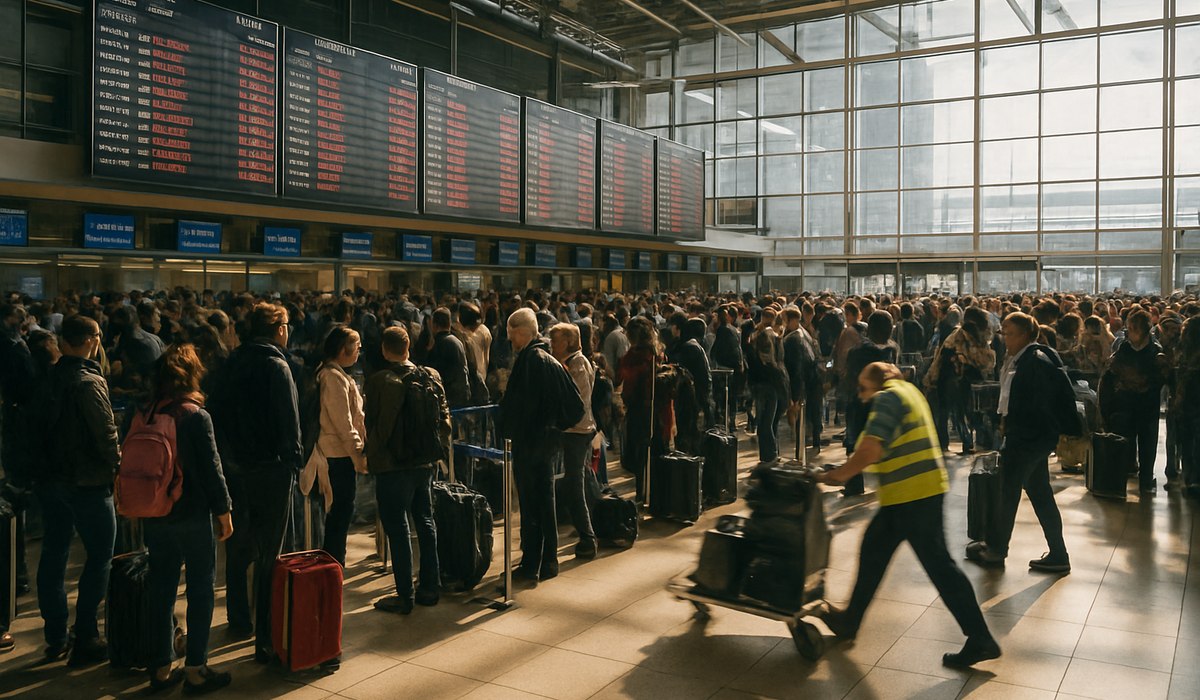
Image generated by AI
Thousands Stranded as Mass Flight Disruptions Grip China's Aviation System
Over 1,600 flights cancelled and delayed across multiple Chinese carriers disrupted travel networks spanning Kunming, Beijing, Shenzhen, and beyond on May 9, 2026. The cascading travel crisis left thousands of passengers stranded at major hubs, with limited rebooking options and delayed passenger support responses. What began as isolated technical issues evolved into mass flight disruptions signaling deeper systemic strain within China's domestic aviation infrastructure during peak holiday travel season.
The unprecedented wave of cancellations and delays affected China Eastern Airlines, Air China, Shanghai Airlines, XiamAir, Lucky Air, and regional carriers simultaneously. This coordination across competing airline groups suggests the disruptions stem from external operational pressures rather than individual carrier failures, making recovery timeframes uncertain for affected travelers.
Widespread Cancellations Hit Major Chinese Carriers
A combined 607 flights were cancelled while 1,052 additional flights experienced delays across a single operating period on May 9. These figures represent one of the largest mass flight disruptions documented in China's recent aviation history, surpassing typical daily disruption rates by a factor of four.
The geographic distribution of cancellations reveals a pattern concentrated on trunk routes linking inland transit hubs with coastal business centers. Flights connecting Kunming to Beijing, Kunming to Shenzhen, Chongqing to Beijing, and Nanjing to Shenzhen absorbed the heaviest impact. Airlines operated morning bank flights and evening connection waves with staggered cancellations, creating compounding delays throughout day-long travel chains.
Passengers reported last-minute flight withdrawals with minimal advance notification. Airport check-in areas experienced severe congestion, with airline service desks overwhelmed by rebooking requests. Travelers faced extended waits without real-time departure updates. Several passengers reported being advised to exit security areas and secure hotel accommodations at personal expense—standard protocol for extended delays but frustrating when spanning multiple hours without clear resolution timelines.
Social media posts from stranded passengers indicated that most major carriers applied inconsistent rebooking policies. Some offered complimentary transfers to next-available flights, while others processed refunds and directed travelers to book alternative transportation independently.
Key Hubs from Kunming to Beijing Experience Gridlock
Kunming International Airport, serving as southwest China's primary aviation gateway, became a bottleneck for passengers attempting to reach Yunnan's tourist destinations. Cancelled morning and midday departures created cascading missed connections affecting downstream flights throughout the region.
Beijing's dual airport system experienced rolling delays on north-south corridors. Both Capital International Airport and Daxing International Airport saw affected flights on routes to Kunming, Shenzhen, and Chongqing. Normally, passengers could rebook across competing carriers serving these routes, but simultaneous disruptions at China Eastern, Air China, and other carriers eliminated flexible alternatives.
Shenzhen Bao'an International Airport, a major hub for technology sector business travel and international connection point, reported delays on services to Kunming and Nanjing. Passengers with onward international connections faced particularly tight windows, with many missing connecting flights to Hong Kong, Singapore, and Southeast Asian destinations.
Nanjing Lukou International Airport and Chongqing Jiangbei International Airport experienced secondary impacts as passengers attempted to reroute through these secondary hubs. However, delays and cancellations cascaded through subsequent flight legs, creating broken itineraries where single segments operated while onward connections were cancelled.
This gridlock pattern across multiple independent hubs strengthens evidence that mass flight disruptions originated from systemwide factors rather than isolated airport or airline incidents.
Systemic Strain Rather Than Isolated Technical Issues
Aviation analysts attribute the disruptions to converging operational pressures rather than single-point failures. China's domestic aviation system operates with compressed scheduling margins during high-demand periods, particularly around holiday festivals when load factors exceed 85 percent.
Restricted airspace notices issued by Chinese aviation authorities in May 2026 appear connected to the disruptions. Military exercises and security protocols in eastern coastal regions created temporary flight path restrictions, forcing carriers to reroute aircraft through congested alternate corridors. These airspace compressions reduced available routing options and increased operational complexity for carriers managing multiple aircraft rotations.
Rising fuel costs and fleet utilization pressures compound scheduling strain. When aircraft complete early-morning Kunming or Chongqing departures with inherent delays, subsequent rotations cascading through Beijing and Shenzhen become increasingly pressured. Rather than operate evening flights with two-hour delays, carriers cancelled downstream legs entirely, triggering passenger rebooking demands that overwhelmed airline customer service teams.
The timing coincided with China's May holiday period, when national statistics documented hundreds of millions of domestic trips. This demand surge compressed scheduling flexibility and eliminated buffer capacity that normally allows carriers to absorb single-aircraft disruptions without system-wide cascades.
What Travelers Need to Know
Stranded passengers facing mass flight disruptions should take immediate action to protect their rights and secure alternative transportation. Here's what current aviation policies require:
Passenger Rights During Flight Cancellations: Chinese aviation regulations mandate that carriers provide rebooking on next-available flights at no passenger expense or offer full refunds. International air carrier liability regulations require compensation between 200-600 RMB depending on flight distance when delays exceed specified thresholds.
Real-Time Flight Status: Use FlightAware for independent flight tracking data. Airline-provided information often lags behind actual operational changes by 15-30 minutes. FlightAware's global radar network provides real-time position data for most commercial flights.
Hotel and Meal Reimbursement: When overnight stays become necessary due to airline cancellations, carriers must provide reasonable accommodation and meal expenses. Document all receipts for reimbursement claims, which carriers typically process within 10-15 business days.
Connecting Flight Protections: If your cancelled flight breaks an international itinerary, carriers must rebook you on competing airlines' connecting flights or arrange alternative routing. Do not accept offers to continue only domestic segments without confirmed onward international reservations.
Travel Insurance Claims: Review your policy for force majeure exceptions. Mass flight disruptions typically qualify as covered events, though documentation requirements are stringent. Submit claims immediately with flight records, cancellation confirmations, and receipts for incurred expenses.
Traveler Action Checklist
-
Screenshot your booking confirmation immediately, including confirmation number, route, date, and airline name before connectivity issues spread.
-
Contact your airline directly via phone (not online chat) and request written confirmation of rebooking or refund eligibility before making alternative transportation arrangements.
-
Document all expenses incurred, including hotel, meals, ground transportation, and rebooking fees paid. Maintain receipts for all transactions.
-
Request written cancellation confirmation from your airline, including cancellation reason code, original flight number, date, and alternate flight details if rebooked.
-
File compensation claims with your airline within 45 days of the disruption using their official passenger compensation portal or submission process.
-
Contact travel insurance provider if you hold coverage, submitting flight cancellation notice and required documentation simultaneously with airline claims.
-
Verify your rebooked flight status on FlightAware before traveling to the airport, as secondary cancellations may affect reassigned flights.
-
Confirm check-in procedures with your rebooked airline, as some carriers implement temporary protocols during recovery operations that differ from standard procedures.
Impact Summary Table
| Metric | Details |
|---|---|
| Total Flights Affected | 1,659 (607 cancelled, 1,052 delayed) |
Disclaimer
This article is for informational and educational purposes only. It does not constitute legal, financial, or professional advice. While we strive to provide accurate and up-to-date information, travel policies, regulations, and conditions change rapidly. Always verify information with official sources before making travel decisions. Nomad Lawyer makes no representations about the accuracy, reliability, completeness, or suitability of the information provided. Readers should consult qualified professionals for advice specific to their circumstances. The views expressed in this article are those of the author and do not necessarily reflect the views of Nomad Lawyer.
Kunal K Choudhary
Co-Founder & Contributor
A passionate traveller and tech enthusiast. Kunal contributes to the vision and growth of Nomad Lawyer, bringing fresh perspectives and driving the community forward.
Learn more about our team →