
Asia Flight Disruptions Strand Thousands Across Major Hubs in April 2026
Over 4,300 flights delayed and 189 cancelled across Asia's major hubs on April 10, 2026. Geopolitical tensions, airspace restrictions, and operational pressures strand thousands of travelers across Bangkok, Beijing, Tokyo, and Dubai.

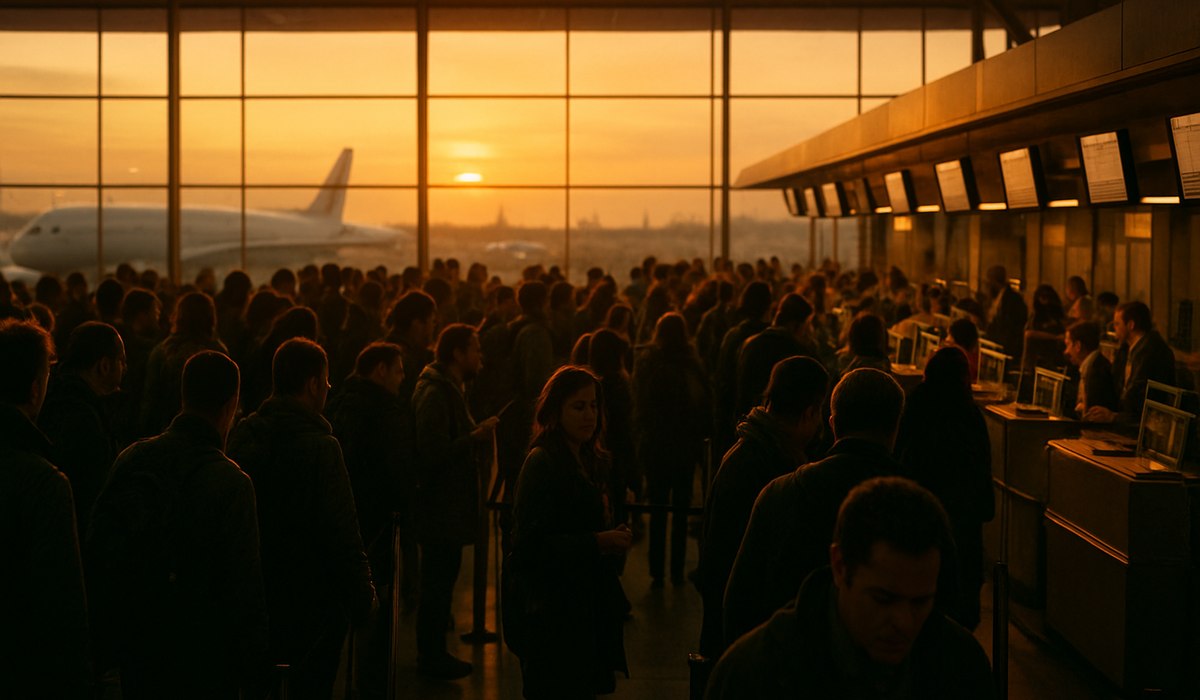
Image generated by AI
Massive Wave of Asia Flight Disruptions Strands Thousands Across Regional Hubs
Over 4,300 flights experienced delays and 189 were cancelled on April 10, 2026, affecting major Asian aviation hubs spanning Thailand, Singapore, Japan, the United Arab Emirates, India, Indonesia, and China. The disruption impacted carriers including Etihad Airways, Japan Airlines, Air China, and Thai Airways, with cascading effects across airports in Bangkok Suvarnabhumi, Beijing Capital, Tokyo Narita, Singapore Changi, and Dubai International. This represents one of the largest single-day operational crises across the region in recent months, leaving thousands of nomadic professionals, business travelers, and leisure passengers scrambling to reschedule connections and assess their travel options.
Scale of Disruption Across Asian Gateways
The April 10 disruption reflects an accelerating pattern of operational strain across Asia's most critical aviation corridors. Flight-tracking data reveals that delay-heavy profiles dominated rather than outright cancellations, meaning most affected services departed late, creating rolling congestion throughout the day. Major hubs like Bangkok Suvarnabhumi, Beijing's dual airport system, Singapore Changi, Jakarta Soekarno-Hatta, and Delhi experienced extended queues and widespread missed connections.
Earlier in the week, similar patterns emerged with over 3,200 delays and 130 cancellations recorded in a single trading day. The consistency of these disruption waves suggests structural pressures beyond weather or isolated incidents. Passengers at these hubs faced average delays ranging from two to eight hours, with some long-haul services experiencing delays exceeding twelve hours due to cascading crew and aircraft positioning issues.
Delay-Heavy Patterns at Major Hub Airports
Unlike mass cancellation events that immediately notify passengers, delay-heavy disruptions create particular hardship for connecting travelers. At Bangkok Suvarnabhumi, passengers faced average delays of 4–6 hours on Southeast Asian routes and 8–10 hours on long-haul connections. Beijing's airports reported similar congestion patterns, with over 40% of daily departures experiencing delays exceeding 90 minutes.
Singapore Changi, typically Asia's most efficient hub, saw its on-time performance drop below 70% for the first time in eighteen months. Tokyo's airports experienced particular strain on domestic and regional networks, where crew rest requirements and aircraft turnaround times were stretched to maximum operational limits. The delay cascade effect proved severe: a single delayed inbound flight triggered delays across three to five subsequent departure waves.
Review current flight status and delays via FlightAware for real-time tracking across affected routes.
Geopolitical Tensions Impact Long-Haul Networks
Beyond immediate hub congestion, Asia flight disruptions stem partly from geopolitical tensions forcing airspace closures and detours. Persistent restrictions over parts of the Middle East have forced lengthy reroutes for flights connecting Europe and Asia, reducing available capacity on traditional Gulf hubs including Dubai and Abu Doha. These detours add 2–4 hours to typical flight times, compressing scheduling windows and reducing recovery margins when disruptions occur.
Indian carriers alone have withdrawn over 10,000 flights to West Asia since late February 2026. Gulf-based operators and European carriers announced targeted suspensions and reroutings as conflict pressures intensified. Long-haul networks experienced knock-on effects throughout April as airlines adjusted schedules and equipment positioning to navigate airspace restrictions. The cascading impact extended to domestic and regional services, where aircraft and crew typically positioned through affected airspace overnight.
According to industry analysis, global cancellations in March 2026 rose more than 100% year-over-year as conflict-related restrictions took hold, demonstrating the wider regional vulnerability.
Operational Pressures Driving Widespread Delays and Cancellations
Multiple structural factors compound the Asia flight disruptions beyond geopolitical tensions alone. Regulatory changes in India, including new pilot duty-time rules implemented in late 2025, increased crew rest requirements and tightened recovery margins. High fuel costs across Southeast Asia pressured carriers to operate tight, utilization-heavy schedules leaving minimal buffering capacity.
Thai Airways and Thai AirAsia X announced route suspensions and fare increases amid sharp fuel price spikes. Regional carriers operating thin margins couldn't absorb disruption costs, triggering cascading cancellations. Aircraft availability constraints, compounded by maintenance scheduling and crew positioning requirements, meant that delays at one hub rippled across multiple daily waves. Weather patterns, while not the primary driver on April 10, continued complicating operations at secondary airports.
Consult the FAA and US DOT for passenger rights information and regulatory guidance on airline compensation.
Impact on Nomadic Professionals and Business Travelers
Digital nomads, remote workers, and frequent business travelers face particular vulnerability to Asia flight disruptions. Missed connections compromise tight itineraries and work schedules. Visa limitations in some countries restrict extended layovers, forcing costly hotel arrangements or connection changes. Travel insurance policies often exclude delays under eight hours, leaving travelers without compensation options.
Professionals relying on consistent schedules across Asian hubs—particularly those connecting through Bangkok, Singapore, and Dubai—should anticipate disruption ripple effects extending through mid-April 2026. Those holding flexible bookings gain significant advantages. Travelers with fixed departure dates should contact airlines immediately to confirm flight status and explore rerouting options before standard rebooking queues form.
| Metric | April 10, 2026 | April 3-9 Pattern | Impact |
|---|---|---|---|
| Total Delayed Flights | 4,319 | 3,200+ daily average | Rolling hub congestion |
| Cancelled Flights | 189 | 130+ daily average | Passenger rebooking required |
| Primary Affected Hubs | Bangkok, Beijing, Tokyo, Dubai, Singapore | Same hubs, consistent | Network vulnerability |
| Average Delay Duration | 4–10 hours | 3–8 hours | Connection risks spike |
| Airlines Most Impacted | JAL, Air China, Thai Airways, Etihad | Regional + Gulf carriers | Long-haul networks strained |
| Root Cause | Geopolitical + operational | Airspace + crew restrictions | Structural, not isolated |
What This Means for Travelers: Nomad Lawyer Action Checklist
Travelers navigating Asia flight disruptions should implement the following steps immediately:
-
Check your flight status on FlightAware or your airline's website within two hours of scheduled departure.
-
Contact your airline directly via phone or app—email queues may delay responses by 24+ hours during disruption events.
-
Request alternative routings before rebooking windows close, prioritizing routes avoiding affected hubs when possible.
-
Verify visa implications if extended layovers become necessary; some countries impose strict transit limits.
-
Document delays over two hours with airline communications for EU261 compensation claims or alternative carrier eligibility.
-
Purchase travel insurance immediately if uninsured; many policies exclude pre-existing disruptions but cover ancillary costs incurred after purchase.
-
Identify backup accommodation near affected hubs; hotel availability tightens during mass disruption events.
-
Confirm connecting flights even after rebooking—second-order delays often affect substitute flights.
-
Monitor geopolitical developments affecting Middle East airspace to anticipate future routing changes and delays.
-
Join airline loyalty programs offering priority rebooking access; this access becomes inval
Disclaimer
This article is for informational and educational purposes only. It does not constitute legal, financial, or professional advice. While we strive to provide accurate and up-to-date information, travel policies, regulations, and conditions change rapidly. Always verify information with official sources before making travel decisions. Nomad Lawyer makes no representations about the accuracy, reliability, completeness, or suitability of the information provided. Readers should consult qualified professionals for advice specific to their circumstances. The views expressed in this article are those of the author and do not necessarily reflect the views of Nomad Lawyer.
Raushan Kumar
Founder & Lead Developer
Full-stack developer with 11+ years of experience and a passionate traveller. Raushan built Nomad Lawyer from the ground up with a vision to create the best travel and law experience on the web.
Learn more about our team →