
March Flight Chaos Exposes Fragile Global Aviation Systems
March 2026's cascading flight disruptions across three continents reveal critical vulnerabilities in global aviation networks. Weather crises, regional conflicts, and infrastructure strain triggered 20,000+ cancellations worldwide during peak travel season.

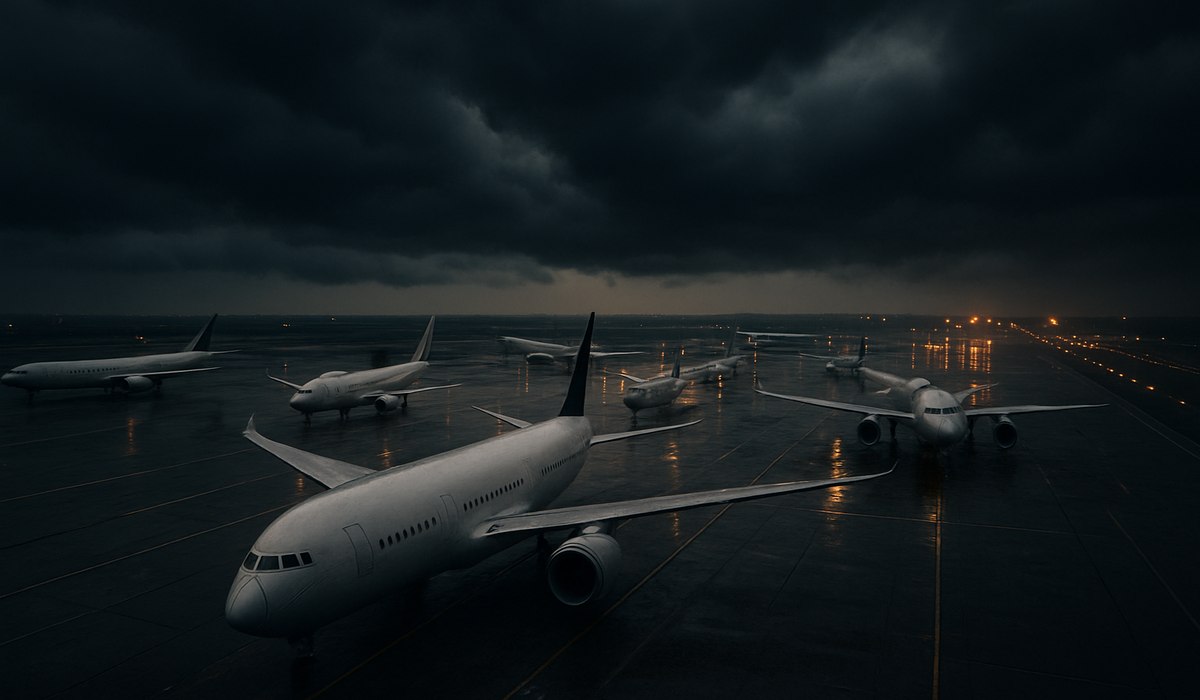
Image generated by AI
Perfect Storm: When Weather, Conflict, and Infrastructure Fail Simultaneously
March 2026 brought unprecedented simultaneous flight disruptions across North America, Europe, and the Middle East, exposing how fragile global aviation networks have become as passenger demand approaches pre-pandemic recovery levels. Between March 13 and March 31, over 20,000 flights faced cancellations while tens of thousands more experienced delays, stranding travelers and forcing airlines to implement emergency rerouting protocols. The convergence of severe spring weather, regional airspace closures, labor actions, and overstressed airport infrastructure created a perfect storm that revealed systemic vulnerabilities in systems designed with minimal redundancy.
Flight tracking data from FlightAware and industry reports documented the March flight chaos unfolding across three major regions simultaneously—a rare occurrence that challenged aviation's interconnected network like never before in the post-pandemic era.
North America's Spring Blizzard Paralyzes Major Hubs
Between March 13 and March 17, a powerful extratropical cyclone unleashed severe winter weather across North America's busiest aviation corridors. Chicago O'Hare, Atlanta Hartsfield-Jackson, and New York LaGuardia experienced the worst operational impacts, with each hub canceling hundreds of flights daily during the four-day storm period.
The March flight chaos during this weather window generated approximately 3,500 flight cancellations across North America, compounded by spring break travel demand that had already strained airport capacity. Passengers faced multi-hour ground delays as de-icing operations overwhelmed ground crews and runway availability bottlenecked departures. Airlines including United, American, and Delta implemented full-day schedule reductions, acknowledging that weather conditions made safe operations impossible for 48+ consecutive hours at several major hubs.
Regional carriers from Canada to Mexico reported widespread cancellations, and cargo operations were similarly disrupted. The Federal Aviation Administration (FAA) issued ground stops lasting 4-6 hours at peak disruption periods, preventing new aircraft from landing until departure backlogs cleared.
Europe Faces Labor Actions and Airspace Constraints
European airports endured a distinct version of aviation chaos driven by labor disputes and infrastructure limitations rather than weather alone. On March 5, over 1,000 flights were disrupted across the United Kingdom, France, Germany, the Netherlands, and Switzerland in a single day—200 cancellations and roughly 800 delays affecting Lufthansa, KLM, Air France, and British Airways operations.
Ground staff strikes at Frankfurt and Paris Charles de Gaulle in mid-March exacerbated the March flight chaos, as boarding and baggage handling delays cascaded through these critical European hubs. Aircraft rotation schedules, already tight before disruptions, could not recover once delays exceeded two hours. Swiss airspace restrictions for military exercises further limited routing options, forcing flights onto longer paths that consumed additional fuel and crew duty time.
Passenger delays averaged 3-5 hours across major European routes, while alternative routes through secondary airports added 60-90 minutes to typical flight times. The region's aging ground infrastructure—particularly baggage handling systems at busy hubs—buckled under the combination of increased passenger volume and labor constraints.
Middle East Conflict Triggers Mass Flight Cancellations
Regional instability and airspace restrictions created the most severe disruption patterns of the March flight chaos worldwide. Over 15,000 flights connected to the broader Middle East region experienced cancellations or significant rerouting from March 1-31, as airlines suspended services, implemented emergency protocols, and navigated temporary corridor closures.
Dubai International, Doha Hamad International, and Abu Dhabi International—crucial hubs linking Asia, Europe, and Africa—operated with reduced flight schedules throughout March. Drone activity concerns and precautionary fuel infrastructure security measures forced airlines to add refueling stops, transforming six-hour flights into nine-hour journeys with additional layovers.
Indian carriers including Air India suspended or reduced flights to Gulf destinations for extended periods, stranding thousands of passengers. Long-haul services from Asia to Europe were compelled to reroute northward through Central Asian airspace or take southern routes via Africa, adding 4-6 hours to journey times. The March flight chaos rippled through connecting passenger networks, as travelers with two-leg itineraries missed connections due to delays on inbound regional flights.
Asia's Network Stress Continues Into Late March
By mid-March, Asia Pacific aviation networks experienced the cascade effects of global disruptions simultaneously with regional weather challenges. On March 11 alone, trackers documented 774 cancellations and 2,100+ delays across Asia Pacific, with global impacts that day exceeding 2,300 cancellations and 18,000 delays combined.
Beijing Capital, Shanghai Pudong, Tokyo Narita, Bangkok Suvarnabhumi, and Jakarta Soekarno-Hatta operated at capacity with minimal buffers for recovery. Monsoon rains, typhoon activity, and complex aircraft rotation schedules left no margin for operational resilience. Later March disruptions involved 3,000+ affected flights on single days, illustrating how regional weather and inherited delays from other continents created compounding stress.
Ground infrastructure limitations—sparse spare aircraft, stretched staffing, and crew scheduling constraints—prevented rapid recovery once delays exceeded four hours. The March flight chaos propagated along long-haul Asia-Europe-Americas corridors, meaning a three-hour delay in Bangkok triggered downstream impacts in Dubai, Frankfurt, and New York within 24 hours.
Systemic Vulnerabilities Exposed Across Global Networks
Aviation industry analysis reveals that the March flight chaos exposed structural weaknesses rather than isolated failures. Aircraft rotation schedules operate with virtually no slack—each aircraft is typically assigned 4-5 flights daily, meaning a single delayed flight cascades through an entire day's schedule.
Limited spare aircraft inventory, a legacy of pandemic-era fleet reductions, prevented rapid redeployment of capacity. Ground staff shortages at major hubs meant that even routine aircraft turnarounds (cleaning, refueling, catering) stretched 20+ minutes longer than normal, compounding delay propagation.
Network interdependence means disruptions in one region immediately stress hubs globally. A 90-minute delay in Singapore affects connections through Dubai, Istanbul, and Frankfurt within 18-20 hours, demonstrating how tightly coupled modern aviation networks have become.
| Disruption Factor | Peak Impact Date | Flights Affected | Geographic Region | Primary Cause | Recovery Timeline |
|---|---|---|---|---|---|
| North American Blizzard | March 15-16 | 3,500+ cancellations | Chicago, Atlanta, NYC | Severe weather | 48 hours |
| European Labor Actions | March 5, 18-21 | 1,000+ (single day peak) | Frankfurt, Paris, London | Staff strikes | 72+ hours |
| Middle East Airspace Closures | March 1-31 | 15,000+ total month | Dubai, Doha, Abu Dhabi | Regional conflict | Ongoing |
| Asia Pacific Weather/Congestion | March 11, 22-24 | 3,000+ (single day peak) | Beijing, Bangkok, Tokyo | Monsoons + inherited delays | 60+ hours |
| Global Network Stress | March 15-25 | 20,000+ monthly total | All major hubs | Systemic fragility | 2+ weeks |
Traveler Action Checklist: Protecting Yourself During March Flight Chaos
If you're traveling during periods of global aviation disruption, implement these protective steps:
-
Monitor official sources daily: Check your airline's website and FlightAware 72 hours before departure for schedule changes and route information.
Disclaimer
This article is for informational and educational purposes only. It does not constitute legal, financial, or professional advice. While we strive to provide accurate and up-to-date information, travel policies, regulations, and conditions change rapidly. Always verify information with official sources before making travel decisions. Nomad Lawyer makes no representations about the accuracy, reliability, completeness, or suitability of the information provided. Readers should consult qualified professionals for advice specific to their circumstances. The views expressed in this article are those of the author and do not necessarily reflect the views of Nomad Lawyer.
Raushan Kumar
Founder & Lead Developer
Full-stack developer with 11+ years of experience and a passionate traveller. Raushan built Nomad Lawyer from the ground up with a vision to create the best travel and law experience on the web.
Learn more about our team →