
Major Flight Disruptions Hit Australian Airports on April 9, 2026
Over 460 flights faced delays and dozens were cancelled across Australia's major airports on April 9, 2026, affecting thousands of passengers on domestic and international routes.

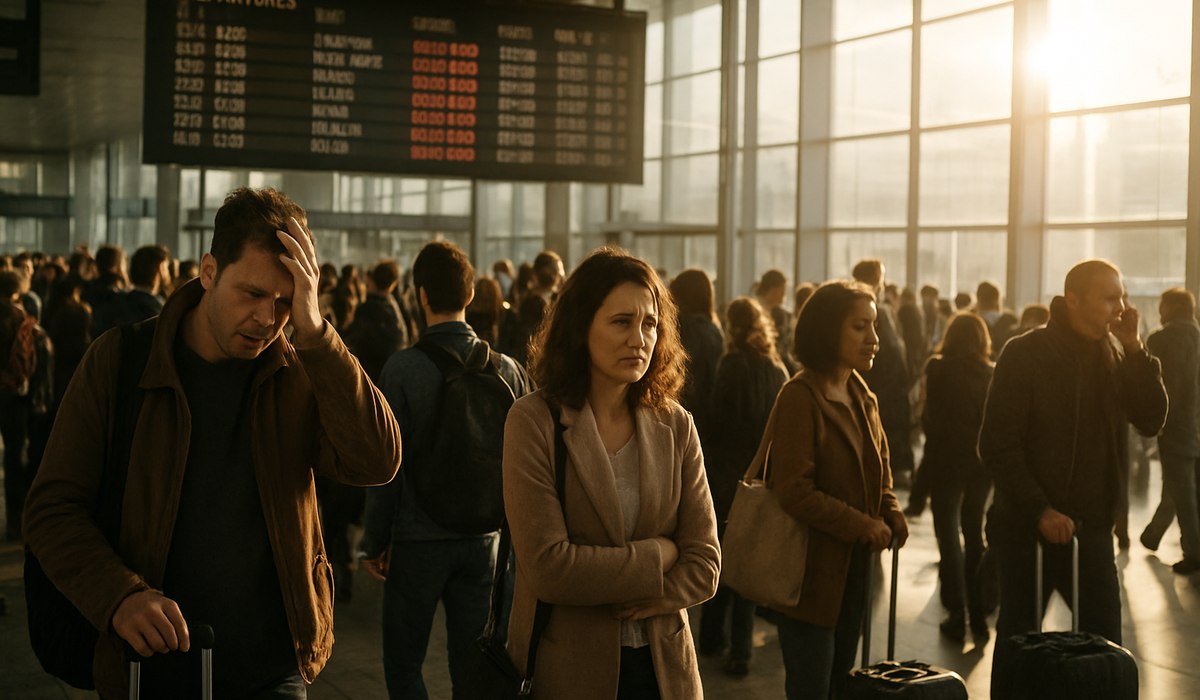
Image generated by AI
Australia's Airports Ground to a Halt: 460+ Flights Delayed on April 9
Sydney, Melbourne, Brisbane, and Perth airports experienced unprecedented congestion on April 9, 2026, when operational failures cascaded across Australia's busiest travel hubs. Flight-tracking data compiled throughout the day revealed approximately 460 delayed services and at least 36 cancellations, stranding tens of thousands of passengers nationwide. The disruption impacted domestic connectors, regional services, and international departures, with Qantas, Virgin Australia, Jetstar, and Network Aviation all reporting irregular operations. Peak business hours and school holiday travel windows bore the brunt of the chaos, while downstream effects rippled through connecting airports for 48 hours.
Delays and Cancellations Mount at Key Australian Hubs
The major flight disruptions began during morning peak operations and intensified throughout the afternoon as aircraft rotations fell progressively behind schedule. Sydney's Kingsford Smith Airport—Australia's busiest gateway—logged over 180 delayed movements by day's end, while Melbourne's Tullamarine and Brisbane's domestic terminals each reported more than 120 delayed flights.
Short-haul routes suffered particularly acute delays. The Melbourne-Sydney corridor, one of the world's busiest domestic lanes, saw individual flights delayed by 2-4 hours as ground handling bottlenecks compounded air traffic congestion. Passengers reported aircraft sitting idle at departure gates while crews awaited slot assignments from air traffic control. Perth International Airport, serving the resource-rich mining regions of Western Australia, cancelled a full day's worth of regional rotations, isolating communities that depend on once-daily service frequencies.
The ripple effects extended to international terminals. Evening departures destined for Asia, the Middle East, and North America were postponed as late-running domestic feeders disrupted minimum connection time windows. Hundreds of transfer passengers faced involuntary rebookings or overnight hotel accommodations arranged by airlines at variable cost recovery.
For real-time tracking of individual flight status, passengers can consult FlightAware or carrier websites for current delay estimates.
Domestic and International Networks Affected
The flight cancellations and delays triggered cascading failures across interconnected networks. Regional operators dependent on capital-city hubs to feed traffic onto trunk routes experienced knock-on cancellations affecting smaller towns across New South Wales, Victoria, Queensland, and South Australia.
International services suffered compounding delays as late-running domestic arrivals blocked international departure slots. Qantas flights to Singapore, Bangkok, and Los Angeles were pushed 3-6 hours beyond scheduled departure times. Virgin Australia's regional express services to Tasmania and remote mining centers saw entire daily rotations shelved, forcing passengers into coach transfers or multi-day reroutings.
Business travelers on the Sydney-Melbourne corridor—a market segment with high schedule sensitivity—faced missed board meetings and conference attendance, amplifying commercial disruption beyond passenger inconvenience. Leisure travelers booked onto package tours, cruises, and group holidays reported cascading consequences as downstream itineraries unraveled due to missed first-leg connections.
Weather, Staffing, and Air Traffic Constraints Combine
No single factor caused the major flight disruptions, but rather a convergence of systemic pressures. In weeks preceding April 9, tropical weather systems across Queensland and Western Australia had degraded runway surfaces and forced equipment diversions, leaving the national fleet spatially misaligned with demand patterns.
Lingering infrastructure repairs at major terminals constrained gate availability and ground handling capacity. Simultaneous staffing shortages—reported by multiple airline and ground services providers—meant fewer aircraft maintenance technicians, reduced flight crew rosters, and leaner air traffic control staffing during peak periods. When these constraints aligned with school holiday travel demand and routine morning congestion, the system lacked resilience to absorb typical disruptions.
Industry reports released in March 2026 had flagged rising sensitivity to crew fatigue policies and ground handling provider capacity thresholds. Once early rotations began running 15-20 minutes behind, subsequent waves could not recover the lost time, creating a cascade that persisted throughout the operational day.
| Metric | Value | Impact |
|---|---|---|
| Total delayed flights | 460+ | Nationwide congestion |
| Total cancelled services | 36+ | Lost daily capacity |
| Peak delay duration | 4-6 hours | Evening operation collapse |
| Affected major airports | 4 (Sydney, Melbourne, Brisbane, Perth) | 80% of domestic traffic |
| International connections missed | 200+ passengers | Rebooking backlogs |
| Regional cancellations | 12+ rotations | Isolated communities |
| Estimated passengers affected | 35,000+ | Network-wide disruption |
What This Means for Travelers
Passengers caught in the major flight disruptions should take these steps:
-
Check your flight status immediately via airline apps or FlightAware before departing for the airport.
-
Contact your airline directly if delays exceed 3 hours to confirm rebooking options or eligibility for accommodation.
-
Document all expenses incurred due to disruption, including meals, hotels, and ground transport—most carriers maintain claim processes for eligible passengers.
-
Review passenger rights under Australian Consumer Law, which mandate compensation for delays exceeding specific thresholds. The US Department of Transportation maintains comparative international standards.
-
Request written confirmation of revised itineraries, particularly for multi-leg journeys involving international connections.
-
Consider travel insurance validation if you hold policies covering operational disruption or missed connections.
Frequently Asked Questions
Q: What caused the April 9 flight disruptions in Australia?
A: A combination of lingering weather-related infrastructure damage, staffing shortages across airlines and ground services, air traffic congestion, and school holiday travel demand created cascading delays that exceeded system resilience.
Q: How many passengers were affected by the disruptions?
A: Approximately 35,000+ passengers were stranded or rebooked across major airports, with effects lasting 48+ hours due to scheduling backlogs.
Q: What compensation are passengers entitled to?
A: Under Australian Consumer Law, passengers on delayed domestic flights may claim compensation depending on delay duration and cause. Consult your airline's customer service team or Australia's Civil Aviation Safety Authority for eligibility.
Q: Will similar disruptions happen again?
A: Systemic capacity constraints identified in industry reports suggest vulnerability remains. Passengers should maintain flexibility on bookings and monitor airline communications during peak travel periods.
Related Travel Guides
- Australia Flight Booking Guide: Avoiding Peak Disruption
- Passenger Rights Across Asia-Pacific Airlines 2026
- Managing International Connections Through Australian Hubs
Disclaimer
This article references operational data from publicly available flight-tracking feeds and industry reporting current as of April 9, 2026. While all information has been compiled from open sources, no guarantee is provided regarding real-time accuracy of delay estimates or cancellation counts, as these fluctuate continuously during disruption events.
For authoritative guidance on passenger compensation, consult Australia's Civil Aviation Safety Authority, review your airline's published policies, or contact the US Department of Transportation for international travel protections. Verify current flight status, delay durations, and rebooking eligibility directly with your airline or booking provider before travel.
Disclaimer
This article is for informational and educational purposes only. It does not constitute legal, financial, or professional advice. While we strive to provide accurate and up-to-date information, travel policies, regulations, and conditions change rapidly. Always verify information with official sources before making travel decisions. Nomad Lawyer makes no representations about the accuracy, reliability, completeness, or suitability of the information provided. Readers should consult qualified professionals for advice specific to their circumstances. The views expressed in this article are those of the author and do not necessarily reflect the views of Nomad Lawyer.
Preeti Gunjan
Contributor & Community Manager
A passionate traveller and community builder. Preeti helps grow the Nomad Lawyer community, fostering engagement and bringing the reader experience to life.
Learn more about our team →