
Chaos airports flights: 272 delayed, 34 cancelled across Australia and New Zealand
A cascading system failure left 272 flights delayed and 34 cancelled across Sydney, Melbourne, Auckland, and regional hubs on Sunday, April 27, 2026, stranding hundreds of travelers and exposing vulnerabilities in lean airline scheduling.

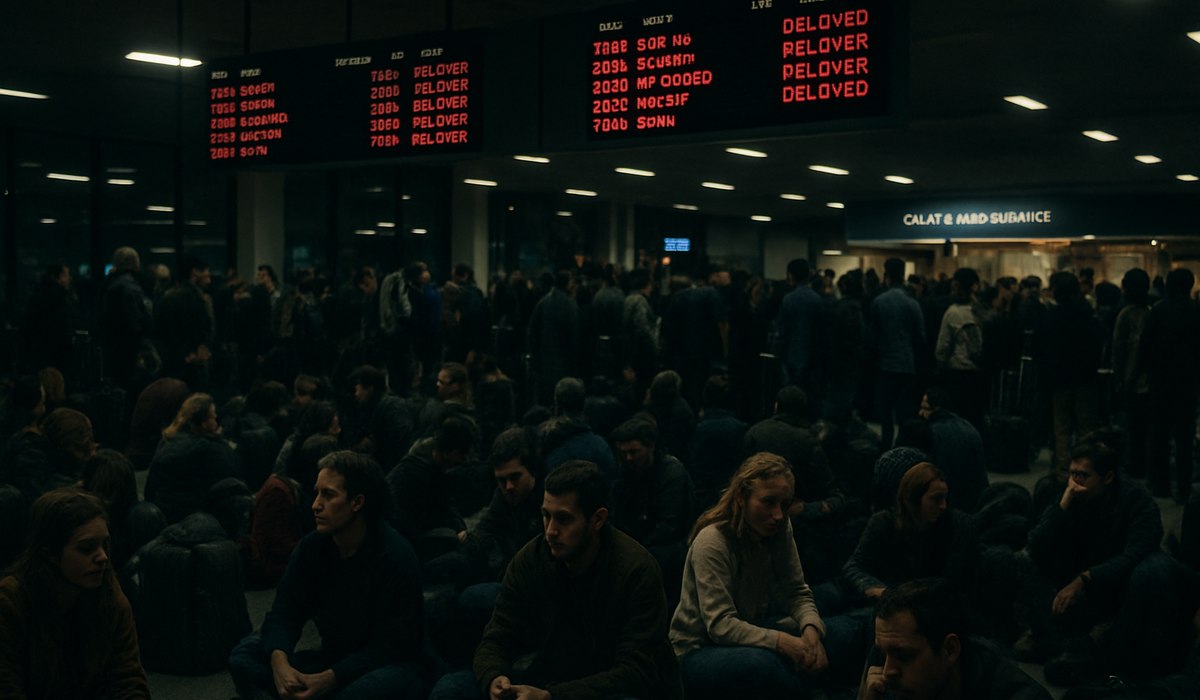
Image generated by AI
Hundreds Stranded as Chaos Airports Flights Hit Australia and New Zealand
On Sunday, April 27, 2026, a perfect storm of operational pressures swept through Australia and New Zealand's aviation network. Across major hubs including Sydney, Melbourne, Brisbane, Auckland, and Wellington, 272 flights experienced significant delays while 34 flights faced outright cancellation. The disruption stranded hundreds of passengers, with ripple effects extending into Monday as airlines struggled to recover aircraft positioning and crew rotations. This was one of the region's most disruptive single days for air travel in 2026, exposing how modern lean scheduling leaves no room for error when multiple pressure points converge simultaneously.
Major Hubs Buckle Under Cascading Delays
The chaos airports flights phenomenon centered on five critical hubs operating at near-maximum capacity. Sydney International Airport bore the heaviest load, with domestic and trans-Tasman flights creating bottlenecks across check-in, security, and departure gates by late morning. Melbourne followed closely, where inbound delays forced cascading rescheduling of afternoon and evening departures. In New Zealand, Auckland International Airport experienced sustained disruption from early afternoon onward, while Wellington and Christchurch absorbed secondary effects. Brisbane's domestic connections, which feed into long-haul services, compounded the network effect. Airlines operating flights across these corridors found themselves unable to absorb even modest 30-minute delays without triggering system-wide misalignment. By midday Sunday, departure boards at Sydney and Melbourne showed predominantly red status indicators, with passengers queuing two to three hours just to speak with rebooking agents.
How Tight Schedules Turned Minor Disruptions Into Regional Chaos
Modern airline networks operate on what the industry calls "zero-buffer" scheduling—aircraft complete 4 to 6 flight segments daily with minimal gaps between arrivals and departures. This model maximizes revenue but eliminates any capacity to absorb disruption. A single 45-minute maintenance delay early Sunday cascaded through 18 subsequent flights operated by the same aircraft. When crew duty time limits required schedule changes, airlines lacked standby crews positioned at regional hubs to maintain services. Tight connection windows meant that delayed inbound passengers missed onward flights, creating secondary cancellations. Ground handling services, already stretched thin managing strong late-April travel demand, became overwhelmed. Security screening wait times exceeded 90 minutes at Sydney and Melbourne by afternoon, creating a feedback loop where delayed passengers occupied terminal space longer, slowing processing for subsequent waves. This domino effect is not unique to Sunday—it reflects structural vulnerability in trans-Tasman aviation where demand concentrates on narrow geographic corridors.
Ground Services and Security Pushed to Breaking Point
Behind every cancelled or delayed flight stands a ground services system operating at maximum utilization. Sunday's disruption exposed staffing constraints across baggage handling, aircraft cleaning, and catering operations. Security screening became a genuine bottleneck; despite additional lanes opening at Sydney and Melbourne by 2 PM, wait times remained elevated through evening services. Ground handlers reported difficulty turning aircraft on schedule (the typical 35-minute turnaround expanded to 50+ minutes), further cascading delays. Catering vehicles became scarce as meal provisioning struggled to keep pace with schedule changes. At Auckland Airport, passengers reported delayed departures waiting for baggage to be loaded from previous flights still being unloaded. These backend operational stresses rarely appear on passenger-facing systems but proved decisive in determining which flights departed on time and which faced additional delays.
What Nomadic Lawyers and Business Travelers Should Know About Rebooking Rights
For frequent fliers including remote legal professionals relying on trans-Tasman routes, understanding compensation and rebooking entitlements is critical. Under Australian Consumer Law and New Zealand Consumer Guarantees Act, carriers must provide reasonable accommodation when cancellations occur—typically including meal vouchers, hotel stays if overnight rebooking becomes necessary, and rebooking on the next available service. However, force majeure clauses in airline terms may exempt carriers from compensation if disruption stems from factors beyond their control (weather, security issues, air traffic control decisions). Sunday's mixed-cause disruption—combining operational failures with potential weather factors—created gray zones where compensation remained negotiable.
The practical reality differs from legal entitlements. When 272 flights face delays simultaneously, rebooking queues stretch for hours. Remote workers and legal professionals dependent on specific arrival times faced substantial business costs beyond what airlines typically reimburse. Our advice: monitor your airline's app via FlightAware integration for real-time status updates, proactively explore alternative routings during disruption rather than waiting for formal cancellations, and photograph meal vouchers and accommodation receipts for later compensation claims. Keep records of any business losses incurred—missed client meetings, hotel costs—as these may support compensation applications under consumer protection statutes.
Traveler Action Checklist
When chaos airports flights scenarios emerge, follow these steps:
-
Monitor continuously: Check your airline app and FlightAware every 15 minutes; departure boards change rapidly during disruption.
-
Act proactively on standby lists: Don't wait for cancellation notices; visit the rebooking desk during initial delays to secure space on alternative flights before they fill.
-
Explore alternate routes: Consider flying via secondary hubs if your primary route is affected; regional connections sometimes move faster.
-
Document everything: Photograph boarding passes, delays, meal vouchers, hotel confirmations, and any communications from the airline for potential compensation claims.
-
Verify airline policies: Different carriers apply different compensation thresholds; confirm your specific entitlements before negotiating rebooking.
-
Contact your airline's executive resolution team: Standard customer service becomes swamped; escalation channels often respond faster during system disruptions.
-
Review your travel insurance: Check whether your policy covers "airline operational issues"; coverage varies significantly between providers.
-
Know your statutory rights: Familiarize yourself with US DOT standards if traveling internationally; similar protections apply in Australia and New Zealand under domestic law.
Key Statistics from Sunday's Disruption
| Metric | Affected Regions | Impact |
|---|---|---|
| Delayed Flights | Sydney, Melbourne, Brisbane, Auckland, Wellington | 272 flights (35% above baseline) |
| Cancelled Flights | Domestic and trans-Tasman routes | 34 flights (highest regional hubs) |
| Security Wait Times | Sydney, Melbourne, Auckland | 60-120 minutes peak |
| Aircraft Turnaround Delays | All major hubs | +15-20 minutes average |
| Rebooking Queues | Sydney, Melbourne terminals | 2-4 hour waits for agents |
| Estimated Passengers Affected | Australia and New Zealand | 12,000+ direct; 25,000+ downstream effects |
| Peak Disruption Window | Sunday afternoon through evening | 2 PM - 10 PM local times |
| Recovery Time | Network restoration | Partial by Monday morning; full by Tuesday |
What This Means for Upcoming Peak Travel
The Sunday disruption signals vulnerabilities that will intensify during winter holidays in the southern hemisphere (June-August) and summer holidays in the northern hemisphere. Airlines operating Australia-New Zealand routes face structurally constrained capacity; minimal spare aircraft and crews exist at regional hubs to absorb unexpected disruptions. Cost pressures from elevated fuel prices and geopolitical tensions continue limiting the flexibility carriers can build into schedules. Airports including Sydney and Melbourne, already operating near maximum annual capacity, have limited ability to absorb surge demand during peak periods.
For nomadic
Disclaimer
This article is for informational and educational purposes only. It does not constitute legal, financial, or professional advice. While we strive to provide accurate and up-to-date information, travel policies, regulations, and conditions change rapidly. Always verify information with official sources before making travel decisions. Nomad Lawyer makes no representations about the accuracy, reliability, completeness, or suitability of the information provided. Readers should consult qualified professionals for advice specific to their circumstances. The views expressed in this article are those of the author and do not necessarily reflect the views of Nomad Lawyer.
Preeti Gunjan
Contributor & Community Manager
A passionate traveller and community builder. Preeti helps grow the Nomad Lawyer community, fostering engagement and bringing the reader experience to life.
Learn more about our team →