
Magaluf Selfie Trail Launches Sustainable Tourism Pivot in 2026
Magaluf, Europe's infamous party resort, unveils a curated selfie trail in 2026 linking Instagram-worthy spots with sustainability messaging to rebrand as a responsible travel destination.

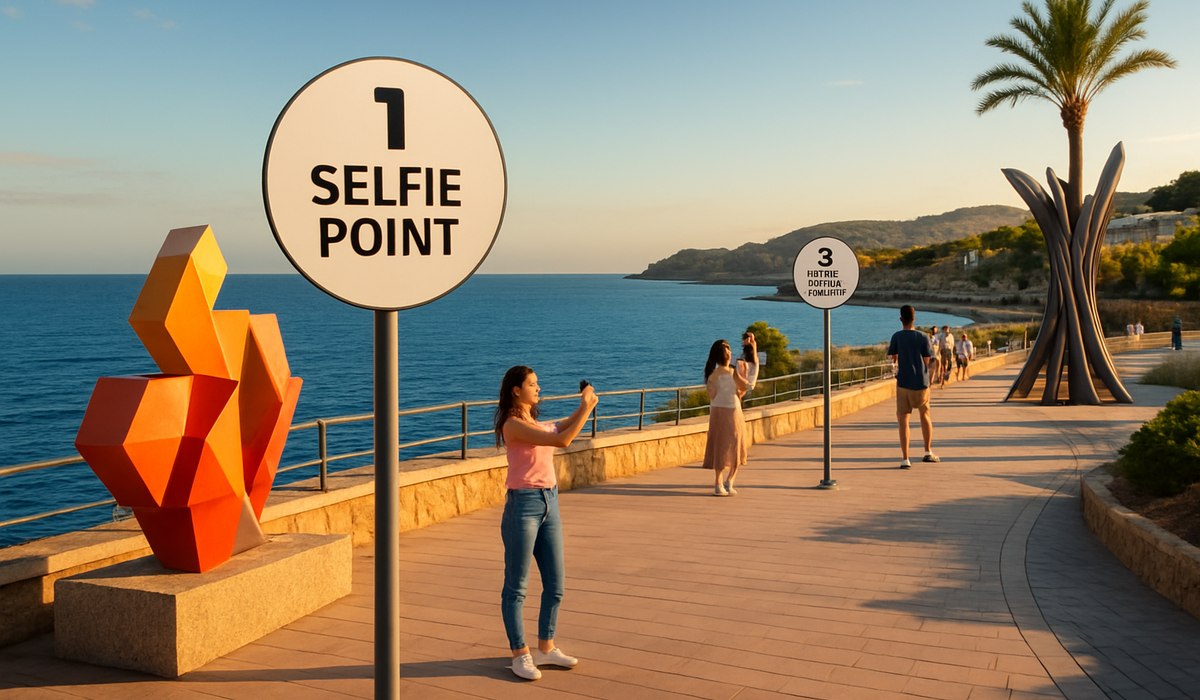
Image generated by AI
A Mediterranean Party Resort Reimagines Its Future
Magaluf launches an Instagram-friendly selfie trail across its Mallorca waterfront, transforming the Balearic Islands' most notorious nightlife hotspot into a model for sustainable tourism. The curated walking route connects scenic viewpoints with environmental and social responsibility messaging, marking a dramatic pivot from decades of mass tourism excess. Launched in April 2026, the initiative represents one of Europe's boldest attempts to rebrand a party destination as a conscious travel hub through social media engagement and pedestrian-friendly infrastructure.
A Party Hotspot Tests a New Image
Magaluf, nestled in Calvià municipality on Mallorca's southwestern coast, has spent the past 15 years shedding its image as Europe's wildest beach resort. The magaluf selfie trail embodies this transformation—a signposted pedestrian route featuring designated photo stations positioned along renovated seafront promenades, scenic overlooks, and public artworks. Rather than imposing top-down restrictions, the strategy harnesses visitors' natural instinct to capture and share travel moments.
The initiative connects to an umbrella campaign branded locally as "Magaluf for All," emphasizing inclusivity and respect alongside tourism revenue. Each selfie point includes multilingual signage reinforcing core messages: protecting beaches, supporting local businesses, respecting residential neighborhoods, and using sustainable transport. Tourism officials position the trail as a counterweight to purely alcohol-focused experiences, encouraging foot traffic through redesigned urban zones and waterfront improvements completed over the previous decade.
How the Selfie Trail Works
The magaluf selfie trail operates as a smartphone-native experience requiring no special equipment or paid entry. Visitors follow numbered stations distributed across the resort's most photogenic locations, capturing images and sharing them via social networks using dedicated hashtags. This gamified approach transforms everyday travel behavior into a marketing channel for sustainability messaging.
Each station features context panels explaining local ecology, cultural heritage, or environmental practices. Wayfinding signage guides pedestrians between points, encouraging exploration of previously overlooked neighborhoods and public spaces. The trail intentionally lengthens visitor duration in open-air settings—a strategic shift away from concentrated nightclub districts toward distributed spending across cafes, local restaurants, and independent retailers in residential areas.
The design prioritizes accessibility and low-cost scalability. Unlike traditional attractions requiring capital investment, the selfie trail leverages existing coastal infrastructure and recent public space improvements, amplifying their reach through digital sharing networks.
Sustainability Messaging and Local Impact
The selfie trail functions as a behavioral nudge system grounded in responsible tourism principles. Signage encourages visitors to moderate noise after dark, use electric buses connecting resort zones, patronize family-owned establishments, and participate in beach cleanup initiatives during their stay. By framing sustainability as aspirational rather than restrictive, the campaign addresses chronic tensions between Mallorca's tourism economy and resident quality of life.
Regional context matters significantly. The Balearic Islands have implemented a tourist tax since 2016, allocated toward environmental restoration and infrastructure upgrades. Recent regulations tighten alcohol licensing in certain resort areas and mandate energy efficiency standards for accommodations. Magaluf's selfie trail integrates with these policy frameworks, using social media virality to reinforce official messaging at minimal administrative cost.
Local businesses have partnered with tourism stakeholders to optimize trail stations near their establishments, creating indirect economic incentives for merchants to maintain attractive storefronts and adopt sustainable practices. This creates circular benefits: cleaner neighborhoods attract higher-spending visitors, which justifies further investment in public maintenance.
The Broader Rebranding Strategy
Magaluf's transformation reflects Spain's national pivot toward quality-over-quantity tourism. Post-pandemic, Spanish regional governments prioritized "intelligent tourism"—attracting lower-volume, higher-spending visitors who extend stays and distribute spending across off-peak seasons. The magaluf selfie trail operationalizes this shift by repositioning the resort as suitable for couples, families, and cultural travelers alongside traditional party-focused demographics.
The initiative sits within Mallorca's wider "Destination Management" framework emphasizing coastal protection, water conservation, and heritage preservation. The selfie trail creates a storytelling infrastructure through which branded content—user-generated Instagram posts featuring sustainability messages—circulates globally, reaching audiences skeptical of traditional tourism marketing.
This approach contrasts sharply with enforcement-heavy models. Rather than prohibiting nightlife, officials acknowledge that economic viability depends on tourism volume while carefully managing impacts through spatial planning, temporal regulation (noise curfews, licensing hours), and cultural messaging that appeals to visitors' identity and values.
Key Data Points: Magaluf's Tourism and Rebranding Facts
| Metric | Details |
|---|---|
| Resort Location | Calvià, Mallorca, Balearic Islands, Spain |
| Population (Magaluf) | Approximately 2,200 permanent residents |
| Annual Visitors (Pre-Pandemic) | Over 600,000 annually |
| Years of Rebranding Effort | 15+ (since early 2010s) |
| Balearic Islands Tourism Tax | Implemented 2016; revenue directed to sustainability |
| Selfie Trail Launch Date | April 2026 |
| Languages on Trail Signage | 5+ (Spanish, English, German, Dutch, French minimum) |
| Average Length of Selfie Trail Route | Approximately 2.5–3.5 kilometers of marked pathway |
| Number of Designated Selfie Points | 12–15 stations across waterfront and urban zones |
| Hotel Refurbishment Projects | 200+ properties upgraded since 2015 |
What This Means for Travelers
The magaluf selfie trail introduces new ways to engage responsibly with a mature resort destination. Here's what visitors should know:
-
Timing Flexibility: Walk the trail at any hour; morning and early evening visits avoid crowds and provide optimal photography light.
-
No Prior Booking Required: Access is free and open to all; simply follow signage from major hotels or tourism information points near the beachfront.
-
Digital Integration: Create a social media account specifically for trail photos; use official hashtags to connect with other visitors and amplify sustainability messaging.
-
Walking Gear: Comfortable shoes essential; typical trail duration is 90 minutes to 3 hours depending on photo stops and neighborhood exploration.
-
Language Support: Signage and QR codes (when present) offer translations; smartphone translation apps handle regional Catalan dialect materials.
-
Extended Discovery: Use the trail as a gateway to discovering local restaurants, independent shops, and residential neighborhoods typically missed by nightlife-focused visitors.
Frequently Asked Questions
What is the magaluf selfie trail's main purpose? The trail combines Instagram-friendly photo locations with sustainability education, using social media sharing to rebrand Magaluf as a responsible travel destination. Rather than restricting visitor behavior, it leverages travelers' natural impulse to photograph and share experiences to reinforce messages about environmental protection, local respect, and longer-stay tourism.
Is there a cost to use the magaluf selfie trail? No. The trail is completely free and open to all visitors. Tourism boards maintain signage and stations through municipal budgets and Balearic Islands tourism tax revenue allocated toward destination management. Visitors need only a smartphone and comfortable walking shoes.
How long does it take to complete the magaluf selfie trail? Most visitors complete the full route in 90 minutes to 3 hours, depending on photo-taking duration and neighborhood exploration. The marked pathway spans approximately 2.5 to 3.5 kilometers of waterfront and urban zones in central Magaluf.
Will the magaluf selfie trail reduce party tourism to Magaluf? Officials aim to maintain overall visitor volume while distributing spending across longer seasons and diverse demographics. Rather than
Disclaimer
This article is for informational and educational purposes only. It does not constitute legal, financial, or professional advice. While we strive to provide accurate and up-to-date information, travel policies, regulations, and conditions change rapidly. Always verify information with official sources before making travel decisions. Nomad Lawyer makes no representations about the accuracy, reliability, completeness, or suitability of the information provided. Readers should consult qualified professionals for advice specific to their circumstances. The views expressed in this article are those of the author and do not necessarily reflect the views of Nomad Lawyer.
Kunal K Choudhary
Co-Founder & Contributor
A passionate traveller and tech enthusiast. Kunal contributes to the vision and growth of Nomad Lawyer, bringing fresh perspectives and driving the community forward.
Learn more about our team →