
LATAM Airbus A320 Runway Excursion at Cascavel Airport Brazil: Safety Analysis 2026
A LATAM Airbus A320 experienced a low-speed runway excursion at Cascavel Airport due to severe weather, sparking a regional review of drainage and safety standards.
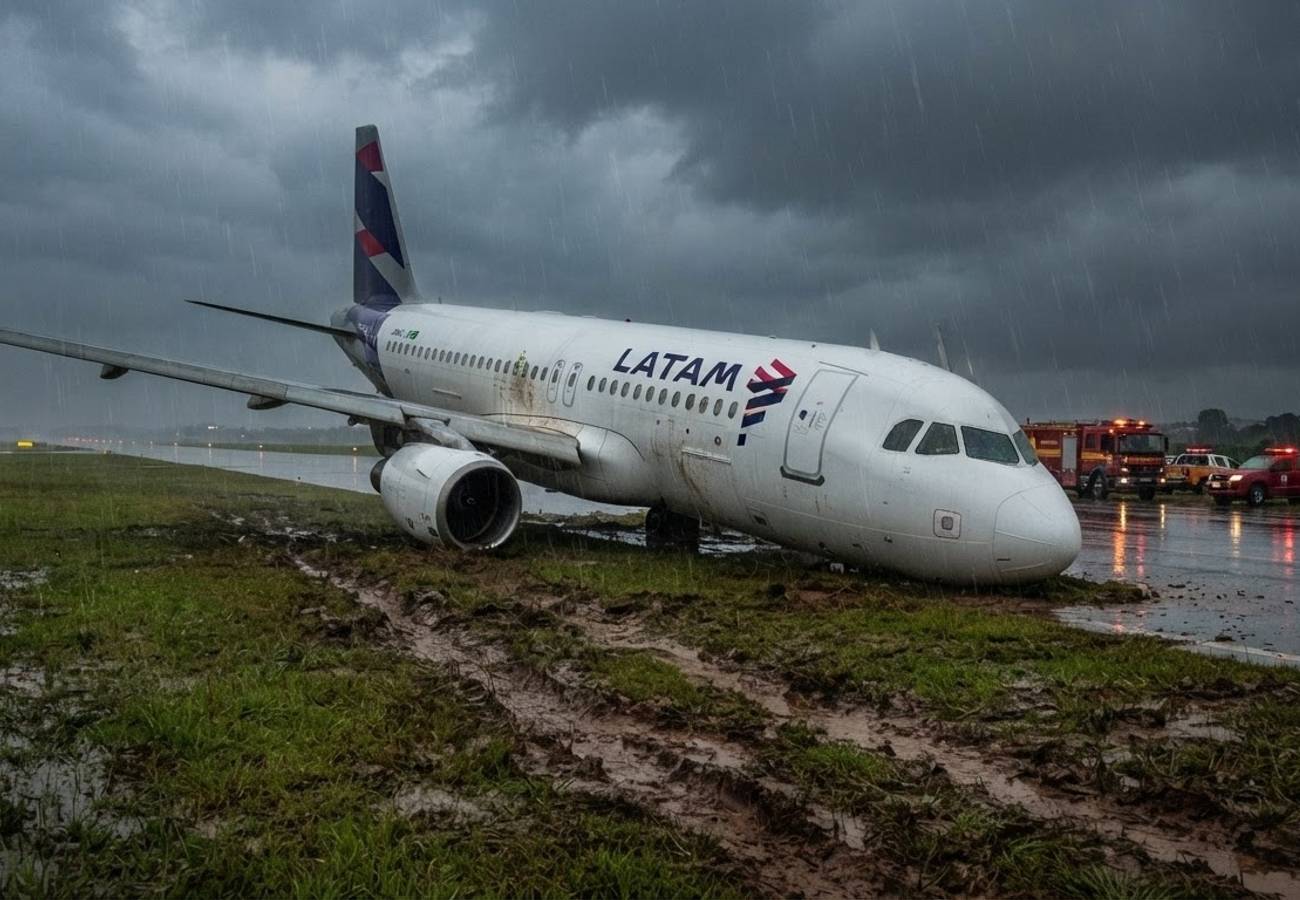
Image generated by AI
145 passengers and six crew members escaped injury when LATAM Flight LA3858 drifted off the pavement at Cascavel Airport on August 31, highlighting the volatility of regional aviation during Brazil's tropical storm seasons.
The Incident at Cascavel Airport
Regional operations in western Paraná faced significant disruption on August 31 as heavy rainfall compromised airfield traction. LATAM Flight LA3858, operated by a fourteen-year-old Airbus A320 (registration PR-MYO), was traveling from São Paulo/Guarulhos International Airport (GRU) to Cascavel.
The flight crew encountered severe atmospheric conditions upon arrival, necessitating a brief holding pattern to evaluate low visibility and surface water accumulation. After receiving clearance, the aircraft touched down on Runway 15 at approximately 09:45 local time (12:45 UTC). While the initial rollout and deployment of thrust reversers functioned normally, the aircraft lost directional control during the final slow-speed turnaround phase. At a ground speed of roughly 15 knots, the nose gear slipped on the saturated surface, leading the aircraft to drift past the paved edge and come to a stop on the soft grass verge.
Operational Impact and Emergency Response
The immediate execution of emergency protocols ensured that all 151 people on board disembarked without injury. Local emergency response teams secured the perimeter and transferred passengers to the terminal, though the incident caused a ripple effect across the regional network.
Cascavel Airport issued a Notice to Air Missions (NOTAM), temporarily closing the airfield for safety inspections. This led to the cancellation of the return leg, Flight LA3859. LATAM managed the disruption by arranging ground transportation and rebooking passengers through alternative hubs, specifically Foz do Iguaçu.
Environmental Factors and Technical Investigation
The investigation, led by Brazil’s aeronautical accidents prevention authority, is centering on the intersection of weather and infrastructure. Heavy downpours throughout the morning created significant surface spray, raising critical questions about aquaplaning risks.
Experts are currently auditing several key variables:
- Water Film Depth: Analyzing if the volume of surface water exceeded the aircraft's drainage capabilities.
- Surface Friction: Investigating rubber build-up near turning points that may have reduced traction.
- Infrastructure Geometry: Evaluating if the turn-pad geometry, runway slope, and drainage systems meet international safety standards during intense precipitation.
The core of the inquiry rests on whether localized water accumulation specifically impaired the directional control required for the low-speed backtrack maneuver.
Recovery and Long-Term Safety Outlook
Before the Airbus A320 (PR-MYO) returns to service, it must undergo a rigorous technical clearance. Engineering teams are inspecting the landing gear, lower fuselage, and engines for structural stress or debris ingestion caused by the excursion into the unpaved terrain.
Simultaneously, airfield technicians are performing friction tests on the affected runway section. Data from the Flight Data Recorder (FDR) and cockpit voice recordings are being analyzed to synchronize pilot inputs with the mechanical feedback of the aircraft.
For the broader region, this event serves as a catalyst for standardizing operating procedures across South American airports. The goal is to ensure that sudden tropical rainstorms do not compromise safety margins, moving toward more resilient infrastructure that can handle extreme weather events.
Visitor Insider Tips for Western Paraná
For travelers visiting the Cascavel and Foz do Iguaçu region, understanding the local climate is essential for seamless transit.
- The Rain Window: Heavy tropical rains are common. When flying into regional hubs like Cascavel, always build a 4-6 hour buffer into your itinerary to account for weather-related holding patterns or diversions.
- Transit Alternatives: If flights are canceled, the road connection to Foz do Iguaçu is the primary artery. Pre-arrange a reliable local transport service rather than relying on airport taxis during mass cancellations.
- Cultural Etiquette: When dealing with airport staff during disruptions, patience is highly valued in Paraná. Local "gaúcho" culture is polite but formal; maintaining a calm demeanor often leads to faster resolution of rebooking issues.
- Hidden Gem: While in the region, visit the local "Cooperativas" (agricultural cooperatives) to sample authentic regional produce and honey, which are staples of the western Paraná economy.
Safety protocols proved effective, but the event underscores the need for infrastructure that matches the intensity of Brazil's climate.
Related Travel Guides
Disclaimer
This article is for informational and educational purposes only. It does not constitute legal, financial, or professional advice. While we strive to provide accurate and up-to-date information, travel policies, regulations, and conditions change rapidly. Always verify information with official sources before making travel decisions. Nomad Lawyer makes no representations about the accuracy, reliability, completeness, or suitability of the information provided. Readers should consult qualified professionals for advice specific to their circumstances. The views expressed in this article are those of the author and do not necessarily reflect the views of Nomad Lawyer.