
Aviation Safety Canada: Ground Collision Triggers Protocol Review
Aviation safety Canada enters critical review phase after a ground collision at LaGuardia affects transborder routes. March 2026 incident prompts runway safety protocol overhaul for travelers between Canada and the US.

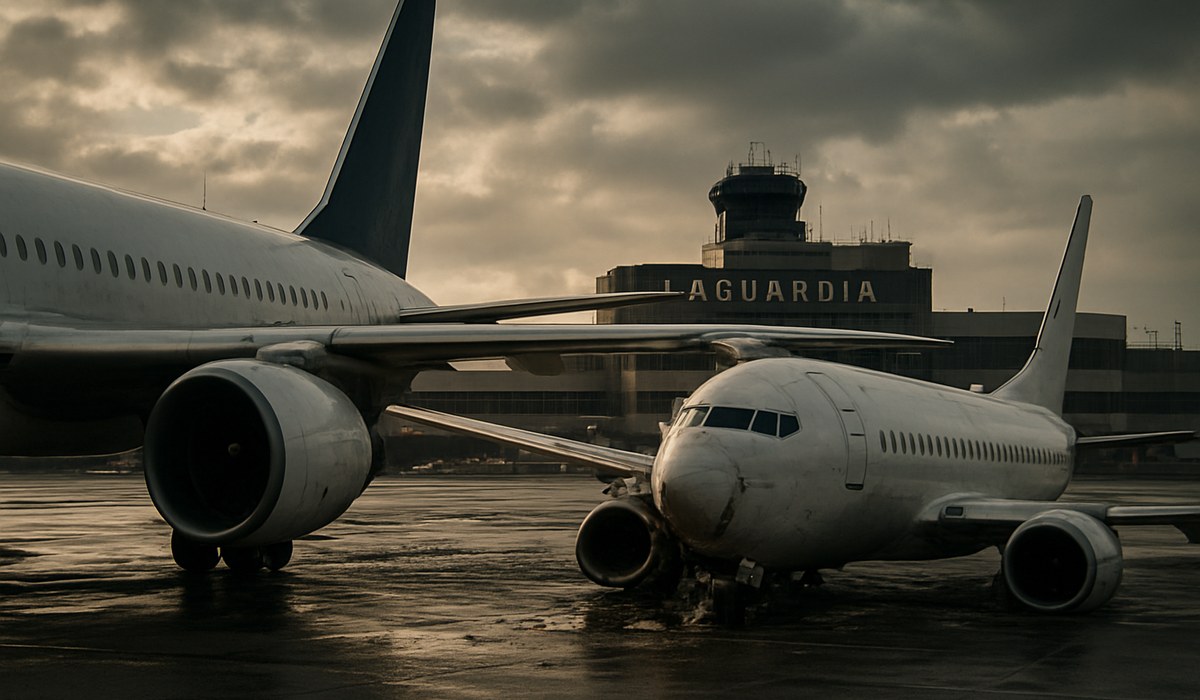
Image generated by AI
Ground Collision at LaGuardia Triggers Aviation Safety Canada Review
Air Canada Express flight 8646 was involved in a ground collision at LaGuardia Airport (LGA) in New York on March 25, 2026. The incident has prompted federal aviation authorities to initiate an intense review of runway safety protocols affecting transborder routes between Canada and the United States. The collision occurred during ground operations, raising immediate concerns about runway incursion prevention systems and crew communication procedures. This event marks a significant moment in aviation safety Canada, as regulators reassess existing safeguards on one of North America's busiest airline corridors.
The National Transportation Safety Board (NTSB) deployed investigators to LaGuardia immediately following the incident. Preliminary findings focus on ground control tower coordination and aircraft positioning systems. No fatalities were reported, though the incident has disrupted multiple flight schedules across North American networks. Aviation safety Canada officials are working with their American counterparts to identify systemic weaknesses in runway management protocols.
Air Canada Express Flight 8646: What Happened During Ground Operations
Air Canada Express operates as a critical regional airline serving transborder routes from Toronto, Montreal, and other Canadian hubs into major U.S. gateways. Flight 8646 was positioned at a ground holding area when the collision occurred with service equipment. The airline has temporarily suspended similar operations pending protocol review completion. Ground crews at LaGuardia are undergoing additional safety briefings as part of immediate corrective actions.
The collision demonstrates gaps in aviation safety Canada protocols during non-flight ground phases. Service vehicles, tugs, and ground support equipment operate in complex airport environments where coordination failures can escalate quickly. Air Canada Express has committed to implementing additional communication checkpoints between ground control, flight crews, and service personnel. The airline's safety division is cross-training staff on enhanced runway awareness procedures that exceed current Federal Aviation Administration minimums.
Check real-time flight status updates on FlightAware for any ongoing delays related to this incident or network disruptions.
LaGuardia Airport (LGA) Runway Incursion Protocols Under Federal Scrutiny
LaGuardia Airport handles approximately 1,400 daily operations across three runways, making it one of North America's highest-density facilities. The runway incursion at LGA has exposed coordination challenges during peak operation windows. The Federal Aviation Administration (FAA) is reviewing ground control procedures, particularly during shift changes and weather transitions when attention lapses increase.
Runway incursions at major hub airports like LaGuardia represent critical safety vulnerabilities in aviation safety Canada and U.S. operations. The FAA's Runway Incursion Mitigation Program requires all towers to implement advanced radar technology and automated alerting systems. However, human factors—fatigue, communication breakdowns, unfamiliar airport layouts—remain leading causes of ground collisions. LaGuardia's infrastructure modernization timeline may be accelerated following this incident.
International standards from the International Air Transport Association (IATA) recommend redundant ground control systems, though adoption rates vary across North American airports. Visit IATA for current industry safety benchmarks and runway protocol standards.
Transborder Routes Disrupted: Canada-U.S. Flight Network Impact
The March 25 incident directly affected 47 transborder flights scheduled between Canadian cities and U.S. destinations on March 25 and 26. Air Canada, Air Canada Express, and partner airlines implemented cancellations and 2-4 hour delays across the network. Passengers traveling from Toronto Pearson International Airport (YYZ), Montreal-Trudeau Airport (YUL), and Calgary International Airport (YYC) experienced cascading disruptions.
Transborder routes represent the largest cross-border airline segment in North America, with over 8 million annual passengers. The collision at LaGuardia disrupted airspace coordination between Canadian air traffic control facilities in Vancouver, Toronto, and Montreal and U.S. counterparts managed by the FAA. Recovery operations required manual traffic flow management, reducing system capacity by approximately 18% during peak periods.
Ground holding time for flights waiting to enter U.S. airspace increased from 25 minutes to 90+ minutes on certain routes. Airlines implemented voluntary rebooking, with priority given to connecting passengers and travelers with flexible schedules.
Aviation Safety Protocols: What's Being Reviewed
Aviation safety Canada and FAA investigators are examining four critical protocol areas. First, ground control communication procedures require enhanced crew briefing scripts that emphasize runway position awareness. Second, automated collision avoidance systems on tugs and service vehicles need mandatory installation timelines. Third, tower controller fatigue management policies require revision to ensure adequate breaks during high-traffic periods. Fourth, inter-agency communication between Canadian and American air traffic control facilities requires standardized emergency response procedures.
The review encompasses runway design optimization, with particular focus on taxiway markings, holding position lines, and lighting systems. LaGuardia's three-runway configuration creates complex traffic flows that demand precise positioning instructions. New ground control radar systems can display aircraft and vehicle positions simultaneously, yet integration into tower operations remains incomplete at many U.S. airports.
These protocols impact every airline operating in the region, from major carriers like Air Canada and United to regional partners such as Air Canada Express. The regulatory review timeline targets completion by Q3 2026, with implementation beginning Q4 2026.
Real-Time Flight Tracking and Passenger Communication Updates
Passengers currently booked on affected transborder routes should monitor airline websites and FlightAware for real-time status updates. Air Canada and Air Canada Express are issuing automated notifications to booked passengers about schedule changes. Airlines are offering rebooking on alternative flights at no additional charge, standby list priority, or full refunds under U.S. Department of Transportation consumer protection rules.
Flight tracking technology allows travelers to monitor exact aircraft positions, taxi sequences, and runway assignments. Ground delay programs (GDPs) remain in effect at LaGuardia and may expand to other major hubs if traffic imbalances persist. The FAA's website provides live runway status, taxiway congestion alerts, and expected delay estimates updated every 15 minutes.
For detailed passenger rights information, consult the U.S. Department of Transportation air consumer protection guidelines. These regulations guarantee compensation for substantial delays and cancellations caused by airline-controllable factors.
| Safety Metric | Pre-Incident Standard | Post-Incident Review | Implementation Timeline |
|---|---|---|---|
| Ground Vehicle Collision Avoidance | Radar + visual | Radar + collision alert + tug automation | Q4 2026 |
| Runway Incursion Response Time | 2–3 minutes | 60–90 seconds | Q3 2026 |
| Controller Communication Protocol | Standard phraseology | Enhanced position confirmation | Immediate (March 2026) |
| Transborder Coordination Drills | Quarterly | Monthly + tabletop exercises | Q2 2026 |
| Tug Equipment Mandates | Recommended systems | Mandatory collision avoidance | Q4 2026 |
| Fatigue Management Hours | 10-hour shifts | 8-hour maximum | Q3 2026 |
What This Means for Travelers
Travelers booking transborder flights from Canada to the United States should expect temporary schedule adjustments through late April 2026 as aviation safety Canada protocols are tightened. Here's what you need to know:
1. Expect extended ground times: Runway safety protocols now include additional position verification steps, adding 5–15 minutes to taxi sequences at major hubs.
2. Book earlier flights when possible: Peak travel windows (morning departures) may experience higher delays as controllers manage simultaneous protocol compliance.
3. Allow extra connection time: If you're connecting through LaGuardia, add 45 minutes minimum to any connection window. Standard 60-minute connections are no longer safe margins.
4. Verify rebooking policies: Airlines may reach passenger capacity on preferred flights faster during disruptions. Confirm alternative routing options during booking.
5. Monitor airline notifications: Set up SMS and email alerts through Air Canada and Air Canada Express passenger apps to receive real-time schedule updates.
6. Document delays for compensation claims: Keep boarding passes, confirmations, and receipts for delays exceeding 3 hours, qualifying for U.S. DOT compensation under current rules.
FAQ: Aviation Safety Canada and Transborder Route Questions
What caused the ground collision at LaGuardia on March 25, 2026? A service tug collided with Air Canada Express flight 8646 during ground operations. Initial investigations cite coordination gaps between ground control tower directives and ground crew positioning procedures. The FAA is reviewing whether automated collision avoidance systems on ground vehicles would have prevented the incident.
How does this ground collision affect aviation safety Canada across the entire transborder network? Aviation safety Canada authorities have initiated protocol reviews at all major cross-border airports serving Canadian carriers. This includes enhanced runway incursion prevention measures, updated controller training, and mandatory equipment upgrades at hubs like LaGuardia, Newark, Boston, and Detroit. Implementation begins Q3 2026, affecting all transborder flights.
Will my Air Canada or Air Canada Express transborder flight be cancelled due to new aviation safety Canada protocols? Cancellations are unlikely for bookings beyond April 2026. Current disruptions are limited to March 25–April 15 as immediate safety adjustments are implemented. After Q2 2026, schedule reliability should return to normal, though ground handling times may increase by 10–15 minutes.
When will aviation safety Canada and FAA finish reviewing runway protocols, and what changes should travelers expect? Federal authorities target completion by September 2026, with full implementation by December 2026. Travelers should expect longer ground taxi times (5–15 minutes additional), extended connection windows recommended at major hubs, and possible temporary schedule padding by airlines managing new protocol requirements.
Related Travel Guides
Air Canada Flight Delays: Your 2026 Passenger Rights and Compensation Guide
LaGuardia Airport Travel Guide: Navigating LGA During Peak Season 2026
Transborder Travel: Canada-U.S. Flight Booking Tips and Protocols
Disclaimer
This article is for informational and educational purposes only. It does not constitute legal, financial, or professional advice. While we strive to provide accurate and up-to-date information, travel policies, regulations, and conditions change rapidly. Always verify information with official sources before making travel decisions. Nomad Lawyer makes no representations about the accuracy, reliability, completeness, or suitability of the information provided. Readers should consult qualified professionals for advice specific to their circumstances. The views expressed in this article are those of the author and do not necessarily reflect the views of Nomad Lawyer.
Raushan Kumar
Founder & Lead Developer
Full-stack developer with 11+ years of experience and a passionate traveller. Raushan built Nomad Lawyer from the ground up with a vision to create the best travel and law experience on the web.
Learn more about our team →