
Nevada Airfare Pressure: Las Vegas Outpaces Reno as Rising Flight Costs Challenge Autumn Travel in 2026

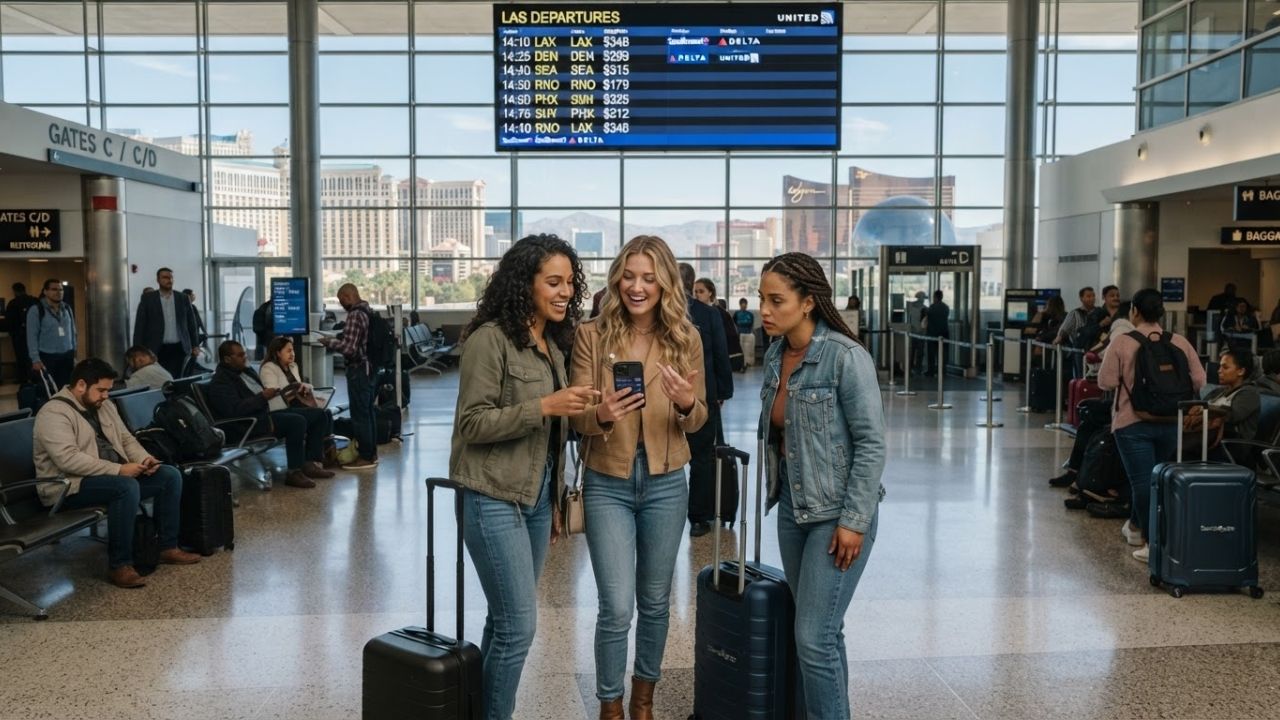
While average U.S. domestic airfares fell 1.8% to $387 in 2025, Harry Reid International Airport in Las Vegas—handling 58.4 million passengers—faces intense autumn ticket price surges that far outpace regional hubs like Reno-Tahoe. For travelers heading into Nevada in 2026, navigating this aviation divide requires strategic timing, rail-and-road connections, and tapping into community-rooted cultural alternatives beyond the Strip.
Nevada’s aviation market is undergoing a pronounced operational divergence. While nationwide domestic itinerary fares tracked by the U.S. Bureau of Transportation Statistics (BTS) averaged $387 in 2025—marking an inflation-adjusted decrease of 1.8% compared with the previous year—travelers booking autumn departures to the Silver State face stubborn pricing pressures. The friction highlights an aviation sector where macro-level ticket relief fails to reach high-demand leisure hubs experiencing record terminal volumes, concentrated event schedules, and shifting airline capacity strategies.
The primary contrast centers on southern versus northern Nevada. Las Vegas, anchored by Harry Reid International Airport (LAS), experiences intense demand-driven fare spikes tied to major conventions, global entertainment events, and weekend leisure travel. In contrast, Reno-Tahoe International Airport (RNO) serves northern Nevada with a significantly smaller passenger base, where fare pressure stems not from overwhelming visitor crowds, but from limited route options and high airline carrier concentration.
| Nevada Aviation Market Indicator | Las Vegas (Harry Reid International – LAS) | Reno (Reno-Tahoe International – RNO) |
|---|---|---|
| City / Hub Role | Las Vegas; Premier leisure and mega-convention gateway | Reno; Northern Nevada regional and outdoor recreation gateway |
| Passenger Volume | 58.4 million passengers (2024 record) | Around 4.9 million passengers (2025) |
| Primary Pricing Pressure | Event clustering, massive autumn convention demand, weekend spikes | Limited route alternatives, fewer daily flights, carrier concentration |
| Dominant Carrier Share | Diversified: Southwest, Spirit, Delta, American, United, Frontier | Concentrated: Southwest Airlines accounted for approx. 40.43% (2025) |
| Official BTS Fare Hike % | Not publicly confirmed by BTS | Not publicly confirmed by BTS |
| Secondary Cities Served | Henderson, Boulder City, Pahrump | Carson City, Lake Tahoe Basin, Sparks, Truckee |
The Nevada Aviation Divide: Demand Spikes vs. Regional Route Concentration
Official data compiled by the U.S. Bureau of Transportation Statistics (BTS) tracks itinerary fares by individual airport and specific route pairs rather than issuing broad statewide rankings. Consequently, Nevada does not carry an official statewide percentage increase figure. Instead, aviation conditions across the state reflect localized market dynamics.
Nationally, airfare movements show significant geographic variation. While the national average itinerary dropped to $387, regional outliers saw steep cost increases. In Texas, Brownsville South Padre Island International Airport saw average fares surge approximately 17.7%, while Laredo International Airport registered an increase of approximately 8.3%. In Utah, Salt Lake City International Airport remains ranked among the nation's higher-cost major hubs.
Within Nevada, the aviation picture divides along operational lines:
- Las Vegas (LAS): As the primary aviation gateway for southern Nevada, Harry Reid International handled 58.4 million passengers in 2024 (surpassing previous records of more than 58 million). The airport relies on an extensive network of domestic carriers including Southwest, Spirit, Delta, American, United, Allegiant Air, and Frontier. Price escalation at LAS is rarely driven by a lack of flights; rather, concentrated surges during major trade shows, international sporting events, and autumn holiday weekends soak up available seat inventory, activating high-tier fare buckets.
- Reno-Tahoe (RNO): Handling around 4.9 million passengers in 2025, northern Nevada's primary hub operates under an entirely different market structure. Southwest Airlines represents the dominant carrier at RNO, accounting for approximately 40.43% of passenger traffic in 2025, followed by American Airlines, United Airlines, and SkyWest. With fewer direct nonstop routes and lower flight frequencies, travelers departing or arriving through Reno often face higher baseline fares due to limited inter-carrier competition on specific regional links.
Beyond the Primary Hubs: Regional Access Across Henderson, Carson City, and Elko
Secondary cities across Nevada do not operate independent commercial airline hubs, meaning airfare trends in outlying municipalities are directly linked to LAS or RNO pricing:
- Henderson: Situated immediately south of Las Vegas, Henderson is Nevada's second-most populous city. Residents and visitors rely entirely on Harry Reid International Airport, absorbing the identical seasonal and convention-driven fare swings affecting Las Vegas travelers.
- Carson City: Nevada’s state capital relies on Reno-Tahoe International Airport, located 30 miles north, for commercial aviation access. Fare changes, route reductions, or carrier adjustments at RNO directly dictate travel affordability for state government officials, regional business travelers, and heritage tourists visiting the capital.
- North Las Vegas: While home to North Las Vegas Airport (VGT), the facility specializes in general aviation, flight training, and private charter operations, generating no scheduled commercial domestic fare data.
- Elko: Serving northeastern Nevada’s mining and ranching communities, Elko Regional Airport (EKO) provides essential regional connectivity with limited scheduled commercial services, operating under distinct federal Essential Air Service (EAS) frameworks with limited standard BTS fare reporting.
Autumn Route Expansions and Airline Capacity Adjustments
To capture autumn travel demand, major airlines continuously adjust flight schedules, aircraft gauge, and route frequencies into Nevada. Autumn represents a premier travel window across the Mojave Desert and Great Basin, combining cooler temperatures with packed convention and sports calendars.
Airlines have focused their network strategies on strategic leisure and business corridors:
- Southwest Airlines: Continues network strength across both Las Vegas and Reno, maintaining high-frequency point-to-point connections across California, Arizona, and the Midwest.
- Allegiant Air: Links secondary and regional markets directly with Las Vegas, bypassing congested national transfer hubs and offering budget-conscious travelers direct access to southern Nevada.
- Frontier Airlines and Spirit Airlines: Expand low-cost seat capacity into Las Vegas, providing price discipline against legacy network carriers on high-volume routes originating in Denver, Dallas, Atlanta, and Chicago.
- Legacy Network Carriers (American, Delta, United): Optimize capacity around high-yield business and convention dates, deploying larger aircraft on transcontinental routes from New York, Charlotte, Atlanta, and Washington, D.C., into Harry Reid International Airport.
Cultural & Environmental Value: Sustaining Nevada's Desert Heritage and Local Communities
For the conscious traveler, navigating rising flight costs presents an opportunity to reconsider how tourism dollars circulate within Nevada. When airfare consumes a larger share of a traveler's budget, the real impact is often felt by local off-Strip merchants, cultural institutions, and regional eco-tourism initiatives.
Nevada's tourism identity extends far beyond casino floors and neon corridors. By redirecting attention toward regional heritage and conservation, travelers support sustainable community development across the Mojave Desert and Great Basin:
- Mojave Desert Water and Resource Stewardship: Southern Nevada operates under strict water conservation mandates overseen by the Southern Nevada Water Authority (SNWA). Las Vegas recycles nearly 100% of all indoor water used on the Strip back into Lake Mead via the Colorado River system. Travelers can contribute by choosing eco-certified accommodations and respecting desert water guidelines during their stay.
- Supporting Non-Gaming Historic Districts: In southern Nevada, shifting itinerary time to the Las Vegas Arts District (18b) directly supports independent galleries, antique cooperatives, and family-owned culinary venues. Similarly, in northern Nevada, exploring the historic Stewart Indian School Cultural Center and Museum in Carson City preserves Indigenous Great Basin heritage representing the Washoe, Paiute, and Western Shoshone nations.
- Lake Tahoe Basin Conservation: For travelers landing at Reno-Tahoe International, visiting Lake Tahoe comes with a civic responsibility to protect the alpine watershed. Guided by the Tahoe Regional Planning Agency (TRPA) and the League to Save Lake Tahoe ("Keep Tahoe Blue"), visitors are encouraged to use public transit systems like TART (Tahoe Truckee Area Regional Transit) and avoid single-use plastics to protect the lake's legendary water clarity.
Destination Specialist Insider Tips for Navigating Nevada Travel
Travelers planning journeys to Las Vegas, Reno, and surrounding Nevada destinations in 2026 can deploy practical insider strategies to bypass high fares and experience authentic regional culture:
- The 60-to-90-Day Autumn Booking Window: For Las Vegas flights, secure reservations 60 to 90 days before departure, particularly if visiting between September and November. Never book flights to LAS without first checking the Las Vegas Convention and Visitors Authority (LVCVA) convention calendar. Mega-trade shows like SEMA (automotive aftermarket) in November or massive industrial gatherings can push round-trip domestic airfares above $600 and triple hotel room rates within 48 hours.
- Fly Midweek, Depart Midweek: The sharpest airfare premiums occur on Friday inbound flights and Sunday evening outbound returns. By shifting arrival dates to Tuesday morning and departing Thursday afternoon, travelers routinely save 35% to 50% on airfare while avoiding 90-minute security checkpoint lines at Harry Reid International.
- Public Transit over Airport Rideshare Surges: Avoid peak $45-$65 rideshare terminal surcharges leaving Harry Reid Airport. The Regional Transportation Commission of Southern Nevada (RTC) operates Route 108 (Paradise) and Route 109 (Maryland Parkway) directly from Terminal 1, connecting to the South Strip Transfer Terminal and Downtown for under $4. On the Strip, the RTC Deuce double-decker bus provides 24-hour service between Mandalay Bay and Fremont Street.
- Local Culinary Havens Away from Strip Markups: Skip standardized celebrity-chef eateries with mandatory service fees to explore Nevada's authentic neighborhood food scenes:
- Las Vegas Chinatown (Spring Mountain Road): Located just two miles west of the Strip, this three-mile corridor features world-class Asian dining, including freshly pulled hand-cut noodles at Shang Artisan Noodle, Cantonese barbecue, and Vietnamese pho at a fraction of resort prices.
- Historic Basque Dining in Northern Nevada: While in Reno or Carson City, experience Nevada’s century-old Basque herding heritage at Louis' Basque Corner or the Martin Hotel. Meals are served family-style with hearty courses of vegetable soup, French bread, chorizo, lamb chops, and the state's unofficial signature beverage, the Picon Punch.
- Desert Etiquette and Conservation Rules: When venturing to Red Rock Canyon National Conservation Area (which requires timed reservations from October through May), Valley of Fire State Park, or Mount Charleston, adhere strictly to Leave No Trace principles. Carry a minimum of one gallon of water per person per day, never approach desert bighorn sheep or wild burros, and never touch prehistoric petroglyphs or scramble on fragile Aztec sandstone immediately following rainstorms.
Tourism Outlook: Infrastructure Resilience Shapes Nevada's Travel Future
The contrast between Las Vegas's demand-driven airfare pressure and Reno's route availability constraints demonstrates the complexity of Nevada's visitor economy in 2026. While average U.S. domestic airfares show moderate national softening, premier leisure and convention destinations operate under distinct economic gravity.
Moving forward, regulatory oversight from the Federal Aviation Administration (FAA) and U.S. Department of Transportation on consumer fee transparency, combined with ongoing terminal capital improvements at both Harry Reid and Reno-Tahoe International Airports, aims to provide greater pricing stability. For visitors, understanding these regional aviation dynamics transforms travel planning—allowing travelers to save on transit expenses while discovering the deep cultural, natural, and historic wonders that define the Silver State beyond the casino lights.
Related Travel Guides
- Asia Aviation Disruption: Shanghai, Jakarta, and Dubai Face 2,129 Delays and 234 Cancellations 2026
- Middle East Aviation Disruption: Dubai, Cairo, and Riyadh Face 871 Delays and 59 Cancellations 2026
- US State Department Travel Advisories: Peru, Ecuador, and Colombia Safety Guide 2026
- Virginia Tourism Spending Record: Waynesboro and Alexandria Cultural Guide 2026
Disclaimer
This article is for informational and educational purposes only. It does not constitute legal, financial, or professional advice. While we strive to provide accurate and up-to-date information, travel policies, regulations, and conditions change rapidly. Always verify information with official sources before making travel decisions. Nomad Lawyer makes no representations about the accuracy, reliability, completeness, or suitability of the information provided. Readers should consult qualified professionals for advice specific to their circumstances. The views expressed in this article are those of the author and do not necessarily reflect the views of Nomad Lawyer.
Raushan Kumar
Founder & Lead Developer
Full-stack developer with 11+ years of experience and a passionate traveller. Raushan built Nomad Lawyer from the ground up with a vision to create the best travel and law experience on the web.
Learn more about our team →