
Asia Aviation Disruption: Shanghai, Jakarta, and Dubai Face 2,129 Delays and 234 Cancellations in 2026

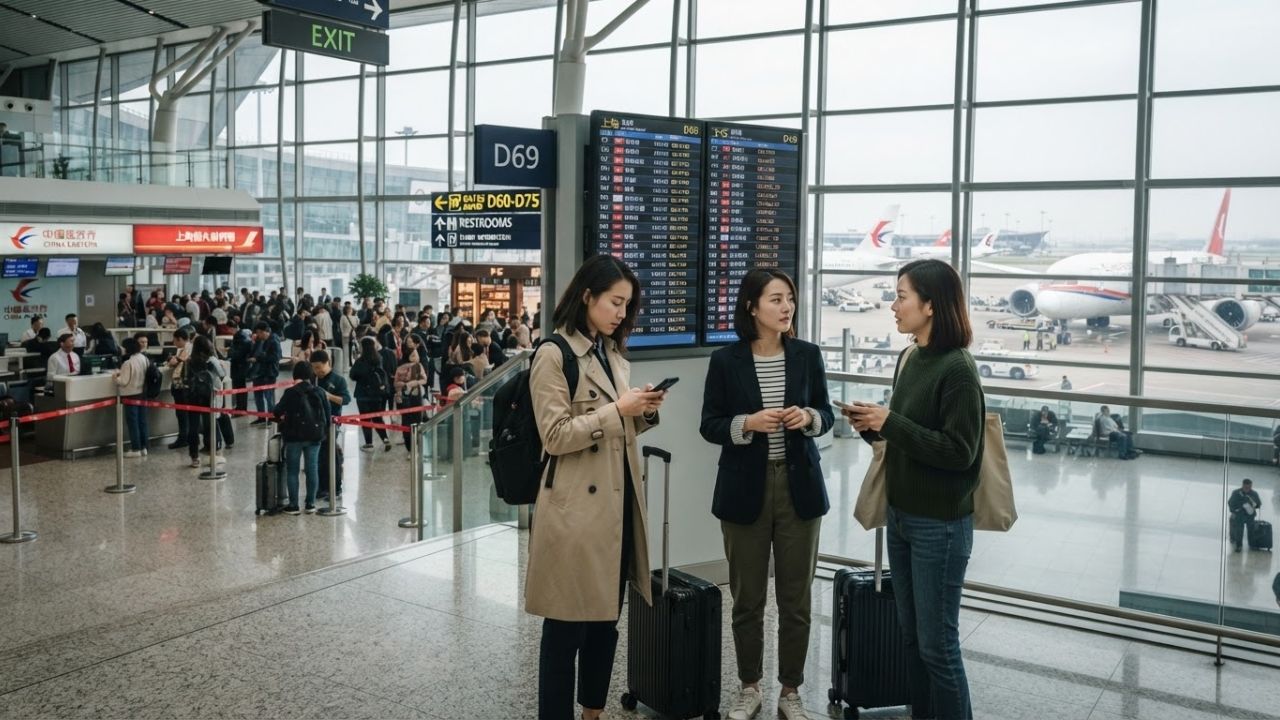
Transpacific and intra-Asian aviation networks experienced massive operational gridlock on September 9, 2026, as 2,129 flight delays and 234 cancellations rippled across primary international hubs in China, Indonesia, Thailand, Saudi Arabia, and the United Arab Emirates. With mega-gateways—including Shanghai Pudong, Guangzhou Baiyun, Jakarta Soekarno-Hatta, and Dubai—straining under aircraft turnaround bottlenecks and airspace congestion, thousands of long-haul and regional passengers faced missed connections and extended terminal layovers.
Captured through real-time flight-tracking intelligence logged at 5:13 pm ET USA (2:43 am IST) via FlightAware, the disruption impacted key continental transit points: Shanghai Pudong International Airport (PVG), Guangzhou Baiyun International Airport (CAN), Jakarta Soekarno-Hatta International Airport (CGK), Dubai International Airport (DXB), King Abdulaziz International Airport (JED) in Jeddah, Zayed International Airport (AUH) in Abu Dhabi, Chengdu Tianfu International Airport (TFU), Chengdu Shuangliu, Suvarnabhumi Airport (BKK) in Bangkok, King Khalid International Airport (RUH) in Riyadh, and Gizan Regional Airport (GIZ). The acute operational drag underscores the vulnerabilities of tightly calibrated transcontinental flight rotations connecting East Asia, Southeast Asia, and the Middle East.
Airspace Congestion: Hub-by-Hub Delay and Cancellation Data
The most intense flight disruptions concentrated across China's eastern manufacturing corridor and Southeast Asia's busiest archipelago hub, where heavy domestic frequencies overlapped with international departure banks:
| Airport Hub | IATA Code | Flight Delays | Flight Cancellations | US-Connected Flight Delays | Key Operational Delay & Cancellation Rates |
|---|---|---|---|---|---|
| Shanghai Pudong | PVG | 289 delays | 17 cancellations | 9 delays | 16% origin delay rate; 1% cancellation & 18% destination delay rates |
| Jakarta Soekarno-Hatta | CGK | 253 delays | 22 cancellations | 0 delays | 2% cancellation & 20% delay origin rates; 1% cancel & 22% delay dest. rates |
| Guangzhou Baiyun | CAN | 251 delays | 14 cancellations | 0 delays | 15% origin delay rate; 16% destination delay rate |
| Dubai International | DXB | 231 delays | 10 cancellations | 7 delays | 1% cancellation & 24% delay origin rates; 18% destination delay rate |
| King Abdulaziz (Jeddah) | JED | 142 delays | 11 cancellations | 1 delay | 1% cancellation & 16% origin delay rates; 1% cancel & 17% delay dest. rates |
| Bangkok Suvarnabhumi | BKK | 139 delays | 2 cancellations | — | Heavy Southeast Asian regional connection delays |
| Abu Dhabi Zayed Intl | AUH | 129 delays | 2 cancellations | 5 delays | Concentrated delays on westbound European and transatlantic routes |
| King Khalid (Riyadh) | RUH | 105 delays | 15 cancellations | — | High domestic cancellation volume |
| Chengdu Tianfu | TFU | 88 delays | 17 cancellations | — | 1% cancellation & 8% origin delay rates; 1% cancel & 9% delay dest. rates |
| Gizan Regional | GIZ | 0 delays | 8 cancellations | — | Localized domestic route suspensions |
Shanghai Pudong recorded the single highest delay tally across Asia, logging 289 delayed flights alongside 17 cancellations, with 9 delayed services directly connecting to airports in the United States. Originating flights from Pudong registered a 16% delay rate, while arriving destination traffic recorded an 18% delay rate. In southern China, Guangzhou Baiyun logged 251 delays and 14 cancellations, operating under 15% origin and 16% destination delay rates.
In Southeast Asia, Jakarta's Soekarno-Hatta International Airport absorbed massive operational friction, recording 253 delayed departures and 22 cancellations. The Indonesian gateway posted a 2% cancellation rate and a 20% delay rate on origin traffic, while destination traffic experienced an elevated 22% delay rate. In Thailand, Bangkok Suvarnabhumi registered 139 delays and 2 cancellations, creating tight connections for holidaymakers heading to coastal resort islands.
Carrier Performance: Flagship Operators Under Operational Strain
Four prominent Asian and Middle Eastern airlines bore the brunt of schedule collapses, collectively absorbing hundreds of delayed operations:
- China Eastern Airlines: Suffered the largest single delay volume across the region, logging 323 delayed flights and 39 cancellations. The carrier maintained a 1% cancellation rate and a 13% delay rate across its domestic and international network.
- Air China: Recorded the highest cancellation count among individual carriers, with 40 grounded flights alongside 114 delays, operating under a 2% cancellation rate and a 6% delay rate.
- Batik Air: Absorbed severe percentage disruption in Southeast Asia, registering 28 cancellations and 70 delays, resulting in an 8% cancellation rate and a 21% delay rate across its domestic Indonesian network.
- Saudia: Registered 72 delays and 23 cancellations across its domestic and regional network, maintaining a 4% cancellation rate and a 13% delay rate.
Aviation analysts note that disruptions of this magnitude typically emerge from cascading chain reactions: air traffic flow management restrictions through dense military and civilian airspace corridors, adverse weather systems across the South China Sea, and tight turnaround cycles where a morning delay in Shanghai or Jakarta triggers delays across subsequent legs throughout the day.
Consumer Protection and Passenger Rights Across Asian Jurisdictions
Navigating flight disruptions in Asia requires an understanding of distinct national consumer protection frameworks:
In mainland China, passenger rights are regulated by the Civil Aviation Administration of China (CAAC) Provisions on the Management of Flight Regularity. If a flight cancellation or delay is caused by internal carrier issues—such as aircraft maintenance, crew scheduling, or operational adjustments—airlines including China Eastern and Air China are legally mandated to provide stranded travelers with complimentary meals and hotel accommodations. If delays stem from weather or air traffic control flow management, carriers must assist passengers in securing lodging and rebooking, though accommodation costs are typically borne by the traveler unless ticket provisions state otherwise.
In Indonesia, passenger compensation is governed by the Directorate General of Civil Aviation under Minister of Transportation Regulation PM 89/2015. The regulation establishes strict compensation tiers based on delay duration:
- Category 1 (30 to 60 minutes): Complimentary refreshments.
- Category 2 (61 to 120 minutes): Heavy snacks and drinks.
- Category 3 (121 to 180 minutes): Full hot meals.
- Category 5 (Exceeding 240 minutes): Mandatory cash compensation of IDR 300,000 (roughly US$20) paid directly to the passenger, alongside meal provisions.
- Category 6 (Outright cancellation): Full ticket refund or immediate transfer to the next available departure without surcharge.
Local Visitor Insider Tips: Mega-Hub Navigation, Rest Pods, and Regional Cuisine
For international travelers facing extended transit delays or tight terminal transfers across Asian airports, these local insider strategies will maximize comfort and minimize transit friction:
- Terminal Navigation and Transit Buffers:
- Shanghai Pudong (PVG): Terminal 1 and Terminal 2 are connected to the world’s largest satellite terminal concourse (S1 and S2) via an underground automated rapid transit rail. Allow at least 20 minutes solely for train transit between check-in halls and satellite boarding gates.
- Jakarta (CGK): Terminal 3 operates international and premium domestic flights (Garuda Indonesia), while Terminal 2 handles regional budget carriers (Batik Air). Use the complimentary automated Skytrain (Kalayang) to transfer between terminals, allowing at least 45 minutes for inter-terminal transfers.
- Bangkok (BKK): Suvarnabhumi features exceptionally long concourses extending over a kilometer. Utilize electric golf cart transfer services if traveling with elderly relatives or managing tight 60-minute connection windows.
- Sanctuary and Rest Lounges:
- Shanghai (PVG): Utilize the hourly transit hotels located inside the secure international zones of Terminals 1 and 2, or relax in pay-per-use lounges in Satellite Concourse S2.
- Jakarta (CGK): Book sleep pods at the "Digital Airport Hotel" capsule facility located on the 1st floor of Terminal 3, offering soundproof sleeping pods, high-speed Wi-Fi, and hot showers.
- Bangkok (BKK): Unwind at the Miracle Transit Hotel on the 4th floor of Concourse G, which offers 6-to-12-hour dayroom bookings without requiring passengers to clear Thai immigration.
- Authentic Terminal Gastronomy: Skip standardized western fast-food outlets to sample authentic regional culinary heritage:
- Shanghai: Order steaming hot shengjianbao (pan-fried pork buns with crispy bottoms and rich soup filling) or savory scallion oil noodles in Terminal 2 dining arcades.
- Jakarta: Feast on authentic Indonesian nasi goreng special accompanied by tender chicken satay (sate ayam) with sweet soy-peanut sauce and crispy shrimp crackers (krupuk) in Terminal 3.
- Guangzhou: Enjoy classic Cantonese dim sum, including steamed shrimp dumplings (har gow) and roasted honey barbecue pork (char siu).
- Bangkok: Savor hot bowls of spicy, fragrant tom yum goong (lemongrass shrimp soup) or classic pad thai prepared with fresh tamarind paste and crushed peanuts.
Sustainable Aviation and Overland High-Speed Rail Integration
As Asian airports grapple with capacity constraints, regional infrastructure is evolving toward integrated multi-modal mobility. In China, the convergence of major airport terminals with the national 45,000-kilometer high-speed rail network offers passengers a resilient, low-carbon alternative during flight cancellations. Travelers facing domestic flight cancellations between Shanghai, Nanjing, Hangzhou, or Beijing can transfer directly to rail stations like Shanghai Hongqiao, boarding 350 km/h Fuxing electric bullet trains that bypass airport delays entirely while emitting up to 75% less carbon per passenger-kilometer than domestic flights.
Across Southeast Asia, airports are adopting green building benchmarks. Jakarta’s Terminal 3 utilizes extensive rainwater harvesting, natural daylighting concourses, and energy-efficient chilled-water cooling systems, aligning terminal expansion with long-term ecological stewardship.
Tourism Outlook: Resilient Infrastructure Safeguards Asia's Skies
The disruption affecting 2,129 flights across Shanghai, Jakarta, Guangzhou, and Bangkok illustrates the extraordinary density and complexity of Asian air travel in 2026. As the world’s most dynamic economic corridor, the Asia-Pacific aviation sector operates at unprecedented scale.
Through robust passenger protection enforcement by the CAAC and Indonesian DGCA, combined with ongoing terminal modernization and multi-modal rail integration, the region’s aviation infrastructure continues to demonstrate remarkable operational recovery. For global explorers traversing Asia in 2026, maintaining flexible itineraries, monitoring real-time flight feeds, and understanding passenger rights ensures that unexpected delays become manageable interludes in an otherwise extraordinary journey.
Related Travel Guides
- Middle East Aviation Disruption: Dubai, Cairo, and Riyadh Face 871 Delays and 59 Cancellations 2026
- China Travel Safety: US Advisory Level 2 and Exit Ban Guide 2026
- PTE Asia Singapore MICE Tourism and Modern Airport Infrastructure Guide 2026
- Beijing Inbound Tourism Growth and Spending Surge: China Visa-Free Travel Guide 2026
Disclaimer
This article is for informational and educational purposes only. It does not constitute legal, financial, or professional advice. While we strive to provide accurate and up-to-date information, travel policies, regulations, and conditions change rapidly. Always verify information with official sources before making travel decisions. Nomad Lawyer makes no representations about the accuracy, reliability, completeness, or suitability of the information provided. Readers should consult qualified professionals for advice specific to their circumstances. The views expressed in this article are those of the author and do not necessarily reflect the views of Nomad Lawyer.
Raushan Kumar
Founder & Lead Developer
Full-stack developer with 11+ years of experience and a passionate traveller. Raushan built Nomad Lawyer from the ground up with a vision to create the best travel and law experience on the web.
Learn more about our team →