
Las Vegas Dominates US Nightlife, Outpacing Miami and NYC
Las Vegas reigns supreme in American after-dark tourism, attracting millions from Canada, Mexico, Europe and Brazil. Here's why it outpaces Miami, NYC, and LA.

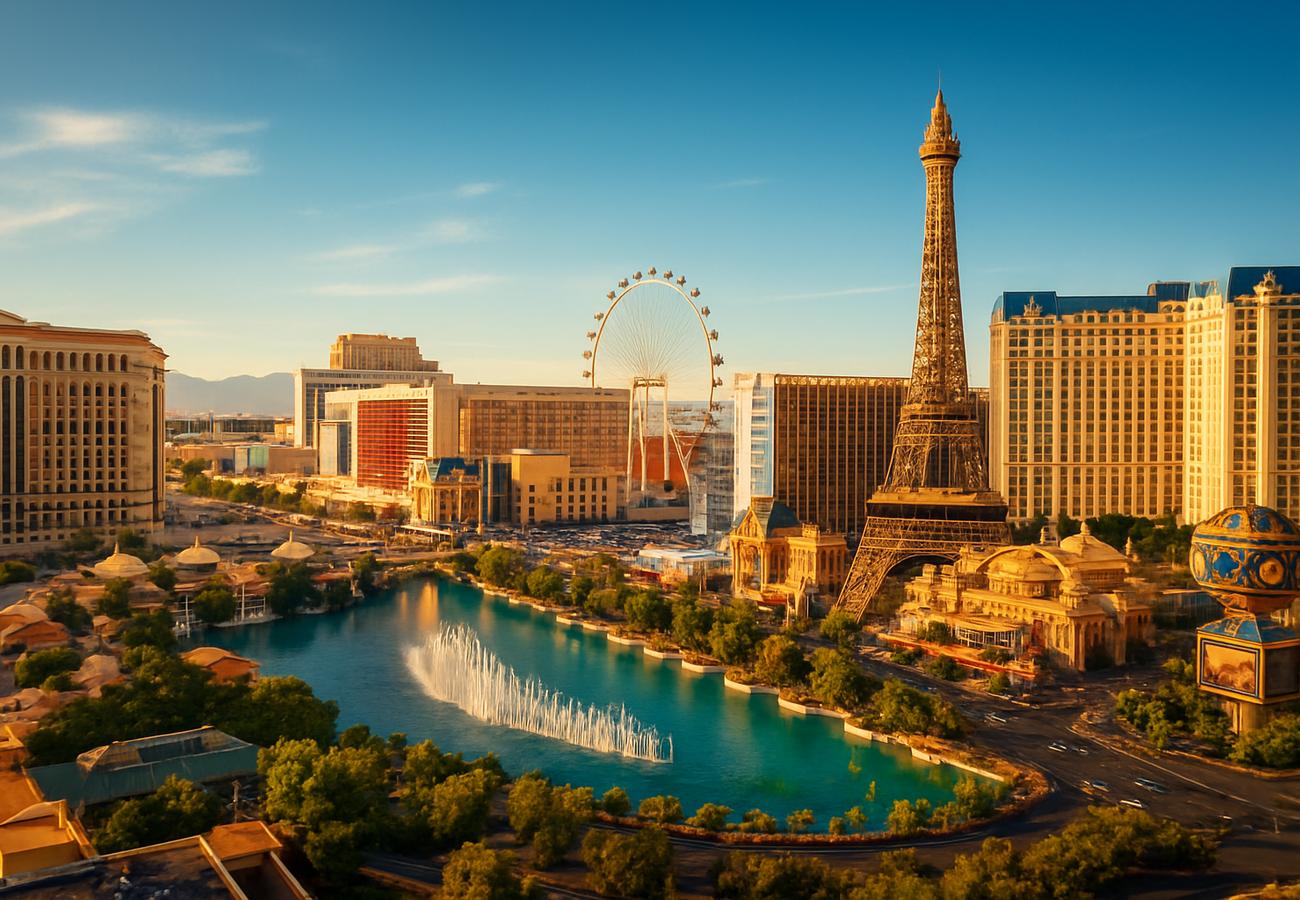
Image generated by AI
The Undisputed King of American After-Dark Tourism
Las Vegas has cemented its position as the world's premier nightlife destination, decisively outpacing Miami, Los Angeles, New York City, Nashville, Aspen, Charleston and virtually every other major US city competing for after-dark tourism dollars. The explosive growth shows no signs of slowing, driven by an unprecedented wave of international visitors from Canada, Mexico, France, Spain, the UK, Germany and Brazil seeking the city's legendary combination of luxury, entertainment and 24-hour excitement.
What makes this dominance remarkable is not merely the volume of visitors, but the diversity of their origins and their willingness to travel vast distances specifically for Vegas nightlife experiences.
Why Las Vegas Remains Untouchable
The numbers tell a compelling story. Las Vegas ranks #1, followed by Miami at #2, Los Angeles at #5, and New York City at #7 in comprehensive nightlife destination rankings. This hierarchy reflects something fundamental about how the city has engineered its entertainment ecosystem.
Unlike other major cities that concentrate nightlife in discrete districts, Las Vegas has created a self-contained universe where everything matters. Walk outside your luxury resort on the Strip and you're immediately surrounded by world-class nightclubs, Michelin-rated restaurants, live performances featuring international superstars, and casinos operating continuously. Everything is proximate. Everything is accessible.
"Nightlife tourism has evolved into a major economic driver rather than a secondary component of the visitor economy," says Anup Kumar Keshan, Founder and Editor-in-Chief of Travel and Tour World. "From live music venues and rooftop bars to large-scale festivals, entertainment districts and late-night dining experiences, nightlife ecosystems are becoming increasingly important in attracting international visitors and extending tourism spending beyond traditional daytime activities."
The infrastructure advantage cannot be overstated. The city operates on a fundamentally different principle than its competitors: 24-hour operations. While Miami's South Beach quiets down by 4 AM and New York's bars close by 4 AM, Las Vegas simply transitions from one wave of entertainment to the next. This continuity is seductive to international travellers juggling multiple time zones and seeking maximum value from limited vacation time.
Miami: The Latin Influence Factor
Miami has built its reputation on an entirely different foundation—one rooted in climate, cultural fusion, and glamorous beachside energy. Districts like South Beach, Wynwood, and Brickell operate as distinct nightlife ecosystems, each serving radically different audiences.
South Beach delivers the high-energy club scene. Wynwood offers street art culture and indie venues. Brickell attracts the after-work professional crowd. This segmentation allows Miami to compete by offering choice rather than sheer scale.
The city's tropical climate is a decisive competitive advantage that Las Vegas cannot replicate. Warm temperatures year-round support outdoor entertainment, rooftop bars, and beachfront clubs that feel fundamentally different from air-conditioned indoor venues. For international visitors, particularly those from Brazil, Spain, and Mexico, Miami's beach culture and Latin American influences create an instantly recognizable cultural bridge.
Yet Miami ranks #2 for a reason: it lacks Las Vegas's concentrated convenience and its operational scale. Where Las Vegas delivers everything within walking distance of your hotel, Miami requires deliberate district-hopping.
New York City: The Unmatched Cultural Breadth
New York City occupies an unusual position—ranked #7 in pure nightlife destinations, yet unmistakably powerful for a fundamentally different reason. The city doesn't compete on club size or luxury resort density. It competes on cultural diversity.
On any given night, you can experience Broadway theatre, world-class jazz clubs, rooftop bars with skyline views, comedy venues, live music across multiple genres, and cocktail lounges serving drinks that redefine mixology standards. This breadth is nearly impossible to replicate.
The city's extensive public transportation system also matters. While Los Angeles requires car rental to navigate nightlife districts, New York's subway allows visitors to island-hop through Manhattan, Brooklyn, and Queens without friction. Accessibility drives volume.
Reddit: "NYC nightlife is about discovery. Vegas is about excess. I prefer NYC because every neighborhood has something different to offer." — r/travel
For visitors from France, Germany, and the UK, New York offers a walkable, transit-accessible cosmopolitan experience that aligns with European city expectations in ways Las Vegas does not.
Los Angeles: The Decentralized Entertainment Model
Los Angeles presents a fundamentally fragmented nightlife landscape. Hollywood, West Hollywood, Downtown LA, Santa Monica, and Silver Lake each function as independent entertainment districts with minimal overlap.
This decentralization is simultaneously a strength and a weakness. Each neighborhood attracts distinct audiences—Hollywood draws the industry crowd, West Hollywood dominates LGBTQ+ nightlife, Downtown attracts younger alternative scenes, Santa Monica serves tourists seeking beach-adjacent venues. The variety is exceptional.
However, the city's transportation infrastructure works against consolidated nightlife tourism. Interstate 405 congestion and sprawling geography mean that visitors cannot casually navigate between districts like they can in Las Vegas or New York. This friction reduces the total nightlife experiences accessible within a single evening.
The entertainment industry's outsized influence also shapes LA's identity. Celebrity culture, exclusive venues, and premium dining create an aspirational quality that resonates with certain visitor demographics, particularly those seeking glamour and potential celebrity sightings.
Nashville and Austin: How Music Became a Nightlife Engine
Nashville has weaponized live music into an incomparable economic advantage. The city's famous Broadway district delivers continuous live performances across dozens of venues simultaneously. Walking down Broadway after 9 PM, you're surrounded by authentic country music, energetic crowds, and an atmosphere that feels organically connected to local culture rather than manufactured for tourists.
This authenticity matters. International visitors recognize and value genuine musical heritage. The venue density—with virtually every storefront hosting multiple performers—creates a unique atmosphere where nightlife feels rooted in legitimate cultural expression.
Austin follows a parallel strategy through its music heritage. The Sixth Street and Red River Cultural District attracts visitors with diverse musical venues featuring country, indie, rock, and electronic music. Austin's tagline—"Live Music Capital"—is more than marketing; it's an operational framework that drives consistent nightlife tourism.
Both cities rank lower than Las Vegas (#13 for Nashville, #14 for Austin) because music alone cannot compete with Las Vegas's comprehensive entertainment ecosystem. However, both demonstrate that specialized excellence can generate sustained international appeal.
The Historic City Thesis: Can Charleston and Savannah Compete?
Charleston (#15) and Savannah (#20) prove something crucial: nightlife dominance doesn't require massive clubs or entertainment complexes. Both cities leverage historic architecture, walkable districts, and strong culinary scenes to create distinctive evening experiences.
Charleston's waterfront atmosphere combined with boutique cocktail bars and live music venues creates intimate evening experiences. Savannah's historic squares and Spanish moss-draped atmosphere generates romantic nightlife appeal unavailable in more modern entertainment hubs.
For visitors prioritizing atmosphere over scale—particularly those from Spain, France, and the UK—these cities deliver authentic experiences that massive resort cities cannot replicate. They compete by offering exclusivity and cultural immersion rather than sheer entertainment volume.
Aspen (#16) and Park City (#17) round out the rankings, leveraging ski season conventions and luxury hospitality to drive seasonal nightlife economies. However, their seasonal concentration limits annual competitiveness against year-round destinations.
The International Tourism Wildcard
The composition of international visitor bases explains much of this hierarchy. Visitors from Canada and Mexico tend to favor proximity and convenience—Las Vegas wins decisively. European visitors from France, Spain, Germany, and the UK show more interest in cultural variety and authentic experiences, creating stronger appeal for New York, New Orleans, and historic cities.
Brazilian visitors demonstrate particular affinity for beach culture and Latin-influenced venues, benefiting Miami and warm-weather destinations. However, even accounting for these regional preferences, Las Vegas's sheer scale and concentrated offerings overcome most competitive advantages held by other destinations.
The Economic Reality
The nightlife tourism economy represents measurable GDP contribution across major American cities. Las Vegas's $60+ billion annual tourism economy relies heavily on nightlife spending. Visitors extending their stays to experience more venues, attend more shows, and explore more restaurants directly translates to hotel occupancy, transportation revenue, and gaming spending.
This creates a virtuous cycle where nightlife investment attracts more visitors, generating revenue that funds additional entertainment infrastructure, which attracts even more visitors.
Smaller destinations struggle to reach this critical mass. While Charleston and Savannah offer exceptional nightlife experiences, they cannot justify building new premium nightclubs or hosting international entertainment acts that command Las Vegas or Miami pricing and demand.
The Future of American Nightlife Tourism
As global travel rebounds and international visitors prioritize experience-driven tourism, nightlife destinations continue gaining prominence within broader travel spending. Las Vegas's dominance appears structurally secure—its combination of luxury hospitality, entertainment density, operational scale, and convenience remain unmatched.
However, Miami's beach culture advantage, New York's cultural diversity, and music cities' authenticity ensure that competition will intensify rather than consolidate. Visitors increasingly seek choice—and America's diverse nightlife landscape provides exceptional variety across different preference profiles.
The real winner is the traveller, who can now access world-class nightlife experiences spanning from Vegas excess to historic city charm.
Las Vegas didn't dominate by accident—it engineered a system that other cities are still trying to replicate.
Related Travel Guides
Air India Thales Agreement: 10-Year IFE Maintenance Deal for 57 Aircraft
Flight Delays Sweep Canadian Hubs: 311 Disruptions in April 2026
Between Minneapolis Madison: Scenic River City for Remote Workers
Disclaimer
This article is for informational and educational purposes only. It does not constitute legal, financial, or professional advice. While we strive to provide accurate and up-to-date information, travel policies, regulations, and conditions change rapidly. Always verify information with official sources before making travel decisions. Nomad Lawyer makes no representations about the accuracy, reliability, completeness, or suitability of the information provided. Readers should consult qualified professionals for advice specific to their circumstances. The views expressed in this article are those of the author and do not necessarily reflect the views of Nomad Lawyer.
Kunal K Choudhary
Co-Founder & Contributor
A passionate traveller and tech enthusiast. Kunal contributes to the vision and growth of Nomad Lawyer, bringing fresh perspectives and driving the community forward.
Learn more about our team →