
Flight Delays Sweep Canadian Hubs: 311 Disruptions in April 2026
Major flight delays sweep across Canadian aviation hubs in 2026, with 311 delayed flights and 29 cancellations affecting Toronto Pearson, Vancouver, and Montreal. Thousands of passengers face rebooking.

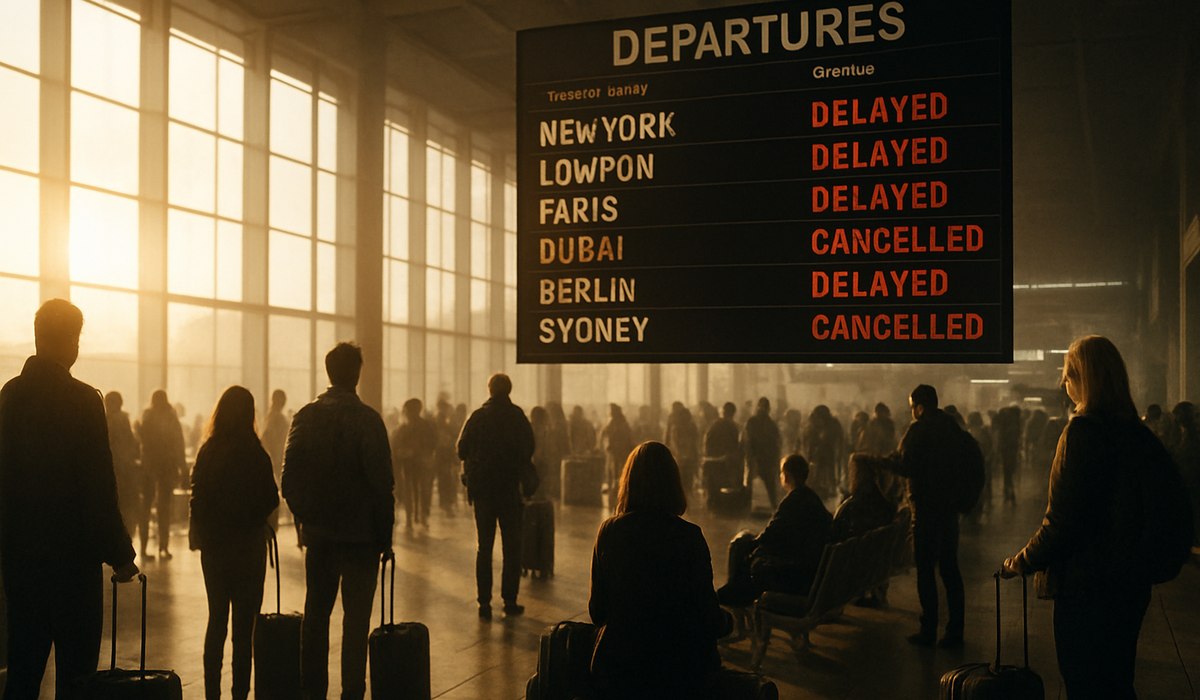
Image generated by AI
Major Flight Delays Sweep Canadian Hubs This Week
Five major Canadian airport hubs experienced a massive operational meltdown on April 11, 2026, logging 311 delayed flights and 29 cancellations across Toronto Pearson, Vancouver International, Montreal Trudeau, Calgary International, and Halifax Stanfield. The disruptions affected thousands of passengers traveling on Air Canada, WestJet, Porter Airlines, Air Transat, and several international carriers operating into Canadian gateways. This widespread flight delays sweep represents another critical challenge for nomadic professionals and business travelers depending on reliable Canadian air networks for work-related mobility.
The scale of these disruptions underscores systemic vulnerabilities in Canada's aviation infrastructure during peak travel periods. When multiple hub airports experience simultaneous delays, cascading effects ripple across entire networks, turning minor operational hiccups into major passenger inconveniences within hours.
Scope of Disruptions: 311 Delays and 29 Cancellations Across Canadian Hubs
Flight tracking data from April 11 reveals the concentrated nature of Canada's aviation challenges. Toronto Pearson International, Canada's largest hub, shouldered a disproportionate share of disruptions due to its role as Air Canada's primary eastern gateway and connection point for transcontinental traffic. Vancouver International in the west similarly recorded substantial delays, reflecting the volume of transpacific and domestic routes converging there.
The 311 total delayed flights represent a systemic operational strain rather than isolated incidents. Even modest cancellation numbers become consequential when operating through hub airports serving thousands of connections daily. A single cancelled flight can reverberate across six to eight downstream rotations, displacing hundreds of passengers across multiple carriers and routes.
Regional centers including Halifax Stanfield and others contributed to the nationwide tally, indicating the disruption was not isolated to major metropolitan areas. This geographic spread suggests infrastructure-wide pressures rather than facility-specific problems. For remote workers and location-independent professionals, such widespread delays complicate mobility plans and disrupt client meetings across time zones.
Which Airports Are Most Affected
Toronto Pearson International emerged as the epicenter of April 11's disruptions, hosting Air Canada's largest Canadian hub and serving as a critical North American connection point. The airport's constrained runway capacity and tight scheduling leave minimal buffer for weather-related slowdowns or operational anomalies.
Vancouver International ranked second among affected facilities, with delays clustering around morning and evening peak periods. The airport's expanding international schedule and growing connectivity to Asian markets mean disruptions carry transpacific implications beyond domestic Canada.
Montreal Trudeau experienced elevated irregular operations, further straining Air Canada's network east of Toronto. Calgary and Halifax rounded out the major disruption centers, with each facility reporting 40+ delayed flights during the monitoring period.
According to FlightAware's real-time tracking data, these five airports collectively handle approximately 60% of Canada's daily commercial traffic, meaning their simultaneous operational stress directly impacts national aviation reliability metrics.
Cascading Effects: How Delays Spread Across the Network
When aircraft arrive late to major hubs, subsequent departure delays follow automatically. A narrowbody aircraft scheduled to depart Vancouver at 2:00 PM on a Calgary rotation, delayed by 90 minutes due to inbound traffic, creates a 90-minute delay on the Calgary flight—which then impacts the aircraft's next scheduled leg to Edmonton or other regional centers.
Crew duty time constraints amplify cascading effects. Flight crews operate under strict fatigue rules; when morning delays compress the schedule, crews may reach federally-mandated rest periods before completing planned rotations. This necessitates crew repositioning, aircraft swaps, or flight cancellations later in the day.
International carrier coordination adds complexity. A delayed Air Canada arrival from Paris compresses connection windows for passengers transferring onto WestJet domestic flights. Missed connections force expensive rebookings and hotel accommodations, which airlines increasingly pass to passengers through change fees or absorption of costs.
Network density at Canadian hubs means connection times average 60-90 minutes. Weather delays of 30+ minutes trigger systematic cascade failures across 15-20% of scheduled connections, as passenger and baggage handling cannot accommodate compressed turnarounds.
Air Canada, WestJet, Porter, and Air Transat Among Most Affected
Air Canada bore the brunt of April 11's disruptions, reflecting its 35-40% market share across Toronto, Montreal, and Vancouver hubs. The carrier's extensive regional network and hub-dependent operations model means a disruption at Toronto Pearson propagates immediately through eastern Canada, Atlantic operations, and connecting transborder traffic.
WestJet, with commanding presence at Calgary and expanding eastern Canadian operations, reported significant delays concentrated on its Alberta hub and inter-regional connections. Labor constraints and aircraft availability challenges have tightened the airline's operational flexibility during peak periods.
Porter Airlines experienced disruptions despite its smaller fleet, as rapid expansion from Toronto into western North American routes increased exposure to congestion at connecting hubs beyond its home airport. Each incremental route adds vulnerability to upstream delays.
Air Transat, Canada's second-largest leisure carrier, faced scheduling inflexibility following recent route suspensions. When aircraft or crews become unavailable mid-week, the airline maintains fewer reserve assets compared to full-service carriers, translating to higher cancellation probability.
International carriers operating into Canadian gateways—including United, Delta, Lufthansa, and Air France—also experienced delays, adding terminal and ramp complexity as ground handlers prioritized congested operations.
Weather, Staffing, and Network Complexity Drive Irregular Operations
Seasonal weather patterns remain a primary disruption driver across Canadian aviation. Spring conditions at Calgary and Vancouver introduce unpredictable wind shear, runway contamination, and visibility restrictions that necessitate reduced arrival/departure rates. Even absent major storms, wind guidance and ceiling thresholds frequently compress operational capacity by 15-25%.
Staffing and resource constraints continue plaguing Canadian carriers post-pandemic. Flight crews remain unevenly distributed; certain bases maintain minimal reserve capacity while others operate at full utilization. Ground handling services in secondary markets operate with reduced staffing, limiting ability to turn aircraft quickly during peak periods.
Maintenance resource availability adds another vulnerability layer. When scheduled maintenance reveals deferred discrepancies, aircraft swap alternatives may not exist, forcing cancellations. Spare parts supply chains remain extended compared to pre-pandemic timelines, complicating technical recovery.
Hub-and-spoke network concentration amplifies these pressures. When Toronto Pearson or Vancouver experiences congestion, backup airports (Ottawa, Hamilton, Kelowna) offer limited alternative capacity. Passengers cannot redistribute to substitute facilities without 2-3 hour ground transport, making network bypassing impractical.
Traveler Action Checklist
Follow these numbered steps if disrupted by Canadian flight delays:
-
Immediately check flight status on FlightAware or your airline's website; delays exceeding 30 minutes typically cascade into larger disruptions.
-
Review passenger rights under Canadian air passenger protection regulations via Transport Canada guidelines.
-
Document all delay communications including departure times, gate changes, and rebooking offers; screenshot everything for compensation claims.
-
Contact your airline's customer service proactively rather than waiting in terminals; high-volume disruptions queue call centers for hours.
-
Explore alternative routings using competitor airlines through different hubs; direct flights via substitute carriers sometimes clear faster than original bookings.
-
Request meal and accommodation per applicable regulations if delays exceed threshold hours; airlines must provide immediate care rather than post-travel reimbursement.
-
File formal compensation claims within 12 months
Disclaimer
This article is for informational and educational purposes only. It does not constitute legal, financial, or professional advice. While we strive to provide accurate and up-to-date information, travel policies, regulations, and conditions change rapidly. Always verify information with official sources before making travel decisions. Nomad Lawyer makes no representations about the accuracy, reliability, completeness, or suitability of the information provided. Readers should consult qualified professionals for advice specific to their circumstances. The views expressed in this article are those of the author and do not necessarily reflect the views of Nomad Lawyer.
Raushan Kumar
Founder & Lead Developer
Full-stack developer with 11+ years of experience and a passionate traveller. Raushan built Nomad Lawyer from the ground up with a vision to create the best travel and law experience on the web.
Learn more about our team →