
Landslide Disrupts Kalka-Shimla Railway Route in Himachal Pradesh: Service Cancellations 2026
Heavy monsoon rainfall triggered a landslide between Gumman and Koti stations, forcing the cancellation of multiple services on the historic Kalka-Shimla narrow-gauge heritage railway line.

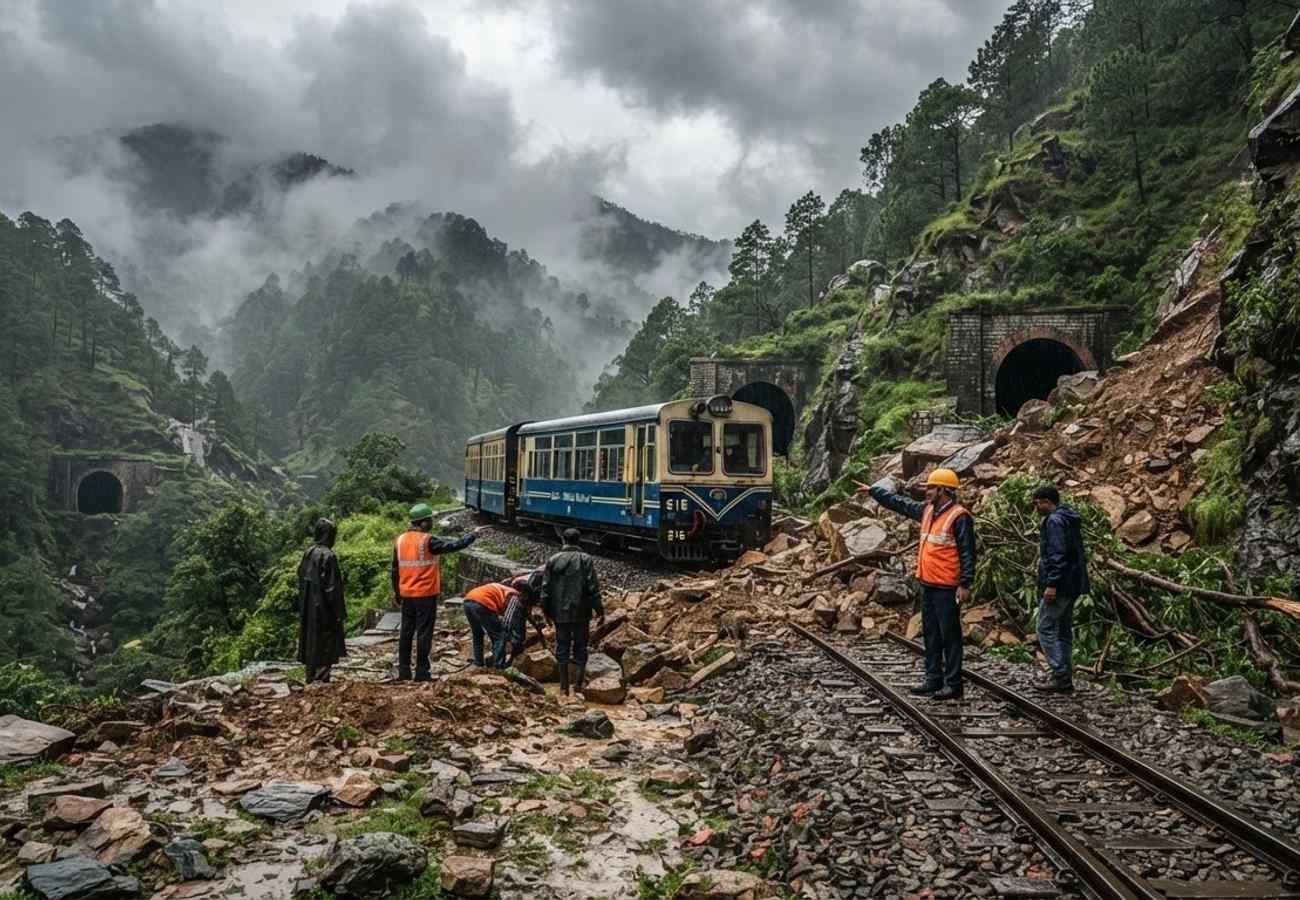
Image generated by AI
Heavy monsoon rainfall has triggered a landslide on the historic Kalka-Shimla Railway, forcing the cancellation of evening services and the short-termination of trains between Gumman and Koti stations.
Monsoon Landslides Block Heritage Rail Corridor
On August 18, 2026, at approximately 3:15 pm, a landslide occurred at kilometre 11/7-8 of the Kalka-Shimla railway line. The debris blocked the narrow-gauge tracks between the Gumman and Koti stations in Himachal Pradesh, bringing operations to a standstill on one of India's most significant heritage routes.
The incident occurred during a period of intense monsoon activity across the state. While one train traveling toward Koti managed to reach the station shortly after the slide, it was unable to proceed. Railway authorities immediately implemented short-termination protocols for this service to ensure passenger safety.
The Engineering Department estimated a restoration window of four to five hours to clear the debris and certify the track for safe passage. Consequently, two scheduled evening services departing from Shimla toward Kalka were cancelled to prevent passengers from being stranded in the mountain corridor.
Service Disruption Summary
| Parameter | Detail |
|---|---|
| Incident Date/Time | August 18, 2026 |
| Affected Section | Between Gumman and Koti Stations |
| Precise Location | Kilometre 11/7-8 |
| Impacted Services | 2 Evening services cancelled; 1 service short-terminated |
| Estimated Repair Time | 4 to 5 hours |
| Primary Cause | Heavy monsoon rainfall and slope instability |
Traveler Logistics Guide: Navigating Himachal During Monsoon
From a ground-level perspective, the best way to navigate the Kalka-Shimla corridor during the monsoon is to treat all schedules as tentative. The Himalayan terrain is highly volatile between July and September, and rail disruptions often coincide with road closures.
Booking and Connection Strategies If you are connecting from a long-distance train at Kalka station, do not book tight connections to Shimla. Given the risk of landslides at km 11/7-8 and other vulnerable points, allow a 12-to-24-hour buffer for your onward journey.
Digital Transit Monitoring Passengers should rely on official Indian Railways (IRCTC) alerts rather than third-party blogs. In the event of a "short-termination," you will be offloaded at the nearest safe station (such as Gumman). Ensure you have a pre-arranged local transport contact or a registered taxi service, as ride-sharing apps are unreliable in the upper reaches of the heritage line.
Alternative Transit When the railway is blocked, the primary alternative is the Kalka-Shimla highway. However, as noted in recent reports, districts such as Mandi, Kullu, and Sirmaur have seen the highest numbers of road blockages. Always verify the status of the National Highway (NH) via the Himachal Pradesh Public Works Department (HPPWD) before attempting a road detour.
Regional Infrastructure Impact Assessment
This disruption underscores the fragility of the narrow-gauge infrastructure in the face of extreme weather. The Kalka-Shimla line is a critical artery for both tourism and local connectivity, but its steep gradients and numerous tunnels make it a prime target for debris flow during heavy rains.
The wider transport network in Himachal Pradesh is currently under severe pressure. With Mandi, Kullu, and Sirmaur reporting significant road failures, the railway often serves as the only reliable backup. When the rail line fails, the region faces a total logistics bottleneck, impacting the supply of essential goods and the movement of thousands of tourists.
The recurring nature of these incidents suggests a need for enhanced slope stabilization and real-time geological monitoring along the heritage corridor to prevent total service collapses during the monsoon peak.
Safe passage in the Himalayas requires patience and a willingness to pivot plans in real-time.
Related Travel Guides
Disclaimer
This article is for informational and educational purposes only. It does not constitute legal, financial, or professional advice. While we strive to provide accurate and up-to-date information, travel policies, regulations, and conditions change rapidly. Always verify information with official sources before making travel decisions. Nomad Lawyer makes no representations about the accuracy, reliability, completeness, or suitability of the information provided. Readers should consult qualified professionals for advice specific to their circumstances. The views expressed in this article are those of the author and do not necessarily reflect the views of Nomad Lawyer.
Kunal K Choudhary
Co-Founder & Contributor
A passionate traveller and tech enthusiast. Kunal contributes to the vision and growth of Nomad Lawyer, bringing fresh perspectives and driving the community forward.
Learn more about our team →