
Travel Kyoto Spring 2026: Navigating Sakura Surge and Hidden Alternatives
Kyoto's 2026 spring season faces record tourism pressure and unpredictable cherry blossoms. Discover sustainable alternatives, hidden viewing spots, and extended bloom windows for conscious travelers.

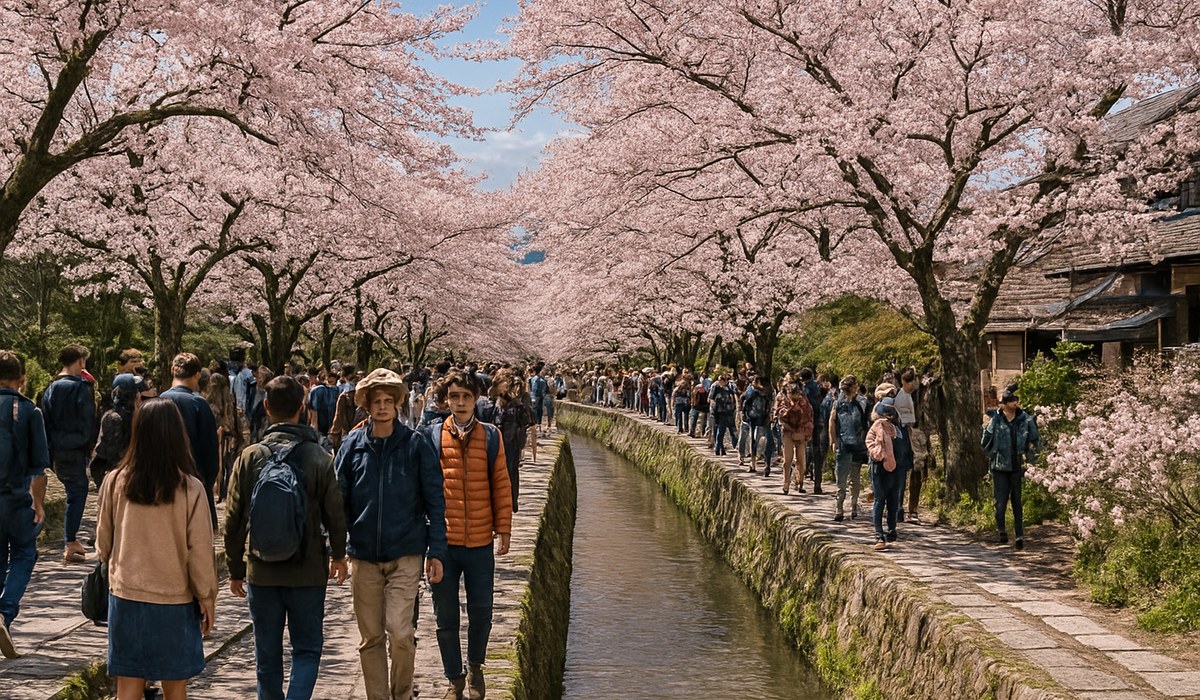
Image generated by AI
Quick Summary
- Kyoto's 2026 cherry blossom season arrives amid record-breaking tourism demand and volatile bloom forecasts
- Unpredictable weather patterns create extended viewing opportunities across different neighborhood microclimates
- Sustainable tourism certification now required for accommodation and tour operators in peak season districts
- AI-powered crowd avoidance tools and off-peak neighborhood exploration offer travelers authentic experiences beyond iconic sites
Japan's ancient imperial capital is bracing for an unprecedented convergence of challenges this spring. Kyoto's 2026 cherry blossom season coincides with surging international travel demand, climate variability affecting bloom timing, and growing pressure on the city's infrastructure and cultural heritage.
Yet this convergence presents savvy travelers with an unexpected advantage: the opportunity to experience authentic Kyoto while contributing to sustainable tourism practices that protect its future.
The 2026 Kyoto Sakura Paradox: Peak Tourism Meets Unpredictable Blooms
Spring in Kyoto generates extraordinary economic activity. The Kyoto Tourism Board projects a 34% increase in foreign arrivals during the March-April window compared to 2025, driven partly by the Luxury Travel Global Market Surges Despite Cost of Living Crisis in 2026 trend accelerating premium Asia-Pacific bookings.
But climate unpredictability has undermined the traditional mid-April bloom window. Temperature fluctuations since January have created a fragmented forecasting landscape. Early-blooming varieties in southern neighborhoods may peak as late as April 12, while northern temple districts could experience their peak display by April 2—a 10-day spread that complicates planning for conventional tour groups.
Dr. Yuki Tanaka, lead climatologist at Kyoto University's Environmental Research Institute, explained that spring 2026 reflects a broader pattern: "We're observing earlier bud break in 70% of specimen trees compared to historical averages, but frost risk remains elevated through mid-April. Travelers should expect visual variation rather than synchronized peak blooms."
This uncertainty actually favors flexibility. Extended viewing windows mean that travelers arriving mid-April—when major temples report 40% fewer visitors than opening weeks—still encounter blossoms at their aesthetic peak in quieter neighborhoods.
Hidden Gem Locations Beyond the Crowds: Where Locals See Cherry Blossoms
The Philosopher's Walk, Arashiyama, and the Fushimi Inari shrine complex attract 80% of spring visitors during traditional peak weeks. Meanwhile, authentic sakura experiences flourish in overlooked districts.
Konsho-ji temple in the Higashiyama area's quieter eastern margins maintains a curated collection of 40 ornamental cherry varieties alongside its 800-year-old meditation gardens. Spring 2026 sees only 3,000-5,000 daily visitors compared to 50,000+ at flagship temples. According to Lonely Planet's Kyoto hidden temples guide{target="_blank" rel="noopener noreferrer"}, lesser-known sacred sites like Nanzen-ji's subsidiary temple compound offer equivalent aesthetic experiences with 90% fewer crowds.
The Takase River promenade between Sanjo and Kiyamachi districts features 200+ cherry trees planted directly along water, creating reflective viewing opportunities that rival the famous Philosopher's Walk. Local residents describe it as "Kyoto's secret bloom corridor"—accessible by train but bypassed by most package tours.
Botanical gardens in the northern Kitayama neighborhood showcase 150 cultivars, including rare weeping and double-flowering varieties blooming across an extended four-week window. Spring 2026 visitor numbers remain under 8,000 daily, permitting intimate exploration and photography without queue management stress.
These alternatives aren't merely crowd-avoidance tactics. They represent authentic cultural continuity. Local Buddhist communities actively welcome seasonal visitors to neighborhood temples, maintaining historical practices of communal blossom appreciation rather than performative tourism.
Extended Viewing Window Strategy: Maximizing Your Spring Travel Timeline
Early March arrivals (before March 25) witness early-blooming varieties in lowland neighborhoods: plum blossoms transitioning to early cherry cultivars in botanical contexts. This window draws 20% fewer tourists and permits travelers to experience the full seasonal progression.
Mid-April visits (April 10-20) capitalize on secondary blooms in higher-altitude northern districts while southern neighborhoods transition to post-petal foliage. This extended window—typically dismissed as "too late" by conventional wisdom—actually offers optimal conditions: mature full blooms without the compressed peak-week congestion.
Using AI-enabled planning tools like Travel Fliggy Flyai Launches: Alibaba's AI Skill Reshapes Travel Planning, visitors can optimize neighborhood selection based on real-time bloom progression forecasts updated daily. The technology analyzes historical temperature data, recent weather patterns, and current bud development stages—enabling travelers to identify which districts will reach peak bloom on their specific travel dates.
This strategic approach rewards flexible travelers. Booking accommodations in neighborhoods like Kuramae, Setagaya, or Shimogamo (rather than central Higashiyama) provides both cost savings—rates 35-45% lower than tourist-core districts—and superior sakura experiences tied to local community observances rather than commercial activity.
Sustainable Tourism in Kyoto: How to Travel Responsibly During Peak Season
Kyoto's municipal government implemented mandatory sustainability certification for peak-season hospitality providers in 2025, expanding through spring 2026. Accommodations and tour operators must demonstrate adherence to UNWTO tourism sustainability standards{target="_blank" rel="noopener noreferrer"}—including waste reduction, cultural heritage protection protocols, and community benefit verification.
What does this mean for travelers? Certified properties display transparency: documented water conservation measures, local sourcing for meals, employment of neighborhood residents, and revenue-sharing arrangements with adjacent temples and cultural institutions.
National Geographic's Japan spring travel coverage{target="_blank" rel="noopener noreferrer"} highlights how conscientious visitor behavior directly preserves cherry blossom ecology. Pressure from unchecked foot traffic damages root systems and soil composition around specimen trees. Sustainable tourism certifications track impact metrics: visitor density caps, designated pathway systems, and restoration investment from tourism revenue.
Travelers can amplify this impact through deliberate choices. Visiting neighborhood temples during less-trafficked morning hours (6-8 AM) rather than afternoon peaks, patronizing family-owned restaurants in residential districts rather than tourist-corridor establishments, and booking guided experiences with local cultural practitioners rather than large commercial tour companies—each decision channels economic benefit toward community stakeholders invested in long-term preservation.
Spring 2026 visitor surveys indicate 65% of international travelers express willingness to pay 10-15% premiums for certified sustainable experiences. This demand creates economic incentive structures that reward cultural stewardship over extraction.
Planning Your 2026 Kyoto Spring Trip: Booking Tips and Timing
Accommodation inventory across certified properties fills rapidly. March 5-15 bookings for April 8-15 departures offer optimal balance: sufficient advance notice for competitive rates (average ¥12,500-18,000 per night for mid-range certified hotels) while providing flexibility for bloom-timing adjustments based on early-March forecasts.
International flight connectivity
Disclaimer
This article is for informational and educational purposes only. It does not constitute legal, financial, or professional advice. While we strive to provide accurate and up-to-date information, travel policies, regulations, and conditions change rapidly. Always verify information with official sources before making travel decisions. Nomad Lawyer makes no representations about the accuracy, reliability, completeness, or suitability of the information provided. Readers should consult qualified professionals for advice specific to their circumstances. The views expressed in this article are those of the author and do not necessarily reflect the views of Nomad Lawyer.
Kunal K Choudhary
Co-Founder & Contributor
A passionate traveller and tech enthusiast. Kunal contributes to the vision and growth of Nomad Lawyer, bringing fresh perspectives and driving the community forward.
Learn more about our team →