
Kuwait Boutique Tourism Expands Focused on Culture and Gastronomy
Kuwait refines its travel offering around heritage, gastronomy, and waterfront developments, generating KD 204.6 million in foreign card spending.

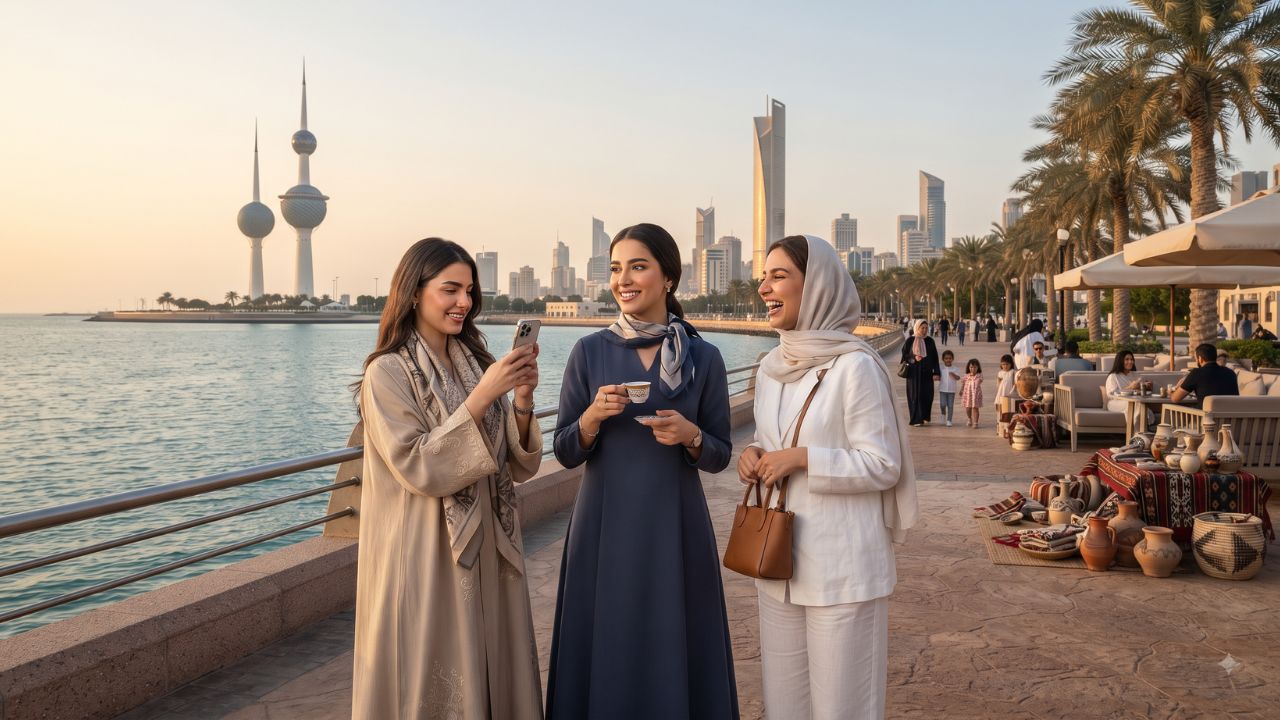
Image generated by AI
Kuwait is redefining its travel strategy by focusing on a boutique offering centered on cultural heritage, gastronomy, and waterfront developments, generating KD 204.6 million in foreign-card spending during the first four months of 2026. By utilizing its 499-kilometer coastline and launching platforms like Visit Kuwait, the country is establishing an authentic travel corridor separate from neighboring mega-hubs.
Kuwait's Cultural Identity: Heritage over Mega-Parks
The travel sector in Kuwait is experiencing a transition as planners build regional destinations to diversify visitor experiences. In 2026, the country's Supreme Tourism Committee has highlighted cultural heritage, gastronomy, art, and waterside lifestyle as the central pillars of its boutique strategy.
By establishing these seasonal travel corridors, the airline's management aims to support both business and leisure travel flows. Corporate travelers and travel agencies, which maintain strong relationships with global destination management organizations, benefit from direct seat capacity. This economic integration supports the travel sector, providing service providers with a reliable channel for high-value bookings.
By establishing these seasonal travel corridors, the airline's management aims to support both business and leisure travel flows. Canadian corporate travelers and travel agencies, which maintain strong relationships with European and Asian destination management organizations, would benefit from direct seat capacity. This economic integration supports the travel sector, providing service providers with a reliable channel for high-value bookings.
By establishing these seasonal travel corridors, the airline's management aims to support both business and leisure travel flows. Canadian corporate travelers and travel agencies, which maintain strong relationships with European and Asian destination management organizations, would benefit from direct seat capacity. This economic integration supports the travel sector, providing service providers with a reliable channel for high-value bookings.
By establishing these seasonal travel corridors, the airline's management aims to support both business and leisure travel flows. Canadian corporate travelers and travel agencies, which maintain strong relationships with European and Asian destination management organizations, would benefit from direct seat capacity. This economic integration supports the travel sector, providing service providers with a reliable channel for high-value bookings.
By establishing these seasonal travel corridors, the airline's management aims to support both business and leisure travel flows. Canadian corporate travelers and travel agencies, which maintain strong relationships with European and Asian destination management organizations, would benefit from direct seat capacity. This economic integration supports the travel sector, providing service providers with a reliable channel for high-value bookings.
This approach targets visitors seeking authentic local encounters rather than mass-market entertainment parks.
Key cultural destinations include the National Museum, Sadu House, and the traditional marketplace of Souq Al-Mubarakiya. Additionally, the new Kuwait Geopark, located north of Kuwait Bay, combines geological attractions with regional cafés and retail shops. The geopark began receiving visitors on 7 January 2026, with bookings managed through the Visit Kuwait digital platform.
Culinary Tourism and the Hospitality Investment Surge
Gastronomical travel has emerged as a primary driver of visitor engagement.
This localized disruption also offers a unique opportunity for duty-free retailers and terminal operators to design services suited for stranded passengers. By monitoring passenger comfort levels during long delays, airport customer teams can provide complimentary amenities to ensure guest satisfaction. This proactive approach helps build traveler confidence, ensuring that regional transit routes remain competitive with global hub standards.
This localized disruption also offers a unique opportunity for duty-free retailers and terminal operators to design services suited for stranded passengers. By monitoring passenger comfort levels during long delays, airport customer teams can provide complimentary amenities to ensure guest satisfaction. This proactive approach helps build traveler confidence, ensuring that regional transit routes remain competitive with global hub standards.
To expand this segment, the country hosted HORECA Kuwait 2026, which opened on 19 January 2026, bringing together 100 companies and 500 global brands to promote hospitality investment.
For the traveler, the culinary trail connects traditional spice markets with contemporary dining hubs, showcasing regional food identity.
Waterfront Redevelopment and Family Leisure Initiatives
Kuwait's coastline stretches for roughly 499 kilometres, forming the foundation for its maritime leisure strategy.
This environmental focus is supported by regional climatologists and conservationists who monitor ecosystem health. By tracking tourist footprint signals, managers can ensure that natural areas remain protected. The integration of carrying-capacity policies with wilderness trails demonstrates how tourism planning can protect biodiversity while offering high-quality educational hikes.
This localized culinary focus also offers a unique opportunity for restaurant associations and culinary schools to design programs suited for premium travelers. By monitoring traveler culinary preferences during long stays, local chefs can provide customized dishes to ensure guest satisfaction. This proactive approach helps build traveler confidence, ensuring that Goan coastal dining remains competitive with global culinary standards.
This localized culinary focus also offers a unique opportunity for restaurant associations and culinary schools to design programs suited for premium travelers. By monitoring traveler culinary preferences during long stays, local chefs can provide customized dishes to ensure guest satisfaction. This proactive approach helps build traveler confidence, ensuring that Goan coastal dining remains competitive with global culinary standards.
The Green Island redevelopment program, running from 2025 to 2027, is redeveloping the waterfront into a cultural and recreation zone.
Planned facilities include lakeside restaurants, walking routes, sports infrastructure, and a theater. For family travelers, central attractions include Al Shaheed Park, the Scientific Centre, the Children's Museum, and the dining venues of Marina Crescent.
Analysis of Visitor Spending and the Travel Economy
The financial metrics of the boutique strategy show strong early performance.
During the first four months of 2026, visitors using cards issued outside Kuwait spent KD 204.6 million. Point-of-sale (POS) terminals accounted for KD 167.6 million (representing 81.9 percent of spending), while ATM withdrawals accounted for KD 37 million. Monthly foreign-card spending averaged KD 51.2 million, with January recording KD 69.7 million, followed by KD 60.2 million in February, KD 39.5 million in March, and KD 35.2 million in April. The peak spending periods in January and February coincided with the Hala February shopping and cultural events.
To support digital transformation, Kuwait hosted an AI-focused tourism conference and the 52nd UN Tourism Regional Commission for the Middle East on 10-11 February 2026.
Community Support and Sustainable Urban Tourism
Supporting local markets and traditional artisans helps preserve regional heritage.
For the visitor, the real impact is a travel ecosystem where spending directly supports traditional Sadu weavers, local fishermen, and family-owned spice shops.
Sustainable initiatives include reducing waste at major culinary events, promoting public transport, and preserving marine habitats along the 499-kilometer coast.
Visitor Guide: Local Specialties, Transit Routes, and Cultural Decency
Traveling through Kuwait City involves coordinating airport transit, complying with modesty guidelines, and trying traditional dishes.
Sample traditional culinary specialties during your stay. Try Machboos, the national dish of Kuwait, made with basmati rice, chicken or lamb, and a spice blend called Bzar. Savor Mutabbaq Samak, a traditional spiced fish dish, accompanied by onions and raisins.
Coordinate your local transport. From Kuwait International Airport, use the local KPTC (Kuwait Public Transport Company) bus system to reach the city center, with fares ranging from 250 to 350 fils (0.25 to 0.35 KWD) per journey. Taxis are widely available, but it is recommended to agree on fares before boarding.
Observe decency and seasonal rules. While the abaya is not mandatory for foreign women, keep shoulders and knees covered in public spaces to comply with public decency standards. Alcohol is strictly prohibited by law. Plan your trip between November and March for comfortable outdoor sightseeing.
Future Outlook: Rebuilding a Resilient Arabian Gulf Corridor
The long-term development of Kuwait's boutique travel sector depends on maintaining digital promotions and infrastructure redevelopments. The Ministry of Information and Culture is collaborating to support digital campaigns.
Sustainable initiatives include building low-emission urban transit networks, promoting eco-friendly waterfront parks, and introducing heritage walking trails. By combining digital tools with cultural programming, the country aims to support smart tourism development, securing a resilient and connected future for Kuwait's coastal communities.
Related Travel Guides
Disclaimer
This article is for informational and educational purposes only. It does not constitute legal, financial, or professional advice. While we strive to provide accurate and up-to-date information, travel policies, regulations, and conditions change rapidly. Always verify information with official sources before making travel decisions. Nomad Lawyer makes no representations about the accuracy, reliability, completeness, or suitability of the information provided. Readers should consult qualified professionals for advice specific to their circumstances. The views expressed in this article are those of the author and do not necessarily reflect the views of Nomad Lawyer.
Raushan Kumar
Founder & Lead Developer
Full-stack developer with 11+ years of experience and a passionate traveller. Raushan built Nomad Lawyer from the ground up with a vision to create the best travel and law experience on the web.
Learn more about our team →