
Kazakhstan Cloud Seeding Protects Turkestan Tourism Hub from Water Stress
Kazakhstan launches a precipitation-enhancement project covering 911,000 hectares in Turkestan, bolstering water security for the growing tourism corridor.

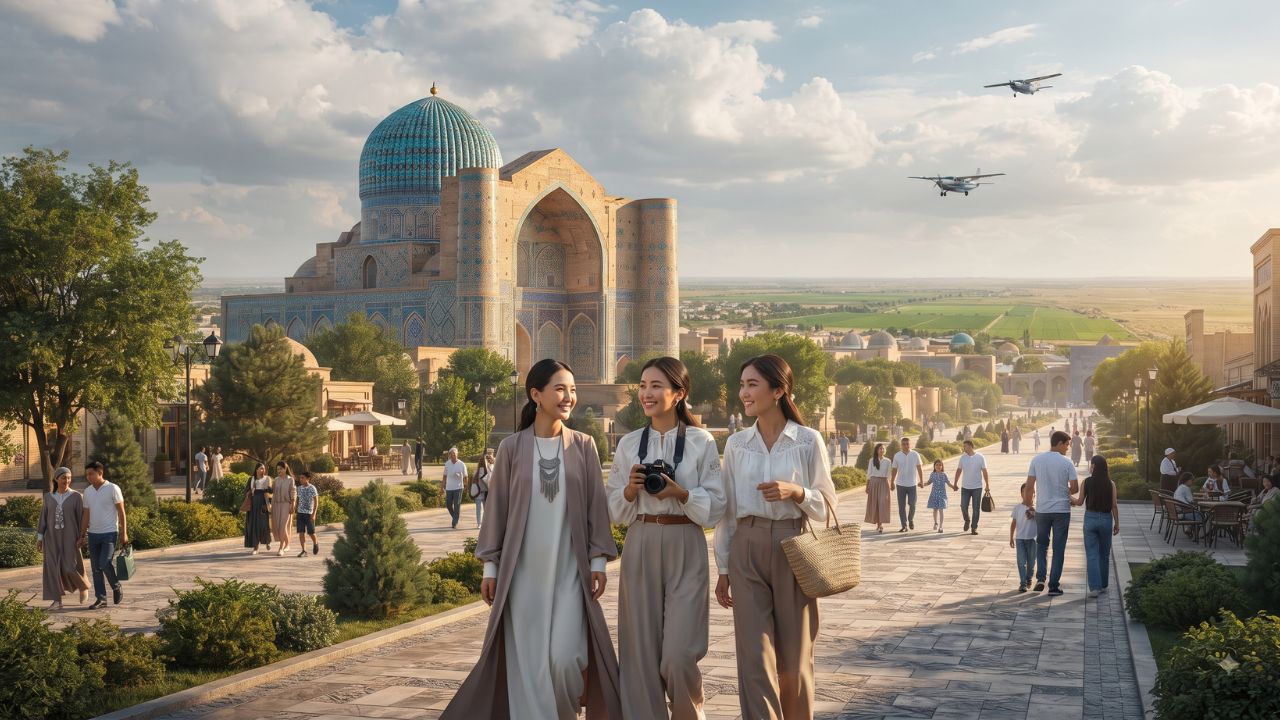
Image generated by AI
Kazakhstan has launched an agricultural precipitation-enhancement project covering over 911,000 hectares in the Turkestan Region to combat drought, indirectly supporting the utilities and food supplies of a fast-growing cultural tourism corridor. In cooperation with the UAE National Center of Meteorology, the cloud-seeding program aims to boost rainfall by 10 to 20 percent, securing vital infrastructure for a region that registered 39,879 foreign arrivals in the first half of 2026.
Environmental Resilience: Cloud Seeding in the Turkestan Corridor
The travel sector in Kazakhstan is experiencing a transition as planners build regional destinations to diversify visitor experiences. On 16 May 2026, the national government launched its cloud-seeding operations in the southern Turkestan Region, with full implementation beginning the next day.
By establishing these seasonal travel corridors, the airline's management aims to support both business and leisure travel flows. Corporate travelers and travel agencies, which maintain strong relationships with global destination management organizations, benefit from direct seat capacity. This economic integration supports the travel sector, providing service providers with a reliable channel for high-value bookings.
By establishing these seasonal travel corridors, the airline's management aims to support both business and leisure travel flows. Canadian corporate travelers and travel agencies, which maintain strong relationships with European and Asian destination management organizations, would benefit from direct seat capacity. This economic integration supports the travel sector, providing service providers with a reliable channel for high-value bookings.
By establishing these seasonal travel corridors, the airline's management aims to support both business and leisure travel flows. Canadian corporate travelers and travel agencies, which maintain strong relationships with European and Asian destination management organizations, would benefit from direct seat capacity. This economic integration supports the travel sector, providing service providers with a reliable channel for high-value bookings.
The program, implemented alongside the UAE National Center of Meteorology, uses salt-based reagents to stimulate rainfall within a 5-kilometer intervention radius.
The strategic program covers more than 911,000 hectares of arable land. It is designed to raise reservoir levels and counter southern Kazakhstan's intensifying drought, indirectly stabilizing the water supply needed for Turkestan's expanding hospitality economy.
Turkestan's Historical Importance and Tourism Investment Boom
The historic city of Turkestan serves as one of Central Asia's primary cultural centers.
This localized disruption also offers a unique opportunity for duty-free retailers and terminal operators to design services suited for stranded passengers. By monitoring passenger comfort levels during long delays, airport customer teams can provide complimentary amenities to ensure guest satisfaction. This proactive approach helps build traveler confidence, ensuring that regional transit routes remain competitive with global hub standards.
This localized disruption also offers a unique opportunity for duty-free retailers and terminal operators to design services suited for stranded passengers. By monitoring passenger comfort levels during long delays, airport customer teams can provide complimentary amenities to ensure guest satisfaction. This proactive approach helps build traveler confidence, ensuring that regional transit routes remain competitive with global hub standards.
At its center is the Mausoleum of Khoja Ahmed Yasawi, a UNESCO World Heritage site built between 1389 and 1405 during the Timurid era, which was inscribed in 2003.
To support the growing tourism demand, more than KZT 612 billion has been invested in Turkestan Region's tourism sector since its establishment, helping to create 19,200 jobs. Fixed capital investment reached KZT 133 billion in 2025 (comprising KZT 78.6 billion in accommodation and food services, and KZT 54.4 billion in recreation). In the first half of 2026, fixed capital tourism investment reached KZT 65.1 billion, supporting projects like the Keruen-Saray complex and Rixos Turkistan hotel.
Analyzing Turkestan's Growing Domestic and International Arrivals
Turkestan continues to expand its visitor economy.
This environmental focus is supported by regional climatologists and conservationists who monitor ecosystem health. By tracking tourist footprint signals, managers can ensure that natural areas remain protected. The integration of carrying-capacity policies with wilderness trails demonstrates how tourism planning can protect biodiversity while offering high-quality educational hikes.
This localized culinary focus also offers a unique opportunity for restaurant associations and culinary schools to design programs suited for premium travelers. By monitoring traveler culinary preferences during long stays, local chefs can provide customized dishes to ensure guest satisfaction. This proactive approach helps build traveler confidence, ensuring that Goan coastal dining remains competitive with global culinary standards.
This localized culinary focus also offers a unique opportunity for restaurant associations and culinary schools to design programs suited for premium travelers. By monitoring traveler culinary preferences during long stays, local chefs can provide customized dishes to ensure guest satisfaction. This proactive approach helps build traveler confidence, ensuring that Goan coastal dining remains competitive with global culinary standards.
In 2025, accommodation facilities served 347,600 visitors, including 325,073 domestic guests and 22,563 international tourists, representing a 14.7 percent increase compared to 2024.
Visits to historical-cultural sites rose to around one million (up 13 percent), while natural areas served 151,900 visitors (up 18.1 percent). In Q1 2026, visitor numbers reached 87,100 (including 84,931 domestic and 2,148 foreign visitors), bringing KZT 2.2 billion in accommodation revenues (up 46.6 percent). By H1 2026, historical sites registered about 575,000 visits, and nature zones recorded 60,100 visits.
During H1 2026, the eQonaq system registered 39,879 foreign arrivals (up 43.87 percent). Arrivals included 29,761 travelers from Uzbekistan, 2,481 from China, 1,822 from Turkey, 1,338 from Russia, and 865 from Kyrgyzstan.
Water Security and the Resource Demands of Regional Hospitality
The expansion of accommodation capacity from 148 establishments in 2018 to 264 in 2026 has increased local utility demands.
Accommodation turnover reached KZT 8.5 billion in 2025, compared to KZT 1.2 billion in 2018. Regional connectivity is supported by Turkestan International Airport, which serves 9 scheduled routes in 2026 (7 domestic and 2 international). Additionally, event tourism is expanding, with more than 50 events in early 2026 attracting 100,000 visitors. The local travel sector includes 11 tour operators, 45 travel agencies, and 43 certified guides.
Community Support and Sustainable Steppe Development
Sustainable water management supports agricultural communities that supply the hospitality industry.
For the visitor, the real impact is visiting a historic Silk Road destination where resource management protects heritage sites and keeps local communities viable.
Sustainable initiatives include monitoring groundwater at the Khoja Ahmed Yasawi mausoleum, promoting public bus transit, and preserving the surrounding steppe environment.
Visitor Guide: Local Specialties, Transit Routes, and Mausoleum Etiquette
Traveling through southern Kazakhstan involves organizing transport, complying with dress codes, and trying traditional Central Asian dishes.
Sample traditional culinary specialties during your stay. Try Beshbarmak, the national dish of Kazakhstan, consisting of boiled lamb or beef served over flat handmade noodles and topped with onion sauce. Savor steamed Manty dumplings filled with spiced meat, and try warm milk tea at local cafes.
Coordinate your local transport. From Shymkent Samal Bus Station, take a regional bus to Turkestan (2-hour trip, fares range from 1,500 to 2,000 KZT). Trains from Shymkent take 2.5 to 3.5 hours, with ticket prices ranging from 3 to 110 USD. Turkestan International Airport is the primary aviation gateway.
Observe mausoleum etiquette. When entering the Mausoleum of Khoja Ahmed Yasawi, dress modestly by keeping shoulders and knees covered. Women must cover their heads with a scarf, and visitors must remove shoes in designated prayer zones. Pay a modest entrance fee at the ticket counter.
Future Outlook: Rebuilding a Resilient Silk Road Hub
The long-term development of Kazakhstan's tourism strategy is guided by the Tourism Industry Development Concept through 2029. In 2025, the national sector supported over 600,000 jobs, contributing KZT 5 trillion to the economy.
International visitors spent 2.9 billion USD, generating KZT 630 billion in tax revenues, supported by KZT 1.3 trillion in industry investment. Transport planners and tourism departments are implementing 61 initiatives to secure a resilient and connected future for Central Asian travel corridors.
Related Travel Guides
Disclaimer
This article is for informational and educational purposes only. It does not constitute legal, financial, or professional advice. While we strive to provide accurate and up-to-date information, travel policies, regulations, and conditions change rapidly. Always verify information with official sources before making travel decisions. Nomad Lawyer makes no representations about the accuracy, reliability, completeness, or suitability of the information provided. Readers should consult qualified professionals for advice specific to their circumstances. The views expressed in this article are those of the author and do not necessarily reflect the views of Nomad Lawyer.
Raushan Kumar
Founder & Lead Developer
Full-stack developer with 11+ years of experience and a passionate traveller. Raushan built Nomad Lawyer from the ground up with a vision to create the best travel and law experience on the web.
Learn more about our team →