
Kuwait Airways Confirms Uninterrupted Air Cargo Operations: Freight Connectivity and Trade Chains Stable Across the Gulf

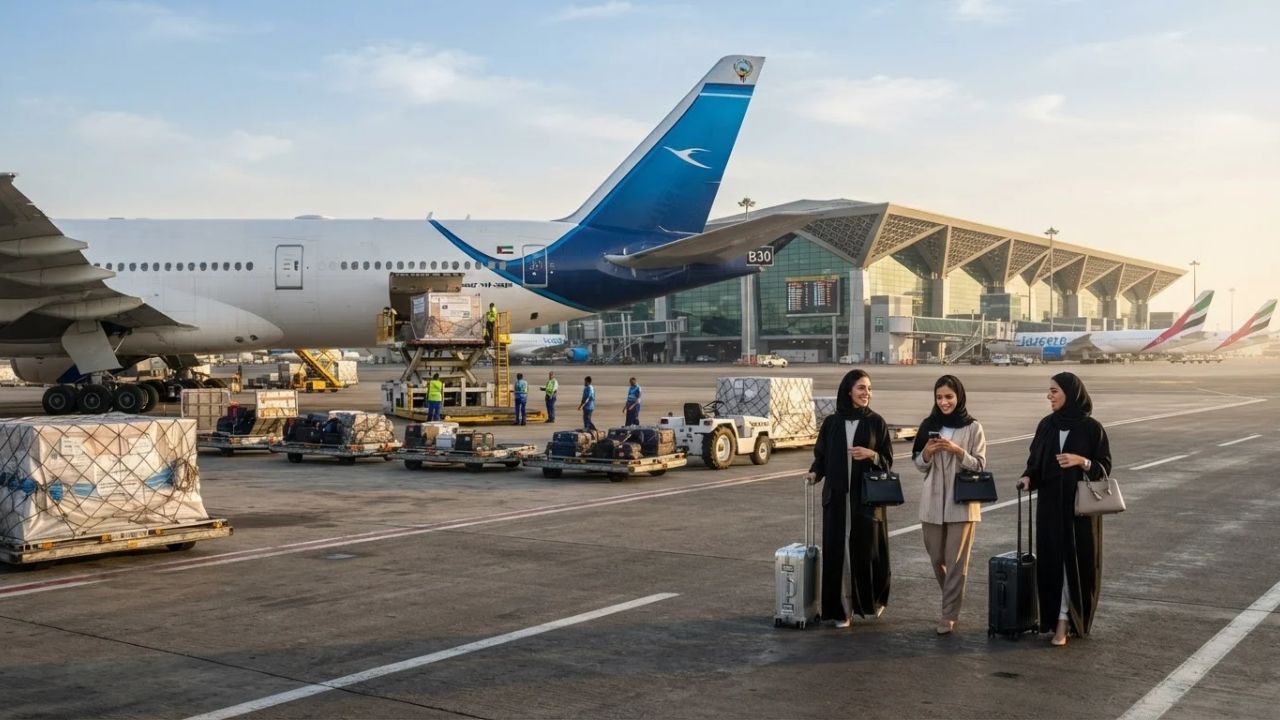
Addressing unfounded claims of an operational shutdown, Kuwait Airways officially confirmed that its air cargo services remain fully functional and operate under established regulatory and security standards. The national carrier's prompt clarification preserves supply chain confidence across Kuwait International Airport (KWI), securing vital freight movements linking the Arabian Gulf with European, Asian, and regional trade corridors.
The clarification arrives at a pivotal juncture for Middle Eastern civil aviation, where cargo consistency, regulatory adherence, and supply chain predictability govern international trade relationships. By issuing an unambiguous verification of its active operations, the Kuwaiti flag carrier reinforced the stability of its transport network, assuring commercial partners, international exporters, freight forwarders, and travelers that its cargo channels remain steady and dependable.
Operational Continuity: Kuwait Airways Refutes Freight Suspension Claims
The controversy originated from unverified claims alleging that Kuwait Airways had halted its air freight activities. Responding directly to these assertions on September 13, 2026, at 18:32 GMT+5:30, the airline released an official statement confirming that no suspension had occurred and that freight logistics continue "as normal."
The carrier emphasized that all cargo handling, transit flights, and distribution protocols strictly comply with approved operational procedures and international aviation security frameworks. Civil aviation operations rely heavily on regulatory compliance coordinated between national authorities, including the Kuwait Directorate General of Civil Aviation (DGCA), and international bodies such as the International Civil Aviation Organization (ICAO) and the International Air Transport Association (IATA).
In commercial aviation, unverified rumors can trigger rapid operational friction. Logistics operators, manufacturers, and freight forwarders schedule supply chains weeks in advance; even temporary confusion regarding airline availability can cause unnecessary shipment re-routings, inventory delays, and elevated freight insurance expenses. By providing rapid and transparent clarification, Kuwait Airways stabilized market expectations and protected ongoing commercial relationships across global markets.
Strategic Crossroads: Kuwait International Airport’s Freight Ecosystem
Operating from its central hub at Kuwait International Airport (KWI), Kuwait Airways holds an advantageous geographic position connecting major trade corridors across Asia, Europe, Africa, and the wider Middle East. The airport serves as a primary transit conduit, enabling time-sensitive goods to move between eastern manufacturing powerhouses and western consumer centers.
Air freight plays a distinct role in modern commerce, transporting items that require rapid transit, controlled environments, or heightened security. Beyond high-value manufactured components, air cargo provides the logistical lifeline for perishable food products, medical equipment, life-saving pharmaceuticals, and urgent industrial replacement parts.
Operational Pillars of Kuwait's Air Freight Network
| Operational Sector | Core Cargo Shipments | Regulatory & Operational Protocols | Strategic Economic Value |
|---|---|---|---|
| Industrial & Commercial Cargo | High-tech electronics, mechanical spare parts, and oilfield equipment | Strict compliance with DGCA and IATA Dangerous Goods Regulations | Protects business continuity and prevents costly shutdowns in regional energy and industrial sectors |
| Perishables & Agricultural Products | Fresh fruits, vegetables, chilled dairy, and fresh meat imports | Temperature-controlled cold chain logistics at KWI cargo terminals | Secures national food supply stability and supports fine dining hospitality across Kuwait's hotel sector |
| Pharmaceuticals & Healthcare | Temperature-sensitive vaccines, biotech medications, and surgical devices | Strict adherence to international Good Distribution Practice (GDP) standards | Delivers emergency medical shipments rapidly to hospitals, research institutes, and health clinics |
| E-Commerce & Express Courier | Consumer goods, direct-to-consumer parcels, and priority postal mail | Streamlined electronic customs declaration and automated X-ray screening | Fuels the rapid expansion of digital retail platforms across Arabian Gulf consumer markets |
| Belly-Hold Passenger Freight | Mixed priority commercial shipments and high-value consumer goods | Coordinated ground handling synchronized with passenger turnaround schedules | Optimizes widebody aircraft utilization, lowering per-unit transport expenses across international routes |
The Dual-Engine Model: Interconnecting Passenger Aviation and Freight Resilience
Although passenger travel and air cargo are often perceived as distinct commercial operations, they represent interconnected halves of modern airline economics. A substantial proportion of international air freight travels in the belly-hold of widebody passenger aircraft, meaning that route profitability and passenger scheduling frequently depend on healthy cargo yields beneath the passenger deck.
For Kuwait’s travel and hospitality sector, cargo stability provides direct operational benefits. Luxury hotels, destination resorts, corporate conference centers, and culinary establishments throughout Kuwait City rely on dependable air links for imported gourmet food products, specialty culinary supplies, audio-visual technology, and luxury furnishings. Without consistent freight operations, maintaining international hospitality standards would face persistent logistical friction.
Kuwait International Airport continues to advance significant infrastructure modernizations to reinforce this dual-engine model. Operating out of the dedicated Terminal 4 (T4)—the exclusive modern passenger base for Kuwait Airways—the airline coordinates smoothly between terminal gate operations and adjacent airside cargo aprons. Furthermore, the ongoing construction of the state-of-the-art Terminal 2 expansion, designed by renowned architectural firm Foster + Partners, aims to boost the airport's capacity to 25 million passengers annually, integrating smart cargo logistics facilities that will further accelerate turnaround times for transiting widebody aircraft.
Cultural & Environmental Value: Responsible Logistics and Heritage Protection
A resilient aviation infrastructure underpins broader cultural exchange and environmental sustainability, ensuring that regional development aligns with community well-being and responsible travel practices.
Modern Fleet Efficiency and Eco-Conscious Operations
Kuwait Airways has progressively modernized its operational fleet, incorporating fuel-efficient aircraft including the Airbus A330-800neo and Boeing 777-300ER. These modern twin-engine aircraft produce significantly lower carbon emissions per ton-kilometer compared to previous-generation freighters and passenger jets, while advanced aerodynamic engineering lowers overall fuel burn across Arabian Gulf flight paths.
Maintaining disciplined, scheduled freight handling also optimizes cargo space allocation, preventing empty belly-hold flights and reducing the carbon footprint of regional supply chains. By utilizing efficient digital airway bills (e-AWB) and automated weight balancing systems, ground handlers at KWI reduce paper waste and improve aircraft weight distribution, enhancing flight efficiency during takeoff and cruise phases.
Supporting Traditional Artisans and Community Heritage
The logistical networks supported by Kuwait's aviation sector also sustain cultural preservation initiatives. Organizations such as the National Council for Culture, Arts and Letters (NCCAL) and the Al Sadu Society rely on international shipping channels to showcase Kuwaiti heritage globally.
Through the Al Sadu Society, traditional Bedouin textile weaving—recognized by UNESCO on the Representative List of the Intangible Cultural Heritage of Humanity—connects with international design exhibitions, textile preservation summits, and educational workshops worldwide. Reliable air cargo ensures that handcrafted camel-hair rugs, woven wall hangings, and historical artifacts can travel safely under specialized archival packing conditions to cultural institutions across Europe, Asia, and North America.
Visitor Insider Tips: Navigating Kuwait International Airport, Transit Secrets, and Local Etiquette
For travelers flying Kuwait Airways or transiting through Kuwait International Airport, these local insights offer practical guidance for a seamless experience:
- Mastering Terminal 4 (T4) Transit: Kuwait Airways operates exclusively out of Terminal 4, an independent passenger terminal designed for rapid transfers. If you have an international layover exceeding three hours, access the Al Mubarakiya Lounge on the mezzanine floor. The lounge features private relaxation pods, hot buffet dining with authentic Arabian mezze, high-speed Wi-Fi, and private shower suites that make long-haul transits comfortable.
- Optimal Visiting Season: Plan trips to Kuwait between November and late March. During these cooler winter months, daytime temperatures average between 18°C and 24°C, creating ideal conditions for outdoor walking tours along the Arabian Gulf Street promenade, boat excursions to Failaka Island, and evening visits to open-air cultural plazas. Avoid the summer period between June and August, when outdoor temperatures routinely surpass 50°C.
- Local Etiquette and Cultural Respect:
- Modesty Guidelines: When visiting traditional markets, cultural institutions, or public government offices, dress respectfully by ensuring shoulders and knees remain covered for both men and women.
- Hospitality Customs: If offered traditional Arabic coffee (gahwa) infused with crushed cardamom and saffron, accept the small cup with your right hand. Gently jiggle the cup between your thumb and forefinger when handing it back to signal you have enjoyed enough; setting it down without shaking signals you would like a refill.
- Photography Protocol: While street photography is widely enjoyed, always ask permission before photographing local residents. Photography of government ministries, military installations, embassies, and petroleum infrastructure is strictly prohibited under Kuwaiti security regulations.
- Authentic Culinary Specialties to Savor:
- Machboos Laham: Kuwait’s signature national dish features tender, slow-cooked lamb seasoned with dried black limes (loomie), cardamom, cinnamon, and turmeric, served over long-grain basmati rice and accompanied by daqqoos—a thick, tangy garlic-and-tomato dipping sauce.
- Mutabbaq Samak: A coastal favorite highlighting fresh Gulf Zobaidy (pomfret), spiced with regional maritime herbs, pan-fried to crisp perfection, and served over fragrant herb-infused rice.
- Sweet Finish with Karak Tea: Conclude meals at Souq Al-Mubarakiya with freshly fried Luqaimat (golden honey-glazed dough balls sprinkled with sesame seeds) paired with a steaming glass of spiced Karak tea or fresh mint infusion.
- Under-the-Radar Cultural Stops: Look beyond the iconic Kuwait Towers on the Arabian Gulf shoreline. Take time to visit the Sheikh Jaber Al-Ahmad Cultural Centre (JACC), whose titanium-clad geometric pavilions reflect classical Islamic architecture. In addition, explore the Tareq Rajab Museum in Jabriya, which houses one of the Middle East's most exquisite private collections of rare Quranic manuscripts, silver Bedouin jewelry, and historical musical instruments.
Tourism Outlook: Strengthening Kuwait’s Position in Vision 2035
The prompt confirmation of stable cargo operations reflects a broader commitment to operational transparency and infrastructural reliability. Under the national development roadmap "New Kuwait" Vision 2035, the country aims to transform itself into a prominent financial, commercial, and cultural hub in the northern Gulf.
A dependable aviation system is fundamental to achieving those ambitions. By maintaining unwavering safety compliance, investing in airport expansions, and preserving vital air links across six continents, Kuwait Airways protects its commercial reputation while reinforcing national connectivity.
For the international aviation community, the airline’s swift response serves as a reminder that clear, verified communications remain essential in maintaining trade velocity, consumer confidence, and cross-border partnerships. As global travel patterns and international logistics continue to adapt, Kuwait's modernizing aviation sector remains solidly positioned at the center of Gulf trade and travel.
Related Travel Guides
Qatar Airways Expands Winter 2026 Flights: Frequency Surges for London, Maldives, and Australia
Sharjah Airport Expands Global Reach at ATM 2026: 19.4M Passengers and Terminal Upgrades
Emirates Wins Historic Berlin Approval: Germany Opens Fifth Hub with Daily Dubai Flights
Disclaimer
This article is for informational and educational purposes only. It does not constitute legal, financial, or professional advice. While we strive to provide accurate and up-to-date information, travel policies, regulations, and conditions change rapidly. Always verify information with official sources before making travel decisions. Nomad Lawyer makes no representations about the accuracy, reliability, completeness, or suitability of the information provided. Readers should consult qualified professionals for advice specific to their circumstances. The views expressed in this article are those of the author and do not necessarily reflect the views of Nomad Lawyer.
Raushan Kumar
Founder & Lead Developer
Full-stack developer with 11+ years of experience and a passionate traveller. Raushan built Nomad Lawyer from the ground up with a vision to create the best travel and law experience on the web.
Learn more about our team →