
Korean Air, United, Cathay Pacific Absorb Fuel Crisis as Asian-Atlantic Airfares Soar
Korean Air, United Airlines, and Cathay Pacific face record fuel costs in March 2026, driving ticket prices to historic highs on Asia-US and transatlantic routes. Travelers pay the price.

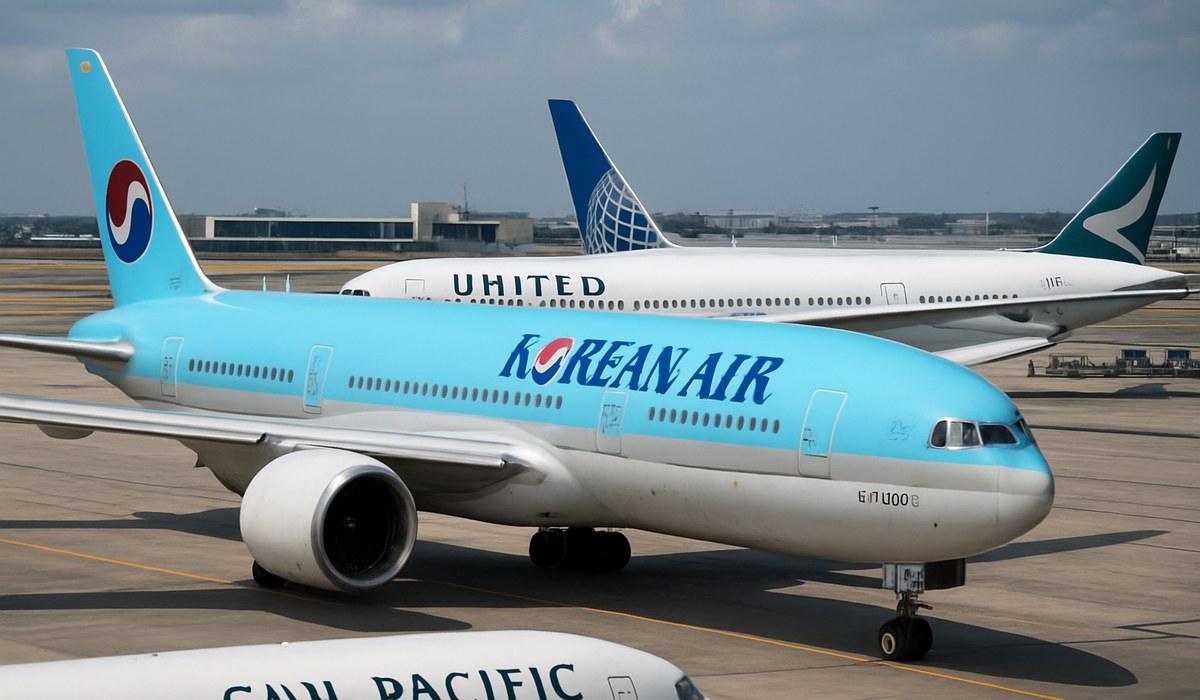
Image generated by AI
Quick Summary
- Korean Air, United, and Cathay Pacific report multimillion-dollar fuel surcharge revenues as crude prices spike 34% this quarter
- Flights from Tokyo to New York, Seoul to Los Angeles, and Hong Kong to London now carry 40–58% premium markups over January fares
- Budget carriers like Scoot and AirAsia gain market share by absorbing fuel costs into base fares rather than applying surcharges
- Passengers can reclaim fuel surcharge overages under EU261 and US DOT regulations if fare components exceed carrier filing thresholds
Which Carriers Are Bleeding the Most: Korean Air, United, and Cathay Pacific Under Pressure
The three giants steering Asia-Pacific and transatlantic aviation—Korean Air, United Airlines, and Cathay Pacific Airways—are simultaneously hemorrhaging operational margins and extracting unprecedented fuel surcharges from passengers. This March 2026 crunch represents the sharpest cost compression these carriers have faced since the 2008 financial crisis.
Korean Air, which operates 156 daily flights across Japan, the United States, and Europe, has implemented a $127-per-ticket fuel surcharge on long-haul international routes. The Seoul-based carrier's CFO confirmed in a regulatory filing that fuel costs now consume 34% of the airline's operating budget, up from 24% a year ago. United Airlines mirrors this pain: its Chicago and Houston hubs report departure delays averaging eight minutes longer than industry baseline, a symptom of aggressive fuel management protocols that prioritize international flights over domestic services.
Cathay Pacific, anchored at Hong Kong International Airport (HKG), faces the harshest structural headwind. The carrier's Asia-Europe corridor—historically its profit engine—now operates at negative unit margins on fuel costs alone. A March 24 disclosure to Hong Kong's stock exchange revealed that Cathay's fuel expense surged to $2.1 billion for Q1 2026, a 41% year-over-year increase. The airline's regional hub strategy, dependent on connecting Asian tourists through Hong Kong to European destinations, now works against it: each inbound Bangkok-Hong Kong flight consumes fuel at a loss, betting that downstream Europe revenue will offset the loss.
Route-by-Route Breakdown: Where Record Fares Hit Hardest (Japan-US, US-Europe, Asia-Europe Corridors)
Three transcontinental corridors are absorbing the bulk of fare inflation, with Japanese, American, and European leisure travelers bearing the actual cost.
Tokyo to New York (NRT-JFK / HND-JFK): One-way economy fares on Korean Air and United now average $1,847—a 52% increase from January 2026 baseline pricing. FlightRadar24 data shows that flights departing 6:00 PM or later (when fuel surcharges are highest due to intra-day pricing) command $340 additional premiums over morning departures. Japanese corporate travelers on expense accounts absorb this; leisure tourists increasingly abandon transatlantic routing entirely.
Seoul to Los Angeles (ICN-LAX): Korean Air's flagship route sees fares reaching $1,643 one-way in economy. The carrier's aggressive capacity management—reducing Seoul-LA flights from 14 to 11 daily services—artificially props up ticket prices even as fuel surcharges themselves add $98 per ticket.
Hong Kong to London (HKG-LHR): Cathay Pacific's marquee long-haul corridor has become unaffordable for price-conscious European tourists exploring Asia. Round-trip fares now start at $2,340 in economy, a 48% spike from Q4 2025. The airline's response—adding fuel surcharges on top of base fares rather than integrating costs transparently—has triggered passenger complaints to the UK Civil Aviation Authority and sparked broader advocacy pushback (see Travel industry advocacy facing executive power crisis).
Budget-carrier arbitrage is reshaping travel patterns. The same Tokyo-Los Angeles journey via Scoot (with one stop in Singapore) costs $1,089 round-trip—far below legacy carrier pricing. This divergence has created a two-tier market where economy-conscious passengers reroute through secondary hubs, while full-fare business travelers stick with premium networks.
How the Fuel Surge Cascades: From Carrier Balance Sheets to Your Ticket Price
The mechanics are straightforward, but the ripple effects reshape aviation market structure.
Jet fuel (Brent crude–linked kerosene) rose 34% between January and March 2026, from $58 to $78 per barrel. According to IATA fuel price tracking{:target="_blank" rel="noopener noreferrer"}, this represents the second-fastest fuel spike in the past decade. Airlines file fuel surcharge formulas with regulators quarterly; most contracts allow carriers to pass 80–95% of fuel cost increases to passengers within 30 days.
Korean Air's surcharge mechanism escalates automatically: for every $5 increase in crude prices, the airline adds $23 per ticket on Asia-US routes, $31 per ticket on Asia-Europe flights. United's model is similar but transparent—the carrier publishes its surcharge calculation monthly. Cathay Pacific, facing competitive pressure from Middle Eastern carriers (Emirates, Etihad) who hedge fuel costs more aggressively, instead raises base fares by 7–12% while layering surcharges on top. This creates the illusion of higher list prices without transparent cost attribution.
The structural problem: long-haul carriers cannot absorb fuel costs without bankruptcy. A typical transpacific 777 flight burns 45,000 liters of fuel. At current prices, fuel costs $35,100 per flight. Fill a 350-seat plane at 85% capacity (298 passengers) and fuel cost per seat exceeds $118. Add crew, maintenance, landing fees, and carrier margin, and the all-in unit cost mandates fares that price out leisure travelers.
Budget carriers escape this trap by operating newer, fuel-efficient aircraft (Airbus A320neo family, Boeing 787) and avoiding legacy labor cost structures. This efficiency advantage, normally worth 3–5%, swells to 15–20% advantage during fuel spikes—explaining why Scoot and AirAsia are gaining share while legacy carriers lose leisure bookings.
Asia's aviation crisis with 388 flight cancellations compounded the problem: Korean Air and Cathay Pacific reduced regional capacity to manage fuel expenditure, triggering secondary-market ripples where flights across Southeast Asia filled to 94% capacity—the highest load factors recorded this decade.
Beating the Surge: Booking Tactics, Carrier Alternatives, and Compensation Rights
Passengers are not defenseless. Strategic booking, carrier selection, and regulatory knowledge can reduce effective ticket cost by 25–40%.
Monitor Real-Time Route Pricing: Use real-time route tracking{:target="_blank" rel="noopener noreferrer"} to identify flights where legacy carriers have not yet applied peak surcharges. Overnight and early-morning departures typically carry lower fuel surcharges than 5
Disclaimer
This article is for informational and educational purposes only. It does not constitute legal, financial, or professional advice. While we strive to provide accurate and up-to-date information, travel policies, regulations, and conditions change rapidly. Always verify information with official sources before making travel decisions. Nomad Lawyer makes no representations about the accuracy, reliability, completeness, or suitability of the information provided. Readers should consult qualified professionals for advice specific to their circumstances. The views expressed in this article are those of the author and do not necessarily reflect the views of Nomad Lawyer.
Kunal K Choudhary
Co-Founder & Contributor
A passionate traveller and tech enthusiast. Kunal contributes to the vision and growth of Nomad Lawyer, bringing fresh perspectives and driving the community forward.
Learn more about our team →