
Kenya Unveils New Accessible Tourism Push as Kenya Beyond Sight Opens Coast and Eastern Regions to All Travellers
Kenya Unveils New Accessible Tourism Push as Kenya Beyond Sight Opens Coast and Eastern Regions to All Travellers

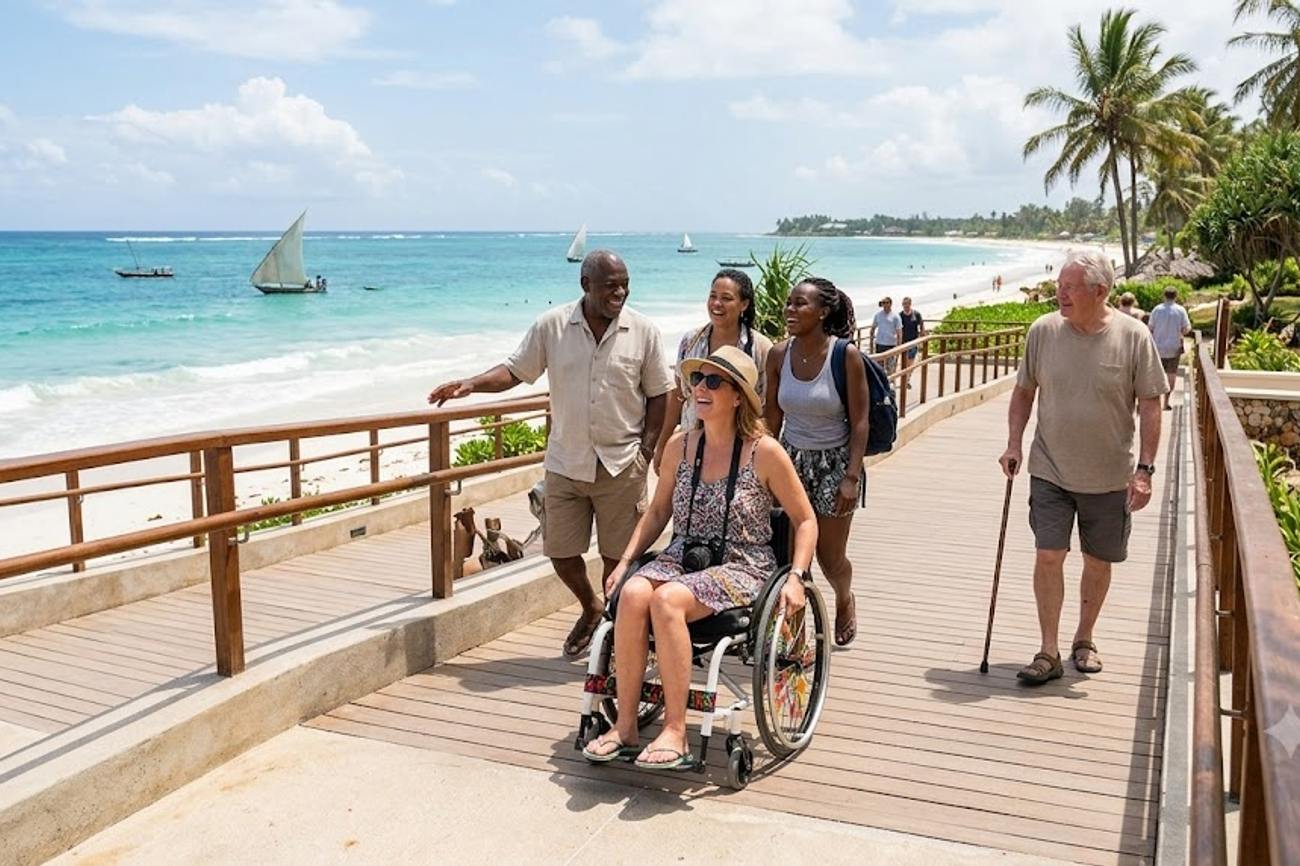
Image generated by AI
Most travel marketing relies entirely on the eyes, yet Kenya is now training a new generation of content creators to describe the coast and the east through sound, smell, and touch. On September 17, 2026, the Kenya Tourism Board, in partnership with RUBiS Energy and KCB Bank, launched "Kenya Beyond Sight," an initiative that rejects the notion that a destination is only what you can see. Instead of focusing on glossy brochures, this project employs six creators on a five-day expedition through the Eastern and Coastal regions to document how travelers with visual impairments actually experience the terrain, from the humidity of the Indian Ocean to the scent of the highlands.
The Shift Toward Sensory Tourism
For decades, the narrative of Kenyan travel has been dominated by the "Big Five" and the visual spectacle of the savannah. However, the current movement in the Eastern and Coastal circuits marks a departure from this visual hegemony. The Kenya Beyond Sight campaign recognizes that for a traveler with visual impairments, the "experience" of a place is found in the tactile grain of a carved Lamu door, the specific rhythm of Swahili spoken in Mombasa, or the cooling air of the Meru and Embu regions.
This shift is not merely a social gesture; it is a response to a massive surge in visitor numbers. According to the Tourism Research Institute, international arrivals hit 2,394,376 in 2024, a 14.6% increase over the 2,089,259 visitors recorded in 2023. When a destination scales this quickly, the gaps in accessibility become more apparent. The government is now pushing for a model where "accessibility" isn't a checkbox for a single hotel room, but a seamless chain that includes the airport transfer, the tour guide's communication style, and the physical layout of the attraction.
The economic stakes are high. The Ministry of Tourism and Wildlife notes that the sector accounts for roughly 10% of the national GDP and provides about 9% of wage employment. With inbound tourism earnings reaching KSh452.20 billion in 2024—a 19.79% jump from the KSh377.49 billion earned in 2023—there is a clear financial incentive to open the doors to the diverse global market of travelers with disabilities.
What Makes the East and Coast Different
To understand why this inclusive push is happening in these specific regions, one must understand the geographic contrast. The Eastern circuit, encompassing areas like Embu and Meru, is a blend of agricultural richness and rugged national parks. Here, accessibility means navigating uneven terrain and creating sensory descriptions of mountain air and rural culture.
Conversely, the Coastal circuit—spanning Diani, Mombasa, and Lamu—presents a different set of challenges and opportunities. In Lamu, for instance, the absence of cars makes the environment naturally quieter and more tactile, but the ancient stone architecture can be a barrier for those with mobility issues. The Magical Kenya portal has already begun addressing this by listing wheelchair-accessible services, including electric wheelchair rentals and specific itineraries that link Nairobi to the Maasai Mara and Mombasa.
The goal is to move beyond the "scenic view." By training creators to use senses other than sight, Kenya is essentially creating a new vocabulary for travel. This includes the integration of Kenyan Sign Language training for hospitality staff, ensuring that the "welcome" is felt and understood by everyone, regardless of how they communicate.
Visitor Insider Tips
Navigating Kenya with a focus on accessibility requires a different strategy than the standard tourist approach. If you are traveling with specific accessibility needs or simply want to experience the country through a more mindful, sensory lens, keep these local nuances in mind:
Timing the Coast: To avoid the oppressive midday heat and the heaviest crowds in Mombasa, schedule your outings for the "golden hours" between 6:00 AM and 9:00 AM. The sensory experience of the coast—the smell of salt air and the sound of the tide—is most potent at dawn.
Transport Logistics: While the official portals list accessible vehicles, always confirm the specific vehicle type with your operator 48 hours in advance. In the Eastern circuit, "accessible" can vary between a modified van and a standard vehicle with a ramp. For those using wheelchairs, Nairobi remains the primary hub for high-end rental equipment before heading to the coast.
Regional Specialties: In the Eastern region, seek out local food experiences in Meru that emphasize the aromatic qualities of the highlands. On the coast, move beyond the resorts and try street-side mshikaki (grilled meat skewers), where the smell of charcoal and spices provides a vivid map of the neighborhood.
Etiquette and Communication: When interacting with guides who are part of the new inclusive training programs, encourage them to be descriptive. Instead of saying "look at that tree," ask them to describe the texture of the bark or the sound of the wind through the leaves. This supports the "Beyond Sight" philosophy and enriches the experience for everyone.
Cultural and Environmental Context
The push for inclusive tourism in Kenya is happening against a backdrop of intense environmental and social pressure. The Tourism Research Institute recorded a staggering 4,818,755 international bed nights and 5,173,966 domestic bed nights in 2024. This volume of traffic puts immense strain on infrastructure, particularly in heritage sites like Lamu, which is a UNESCO World Heritage site.
When accessibility is retrofitted into ancient towns, there is often a tension between preserving historical integrity and providing modern access. The "Kenya Beyond Sight" approach mitigates this by focusing on the experience and communication rather than just physical demolition or construction. By training staff in sign language and sensory description, the country is finding ways to make heritage accessible without compromising the physical stones of the past.
The "Kenya Beyond Sight" initiative aims to dismantle barriers for travelers with disabilities by enhancing infrastructure across the coast and eastern regions. This strategic push aligns with the broader goals of the Kenya Tourism Board, focusing on inclusivity to position the country as a premier global destination for accessible tourism.
Furthermore, the diversification into wellness and adventure tourism—cited by the Ministry of Tourism and Wildlife as a driver for the 2.4 million visitors in the 2024/25 financial year—allows Kenya to move away from "mass tourism." Inclusive tourism encourages slower, more intentional travel. When a destination is designed for someone with a disability, it generally becomes more intuitive and pleasant for every traveler, reducing the "tourist bubble" effect and fostering genuine interaction with local communities.
FAQ: Visiting Kenya 2026
What is the best time to visit the Coastal region? The best windows are July to September and December to March. These months offer the most stable weather for outdoor activities and are generally less humid, making navigation easier for those with mobility or respiratory sensitivities.
How do I find certified accessible accommodation? The most reliable resource is the Magical Kenya Online Tourist Information Centre, which specifically filters for wheelchair-accessible rooms, accessible vehicles, and visitor support services across the major circuits.
Do I need a visa to enter Kenya? Kenya has transitioned to an Electronic Travel Authorization (eTA) system. Most visitors must apply for their eTA online before departure. Check the official government portal for the most current requirements based on your nationality.
Is the Eastern circuit safe for solo travelers with disabilities? Yes, provided you use registered tour operators. The region is welcoming, and the current government push for inclusive tourism has increased the number of trained guides who are equipped to assist travelers with diverse needs.
The true essence of a place is rarely found in a photograph; it is found in the things we feel, hear, and smell when we stop trying to simply "see" the world.
Related Travel Guides
- Taiwan Travel Philippines Campaign Unveils Major Manila Expo With Exclusive Deals and Visitor Incentives
- Global Travel Growth Slows to 0.4% in H1 2026 as Tourism Arrivals Decline Amid Rising Challenges
- Finland Teams Up With Seychelles And More Countries In Lifting Emirates Air Travel Growth With 75% Seat Capacity Rise
Disclaimer
This article is for informational and educational purposes only. It does not constitute legal, financial, or professional advice. While we strive to provide accurate and up-to-date information, travel policies, regulations, and conditions change rapidly. Always verify information with official sources before making travel decisions. Nomad Lawyer makes no representations about the accuracy, reliability, completeness, or suitability of the information provided. Readers should consult qualified professionals for advice specific to their circumstances. The views expressed in this article are those of the author and do not necessarily reflect the views of Nomad Lawyer.
Kunal K Choudhary
Co-Founder & Contributor
A passionate traveller and tech enthusiast. Kunal contributes to the vision and growth of Nomad Lawyer, bringing fresh perspectives and driving the community forward.
Learn more about our team →