
Taiwan Travel Philippines Campaign Unveils Major Manila Expo With Exclusive Deals and Visitor Incentives
Taiwan Travel Philippines Campaign Unveils Major Manila Expo With Exclusive Deals and Visitor Incentives

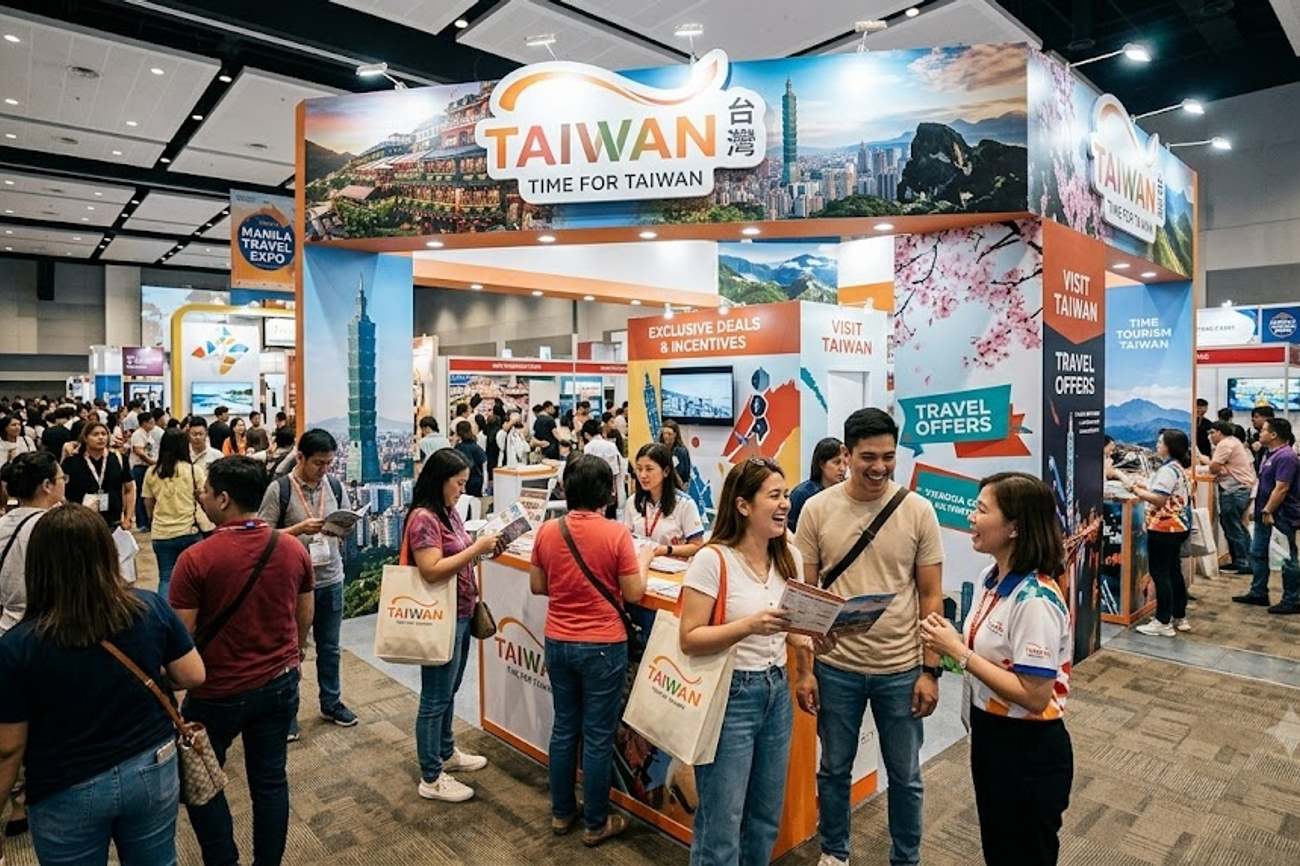
Image generated by AI
Philippine visitor arrivals to Taiwan grew by 12.40% year-on-year in May 2026, signaling a aggressive recovery pattern that far outpaces the broader regional growth seen in previous quarters. This surge is not an isolated spike but part of a calculated market capture strategy by the Taiwan Tourism Administration, which is now leveraging high-frequency travel patterns from Manila to stabilize its visitor pipeline. By analyzing the transition from May's 62,800 visitors to July's 49,189, we see a clear seasonal contraction, yet the consistent positive year-over-year delta across the entire second quarter proves that the Philippine market is becoming a primary pillar of Taiwan's tourism portfolio.
The Philippine-Taiwan Corridor in Numbers
The data from the second and third quarters of 2026 reveals a destination that is successfully transitioning from a "bucket list" location to a "repeat visit" hub. In May 2026, Philippine nationals accounted for 9.06% of all arrivals into Taiwan. While this market share dipped slightly to 8.10% by July 2026, the volume remains significant. The 5.01% annual increase recorded in July, following a 12.40% jump in May, suggests that while the peak summer surge has leveled off, the baseline for Philippine travel to Taiwan has shifted permanently upward.
This growth is being fueled by a strategic removal of friction. The extension of the 14-day visa-free entry program—now valid until July 31, 2027—acts as a powerful catalyst for spontaneous, short-haul travel. According to data trends tracked by IATA, the reduction of visa barriers in the Asia-Pacific region correlates directly with an increase in "weekend warrior" travel patterns, where travelers prioritize destinations with minimal administrative overhead.
Regional Benchmarking and Market Share
When comparing the current growth trajectory to historical benchmarks, Taiwan is positioning itself as the primary competitor to other short-haul destinations in the region. The focus on the Philippine market is a tactical move to diversify arrival sources and reduce reliance on any single East Asian market.
The following table illustrates the volatility and growth of the Philippine market share within Taiwan's total arrivals for the mid-2026 period:
| Metric | May 2026 | June 2026 | July 2026 | Trend Analysis |
|---|---|---|---|---|
| Total Philippine Visitors | 62,800 | 55,379 | 49,189 | Seasonal Decline |
| % of Total Taiwan Arrivals | 9.06% | 9.06% | 8.10% | Slight Market Share Dip |
| Year-over-Year Growth | +12.40% | +5.27% | +5.01% | Sustained Positive Growth |
| Foreign Visitor Volume | 62,711 | 55,296 | 49,102 | Volume Correlation |
This data indicates that while the raw number of visitors fluctuates monthly, the year-over-year growth remains positive. This is a critical distinction for analysts; it suggests that the "floor" for Philippine tourism is rising, even as the "ceiling" fluctuates with the seasons. By maintaining a market share around 8-9%, Taiwan is establishing a stable, high-volume corridor that is less susceptible to the extreme volatility seen in long-haul markets.
Practical Traveler Advisory and Strategic Insights
For the individual traveler, particularly those based in the Philippines, the current data suggests a window of high value and low friction for Q4 2026 and Q1 2027. The industry shift toward "participatory promotion" and the introduction of direct financial incentives change the booking calculus.
1. Leverage the "Return to Taiwan" Financials The "Return to Taiwan, Double Your Luck" campaign is a direct subsidy for repeat visitors. For those who visited Taiwan after January 1, 2023, arriving between October 10, 2026, and March 31, 2027, there is a tangible opportunity to secure NT$5,000 in credits, potentially rising to NT$8,000 when traveling with first-time visitors. This effectively lowers the net cost of the trip, making it an ideal time for a return visit.
2. Optimize Transit with Rail Promotions The introduction of "Buy 1 Get 1 Free" High-Speed Rail (HSR) promotions at the Travel Sale Expo indicates a push to move travelers beyond Taipei. Travelers should plan itineraries that utilize the HSR to reach the south and west of the island, as these incentives are designed to distribute tourist spending across more regions.
3. Timing the Visa-Free Window With the visa-free trial extended to July 31, 2027, the pressure to "rush" before a deadline has vanished. However, given the 14-day limit, travelers should focus on high-density, 4-to-7 day itineraries. Booking 6-8 weeks in advance for the October-December window is advised to capitalize on the "Waves of Wonder" seasonal promotions.
The Taiwan Travel Philippines campaign aims to boost regional tourism by offering exclusive travel deals and incentives for Filipino visitors. Travelers can explore detailed destination guides and current entry requirements through the Taiwan Tourism Administration to plan their itineraries.
Projections for the 2027 Travel Cycle
Based on the current trajectory, we can project a shift in how Taiwan is marketed to the Southeast Asian demographic. We are moving away from "City-Sightseeing" (Taipei-centric) toward "Segmented Experiential" travel. The focus on hot springs, flower viewing, and theme parks suggests that Taiwan is attempting to create a "seasonal calendar" that encourages travelers to visit three or four times a year rather than once every few years.
The integration of creator-led storytelling, such as the sessions featuring Kyle Vergara, indicates that Taiwan is targeting the Gen Z and Millennial demographic. By shifting from traditional brochures to "social-media-friendly experiences," the Taiwan Tourism Administration is betting on organic growth driven by Instagram and TikTok. We expect to see a corresponding increase in "independent touring" statistics, as the reliance on group tour operators decreases in favor of self-guided, rail-based exploration.
Further data from Statista on regional travel preferences suggests that the "experience economy" is currently outperforming traditional luxury tourism. Taiwan's focus on D.I.Y. workshops and interactive games at the SM Megamall expo is a direct response to this global shift. If the current growth rates hold, the Philippine market could potentially exceed 10% of total arrivals by mid-2027.
FAQ: Taiwan-Philippines Travel Trends 2026
Will flight prices increase due to higher demand from the Philippines? While demand is rising, the increased volume typically encourages carriers to add more frequencies. Short-term spikes may occur during the October expo window, but the overall trend suggests stable pricing due to high competition on the Manila-Taipei route.
Is now a good time to book a return trip to Taiwan? Yes. Between October 10, 2026, and March 31, 2027, returning visitors can access stored-value credits of up to NT$8,000. This financial incentive, combined with the visa-free extension, makes this the most cost-effective window for repeat travel.
Which travel segments are currently the most promoted? The "Waves of Wonder" campaign is specifically pushing seasonal flower viewing, hot springs, and independent rail travel. These segments are being prioritized to move tourists away from the saturated Taipei city center.
Do I need a visa for a trip in early 2027? Eligible Philippine nationals can enter visa-free for up to 14 days until July 31, 2027. However, this excludes diplomatic and official passport holders, and travelers must still meet all standard border entry requirements.
The shift from passive sightseeing to subsidized, repeat-visit experiences marks a new era of strategic tourism in the Asia-Pacific corridor.
Related Travel Guides
- Global Travel Growth Slows to 0.4% in H1 2026 as Tourism Arrivals Decline Amid Rising Challenges
- Finland Teams Up With Seychelles And More Countries In Lifting Emirates Air Travel Growth With 75% Seat Capacity Rise
- Thailand and Malaysia Stand Alongside Southeast Asia’s Tourism Heavyweights as Spending Outpaces Arrival Growth
Disclaimer
This article is for informational and educational purposes only. It does not constitute legal, financial, or professional advice. While we strive to provide accurate and up-to-date information, travel policies, regulations, and conditions change rapidly. Always verify information with official sources before making travel decisions. Nomad Lawyer makes no representations about the accuracy, reliability, completeness, or suitability of the information provided. Readers should consult qualified professionals for advice specific to their circumstances. The views expressed in this article are those of the author and do not necessarily reflect the views of Nomad Lawyer.
Raushan Kumar
Founder & Lead Developer
Full-stack developer with 11+ years of experience and a passionate traveller. Raushan built Nomad Lawyer from the ground up with a vision to create the best travel and law experience on the web.
Learn more about our team →