
Australian Travelers Pivot to Kazakhstan and Silk Road Routes Over Europe in 2026
Australian travelers are increasingly bypassing traditional European destinations in favor of Kazakhstan, leveraging visa-free access and lower costs to explore the historic Silk Road in 2026.

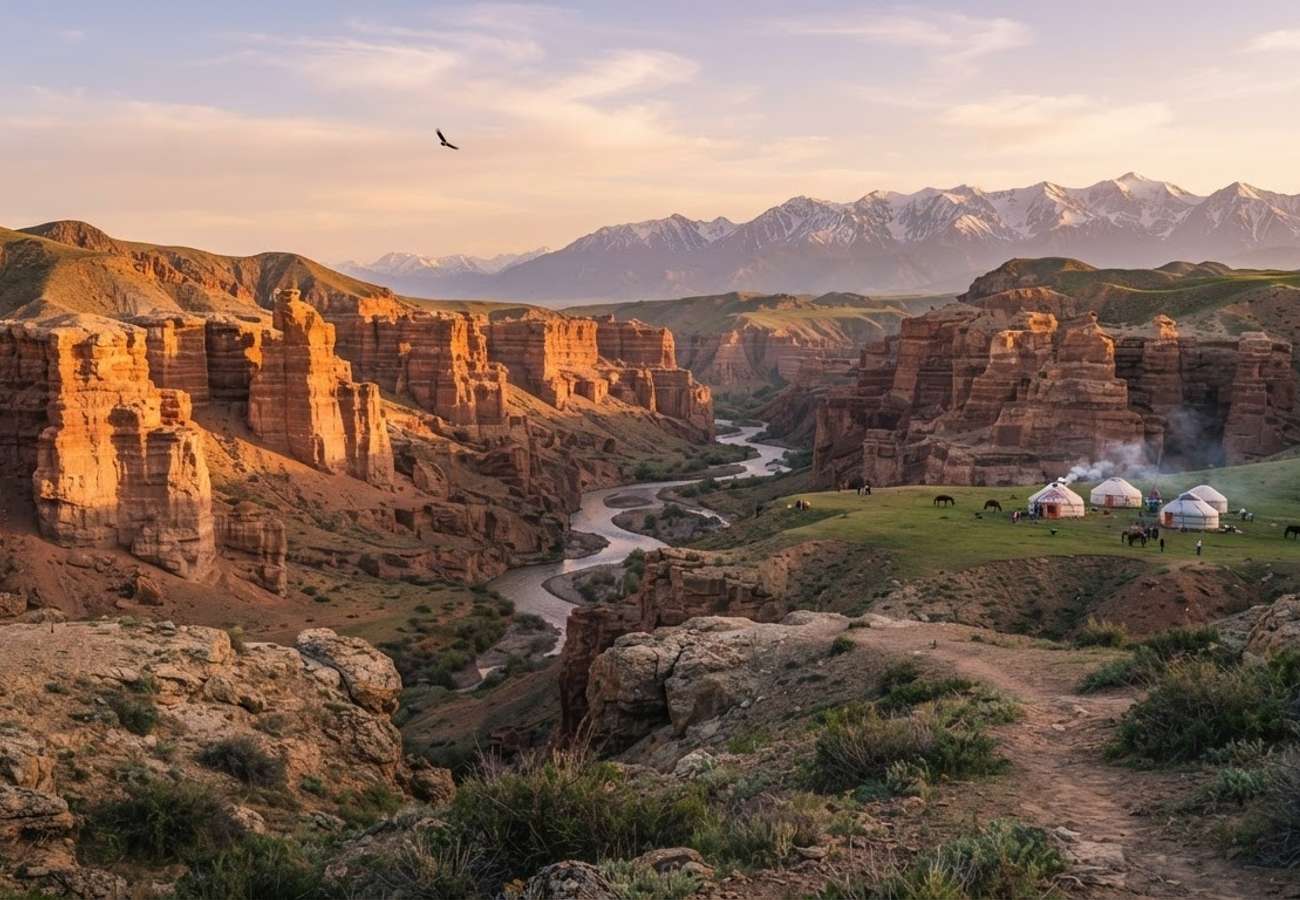
Image generated by AI
Australian travelers are increasingly abandoning crowded European hubs in favor of Kazakhstan, driven by visa-free entry, superior value, and the allure of the historic Silk Road.
Shift in Long-Haul Travel Patterns
Data from the Australian Travel Industry Association indicates a strategic pivot in spending. Travelers are redirecting budgets away from established North American and European routes toward Asia and Central Asia. This shift is characterized by a desire for destinations that offer higher perceived value and lower congestion.
Kazakhstan has emerged as the primary gateway for this trend. Specialist tour operators report a surge in multi-country itineraries that link Almaty and Astana with Bishkek (Kyrgyzstan) and the historic Uzbek cities of Samarkand and Bukhara.
Our analysis identifies three primary drivers for this migration:
- Economic Factors: High pricing in European hotspots and a strong Australian dollar against several Asian currencies.
- Saturation: A growing segment of "experienced" travelers who have already visited primary global destinations and are seeking niche, culturally deep alternatives.
- Accessibility: Simplified entry requirements compared to other Central Asian states.
Entry Requirements and Visa Policy
Kazakhstan has implemented a strategic visa-waiver regime to stimulate inbound tourism and business travel. According to official government portals and electronic government services, Australian passport holders are granted visa-free entry for stays of up to 30 days.
This policy, which has remained active through 2025 and into 2026, is extended to over 50 countries. Australia’s Smartraveller advisory service confirms that provided travelers hold a valid passport and meet standard entry conditions, the process is streamlined.
For the traveler, this means a significant reduction in bureaucratic friction. The removal of visa costs and application wait times makes Kazakhstan a natural starting point for broader Silk Road circuits.
Aviation Logistics and Hub Connectivity
While direct nonstop flights from Australia to Kazakhstan do not currently exist, flight tracking and network data show expanding capacity through major international transit hubs.
Primary Entry Points and Transit Hubs:
- Almaty (ALA): The southeast hub, seeing increased capacity from Kazakhstan’s flag carrier and partners.
- Astana (NQZ): The capital city, focusing on infrastructure for business and conference traffic.
- Key Transit Hubs: Most Australian itineraries utilize one-stop connections via Dubai (DXB), Doha (DOH), Istanbul (IST), or Seoul (ICN).
Once in-country, travelers are increasingly using overland train and road networks to move from Almaty to Bishkek and onward to Tashkent and Samarkand, recreating ancient trade corridors.
Cost Analysis and Destination Appeal
Comparative data suggests that the cost of accommodation, dining, and internal transport in Central Asia significantly undercuts peak-season pricing in Western Europe. While long-haul airfares remain a fixed high cost, the overall daily spend for multi-week itineraries is lower.
Beyond economics, the appeal lies in "untouched" landscapes. Travelers are prioritizing:
- Natural Landscapes: The Tian Shan range, alpine lakes, and canyon systems near Almaty.
- Cultural Depth: UNESCO recognized sites, traditional bazaars, and the intersection of Soviet-era urbanism with nomadic heritage.
- Lack of Commercialization: A preference for sites that are not yet overwhelmed by mass tourism.
Passenger Rights & Safety Advisory
For Australians planning a journey to Kazakhstan, our analysis of current policies and safety frameworks suggests the following practical considerations:
Healthcare and Insurance There is no reciprocal healthcare agreement between Australia and Kazakhstan. For the affected passenger, this means that any medical emergency will be an out-of-pocket expense unless covered by private insurance. Comprehensive travel insurance is not optional; it is a necessity for this region.
Consular and Safety Protocols Current advisories from the Australian and U.S. governments rate Kazakhstan as a destination where "normal precautions" should be exercised. However, travelers should:
- Register with consular services prior to departure.
- Exercise caution in remote areas where infrastructure is limited and weather shifts rapidly.
- Monitor local news for regional stability updates.
Rebooking and Disruptions Because these trips involve multiple airlines and overland transfers, passengers should ensure their tickets are flexible. In the event of a flight cancellation at a hub like Dubai or Doha, passengers are protected by the carrier's specific conditions of carriage and, depending on the airline's origin, potentially EU261/2004 or similar regional protections.
Industry Analyst View
The rise of Kazakhstan as an Australian favorite is not an anomaly but a symptom of "destination fatigue" in the West. By positioning itself as a low-friction entry point to the "Stans," Kazakhstan is capturing a market segment that values authenticity over luxury. As infrastructure in Astana and Almaty continues to modernize, the country is likely to transition from a "niche" choice to a mainstream alternative for adventurous long-haul travelers.
The Silk Road is no longer just a history lesson; it is a viable, value-driven alternative to the European summer.
Related Travel Guides
Disclaimer
This article is for informational and educational purposes only. It does not constitute legal, financial, or professional advice. While we strive to provide accurate and up-to-date information, travel policies, regulations, and conditions change rapidly. Always verify information with official sources before making travel decisions. Nomad Lawyer makes no representations about the accuracy, reliability, completeness, or suitability of the information provided. Readers should consult qualified professionals for advice specific to their circumstances. The views expressed in this article are those of the author and do not necessarily reflect the views of Nomad Lawyer.
Preeti Gunjan
Contributor & Community Manager
A passionate traveller and community builder. Preeti helps grow the Nomad Lawyer community, fostering engagement and bringing the reader experience to life.
Learn more about our team →