
Vande Bharat Express and Road Networks Drive Kashmir’s Summer Tourism Surge, Straining Srinagar Infrastructure
Enhanced rail connectivity and rising self-drive travel are reshaping visitor patterns across the Kashmir Valley, drivin

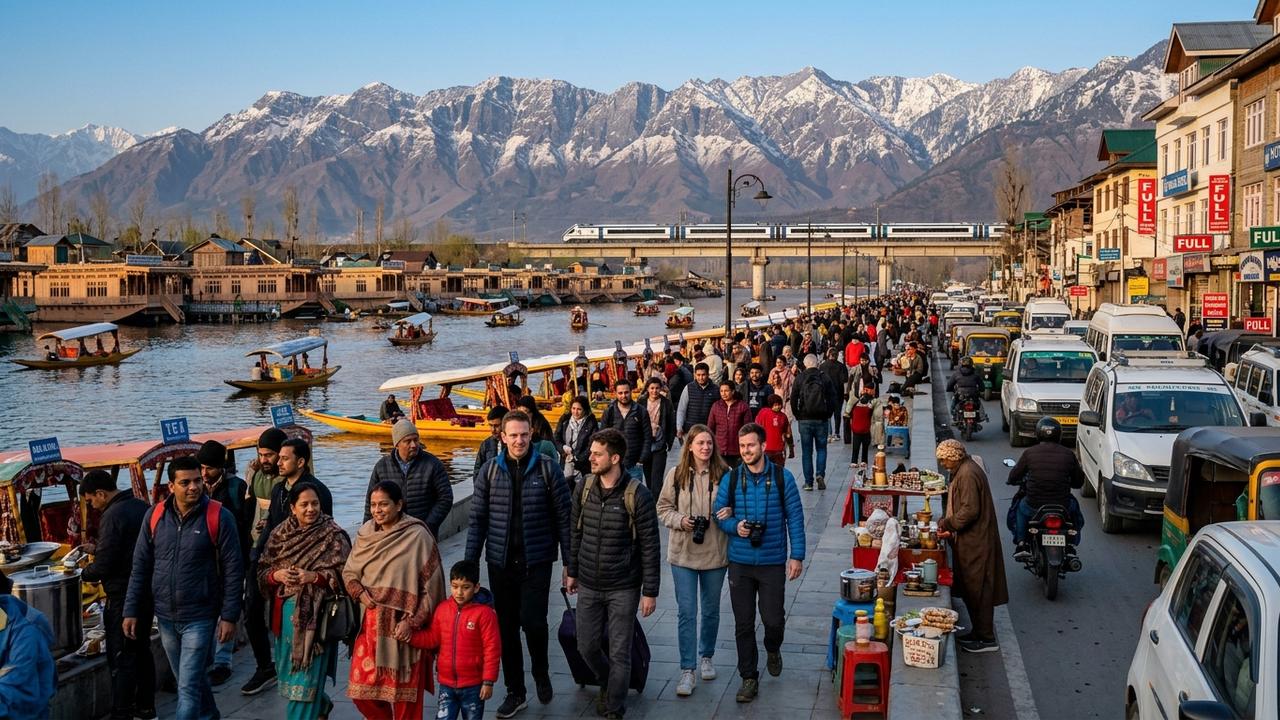
Image generated by AI
Kashmir’s summer visitor numbers have reached record levels, fueled by the rollout of the Vande Bharat Express and upgraded highway corridors that have drastically shortened travel times for domestic travelers. The improved accessibility has drawn first-time visitors, weekend getaway groups, and independent road trippers, pushing hotel and houseboat occupancy near capacity in Srinagar and Pahalgam. While demand remains robust, room tariffs have adjusted downward due to expanded budget inventory and evolving traveler spending habits. The influx of private vehicles has simultaneously triggered persistent bottlenecks along Srinagar’s primary tourist corridors, particularly around Dal Lake, testing the city’s traffic management capacity during peak daylight hours and holiday weekends.
Vande Bharat Rail Service Accelerates Domestic Travel
The introduction of the Vande Bharat Express has emerged as the primary catalyst for the region’s tourism acceleration. By cutting rail transit times and offering a more comfortable journey, the service has made the valley a viable destination for short-duration trips and weekend travel. Tourism operators report that the train not only attracts new demographics but also encourages repeat visits from neighboring states. Travelers are increasingly stitching together rail journeys with local road networks, allowing them to cover multiple destinations across Jammu and Kashmir within a single itinerary. This shift toward flexible, time-efficient routing has fundamentally altered traditional travel calendars, concentrating visitor peaks around weekends and public holidays.
Self-Drive Tourism and Pilgrimage-Leisure Linkages
A defining characteristic of this season’s visitor mix is the sharp rise in personal vehicle usage. Highways entering the valley are now regularly congested with cars and SUVs bearing registration plates from across India, reflecting a broader national trend toward self-guided road travel. Families and group travelers are prioritizing route flexibility, often extending their stays to accommodate spontaneous sightseeing.
Concurrently, religious pilgrimage circuits are merging with leisure travel. Srinagar’s proximity to major spiritual destinations has enabled visitors to transition directly from religious visits into nature and cultural tourism. This integrated travel model has lengthened average visitor stays and diversified spending across hospitality, transport, and local commerce, positioning the valley as a multi-experience destination rather than a single-stop retreat.
Srinagar Traffic Corridors Under Pressure
The convergence of tourist arrivals, private vehicles, and commercial transport has created visible strain on Srinagar’s urban road network. The Boulevard Road, which traces the perimeter of Dal Lake and functions as the city’s main tourist artery, experiences severe bottlenecks during midday sightseeing windows and holiday periods. The mix of private cars, rental vehicles, and tourist buses frequently halts traffic flow, while local commuting routes face secondary delays.
Municipal authorities have deployed additional traffic management protocols and are evaluating dynamic routing systems to mitigate disruptions. However, hospitality operators, transport providers, and tour coordinators confirm that congestion remains a recurring operational hurdle. The pressure highlights the need for coordinated infrastructure planning that can accommodate seasonal visitor surges without compromising urban mobility.
Hospitality Occupancy and Tariff Adjustments
Accommodation demand across Srinagar and Pahalgam has reached approximately 90 percent, reflecting the season’s strong visitor base. Despite high occupancy, average room rates have declined compared to previous years. The downward correction stems from two primary market forces: a measurable increase in budget accommodations and homestays, and a shift in traveler spending behavior toward value-conscious bookings.
Premium properties have also adjusted their pricing structures to remain competitive, offering more flexible rate tiers to capture cost-sensitive leisure travelers. While occupancy metrics remain strong, the hospitality sector is navigating a more competitive landscape that rewards operational efficiency and diversified inventory over premium-only positioning.
Economic Footprint and Infrastructure Balance
Tourism continues to anchor the regional economy, contributing roughly seven percent to the Union Territory’s gross domestic product. The sector sustains approximately half a million livelihoods spanning hospitality, ground transport, handicrafts, and allied services. The current visitor surge reinforces the valley’s status as a cornerstone of India’s domestic travel market.
The rapid growth, however, presents a dual challenge. While connectivity improvements and rising travel demand drive economic momentum, infrastructure bottlenecks and accommodation pricing shifts underscore the necessity for long-term urban and transport planning. Balancing visitor expansion with sustainable crowd management, efficient traffic routing, and balanced hospitality pricing will dictate the valley’s tourism trajectory in coming seasons.
Key Takeaways
- Vande Bharat Express connectivity has shortened travel times, driving a surge in weekend and short-haul domestic visitors.
- Self-drive tourism and pilgrimage-to-leisure extensions are lengthening average stays and diversifying regional spending.
- Hotel and houseboat occupancy in Srinagar and Pahalgam have reached approximately 90 percent.
- Room tariffs have corrected downward due to expanded budget inventory and shifting traveler spending patterns.
- Srinagar’s Boulevard Road and Dal Lake corridors face persistent traffic bottlenecks during peak sightseeing hours.
- Tourism contributes ~7% to the UT’s GDP and supports ~500,000 jobs across hospitality, transport, and allied sectors.
FAQ
Why have hotel rates in Kashmir decreased despite high occupancy? Rising competition from newly opened budget hotels and homestays, combined with travelers prioritizing value over premium pricing, has prompted widespread tariff adjustments across the hospitality sector.
How is the Vande Bharat Express affecting travel patterns in the valley? The train has made the region accessible for weekend trips and short itineraries, encouraging repeat visits from nearby states and enabling travelers to combine rail journeys with local road exploration.
Which areas in Srinagar experience the most traffic congestion? The Boulevard Road, which runs alongside Dal Lake, faces the heaviest bottlenecks due to the concentration of private vehicles, rental cars, sightseeing buses, and local commuter traffic during peak daylight hours.
Are religious pilgrimages influencing Kashmir’s tourism numbers? Yes. Many visitors complete religious visits at nearby spiritual sites and extend their journeys into Kashmir for leisure, effectively merging pilgrimage tourism with nature and cultural travel circuits.
What is the economic significance of tourism in the region? Tourism accounts for approximately seven percent of the Union Territory’s GDP and directly supports around 500,000 jobs in hospitality, transportation, handicrafts, and related service industries.
Related Travel Guides
Disclaimer
This article is for informational and educational purposes only. It does not constitute legal, financial, or professional advice. While we strive to provide accurate and up-to-date information, travel policies, regulations, and conditions change rapidly. Always verify information with official sources before making travel decisions. Nomad Lawyer makes no representations about the accuracy, reliability, completeness, or suitability of the information provided. Readers should consult qualified professionals for advice specific to their circumstances. The views expressed in this article are those of the author and do not necessarily reflect the views of Nomad Lawyer.
Kunal K Choudhary
Co-Founder & Contributor
A passionate traveller and tech enthusiast. Kunal contributes to the vision and growth of Nomad Lawyer, bringing fresh perspectives and driving the community forward.
Learn more about our team →