
South Korea Travel Chaos: Jeju Air Slashes Flights and Forces Unpaid Leave as Global Fuel Prices Skyrocket
Skyrocketing jet fuel prices have forced South Korea's Jeju Air to slash international routes and implement unpaid leave, causing severe disruptions for travelers heading to Southeast Asia.

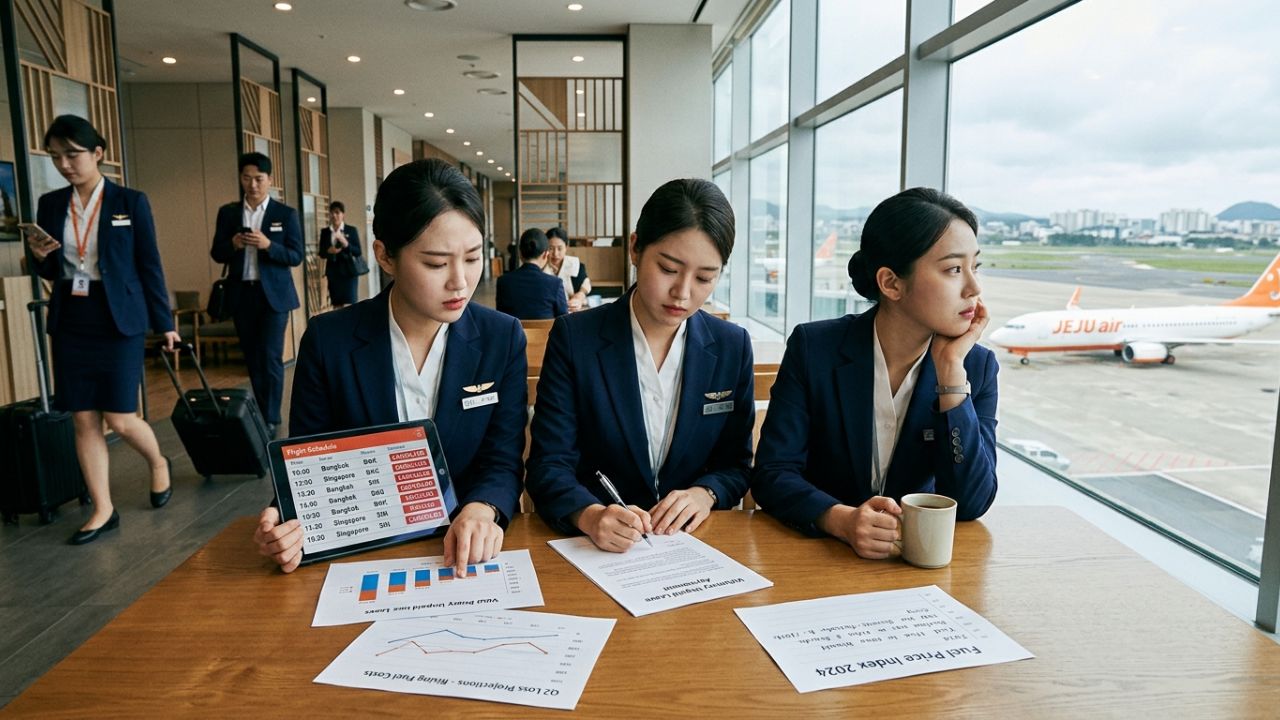
Image generated by AI
South Korea Travel Chaos: Jeju Air Slashes Flights and Forces Unpaid Leave as Global Fuel Prices Skyrocket
Published on May 13, 2026
The global energy crisis has officially grounded the budget travel boom in East Asia. In a drastic, unprecedented move that is sending shockwaves through the South Korean aviation industry, Jeju Air has announced sweeping voluntary unpaid leave programs for its flight crews. Driven by skyrocketing jet fuel prices directly linked to severe geopolitical instability in the Middle East, the low-cost carrier is currently hemorrhaging cash, projecting a massive ₩51.7 billion operating loss for the second quarter of 2026. As fuel costs mercilessly erode profit margins, the airline has been forced to slash critical international flight routes, leaving countless tourists scrambling for alternatives. For travelers planning a highly anticipated luxury escape from Seoul to popular destinations like Bangkok, Singapore, and Vietnam, this financial crisis translates directly into fewer flight options, sudden cancellations, and a dramatic surge in ticket prices. As the industry braces for prolonged turbulence, this massive disruption threatens to drastically reshape the landscape of South Korean tourism and affordable international travel.
Quick Summary:
- Jeju Air, South Korea's premier low-cost carrier, is implementing an emergency unpaid leave program for flight crews starting next month to combat severe financial losses.
- The drastic cost-saving measure is a direct response to skyrocketing global jet fuel prices triggered by ongoing geopolitical instability in the Middle East.
- The airline is currently projecting a massive ₩51.7 billion operating loss for Q2 2026, completely reversing its strong ₩64.4 billion Q1 profit.
- International travel is taking a massive hit, with Jeju Air abruptly slashing 4% of its international flights across May and June to rapidly conserve fuel.
- Popular tourist routes originating from Seoul to major Southeast Asian hubs, including Bangkok, Singapore, and Vietnam, are facing significant, highly disruptive flight reductions.
- Competitor airlines such as T’way Air and Aero K are rapidly adopting similar emergency measures, signaling a broader crisis across the entire South Korean budget aviation sector.
The Fuel Crisis Hits Home: Why Jeju Air is Bleeding Cash
In the highly competitive world of low-cost carriers (LCCs), profit margins are notoriously razor-thin. Jet fuel constitutes the single largest operating expense for these airlines. When global fuel prices surge—as they have relentlessly during the current Middle East crisis—the entire LCC business model begins to fracture.
Jeju Air's financial whiplash is staggering. After posting a robust ₩64.4 billion operating profit in Q1 from strong post-holiday travel demand, the sudden fuel price inflation has completely decimated their balance sheets. Aviation analysts note that budget carriers simply cannot pass the full burden of these skyrocketing costs onto their passengers; aggressively raising ticket prices would instantly kill travel demand among budget-conscious tourists. Caught in this impossible financial trap, Jeju Air has been forced to look inward, implementing highly controversial voluntary unpaid leave programs for its dedicated flight crews to stave off immediate liquidity challenges.
Grounded Dreams: How Flight Reductions Impact Southeast Asian Tourism
The operational fallout of this fuel crisis is directly impacting global tourists. To immediately curb their bleeding profit margins, Jeju Air has aggressively trimmed roughly 4% of its entire international flight schedule across May and June.
These cuts are not happening on obscure, low-traffic routes. The airline is actively reducing capacity on some of its most incredibly popular mid-haul and long-haul tourist routes. Passengers traveling from Seoul to vibrant cultural hotspots like Bangkok, the luxury hubs of Singapore, and the breathtaking coastal resorts of Vietnam are suddenly facing a massive shortage of available seats. Data from Korea’s transport regulators paints a grim picture: nearly 900 round-trip international flights have been cancelled or reduced statewide by South Korean carriers, severely dampening the region's summer tourism prospects.
The Domino Effect: Competitors T'way Air and Aero K Follow Suit
Unfortunately for the South Korean traveler, Jeju Air is not an isolated casualty in this aviation crisis. The harsh financial realities of the current fuel market are triggering a massive domino effect across the entire budget sector.
Fierce competitors, including T’way Air and Aero K, are also being forced into emergency cost-management mode. Both airlines are currently accepting unpaid leave applications or rapidly expanding similar operational restructuring programs to slash spending. Industry officials at the national aviation authority are warning that if fuel demand shocks persist, these unpaid leave programs will become widespread, structural realities. This industry-wide contraction means that tourists cannot simply switch to a rival budget airline to escape the cancellations—the entire LCC sector is currently operating in survival mode.
Pivoting to China: Airlines Scramble for Shorter, Cheaper Routes
In a desperate bid to maintain aircraft utilization without burning through expensive jet fuel, South Korean airlines are executing a massive strategic pivot. Instead of flying the longer, fuel-heavy routes down to Southeast Asia, carriers are aggressively prioritizing hyper-short-haul flights.
Aviation policy regulators have recently allocated new traffic rights aimed at heavily bolstering connections between South Korea and nearby destinations in China. By focusing on shorter distance routes, airlines can squeeze more flights out of a single tank of fuel, marginally improving their profit-per-flight metrics. For the adaptable tourist, this shift means that while a tropical escape to Vietnam may be prohibitively expensive or cancelled, highly affordable flights for an immersive cultural experience in Shanghai or Beijing are becoming significantly more accessible.
Guide for Travelers:
- Anticipate Hidden Fees: When booking any low-cost carrier out of South Korea, obsessively check the airline's official fuel surcharge notices. These surcharges are completely separate from the base ticket price and are currently surging at an alarming rate.
- Book Legacy Carriers for Stability: If you have strict, inflexible travel dates (like a honeymoon or business conference), strongly consider paying a premium to fly with a legacy carrier like Korean Air or Asiana Airlines, which have deeper financial reserves to absorb fuel shocks without abruptly cancelling flights.
- Pivot Your Destination: If flights to Singapore or Bangkok are cancelled or astronomically priced, adapt your itinerary. Leverage the new LCC route shifts and book an incredibly cheap, short-haul flight to a vibrant cultural hub in China or Japan.
- Book Early and Insure: Summer 2026 is going to be exceptionally volatile for budget travel in Asia. Book your flights immediately and purchase robust travel insurance that explicitly covers carrier-initiated cancellations and severe itinerary disruptions.
Related Travel Guides
- Southwest Airlines Boeing 737 Diverted to Tulsa After Terrifying Windshield Crack
- Lufthansa’s Historic ITA Airways Deal Unlocks Direct Flights to Italy
- Massive Aviation Chaos Hits China: 60 Flights Cancelled Across Major Hubs
The severe financial crisis currently gripping Jeju Air and the broader South Korean budget aviation sector is a stark reminder of how deeply interconnected global geopolitics are with our everyday travel dreams. As the devastating surge in jet fuel prices forces airlines to slash routes to breathtaking destinations like Bangkok and Vietnam, the era of incredibly cheap, highly reliable mid-haul travel in Asia is facing its greatest threat in years. While airlines desperately scramble to restructure routes and implement painful unpaid leave programs to survive the storm, travelers must adapt to a new reality of extreme flight volatility, surging surcharges, and sudden cancellations. For those determined to secure their ultimate luxury escape or immersive cultural adventure this summer, meticulous planning, immense flexibility, and a deep understanding of this ongoing aviation crisis are absolutely essential to navigating the turbulent skies ahead.
Disclaimer
This article is for informational and educational purposes only. It does not constitute legal, financial, or professional advice. While we strive to provide accurate and up-to-date information, travel policies, regulations, and conditions change rapidly. Always verify information with official sources before making travel decisions. Nomad Lawyer makes no representations about the accuracy, reliability, completeness, or suitability of the information provided. Readers should consult qualified professionals for advice specific to their circumstances. The views expressed in this article are those of the author and do not necessarily reflect the views of Nomad Lawyer.
Kunal K Choudhary
Co-Founder & Contributor
A passionate traveller and tech enthusiast. Kunal contributes to the vision and growth of Nomad Lawyer, bringing fresh perspectives and driving the community forward.
Learn more about our team →