
Japan Tourism Enters A New Global Growth Era As WTTC JATA Alliance Drives Sustainable And Digital Travel Transformation
Japan Tourism Enters A New Global Growth Era As WTTC JATA Alliance Drives Sustainable And Digital Travel Transformation

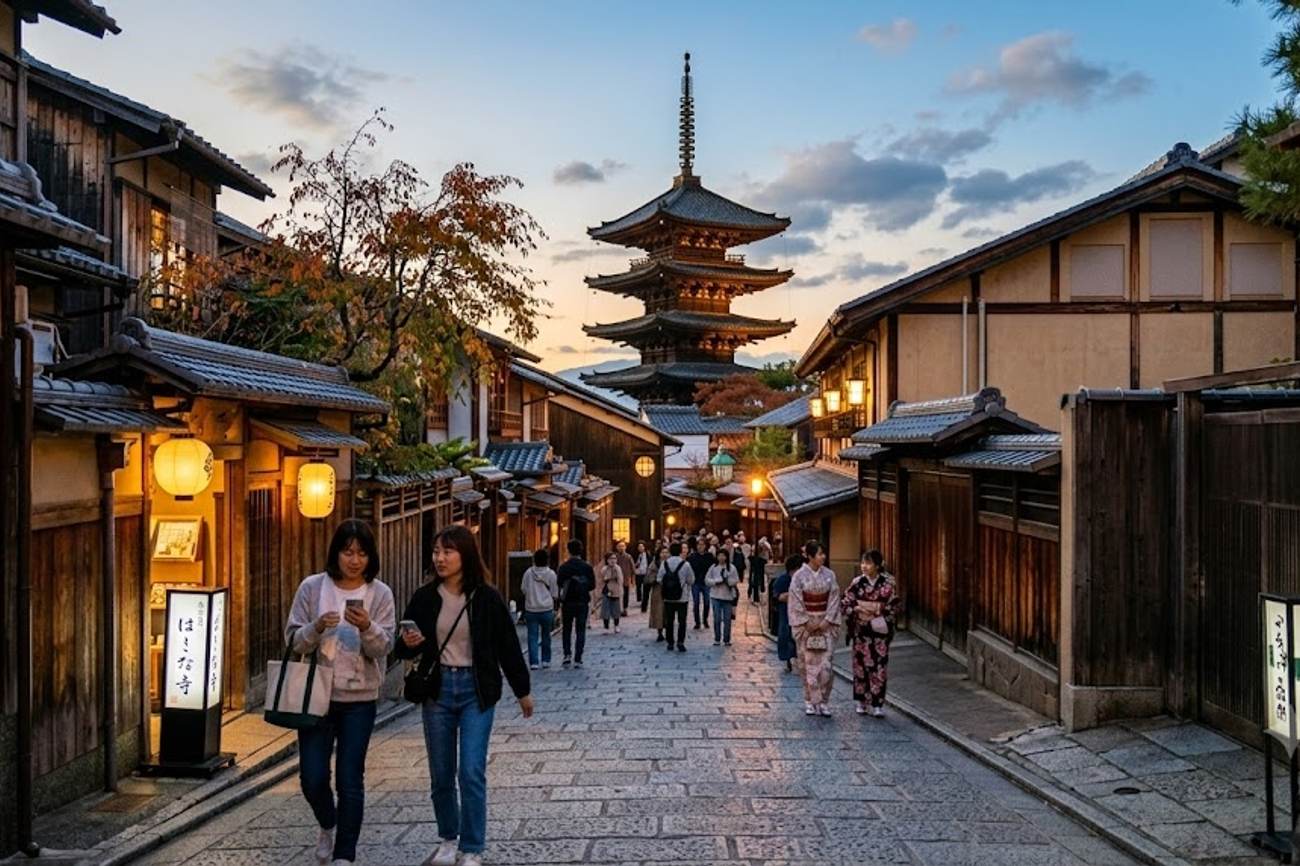
Image generated by AI
A US$343.1 billion economic contribution from the travel and tourism sector in 2025 has cemented Japan’s position as the fifth-largest tourism economy on the planet. This massive financial influx represents 8.1% of the nation's total GDP, a figure that underscores a strategic pivot in how the Japanese state views international arrivals—not merely as guests, but as a primary engine for national economic resilience. While the broader Japanese economy grew by a modest 1.1% in 2025, the tourism sector surged by 4.6%, outperforming the general economy by a factor of four.
The Institutional Pivot Toward Digital Sovereignty
The scale of this growth has necessitated a fundamental restructuring of Japan's tourism infrastructure. Between September 24 and 27, during the 2026 Tourism Expo Japan in Tokyo, a pivotal Memorandum of Understanding (MOU) was signed between the World Travel & Tourism Council (WTTC), the Japan Association of Travel Agents (JATA), and the TEJ Executive Committee. This agreement is not a mere formality; it is a blueprint for the digital transformation of an industry struggling to keep pace with its own success.
For decades, Japan's tourism model relied on high-touch, human-centric service. However, the collision of an aging domestic workforce and a record-breaking influx of foreigners has created an operational ceiling. The MOU aims to break this ceiling by integrating artificial intelligence and automation into the core of the visitor experience. By shifting toward "smart tourism," Japan intends to mitigate the friction of international travel—specifically language barriers and logistical bottlenecks—without requiring a proportional increase in human labor, which the current demographic trend makes impossible.
Quantifying the Shift to High-Value Tourism
The most telling metric of Japan's current trajectory is not the number of arrivals, but the spending per head. The transition from a volume-based model to a value-based model is evident when comparing pre-pandemic benchmarks to 2025 performance. In 2019, the average international visitor spent approximately ¥158,000; by 2025, that figure climbed to approximately ¥229,000.
This increase in individual expenditure has propelled Japan from the 15th largest market for international visitor spending in 2019 to the 7th largest globally in 2025. Total international visitor spending reached US$63.3 billion in 2025, an 8.8% year-on-year increase that sits 74.9% above 2019 levels.
The following data illustrates the aggressive growth trajectory of the sector:
| Year | International Visitor Arrivals | International Visitor Spending |
|---|---|---|
| 2019 | 31.88 million | ¥4.81 trillion |
| 2024 | 36.87 million | ¥8.13 trillion |
| 2025 | 42.68 million | ¥9.46–9.5 trillion |
The composition of this spending reveals where the "high-value" shift is most pronounced. Accommodation now accounts for 36.6% of total expenditure, followed by shopping at 27% and food and dining at 21.9%. This suggests a move away from budget backpacking toward luxury stays and premium gastronomic experiences.
Expert Analysis: The Logistics of "Over-Tourism" and AI Mitigation
From an editorial perspective, the WTTC-JATA-TEJ partnership is a reactive necessity rather than a proactive choice. When international arrivals hit 42.68 million in 2025—shattering the 2019 record of 31.88 million—the physical infrastructure of cities like Kyoto and Tokyo reached a breaking point. The "congestion" mentioned in the MOU is a polite industry term for systemic failure in crowd management and resource allocation.
The World Travel & Tourism Council (WTTC) and the Japan Association of Travel Agents (JATA) have formed a strategic alliance to drive sustainable and digital travel transformation in Japan, marking a new era of global growth for the country's tourism industry. This partnership aims to promote innovative and environmentally-friendly tourism practices, as outlined on the WTTC website. By leveraging technology and data-driven insights, Japan seeks to enhance the overall travel experience and attract more international visitors.
For travelers booking trips to Japan, the direct consequence of this policy shift will be a visible "digital wall" between the visitor and the service provider. The push for AI-powered travel services, automated check-ins, and multilingual digital platforms is designed to remove the human element from routine transactions. This allows the dwindling number of available staff to focus on high-value, complex guest needs while the "mass market" is managed by algorithms.
Furthermore, the strategic focus on "Regional Tourism Development" is a calculated attempt to decentralize the economy. By pushing visitors away from the "Golden Route" (Tokyo-Osaka-Kyoto) and toward rural prefectures, Japan is attempting to prevent the collapse of local ecosystems under the weight of over-tourism. The pricing pressure this creates means we will likely see a rise in "premium" regional experiences—curated, high-cost tours of rural Japan designed to attract the same high-spending demographic that currently crowds Tokyo.
The reliance on specific source markets also creates a geopolitical vulnerability. With Chinese visitors generating over ¥2 trillion, Taiwanese visitors contributing approximately ¥1.2 trillion, and US visitors adding around ¥1.1 trillion, Japan’s tourism GDP is heavily tied to the diplomatic stability of these three nations. Any shift in visa policy or geopolitical tension could result in a multi-trillion yen deficit overnight.
Key Takeaways
- Economic Dominance: Tourism now accounts for 8.1% of Japan's GDP, contributing US$343.1 billion in 2025 and ranking Japan as the 5th largest tourism economy globally.
- Spending Surge: Average visitor spending rose from ¥158,000 (2019) to ¥229,000 (2025), signaling a successful pivot toward high-net-worth travelers.
- Arrival Records: 2025 saw a historic peak of 42.68 million international visitors, a significant jump from the 31.88 million recorded in 2019.
- Tech Integration: To combat labor shortages and aging populations, Japan is implementing AI-driven navigation, automated check-ins, and data-driven management tools.
- Decentralization Strategy: New policies aim to divert traffic from Tokyo, Osaka, and Kyoto toward regional areas to ensure sustainable growth and cultural preservation.
FAQ: Japan Tourism 2026
Will it be harder to visit popular Japanese cities due to over-tourism? While cities remain open, you will notice more "smart management" tools. The government is actively incentivizing travel to regional areas to reduce congestion in Tokyo and Kyoto, which may result in more curated or restricted access to certain heritage sites.
As Japan's tourism industry continues to grow, the country's major airports, such as Tokyo's Narita and Haneda airports, are expected to play a crucial role in facilitating the influx of international passengers. For the latest information on flight schedules, airport facilities, and travel requirements, visitors can check the official Japan National Tourism Organization website. With its rich culture, vibrant cities, and stunning natural landscapes, Japan is poised to become one of the world's most popular tourist destinations, offering a unique and unforgettable experience for travelers from around the globe.
How is AI changing the visitor experience in Japan? Expect a significant increase in automated kiosks, AI-driven translation apps integrated into public transport, and digital concierge services. These tools are being deployed to maintain service quality despite a shrinking hospitality workforce.
Why has the cost of visiting Japan increased? Japan is intentionally shifting toward "high-value tourism." By targeting travelers who spend more on premium accommodation (36.6% of spending) and luxury dining, the country aims to increase economic impact without needing to infinitely increase the number of arrivals.
Which countries are the biggest contributors to Japan's tourism economy? China is the largest contributor, generating over ¥2 trillion in spending, followed by Taiwan (¥1.2 trillion) and the United States (¥1.1 trillion).
The era of the accidental tourist in Japan is ending; the era of the algorithmically managed luxury guest has arrived.
Tags: WTTC, JATA, Tourism Expo Japan 2026, Japan GDP 2025, High-Value Tourism Japan, Digital Transformation Tourism
Related Travel Guides
- Phuket’s Le Méridien Mai Khao Beach Resort Launches Unique Festive Experience Inspired by Local Heritage and Traditions
- Barbados Redefines Global Travel by Rejecting Mass Tourism for High-Yield Aspirational Growth
- Malaysia Prepares For 2026 Harvest Moon As Spectacular Night Sky Event Boosts Celestial Travel Experiences
Disclaimer
This article is for informational and educational purposes only. It does not constitute legal, financial, or professional advice. While we strive to provide accurate and up-to-date information, travel policies, regulations, and conditions change rapidly. Always verify information with official sources before making travel decisions. Nomad Lawyer makes no representations about the accuracy, reliability, completeness, or suitability of the information provided. Readers should consult qualified professionals for advice specific to their circumstances. The views expressed in this article are those of the author and do not necessarily reflect the views of Nomad Lawyer.
Raushan Kumar
Founder & Lead Developer
Full-stack developer with 11+ years of experience and a passionate traveller. Raushan built Nomad Lawyer from the ground up with a vision to create the best travel and law experience on the web.
Learn more about our team →