
Japan Travel Chaos: Thousands Stranded as Toki Air Triggers Severe July Flight Cancellations Across Niigata, Sapporo, and Nagoya
As severe operational constraints paralyze regional Japanese expansions, Toki Air triggers massive travel chaos by abruptly cancelling selected July flights across Niigata, Nagoya, and Sapporo.

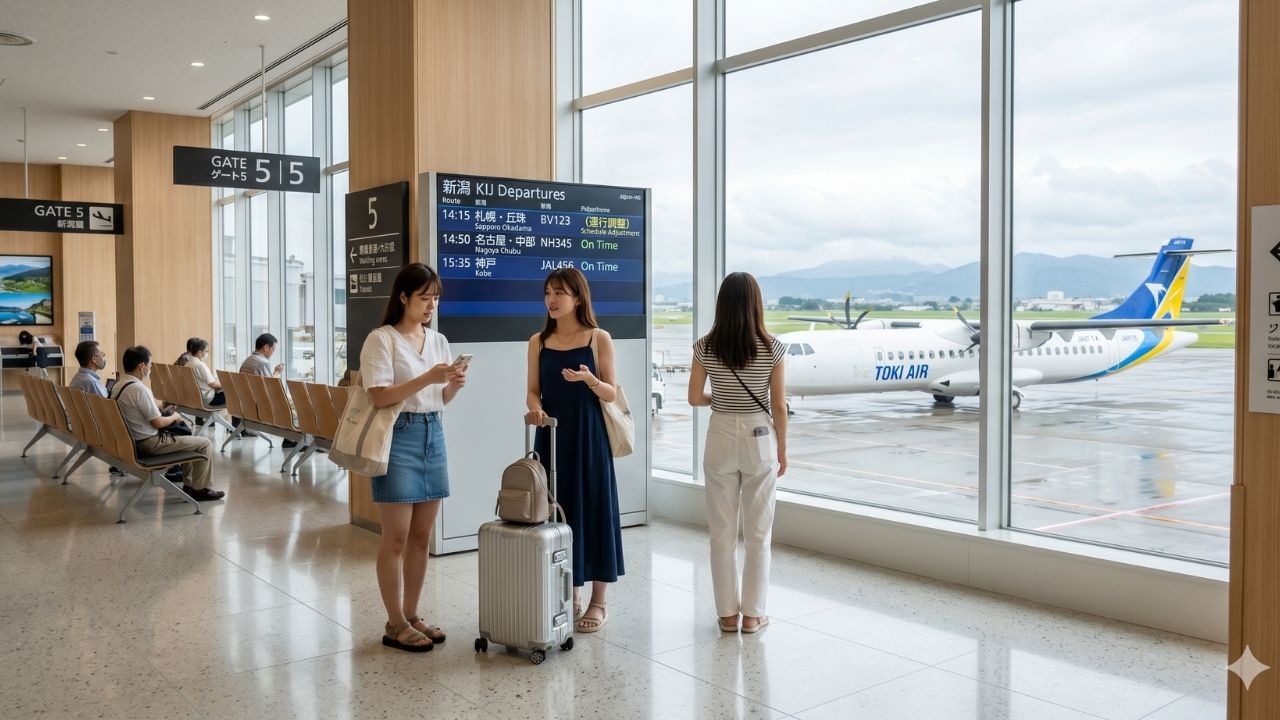
Image generated by AI
A Massive Strategic Recalibration Plunges Japanese Commuters into Gridlock
While massive sectors of the global passenger network frequently battle highly unpredictable weather events, synchronized logistical bottlenecks and sudden airline network halts remain the absolute most terrifying catalysts for sudden, unmanageable terminal congestion. Delivering highly urgent, breaking airline news, verified Japanese aviation trackers confirm that a catastrophic operational adjustment has actively generated severe, cascading travel chaos across regional Japan. Today, June 1, 2026, severe travel distress forcefully emerged as Niigata-based regional carrier Toki Air abruptly announced massive flight cancellations and severe schedule halts, brutally rewriting its highly publicized summer travel programme.
While desperate travelers already attempt to navigate sudden, terrifying airport disruptions caused by massive summer tourist volumes, these exclusive aviation updates reveal that this localized network failure is aggressively rippling across the nation's regional network. Thousands of highly vulnerable families, students, business travellers, and tourists who strictly depend on smaller regional air links have been brutally stranded by the sudden cancellation of mid-week flights. The widespread issues highlight exactly how quickly fleet management constraints can severely cripple an incredibly fragile interconnected air network, forcing smaller carriers to violently ground operations and completely destroying the summer itineraries of thousands of domestic passengers navigating Japan.
Expanded Overview: The Scale of the Aviation Crisis
The sudden, highly publicized execution of this operational meltdown serves as an undeniable example of how rapidly a regional transit strategy can completely disintegrate under logistical pressure. The airline has officially confirmed that vital services operating under its Tuesday, Wednesday, and Thursday pattern will definitively not be set between 1 July and 16 July 2026.
This devastating decision aggressively creates exactly eight severely affected travel days during the absolute peak of the summer booking period. The massive cancellation block brutally affects thousands of passengers attempting to travel from Niigata to Sapporo Okadama, Nagoya Chubu, and Kobe. As Toki Air frantically works to balance safe operations with passenger demand, desperate travelers are left scrambling. The airline’s deployment strategy now heavily emphasises brutal flexibility, ensuring that their limited resources are strictly aligned with operational feasibility, violently abandoning vital mid-week routes that suddenly appear logistically unviable.
Section-Wise Breakdown of the Connectivity Crisis
The Terrifying July Gap
The airline has officially framed the early July adjustment as a critical component of its safe operating structure, proving this is far more than a simple timetable change. For a regional carrier, stable operations are absolutely vital; even a short disruption can aggressively sever several city pairs.
The violently affected period brutally covers the first half of July. The calendar pattern means the completely non-operating Tuesday to Thursday dates specifically fall on 1, 2, 7, 8, 9, 14, 15, and 16 July. These are the eight exact days most relevant for frantic travellers checking early third-quarter plans. Fortunately, Toki Air has already placed Monday, Friday, Saturday, and Sunday services on sale for the 1 July to 31 August 2026 period, desperately offering a partial lifeline.
Routes Severely Affected
Toki Air’s highly volatile summer network remains totally focused on regional mobility from its Niigata fortress hub. The airline strictly lists services linking Niigata with Sapporo Okadama, Niigata with Nagoya Chubu, Niigata with Kobe, and Nagoya Chubu with Sapporo Okadama as being directly trapped in this operational web.
When the Tuesday to Thursday additional schedule finally resumes from 21 July, the vital Niigata to Sapporo Okadama service will officially depart at 10:15 and arrive at 11:50. The crucial return flight leaves Sapporo Okadama at 12:20 and violently touches down in Niigata at 14:00. Simultaneously, the Niigata to Nagoya Chubu flight will depart at 14:45 and arrive at 16:05, with the return leaving Nagoya at 16:40 to reach Niigata at 17:50.
Verified Toki Air Flight Details & Economics
To fully comprehend the massive operational scale and strategic deployment dictating this highly volatile network adjustment, the following table explicitly details the exact operational metrics, timings, and fares officially recorded for the revised network:
| Route / Metric | Verified Data | Time / Fee |
|---|---|---|
| Cancelled Dates (Tue-Thu) | July 1, 2, 7, 8, 9, 14, 15, 16 | N/A |
| Niigata to Sapporo Okadama | Resumes July 21 (Tue-Thu) | Departs 10:15 / Arrives 11:50 |
| Sapporo Okadama to Niigata | Resumes July 21 (Tue-Thu) | Departs 12:20 / Arrives 14:00 |
| Niigata to Nagoya Chubu | Resumes July 21 (Tue-Thu) | Departs 14:45 / Arrives 16:05 |
| Nagoya Chubu to Niigata | Resumes July 21 (Tue-Thu) | Departs 16:40 / Arrives 17:50 |
| Niigata to Nagoya Fare | One-way Starting Price | From 7,700 yen |
| Chubu Airport Charge | Adult Facility Charge | 440 yen |
| Kobe Airport Charge | Adult Facility Charge | 300 yen |
| Manual Booking Fee | Via Phone/Counter | 3,000 yen (per person, per sector) |
Passenger Impact: Navigating the Financial Fallout
For the modern domestic commuter attempting to navigate this highly volatile Japanese corridor, the passenger impact of this massive operational meltdown is completely exhausting. Massive flight cancellations are incredibly frustrating, but knowing the strict logistical steps to take can heavily minimize terminal stress.
- Avoid Booking Fees: Toki Air accepts bookings through its website entirely fee-free. However, desperately booking via the support centre and airport counters will aggressively incur a manual booking fee of exactly 3,000 yen per person per sector.
- Understand Airline-Controlled Cancellations: For airline-controlled cancellations—including these massive schedule halts—the airline legally states that passengers may receive a transfer to another Toki Air flight or a complete fare refund.
- Observe Strict Deadlines: The airline strictly mandates that change fees and cancellation fees absolutely do not apply in these cases. However, for self-operated replacement flights, passengers must complete procedures within ten days from the scheduled departure date. Refund procedures absolutely must be completed within thirty days.
Industry Analysis: A Delicate Test for Regional Aviation
From a macroeconomic and industry operations perspective, the localized cancellations highlight a massive, terrifying truth: the Japanese regional aviation system continues to face severe operational vulnerabilities. Large airlines can often easily absorb massive changes across bigger fleets. Smaller regional airlines like Toki Air violently face a completely different challenge because each aircraft and each route inherently carries massive network weight.
By placing Niigata strictly at the absolute centre of its operations, Toki Air attempts to bypass Japan’s largest aviation hubs. However, for local tourism businesses—including hotels, transport operators, and restaurants—this sudden air access gap matters immensely. Predictable air schedules are vital, and a massive mid-week schedule gap aggressively destroys careful travel planning for inbound tourists attempting to connect towards Hokkaido or central Japan.
Conclusion: A Highly Volatile Summer Crisis
The massive, highly publicized operational failure of the Toki Air summer schedule represents a severe, terrifying crisis for the Japanese regional travel sector. By actively forcing passengers to endure 8 massive days of flight cancellations across Niigata, Sapporo, and Nagoya, the airline industry guarantees an incredibly stressful, highly exhausting summer journey. As the operational teams frantically battle this massive scheduling gridlock, passengers are heavily urged to aggressively monitor their bookings, strictly demand their ticket refunds within thirty days, and fully expect massive, cascading flight disruptions amidst unprecedented Japanese travel chaos.
Key Takeaways
- Massive Schedule Halts: Toki Air has abruptly cancelled all Tuesday, Wednesday, and Thursday flights between July 1 and July 16, 2026.
- 8 Travel Days Destroyed: The cancellations directly impact flights on July 1, 2, 7, 8, 9, 14, 15, and 16.
- Critical Routes Severed: The affected routes fiercely link Niigata with Sapporo Okadama, Nagoya Chubu, and Kobe.
- Resumption Timeline: The mid-week schedule will officially and aggressively resume beginning July 21, 2026.
- Passenger Survival Tactics: Travelers are aggressively urged to demand their rightful transfers or refunds within the strict 30-day window and absolutely avoid the 3,000 yen manual booking fee by utilizing web services.
Disclaimer: The specific cancellation metrics, delayed flight timelines, and airline operational policies presented in this report are based on verified transit tracking data regarding the Toki Air network disruption on June 1, 2026. Official airline routing, terminal congestion levels, and final ticket rebooking options are highly volatile and subject to continuous, real-time update based on active carrier operational directives and regional safety constraints. Prospective passengers are urgently advised to fiercely monitor their specific booking status and verify active flight schedules directly via the airline's official portal prior to booking a flight.
Disclaimer
This article is for informational and educational purposes only. It does not constitute legal, financial, or professional advice. While we strive to provide accurate and up-to-date information, travel policies, regulations, and conditions change rapidly. Always verify information with official sources before making travel decisions. Nomad Lawyer makes no representations about the accuracy, reliability, completeness, or suitability of the information provided. Readers should consult qualified professionals for advice specific to their circumstances. The views expressed in this article are those of the author and do not necessarily reflect the views of Nomad Lawyer.
Kunal K Choudhary
Co-Founder & Contributor
A passionate traveller and tech enthusiast. Kunal contributes to the vision and growth of Nomad Lawyer, bringing fresh perspectives and driving the community forward.
Learn more about our team →