
Asia Travel Chaos: Severe Storm Jangmi Triggers Massive Flight Cancellations Across Vietnam Airlines, Vietjet, and JAL, Stranding Thousands
As destructive typhoon winds violently paralyze the Japanese transport grid, major Asian carriers are forced to aggressively cancel and delay hundreds of international flights, plunging passengers into severe travel chaos.

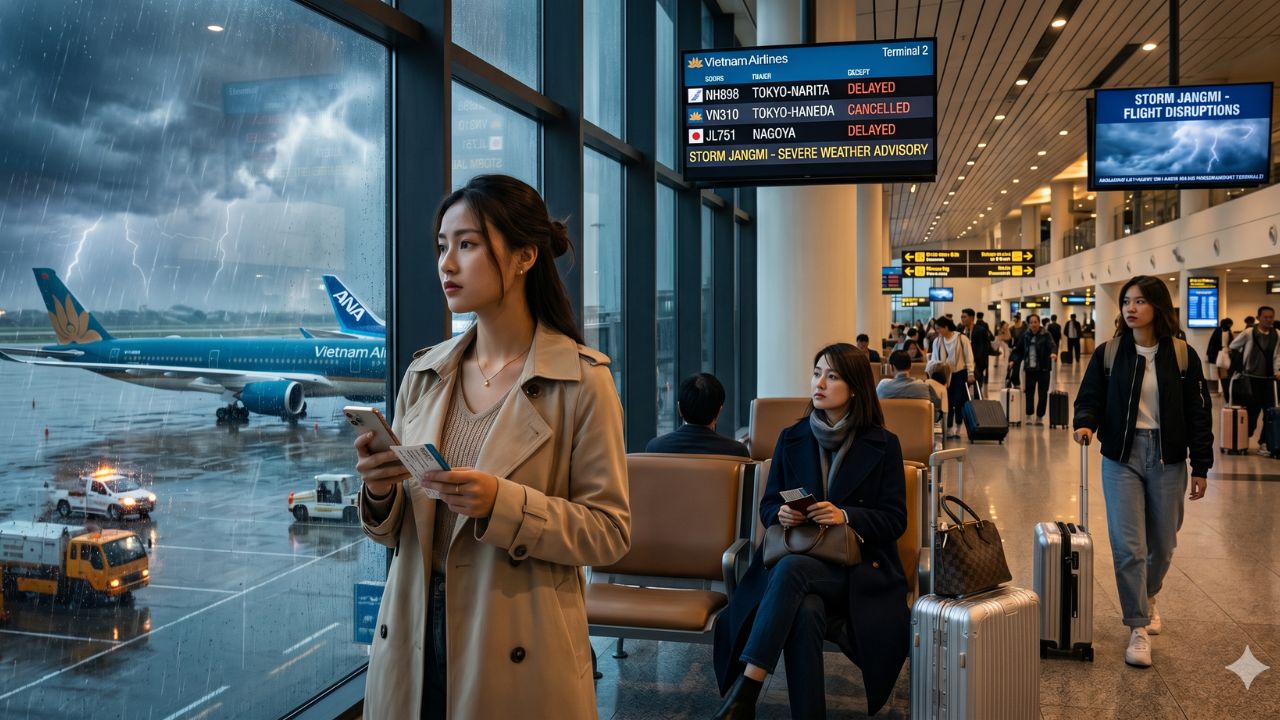
Image generated by AI
A Massive Meteorological Meltdown Paralyzes Asian Hubs
While massive sectors of the global passenger network frequently battle highly unpredictable labor shortages, synchronized logistical bottlenecks, and horrific commercial fleet constraints, severe, highly destructive cyclonic weather events remain the absolute most terrifying catalyst for cascading airport disruptions. Delivering highly urgent, breaking airline news, verified East Asian aviation trackers confirm that a catastrophic meteorological breakdown has actively generated severe travel chaos across the massive Japanese and Vietnamese aviation networks. Today, June 3, 2026, severe terminal distress forcefully emerged as the incredibly destructive Storm Jangmi violently lashed Japan, forcing Vietnam Airlines, Vietjet Air, Japan Airlines (JAL), and ANA to frantically execute massive flight cancellations and severe delays across Haneda, Narita, and Nagoya airports.
While desperate travelers usually attempt to navigate sudden, terrifying airport disruptions caused by isolated technical failures, these exclusive aviation updates reveal a highly systemic, incredibly destructive capacity crisis triggered by pure atmospheric violence. Verified meteorological data confirms that this massive operational strain is a direct result of severe winds and torrential rainfall aggressively shutting down Japanese airspace. This horrific logistical overload is actively destroying the operational efficiency of Japan's primary gateways, violently stranding thousands of international tourists from Japan, China, South Korea, Taiwan, the US, and Australia, and explicitly forcing legacy carriers to completely abandon their summer flight schedules to protect passenger lives.
Expanded Overview: The Scale of the Transcontinental Crisis
The sudden, highly publicized execution of this massive regional operational lockdown serves as an undeniable example of how rapidly a heavily reliant transit network can completely disintegrate under extreme weather pressure. The massive disruption has explicitly drawn international attention to the incredibly complex, highly fragile operational ecosystem that links Vietnam's booming tourism hubs to Japan's major economic centers. For a massive continental region heavily reliant on incredibly robust, high-frequency inbound flight schedules, a massive cyclone requires incredibly precise crisis management by airport authorities to prevent total terminal collapse and aircraft damage.
The terrifying reality of this crisis is found in the sheer volume of high-capacity aircraft abruptly grounded by civil aviation authorities. Government statistics shockingly reveal that almost 900 flights have been completely canceled across Japan. Furthermore, the violent storm has forced the total suspension of high-speed rail segments, violently knocked out power to tens of thousands of homes, and triggered severe evacuation advisories across southern and central prefectures. The Japan Meteorological Agency is actively forecasting massive flooding and the catastrophic loss of road infrastructure as Storm Jangmi violently tracks toward the massive population centers of Tokyo and Kyushu, ensuring that the localized ripple effects will violently spiral into a massive, unmanageable wave of terminal congestion nationwide.
Section-Wise Breakdown of the Connectivity Crisis
The Vietnam Airlines and Vietjet Meltdown
Japan's violently deteriorating airspace has caused severe, cascading delays to massive volumes of flights scheduled to operate between Hanoi and Tokyo on June 3. Vietnam Airlines was forcefully compelled to delay all flights departing from Vietnam to Narita and Nagoya that were originally scheduled for just past midnight; these will now theoretically depart later in the morning, weather permitting. Furthermore, the highly critical 08:05 flight from Hanoi to Haneda was violently delayed by two hours. Consequently, all return legs from Narita, Haneda, and Nagoya back to Vietnam are facing massive, compounding delays. Vietjet Air took even more aggressive action, completely suspending and canceling its highly lucrative round-trip flight from Hanoi to Tokyo (Narita), leaving hundreds of passengers instantly stranded.
The Domestic Japanese Gridlock (JAL and ANA)
As reported by elite aviation monitors, the flight disruptions violently infecting the Vietnamese carriers are merely symptomatic of the total collapse of Japan Airlines (JAL) and All Nippon Airways (ANA) operations. Due to the terrifying, rapidly deteriorating conditions from the typhoon, the number of canceled or severely delayed flights nationwide is officially forecast to breach 900 flights. These massive, highly destructive disruptions explicitly target departures and arrivals to and from the primary Tokyo airports, Osaka (Kansai), and Kyoto, while simultaneously destroying regional connections to and from Fukuoka and Okinawa.
The Economic Toll of Weather Disruptions
The timing of this terrifying meteorological collapse could not be worse for the Asian tourism market. International arrivals to Vietnam exploded in 2025, reaching a massive 19.1 million (a 20.9% increase), fueled heavily by North American and European demand. This massive economic surge violently continued into the first quarter of 2026, setting an all-time record of 6.76 million arrivals. Transport-related services actively contribute a massive 44% to Vietnam’s overall service economy, growing 27% year-on-year. Because East Asian airports like Narita and Haneda function as absolutely critical transit bottlenecks for international tourists heading to Vietnam, a complete lockdown in Japan violently severs this massive economic pipeline, instantly resulting in plunging hotel occupancies and ruined vacation expenditures across Southeast Asia.
Verified Storm Jangmi Disruption Data
To fully comprehend the massive operational scale and severe capacity strain dictating this highly volatile international crisis, the following tables explicitly detail the exact flight disruptions and weather impacts officially recorded on June 3, 2026:
Severe Airline Disruption Metrics (June 3, 2026)
| Affected Airline | Specific Route Impact | Operational Severity |
|---|---|---|
| Vietnam Airlines | Vietnam to Narita/Nagoya (Midnight) | Delayed to late morning; return legs delayed. |
| Vietnam Airlines | Hanoi to Haneda (08:05) | Violently delayed by two minimum hours. |
| Vietjet Air | Hanoi to Tokyo (Narita) Round-Trip | Completely Canceled / Suspended. |
| Japan Airlines (JAL) | Tokyo, Osaka, Kyoto, Fukuoka, Okinawa | Massive domestic cancellations. |
| ANA | Nationwide Japanese Network | Contributing to the ~900 canceled flight total. |
Storm Jangmi Infrastructure Impact
| Infrastructure Sector | Verified Damage / Disruption | Threat Level |
|---|---|---|
| Aviation | ~900 Flights Canceled Nationwide | Severe Terminal Gridlock |
| High-Speed Rail | Multiple Segments Suspended | Total Ground Transport Paralysis |
| Power Grid | Tens of Thousands Without Power | Rolling Blackouts in Central Prefectures |
| Civil Defense | Mass Evacuation Advisories Issued | Severe Flooding and Road Loss Forecasted |
Passenger Impact: Navigating the Meteorological Meltdown
For the modern commuter attempting to navigate this highly volatile East Asian network, the passenger impact of this massive storm surge is completely exhausting. Reliable scheduling is the absolute backbone of multi-city itineraries frequently booked by high-spending international tourists.
- Anticipate Overwhelming Terminal Congestion: Because 900 flights have been violently deleted from the Japanese schedules, tens of thousands of passengers are simultaneously dumped into terminal departure halls or trapped in transit hotels. Rebooking procedures will take exceptionally longer than usual.
- Do Not Go To The Airport: Passengers booked on Vietnam Airlines, Vietjet, JAL, or ANA must aggressively monitor official airline mobile apps. Traveling to a paralyzed airport without a confirmed, active boarding pass will result in being stranded in a highly dangerous weather zone.
- Expect Force Majeure Policies: Airlines legally classify typhoon disruptions as "Force Majeure" events. While airlines will prioritize safety and eventual rebooking, passengers must aggressively rely on their private travel insurance to cover the massive financial losses associated with emergency overnight lodging and ruined connecting flights to Australia, China, or the US.
Conclusion: A Highly Volatile Transit Crisis
The massive, highly publicized meteorological breakdown currently crushing Japan represents a severe, terrifying operational crisis for the Asian travel sector. By actively forcing millions of passengers through strained gateways during a deadly cyclone, this extreme weather volume guarantees an incredibly stressful, highly exhausting travel experience. As operational teams frantically battle sudden logistical puzzles and severe runway flooding, passengers are heavily urged to aggressively monitor their bookings, thoroughly verify their travel insurance policies, and fully expect massive, cascading flight disruptions amidst unprecedented Asian travel chaos.
Key Takeaways
- Massive Weather Meltdown: Storm Jangmi has violently struck Japan, triggering mass evacuations, power losses, and the complete suspension of high-speed rail networks.
- 900 Flights Canceled: The incredibly destructive typhoon has forced the cancellation of nearly 900 flights nationwide, completely paralyzing JAL and ANA operations across Tokyo, Osaka, and Okinawa.
- Vietnam Routes Severed: Vietnam Airlines has been forced into massive delays for its Hanoi-Tokyo routes, while Vietjet Air completely canceled its Narita services on June 3.
- Global Ripple Effects: The massive hub failure in Japan completely destroys the connecting itineraries of international tourists traveling from the US, Australia, China, and Taiwan to Southeast Asia.
- Passenger Survival Tactics: Travelers are aggressively urged to completely avoid traveling to the airport until their flight status is explicitly confirmed, and must immediately utilize travel insurance to secure emergency lodging as the storm tracks toward Tokyo.
Disclaimer: The specific cancellation metrics, delayed flight volumes, and airline operational failures presented in this report are based on verified meteorological data regarding Storm Jangmi in June 2026. Official airline routing, terminal congestion levels, and local civil defense evacuation policies are highly volatile and subject to continuous, real-time update based on active weather patterns, fluctuating runway safety, and sudden air traffic control ground stops. Prospective passengers are urgently advised to fiercely monitor their specific booking status and verify active flight schedules directly via the airline's official portal prior to airport arrival.
Disclaimer
This article is for informational and educational purposes only. It does not constitute legal, financial, or professional advice. While we strive to provide accurate and up-to-date information, travel policies, regulations, and conditions change rapidly. Always verify information with official sources before making travel decisions. Nomad Lawyer makes no representations about the accuracy, reliability, completeness, or suitability of the information provided. Readers should consult qualified professionals for advice specific to their circumstances. The views expressed in this article are those of the author and do not necessarily reflect the views of Nomad Lawyer.
Kunal K Choudhary
Co-Founder & Contributor
A passionate traveller and tech enthusiast. Kunal contributes to the vision and growth of Nomad Lawyer, bringing fresh perspectives and driving the community forward.
Learn more about our team →