
Heavy Rain Triggers Rail Chaos Across Japan and India
Severe rainfall triggers widespread train cancellations in Tokyo, Hokkaido, and West Bengal. Get the latest on route suspensions and travel alternatives.

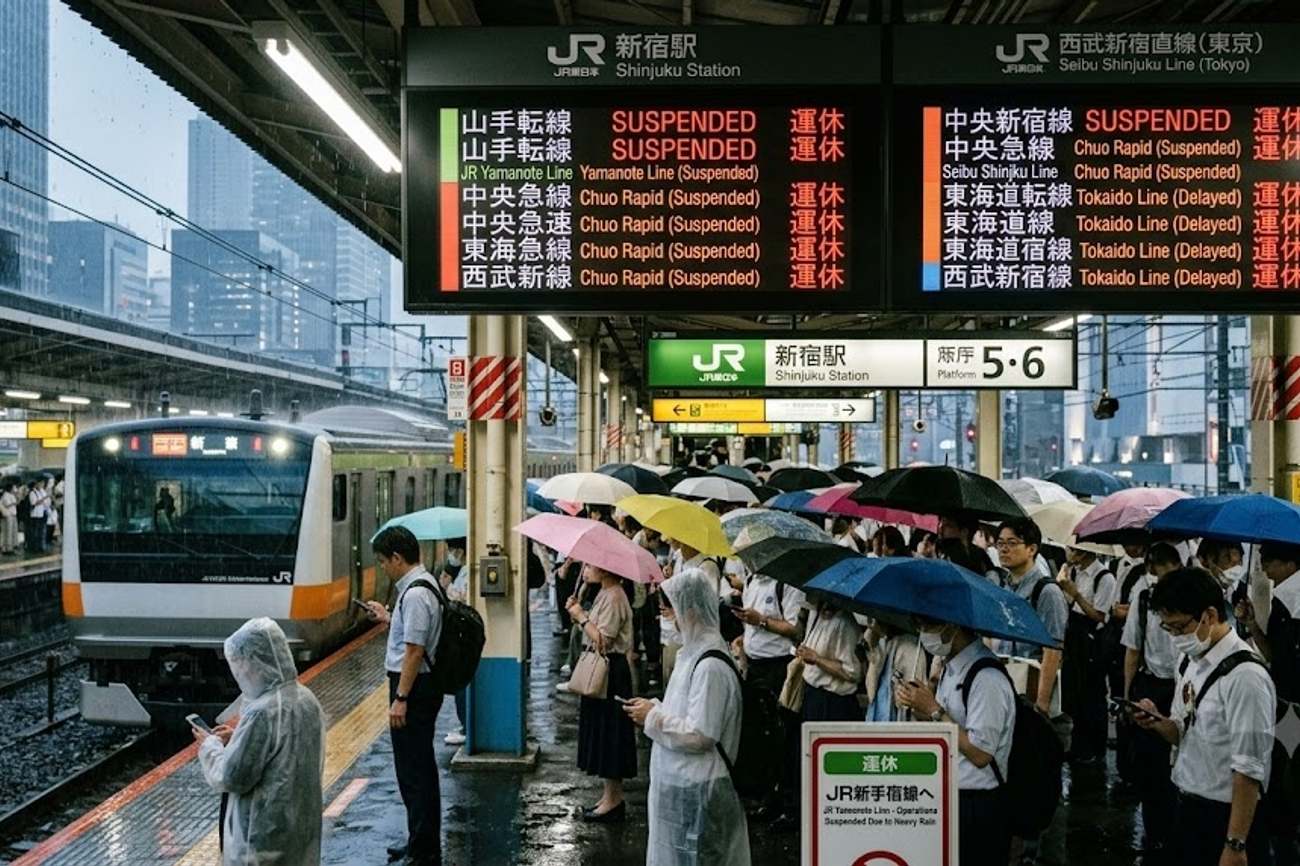
Image generated by AI
The Local Trend Revealed
A pattern of volatile weather is fundamentally altering the reliability of high-capacity rail networks in Asia. In Japan, the approach has shifted toward "preventative suspension," where operators halt services before disasters occur. This is evident in the Tokyo metropolitan region, where the Yamanote, Chuo, Keihin-Tohoku, Yokosuka, Tokaido, Ueno-Tokyo, Shonan-Shinjuku, Saikyo, Musashino, Keiyo, and Chuo-Sobu lines have all faced restrictions.
Specific regional outages have been more severe: the Mito Line (between Oyama and Tomobe) and the Suigun Line faced full-day suspensions, while the Hachiko Line (Yorii to Komagawa) and parts of the Koumi Line stopped services entirely without replacement buses.
In India, the impact is structural. In West Bengal’s Murshidabad district, intense rain caused soil subsidence beneath the tracks near New Farakka station. This physical failure damaged overhead electrical systems and the section between New Farakka and Tildanga, forcing the cancellation of 11 high-priority services, including the Vande Bharat, Shatabdi Express, and Darjeeling Mail.
Cultural & Environmental Value
For the visitor, the real impact is a lesson in regional resilience and infrastructure vulnerability. In Hokkaido, the suspension of the route between Oshamambe and Toyoura highlights the fragility of northern transit links. While the Hokuto limited express services remain cancelled, the reliance on the "Kutchan route" reveals a secondary, less frequent rail network that locals use during crises, though it remains impractical for most tourists.
In West Bengal, the shift toward "controlled speed" operations during restoration shows a cautious approach to safety. The surge in demand for road transport during these rail failures puts immense pressure on local bus networks, often leading to localized traffic gridlock that affects the broader community economy.
Visitor Insider Tips
- Tokyo Navigation: When major lines like the Yamanote or Chuo are delayed, avoid the main hubs. Use the "Japan Transit Planner" (Jorudan) or Google Maps in real-time, but prioritize walking between nearby wards if the delay is under 30 minutes to avoid station overcrowding.
- Hokkaido Alternatives: If the Sapporo–Hakodate rail is down, skip the Kutchan detour. Book highway buses or domestic flights immediately, as these sell out within hours of a rail suspension.
- West Bengal Etiquette: During rail disruptions, local bus terminals become extremely crowded. Be patient with drivers and avoid using unofficial "touts" who offer private rides at inflated prices during emergencies.
- Official Resources: Always cross-reference alerts via the Japan Meteorological Agency (JMA) and the Indian Railways (NTES) official apps rather than relying on social media rumors.
Tourism Outlook
These disruptions signal a long-term need for "climate-proof" tourism planning. The transition toward more frequent preventative closures in Japan suggests that travelers must now build "buffer days" into their itineraries during the rainy season. In India, the focus is shifting toward reinforcing embankment stability to protect the Vande Bharat and other premium corridors from soil subsidence.
Related Travel Guides
Disclaimer
This article is for informational and educational purposes only. It does not constitute legal, financial, or professional advice. While we strive to provide accurate and up-to-date information, travel policies, regulations, and conditions change rapidly. Always verify information with official sources before making travel decisions. Nomad Lawyer makes no representations about the accuracy, reliability, completeness, or suitability of the information provided. Readers should consult qualified professionals for advice specific to their circumstances. The views expressed in this article are those of the author and do not necessarily reflect the views of Nomad Lawyer.
Kunal K Choudhary
Co-Founder & Contributor
A passionate traveller and tech enthusiast. Kunal contributes to the vision and growth of Nomad Lawyer, bringing fresh perspectives and driving the community forward.
Learn more about our team →