
New Delhi-Patna Bullet Train: High-Speed Rail to Cut Travel to 4.5 Hours
India's proposed New Delhi-Patna high-speed rail corridor aims to reduce travel time from 12+ hours to 4.5 hours, linking major hubs in UP and Bihar.

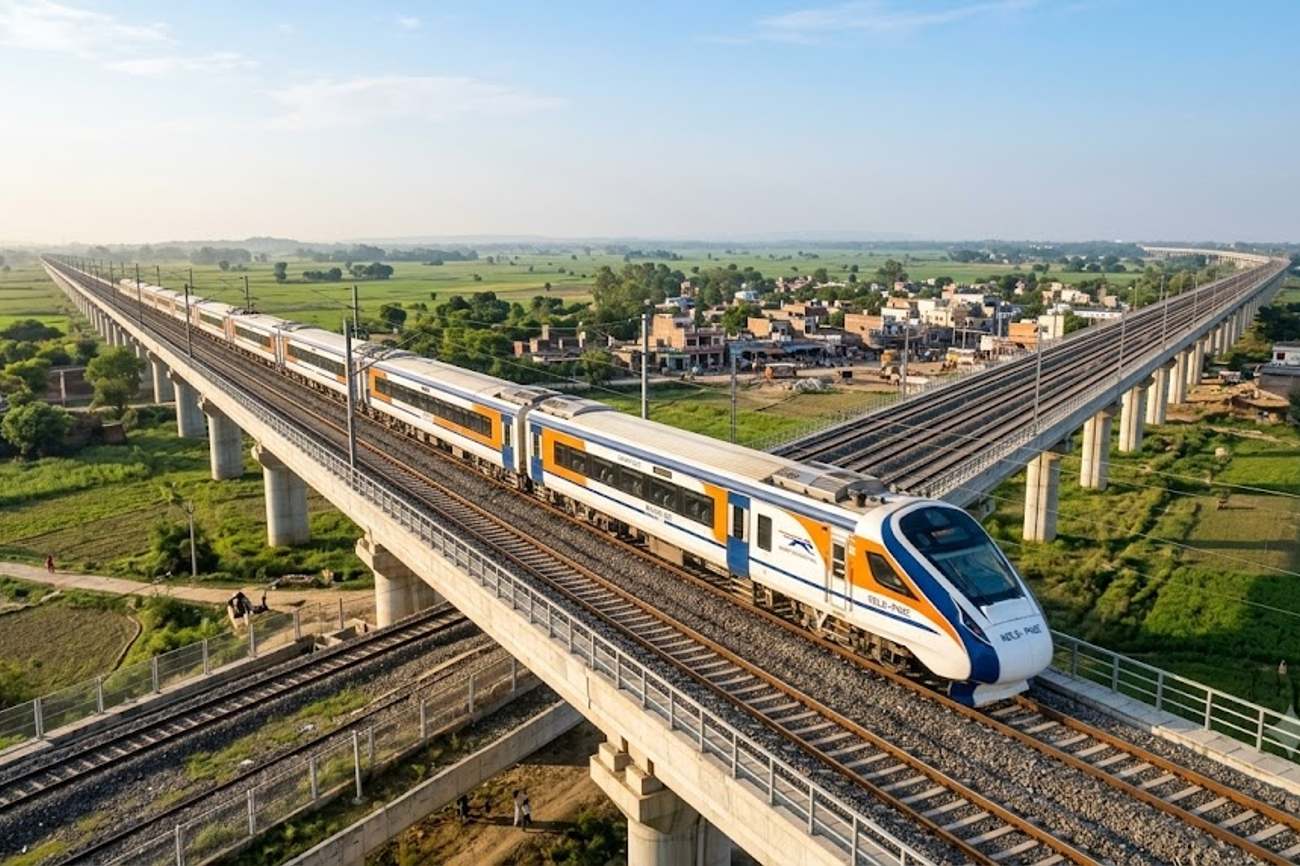
Image generated by AI
New Delhi-Patna High-Speed Rail to Transform Northern India Connectivity
India is advancing plans for a high-speed rail corridor connecting New Delhi and Patna. The proposed network intends to modernize travel across the densely populated Indo-Gangetic region, utilizing advanced rail technology to operate at speeds of 320 km/h, with design capacities reaching 350 km/h.
The corridor will span approximately 1,170 kilometres. Currently, passengers rely on conventional express trains, with transit times frequently ranging between 12 and 17 hours. The transition to a bullet train system would fundamentally alter the logistics of long-distance travel in northern India.
Key Project Specifications
- Total Distance: Approximately 1,170 km.
- Operating Speed: 320 km/h (Design speed up to 350 km/h).
- Primary Objective: Reduce Delhi-Patna transit from 12+ hours to ~4.5 hours.
- Lead Agency: National High Speed Rail Corporation Limited (NHSRCL).
- Key Transit Hubs: New Delhi, Agra, Kanpur, Lucknow, Prayagraj, Varanasi, and Patna.
Travel Time Comparison
Our analysis of the proposed route indicates a dramatic shift in regional accessibility. The following data outlines the projected time savings compared to current rail services:
| Route | Approx. Distance | Proposed HSR Time | Current Train Journey |
|---|---|---|---|
| Delhi–Agra | 200 km | ~58 minutes | 2–3 hours |
| Delhi–Kanpur | 455 km | ~1 hour 45 minutes | 5–6 hours |
| Delhi–Lucknow | 495 km | ~2 hours 12 minutes | 6–8 hours |
| Delhi–Prayagraj | 750 km | ~3 hours | 7–9 hours |
| Delhi–Varanasi | 945 km | ~3 hours 33 minutes | 8–11 hours |
| Delhi–Patna | 1,170 km | ~4 hours 30 minutes | 12–15 hours |
Why This Matters: Industry Analysis
From a logistical perspective, this corridor does more than just save time; it creates a "mega-region" effect. By reducing the Delhi-Varanasi leg to under 4 hours, the project effectively turns these distant cities into commutable hubs for high-value business and specialized services.
For the travel industry, the implications are twofold:
- Tourism Clustering: Currently, tourists often choose between Agra, Varanasi, or Patna due to grueling transit times. A 4.5-hour window allows for "multi-city circuit" itineraries, likely increasing hotel occupancy and spend in secondary cities like Prayagraj and Kanpur.
- Network Decongestion: The Delhi-Bihar route is notorious for extreme congestion during Diwali and Chhath Puja. By shifting premium long-distance traffic to a dedicated high-speed line, the Indian Railways can potentially reallocate existing tracks to improve the reliability of slower, essential passenger and freight services.
Industry Outlook
While the project remains in the planning stage under NHSRCL, its implementation would signal a shift toward a tiered rail system in India: high-speed for business and tourism, and conventional for mass transit. Investors and hospitality developers should monitor land use patterns around the proposed stations in Lucknow and Varanasi, as these are likely to become primary economic catalysts.
Internal Link Suggestions:
- Explore our analysis on [India's High-Speed Rail Infrastructure Trends].
- Read more about [Regional Tourism Growth in Uttar Pradesh and Bihar].
- Compare this with [The Mumbai-Ahmedabad Bullet Train Project Progress].
Related Travel Guides
Disclaimer
This article is for informational and educational purposes only. It does not constitute legal, financial, or professional advice. While we strive to provide accurate and up-to-date information, travel policies, regulations, and conditions change rapidly. Always verify information with official sources before making travel decisions. Nomad Lawyer makes no representations about the accuracy, reliability, completeness, or suitability of the information provided. Readers should consult qualified professionals for advice specific to their circumstances. The views expressed in this article are those of the author and do not necessarily reflect the views of Nomad Lawyer.
Kunal K Choudhary
Co-Founder & Contributor
A passionate traveller and tech enthusiast. Kunal contributes to the vision and growth of Nomad Lawyer, bringing fresh perspectives and driving the community forward.
Learn more about our team →